
The 1970s brought a bold and expressive approach to home design, filled with distinctive colors, creative layouts, and unforgettable decorative details. If you have ever stepped into a home that instantly feels nostalgic, its character may come from the design choices that defined this decade. From playful interiors to innovative floor plans, 70s style introduced ideas that continue to influence modern homes today. These eight unique features of 70s house design can inspire your next renovation, whether you are updating a tiny home or simply adding a subtle retro touch.
Tiny Home Renovations with 70s Style
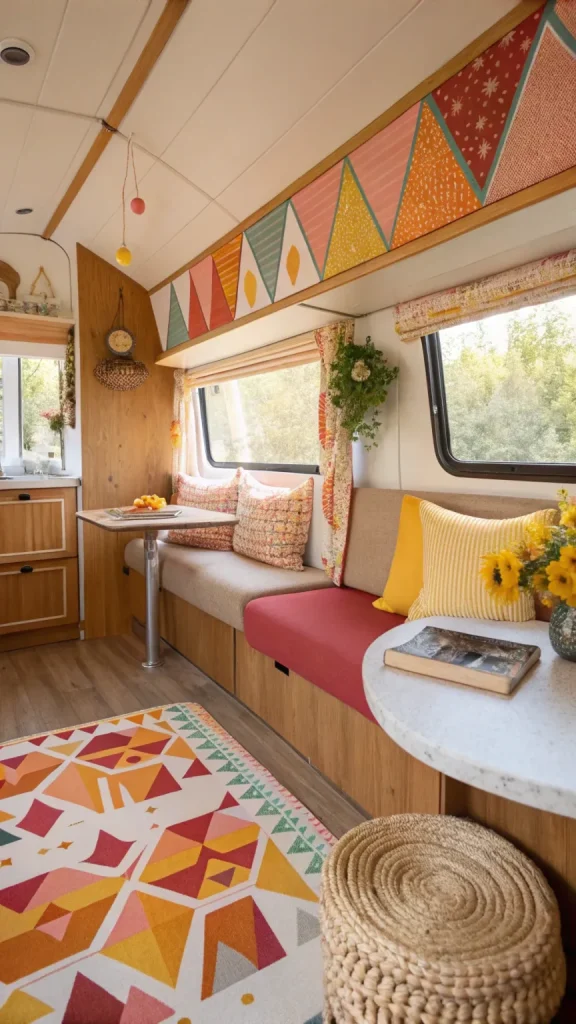
Cozy tiny home interior with 70s design elements and bright colors.
Bringing 70s-inspired details into tiny home renovations can make a compact space feel warm, creative, and full of personality. Consider using bright colors, geometric patterns, and natural materials to capture the character of the era. Retro-style tiles can add instant visual interest to a kitchen backsplash or bathroom floor, while open shelving with a vintage finish provides practical storage and space for displaying quirky accessories. A small living area can also benefit from a carefully chosen combination of retro furniture and decorative accents, creating an inviting atmosphere without making the room feel crowded.
Eclectic Maximalism in the Bathroom
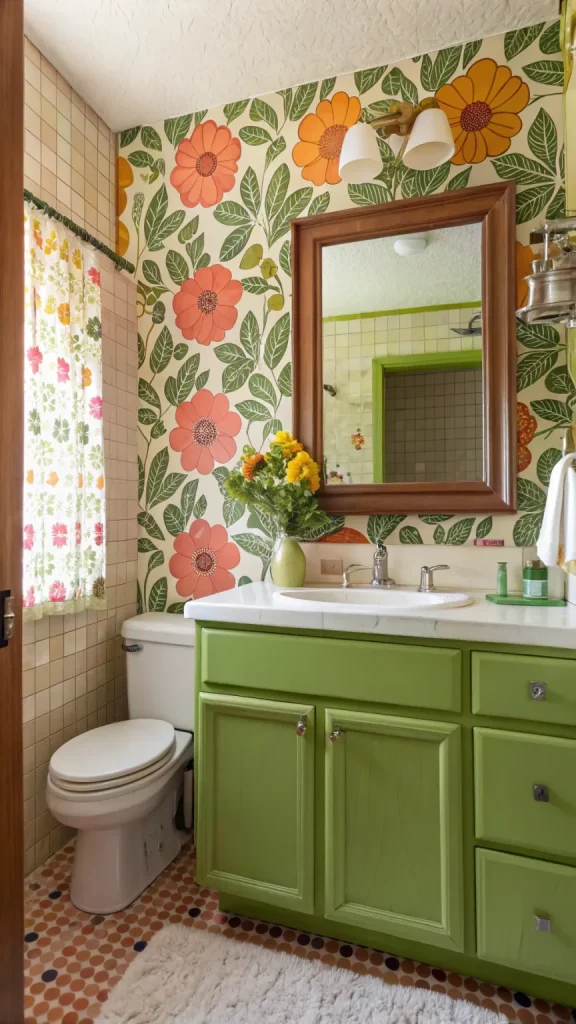
Eclectic 70s bathroom with floral wallpaper and vibrant fixtures.
Bathrooms in the 70s often embraced eclectic maximalism, giving homeowners plenty of freedom to experiment with color, patterns, and textures. Try combining floral wallpaper with distinctive tile designs for an unmistakably retro appearance. Shades such as avocado green, mustard yellow, and earthy orange can be introduced through fixtures, accessories, or decorative accents. A sunken bathtub or spacious vanity with unusual hardware can strengthen the vintage character. Add plants, mirrors, or period-inspired artwork to give the bathroom a lively and personalized finish.
Sunken Lounge Rooms with Conversation Pits
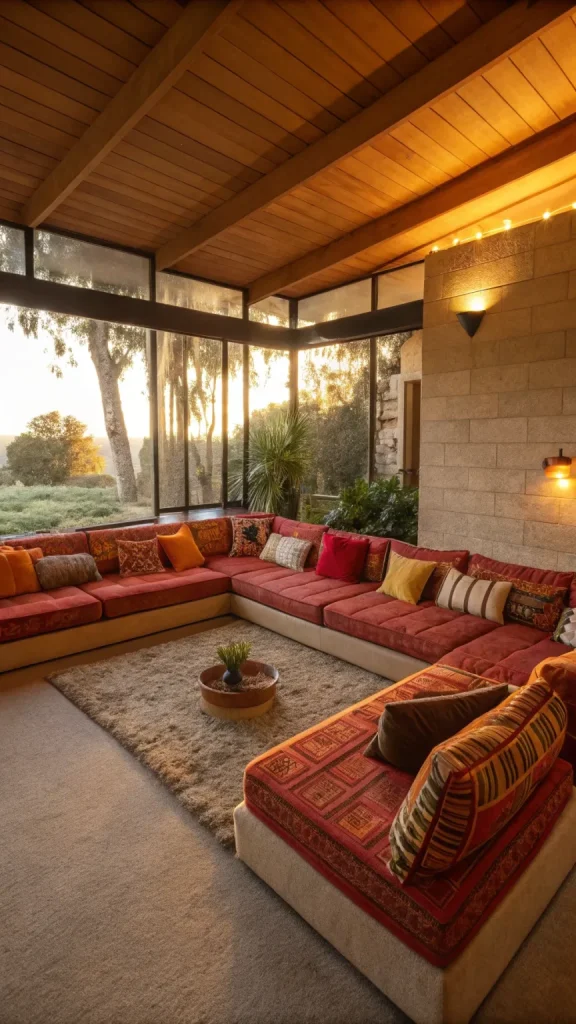
Cozy sunken lounge room with a sectional sofa and bold cushions.
The sunken lounge room, also known as a conversation pit, remains one of the most recognizable features of 70s home design. These lowered seating areas were created for conversation, entertaining, and relaxed gatherings. To recreate the concept, consider lowering part of the living room floor and surrounding the area with comfortable seating. A plush sectional, colorful cushions, and textured throws can reinforce the retro atmosphere. Finish the space with a low coffee table to create a relaxed setting that works well for family time or social occasions.
Funky 70s Furniture Pieces
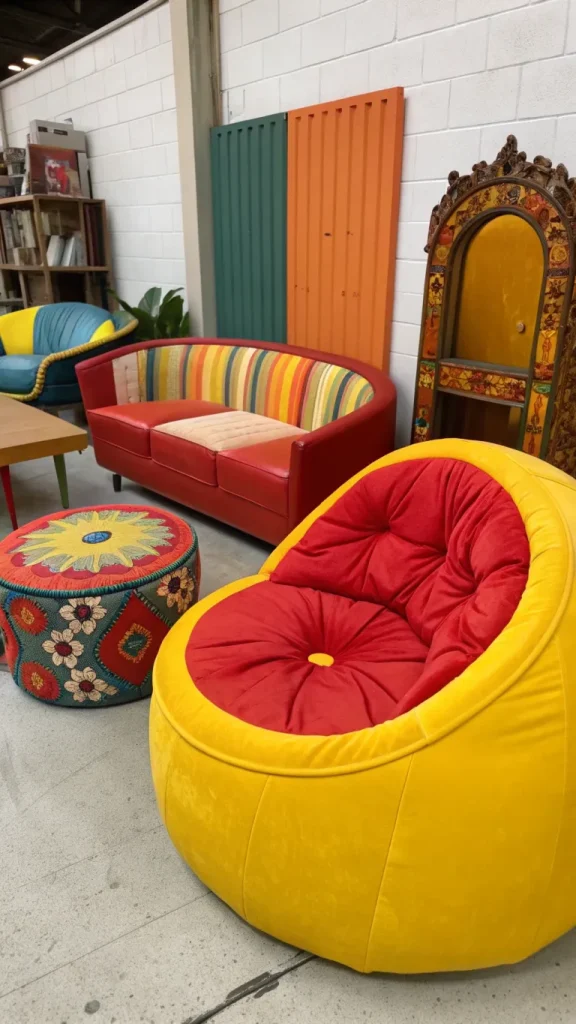
Collection of funky 70s furniture pieces in bold colors and shapes.
Furniture from the 70s was known for expressive colors, unusual silhouettes, and unconventional materials. Vintage-inspired bean bags, curved sofas, sculptural chairs, and boldly patterned armchairs can become eye-catching focal points. Rather than matching every piece, combine different shapes and styles to create an eclectic but balanced interior. Colors such as orange, teal, purple, and warm brown can help establish the period-inspired palette. The goal is to choose furniture that feels distinctive while allowing the room to reflect your individual taste.
Timber Interiors of 70s Australian Beach Houses
Interior of a 70s beach house with timber paneling and large windows.
Natural materials played an important role in 70s interiors, particularly in Australian beach houses where timber helped connect indoor spaces with the surrounding landscape. Wooden beams, wall paneling, exposed surfaces, and reclaimed timber can introduce similar warmth into modern tiny home renovations. Large windows are another useful feature because they bring in natural light and highlight outdoor views. Pair timber finishes with lightweight fabrics, neutral textures, and coastal-inspired accessories to create a relaxed interior with a distinctly 70s character.
Retro Style House Exteriors
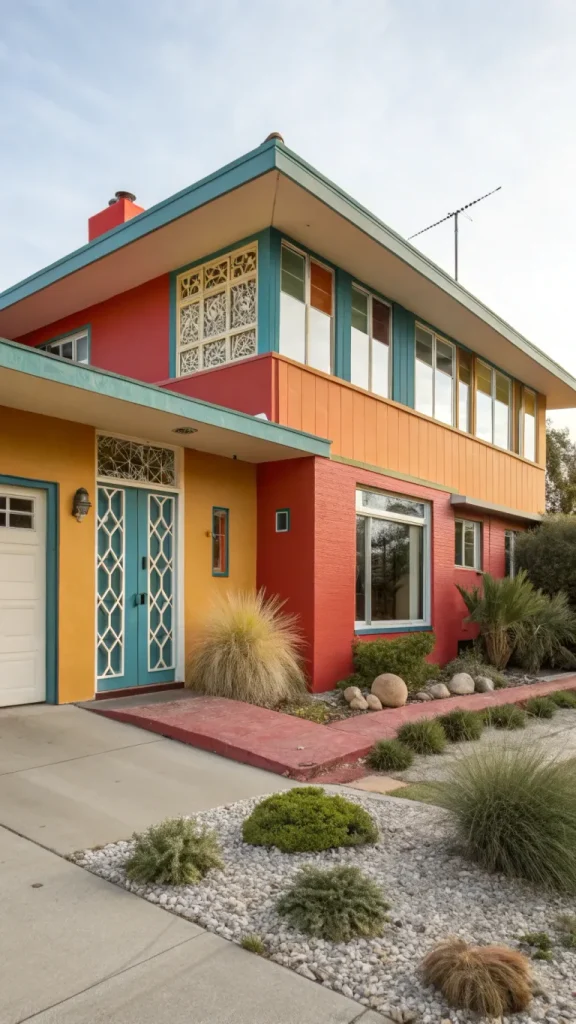
Exterior of a retro 70s house with bold colors and geometric windows.
Many 70s house exteriors stood out through bold colors, unusual architectural forms, flat or low-pitched roofs, and large windows. You can introduce these ideas without completely redesigning your home by experimenting with exterior paint colors or siding inspired by the period. Geometric windows can add architectural interest while bringing more daylight indoors. Complete the look with simple landscaping, native plants, and a clean pathway that complements the home’s structure. These details can give a modern property a retro-inspired personality without making it feel dated.
Modern 70s House Aesthetics
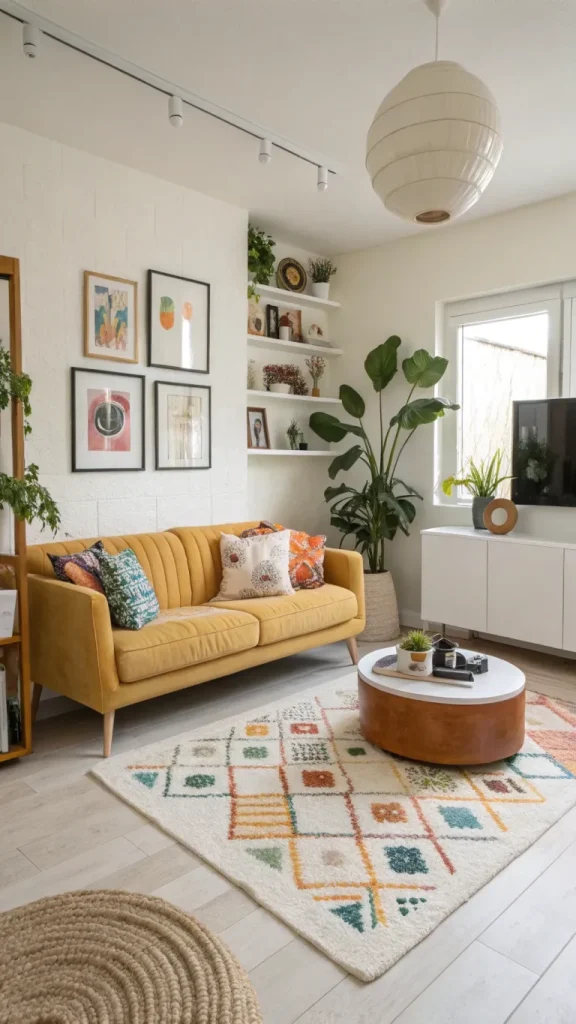
Modern 70s house aesthetics with clean lines and playful decor.
Contemporary interpretations of 70s house aesthetics often combine the era’s playful character with cleaner lines and simpler layouts. Start with a neutral foundation, then introduce stronger colors through furniture, artwork, rugs, or accessories. Retro-inspired lighting and patterned wall art can reference the decade without dominating the entire room. Mixing modern furniture with carefully selected vintage pieces creates a balanced appearance that feels current while retaining nostalgic charm. This approach is especially useful when you want the spirit of the 70s without turning your home into a complete time capsule.
Unique House Details from the 70s
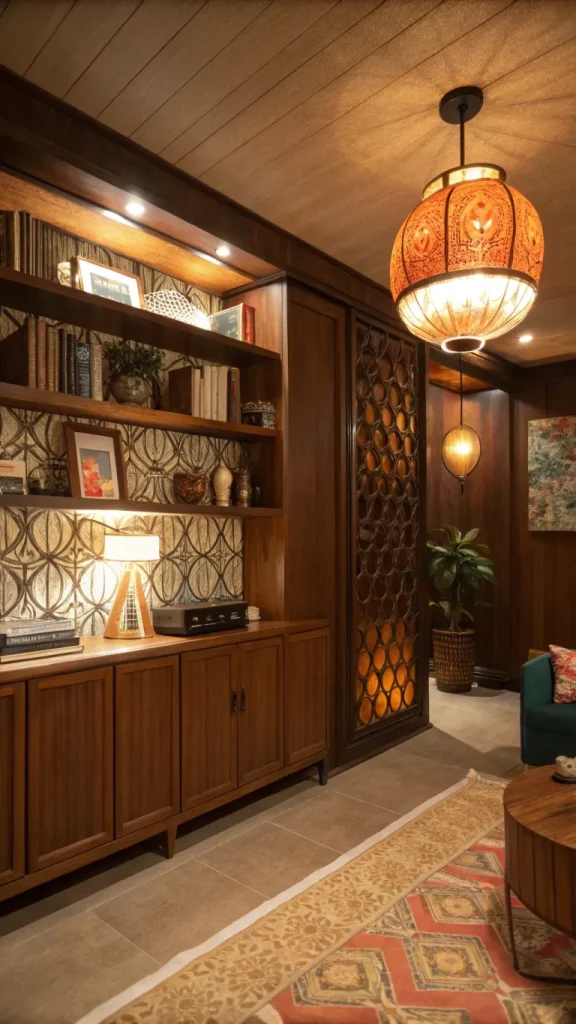
Unique 70s design details with built-in shelving and funky light fixtures.
Some of the most memorable elements of 70s design were the small architectural and decorative details that gave homes their individuality. Built-in shelving, sunken floors, wood paneling, colorful tiles, and distinctive lighting fixtures can all bring period character into a renovation. Even a few carefully selected details can transform an otherwise ordinary room into a retro-inspired retreat. If you are renovating an older property, look for original features that can be restored or highlighted rather than removed. Preserving these details can add character while allowing the rest of the space to feel fresh and functional.