

Red and white is the easiest Christmas palette to recognize and one of the hardest to get right. Too much red and the tree feels heavy. Too much white and it can read as unfinished. The best red and white Christmas tree ideas balance the two with texture, scale, and a little contrast from natural elements like greenery, wood, or warm light.
Below are 27 different ways to decorate a red and white Christmas tree. Some suit a full-size tree in a family living room, and others fit a slim tree in an apartment corner or a tabletop tree on a console. You’ll find farmhouse, vintage, modern, and woodland takes, plus budget swaps where a pricey piece isn’t necessary.
1. Wrap the Tree in Candy Cane Stripes
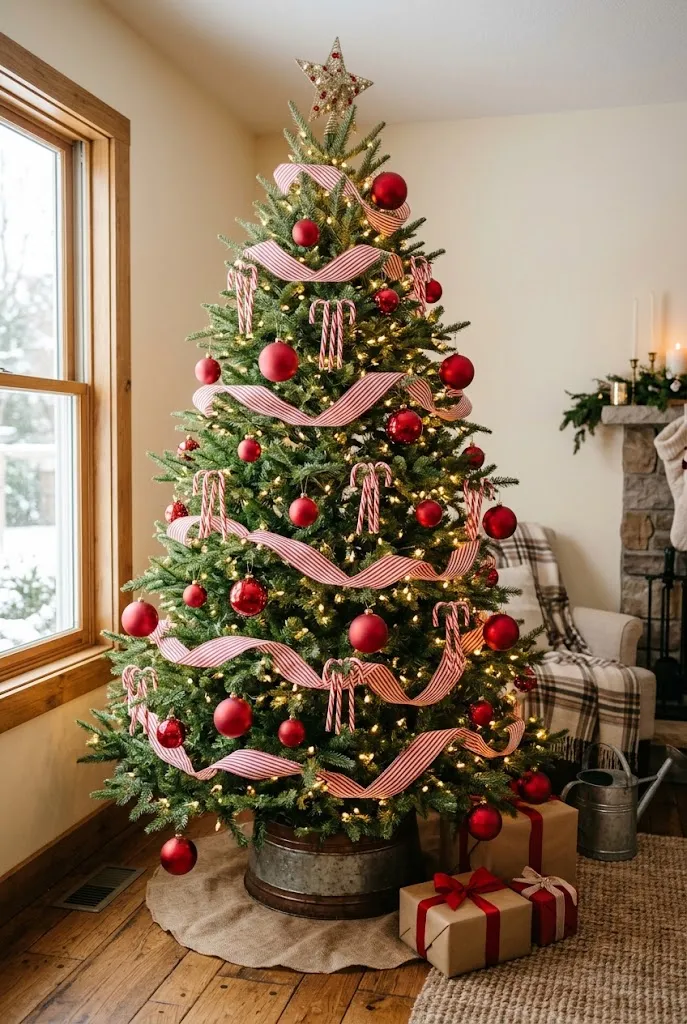
Start with a green tree and commit to stripes. Hang real or faux candy canes in clusters of three on the branch tips, then thread red-and-white striped ribbon in loose horizontal waves. Add solid red ball ornaments in two sizes to rest your eyes between all that pattern.
Keep the lights warm white so the stripes don’t turn harsh. If you’re using real candy canes, hang them in the final week, since humidity can soften them.
2. Flock a White Tree and Add Red Velvet Bows
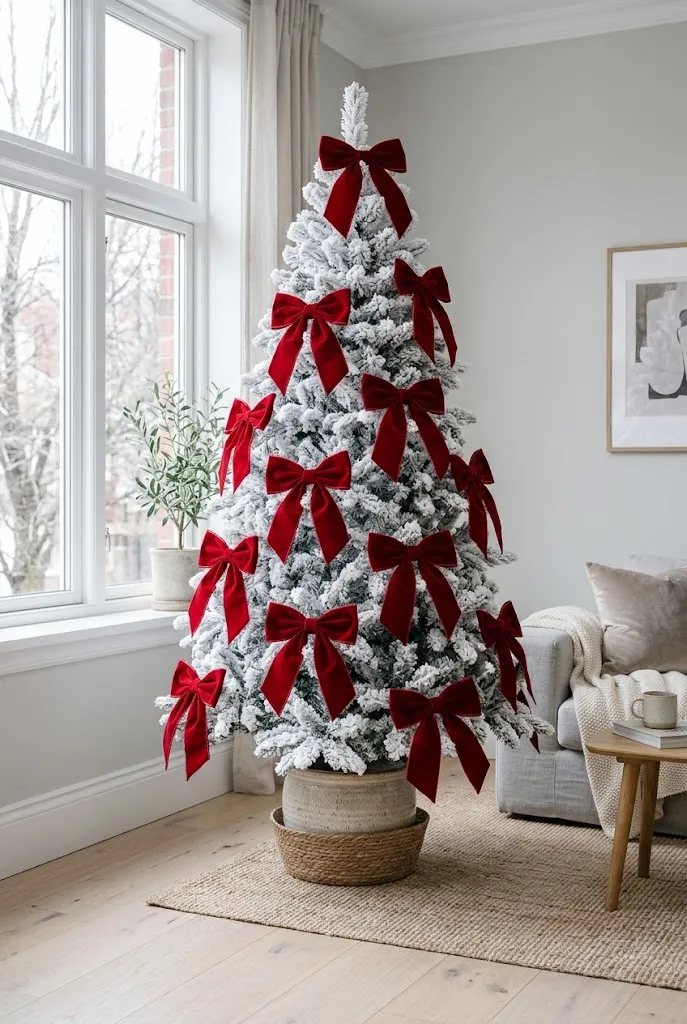
A flocked or frosted white tree is a clean backdrop for one bold move. Tie oversized red velvet bows, roughly 6 to 8 inches wide, and tuck them deep into the branches at staggered heights. Skip the ball ornaments entirely, or add only a few in matte white.
Velvet absorbs light, which gives the red a richer, deeper look than satin ribbon. Wire-edged ribbon holds its shape better on spreading branches.
3. Keep the Green Tree, Limit the Ornaments to Red and White
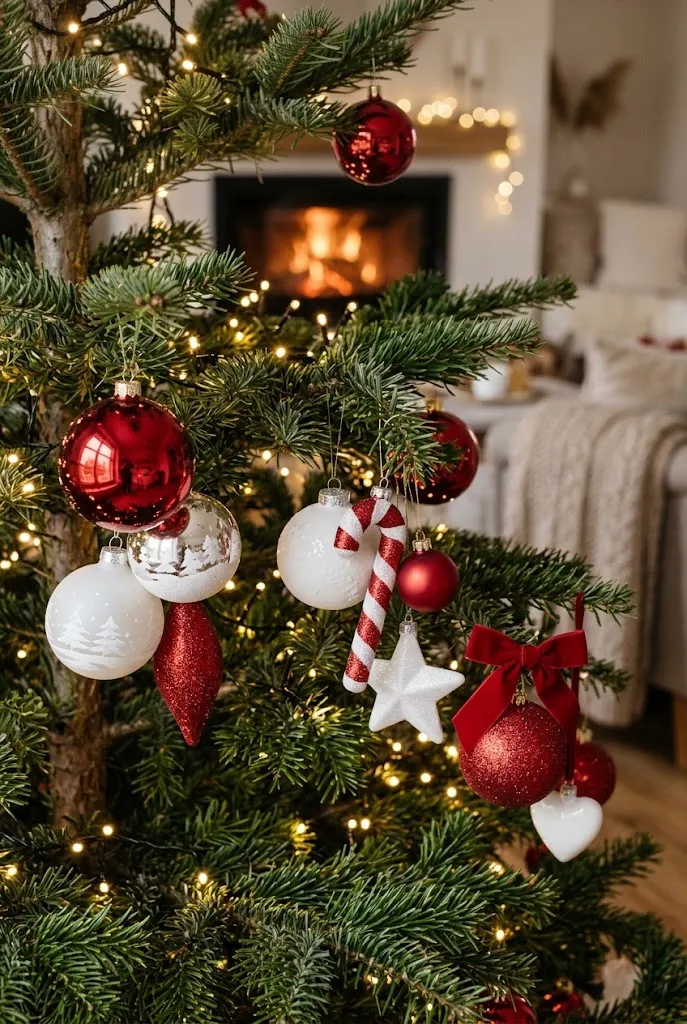
Not everyone wants a themed tree that hides the green. This version lets the natural branches show and restricts every ornament to two colors. Mix finishes for depth: shiny red glass, matte white ceramic, and a few glittered pieces.
- Use odd-numbered groupings, such as three small reds near one large white.
- Place the largest ornaments closest to the trunk for dimension.
- Repeat each shape at least three times so the tree feels planned.
4. Cascade Buffalo Check Ribbon From Top to Bottom
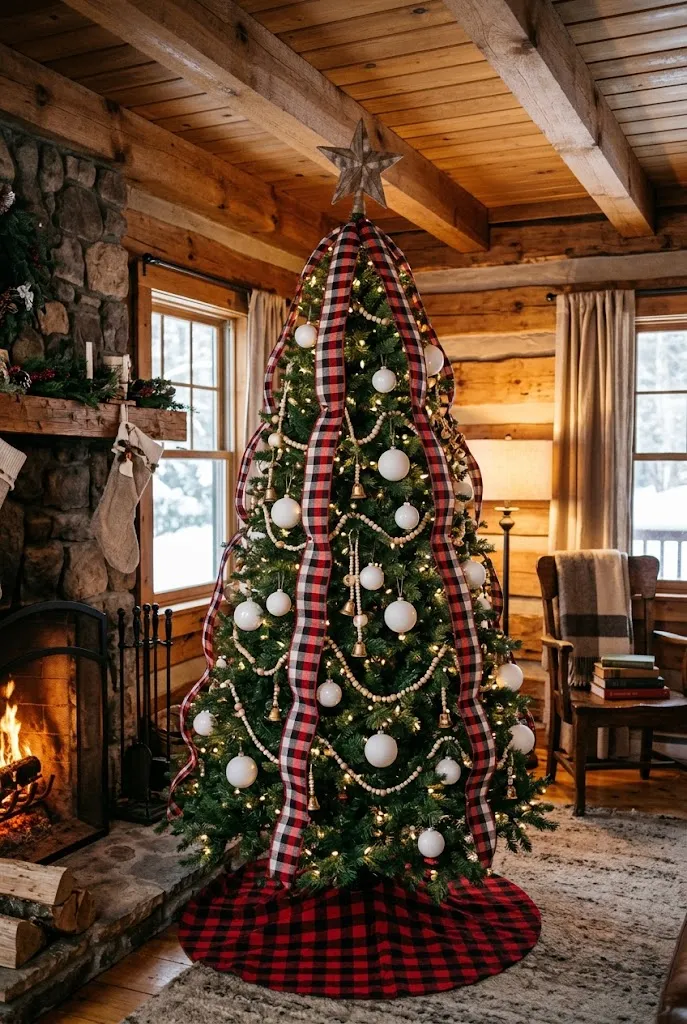
Buffalo check is the quickest route to a cozy cabin feel. Instead of wrapping the ribbon around the tree, tuck one end near the top and let it fall in gentle, vertical drapes, repeating the swag every foot or so around the tree.
Pair the check with plain white ornaments and a few wooden beads or bells. Because the plaid is already busy, the rest of the tree should stay quiet.
5. Build a Peppermint Swirl Tree
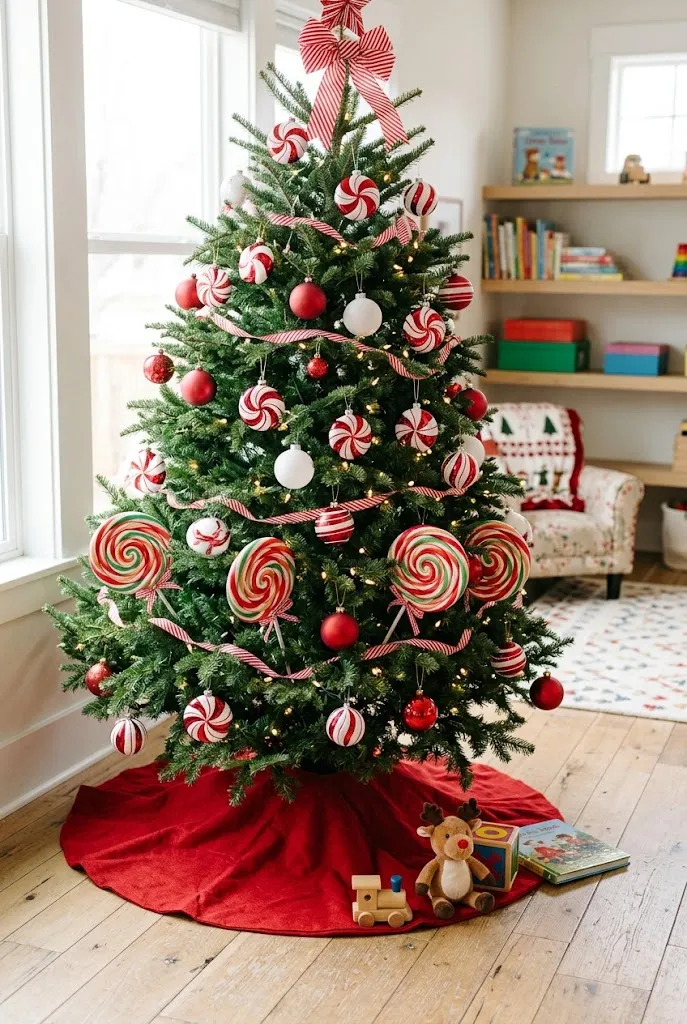
Peppermint swirls give this tree its whole personality. Use plastic or resin peppermint ornaments in varied sizes, add oversized swirl lollipop picks near the lower branches, and fill gaps with red and white glass balls.
A tree skirt in a solid red or a white faux fur base keeps the look cohesive. This one is especially fun for families with kids, and shatterproof ornaments make it easier to place low.
6. Pair White Poinsettias With Red Berry Picks
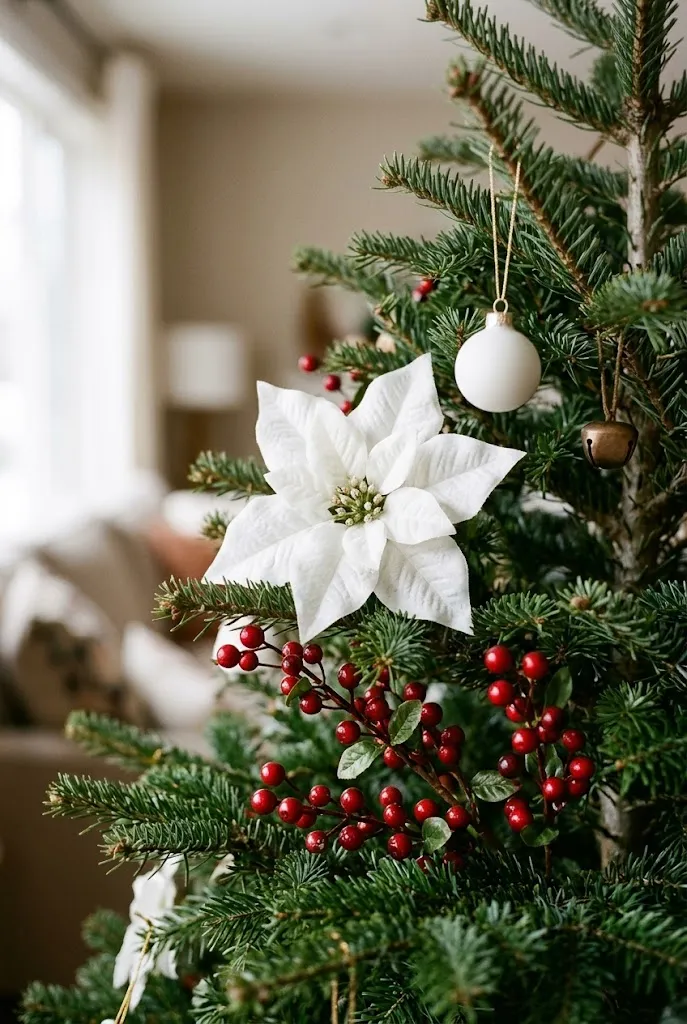
Florals bring softness to a color scheme that can otherwise feel graphic. Poke white faux poinsettias into the branches at a slight angle, and add red berry stems in the gaps between them. The effect is closer to a wreath-covered tree than a bauble-covered one.
Because there are fewer hanging ornaments, check that the stems are secured at the base of each branch. A bit of floral wire is more reliable than relying on the stem’s own bend.
7. Choose a Slim Pencil Tree for a Corner
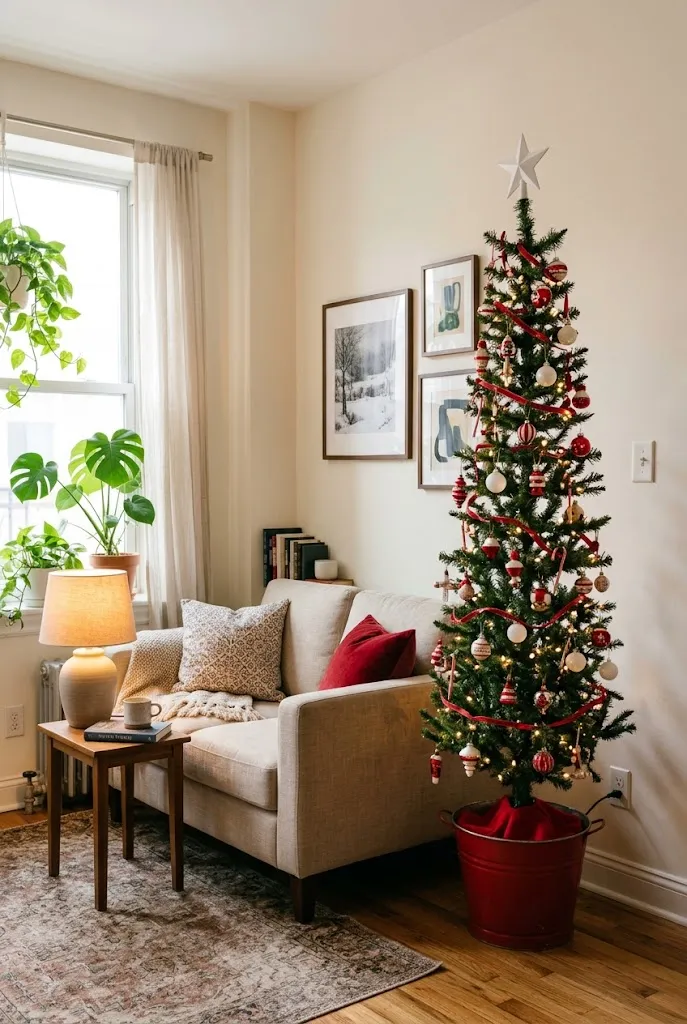
A 6-foot pencil tree takes up a fraction of the floor space of a standard tree, which makes it a smart choice for apartments, hallways, and bedroom corners. Because the branches are short, use smaller ornaments in the 1.5 to 2.5 inch range and keep garland thin.
Try a red metal bucket or a white wicker basket as a base. Both hide the stand and add a color anchor at the bottom.
8. Mix Red Gingham With Natural Muslin
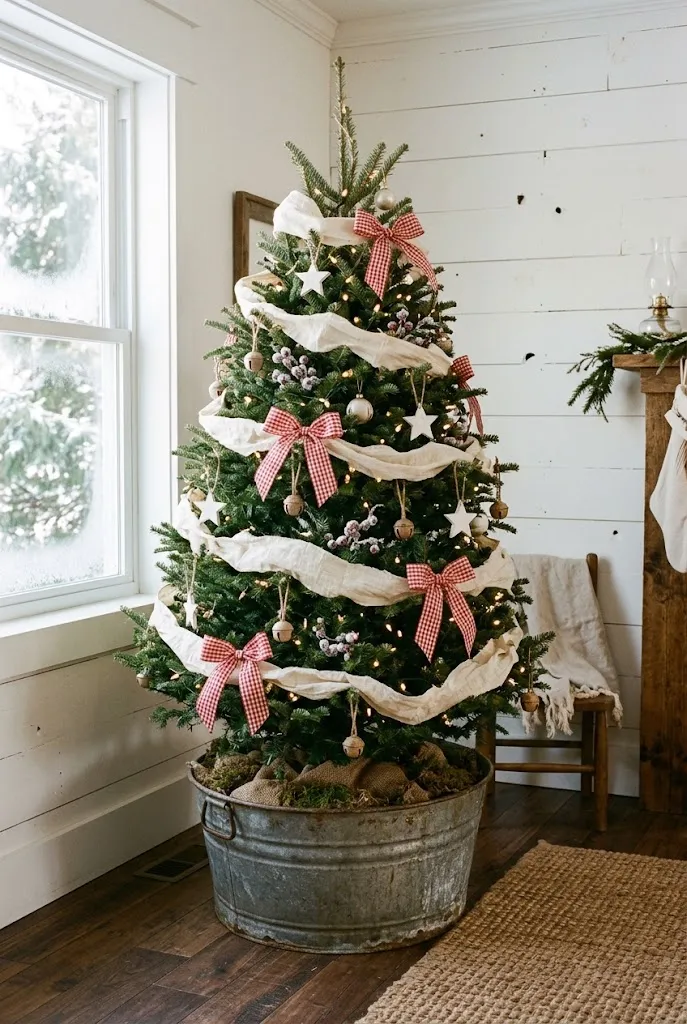
Gingham sits somewhere between farmhouse and storybook. Cut muslin or burlap into wide ribbon strips for the base layer, then add red gingham bows on top. White wooden stars and small bells carry the white side of the palette.
The slightly rumpled texture of muslin keeps the tree from feeling too tidy, which is the point. A galvanized tub or a woven tree collar finishes the look.
9. Create a Red-to-White Ornament Gradient
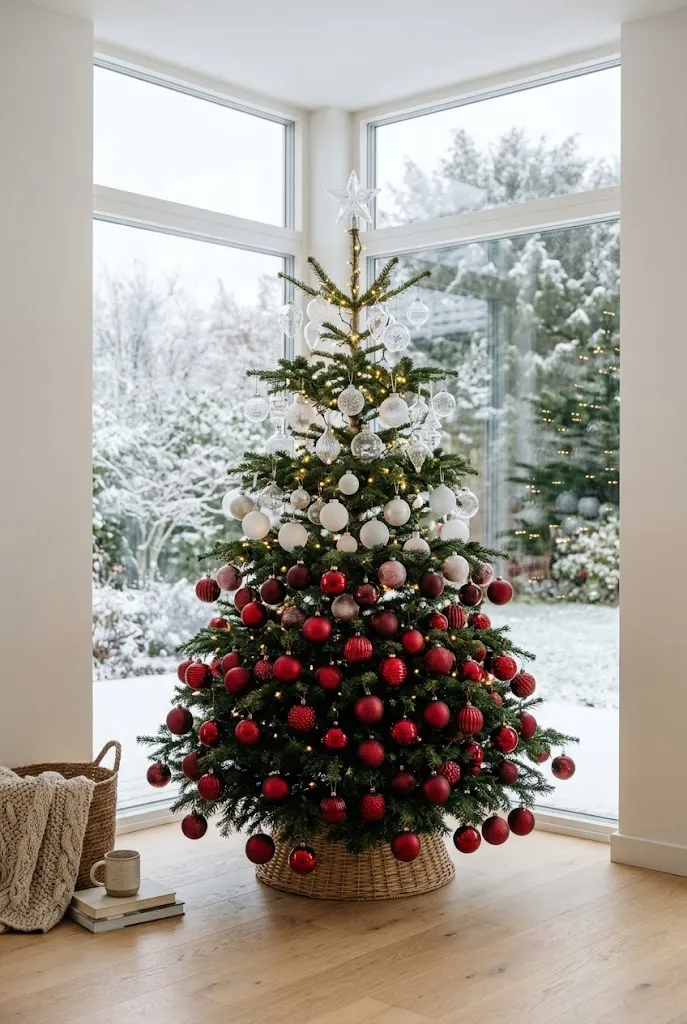
For a more design-led approach, arrange ornaments by color rather than scattering them. Place deep red at the bottom, move through lighter red and soft pink-white in the middle, and finish with white and clear near the top.
This takes patience, but it works well on a tree you plan to display in a window. A mix of matte and glossy finishes keeps the gradient from looking flat.
10. Make Paper Snowflakes and Ribbon Ties on a Budget
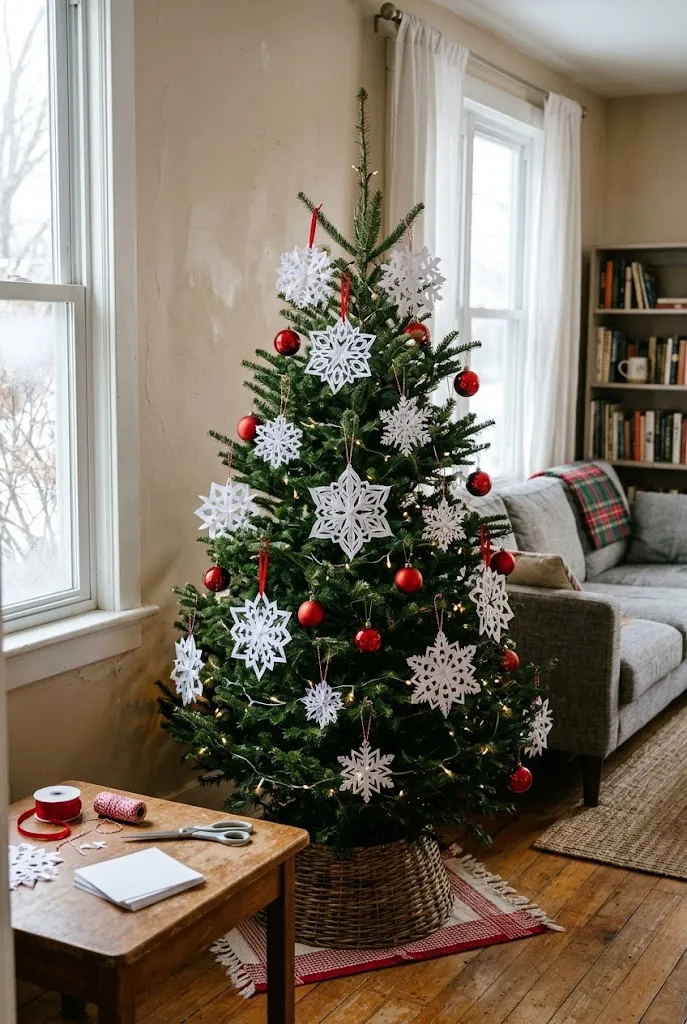
If you want a handmade, low-cost tree, cut a stack of white paper snowflakes in varied sizes and hang them with thin red ribbon or baker’s twine. Heavy-weight paper or card stock holds its shape better than printer paper.
Add a handful of inexpensive red ball ornaments to anchor the design. The snowflakes are light, so they move slightly when someone walks past, which adds more life than hard ornaments do.
11. Go Vintage With Mercury Glass and Silver Tinsel
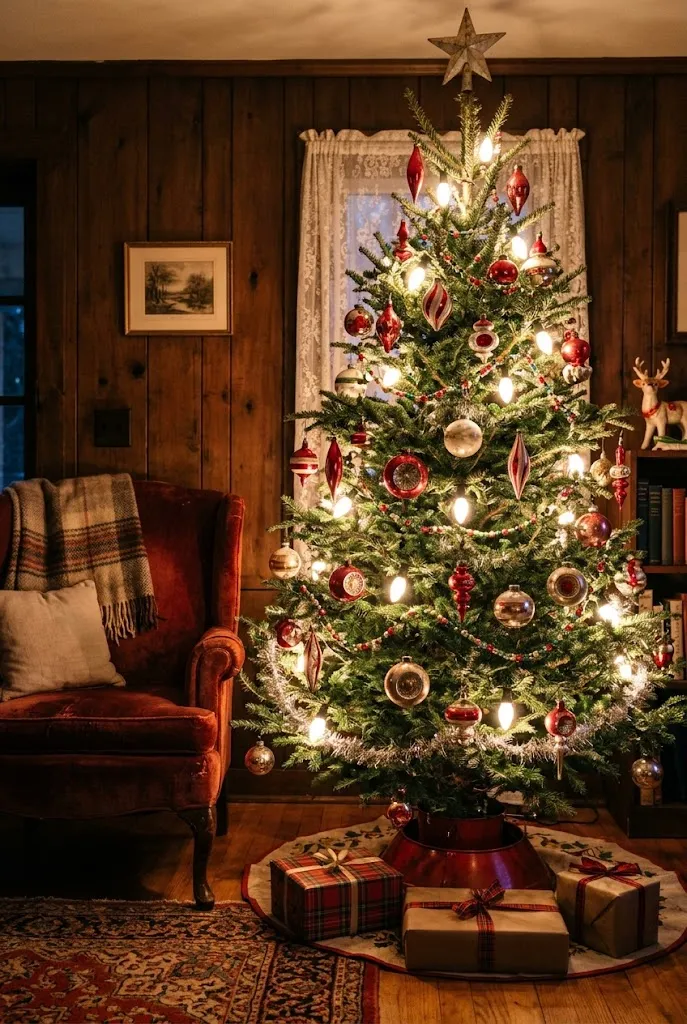
Vintage trees lean on shine. Use mercury glass in red and white tones, add glass bead garland, and drape a little silver tinsel sparingly through the lower branches. The metallic gleam softens the contrast between red and white.
Look for old-style shapes like teardrops, indents, and pinecone ornaments. Smaller strands of large-bulb lights, in warm white or a mix with red, strengthen the nostalgic feel.
12. Style a Scandinavian Tree With Straw and Red Hearts
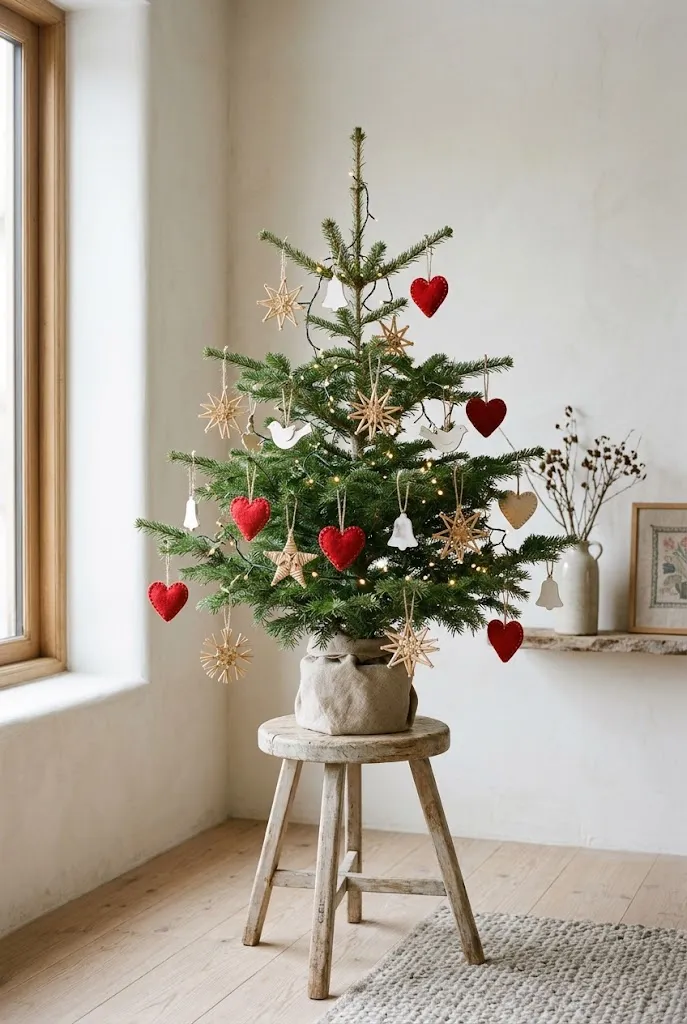
Scandinavian holiday decor tends to rely on simple, handmade shapes. Weave or buy straw stars, red felt hearts, and small white wooden ornaments, then hang everything with natural twine.
Keep the spacing a little loose, since the shapes are flat and need room to be seen. White string lights work better here than multicolor, and a plain wood stool or crate makes a fitting base.
13. Dress the Tree in Knit Mittens and Wool Pom-Poms

Small knitted mittens and white pom-poms bring warmth you can feel just by looking. Use red and cream tones, mix in a few tiny wool stockings, and finish with a thick red knit garland.
Wool ornaments are lightweight, so they sit well on smaller branches. Hang them in clusters near the front, and keep glass elements minimal so the texture takes center stage.
14. Spiral Red Velvet Ribbon Garland Around a White Tree
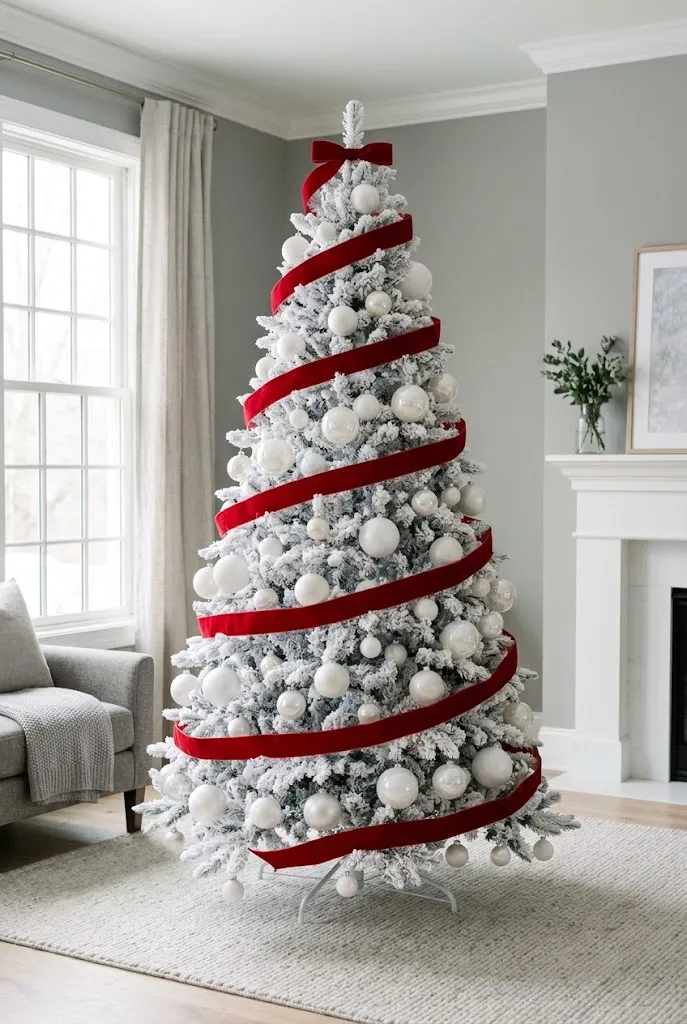
A continuous spiral of 2.5-inch red velvet ribbon gives a white tree a polished, intentional look. Start at the top, tuck the ribbon end, and wind downward at an even slope, securing it every few branches.
Add white or pearl ball ornaments in varying sizes and leave the rest bare. The spiral is the star here, so resist the urge to layer on more decorations.
15. Set a Tabletop Tree on a Console or Sideboard
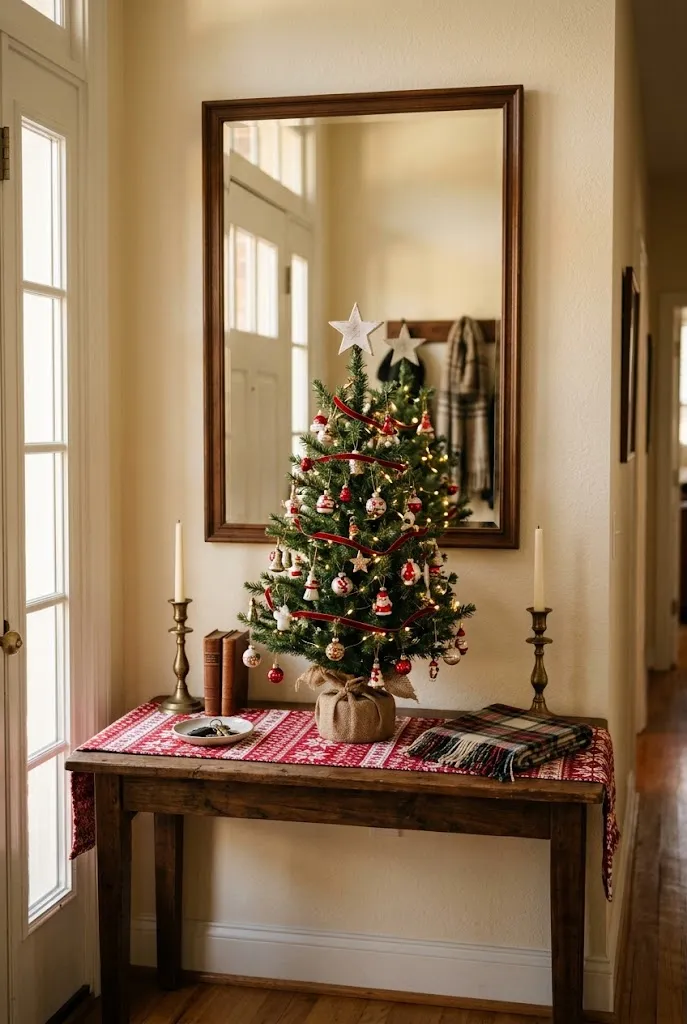
Not every red and white tree needs to touch the floor. A 2- to 3-foot tabletop tree on an entry console works well with a handful of miniature ornaments, a red ribbon, and a small white star topper.
Place it on a white or red runner and add a pair of candle holders on each side. Use battery-operated lights if the outlet is far away.
16. Keep It Modern With Clusters of Solid Red Balls
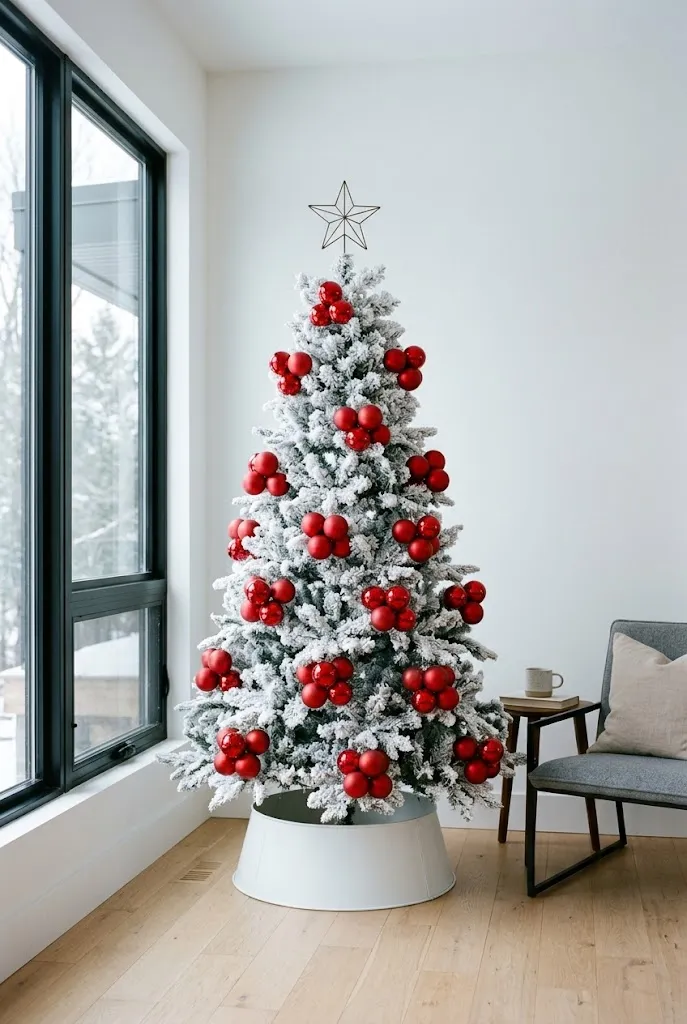
A modern tree benefits from restraint. Choose one ornament shape, a simple round ball, and group them in tight clusters of red against a flocked or white tree. Leave generous space between clusters so each one reads as a deliberate accent.
A simple white tree collar and a slim metal or acrylic star topper keep the lines clean. Fewer decorations mean each one needs to be good quality, so buy a few well-made ones rather than a big box of cheap ones.
17. Fill a Kids’ Tree With Lollipops and Candy
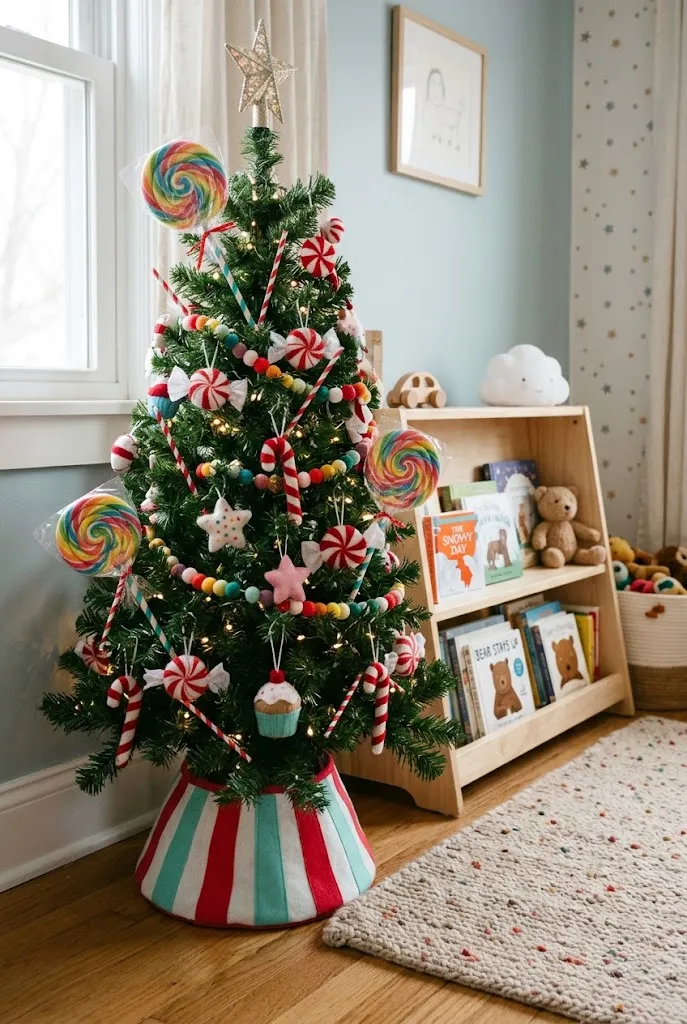
A smaller tree in a playroom or a child’s bedroom is a good place for edible and candy-themed decorations. Use large swirl lollipops, wrapped peppermints, and red and white striped paper straws as decorative sticks.
Hang breakable ornaments higher and place softer ones, such as felt candies or pom-poms, within reach. If you use real candy, pick pieces with sealed wrappers.
18. Add Cardinals and Birch for a Winter Woodland Look
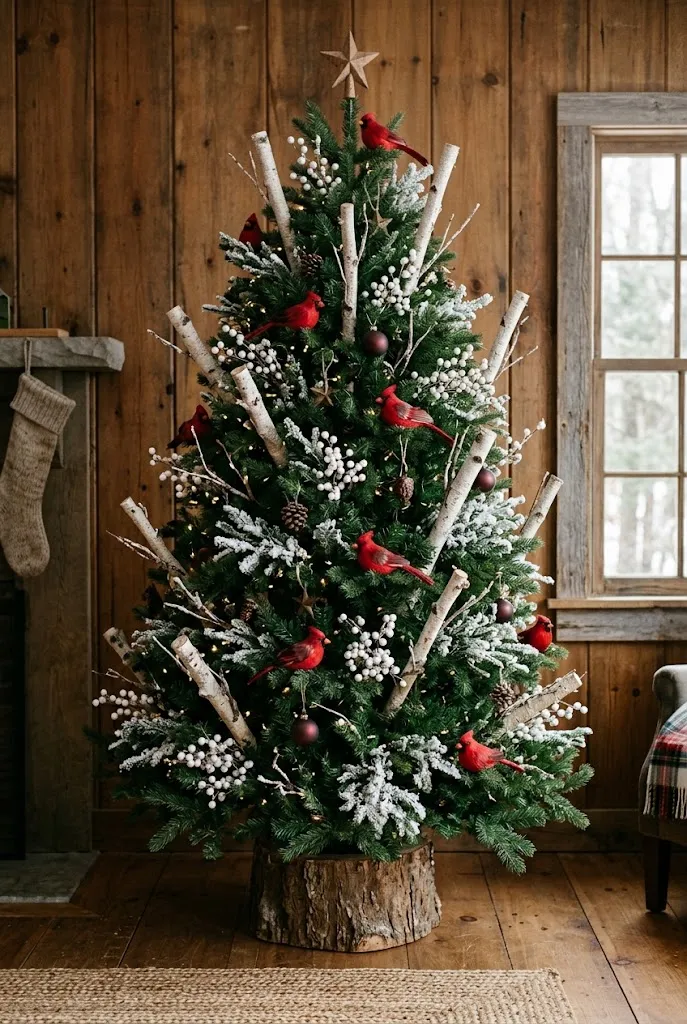
Red cardinals perched on white birch branches are one of the most natural ways to bring red and white together. Use faux birch stems tucked among the branches, add clip-on cardinal birds, and finish with white berries and a little snow-dusted greenery.
This version feels more outdoorsy than ornament-heavy, so skip most of the shiny balls. A rough wood slice or a log base keeps the woodland story going.
19. Try a Red Artificial Tree With White Ornaments
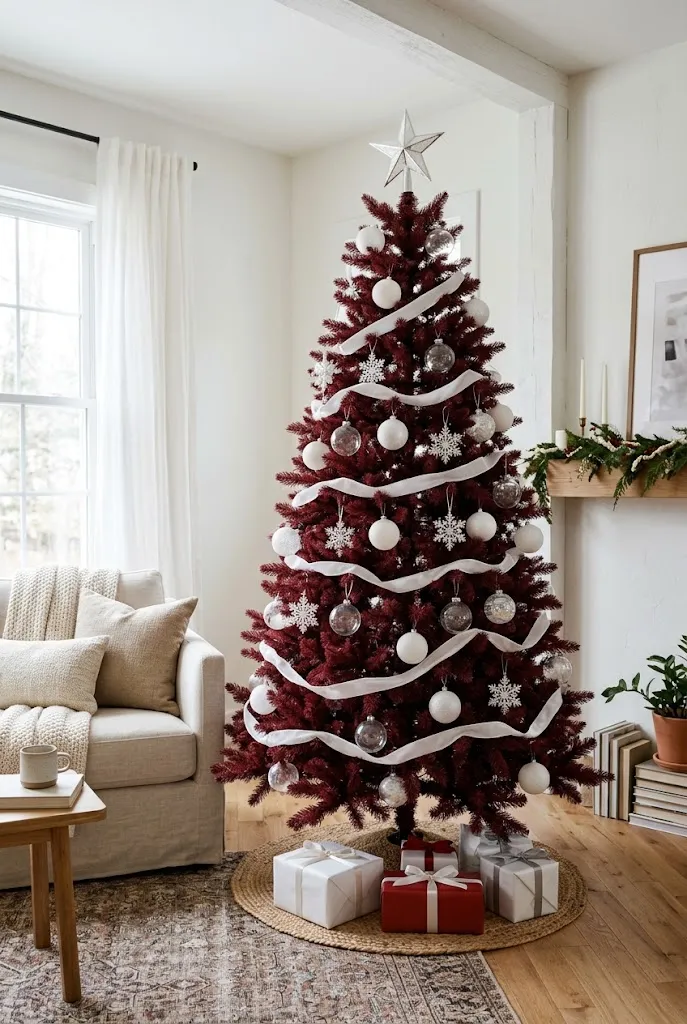
A red tree is a statement piece, and it takes the opposite approach to the usual green-base setup. White ornaments, white ribbon, and clear glass stand out sharply against red branches.
Choose a deep, slightly muted red rather than a bright one, since it photographs and sits in a room more comfortably. A white or silver topper balances the color.
20. Crown the Tree With a Poinsettia Topper
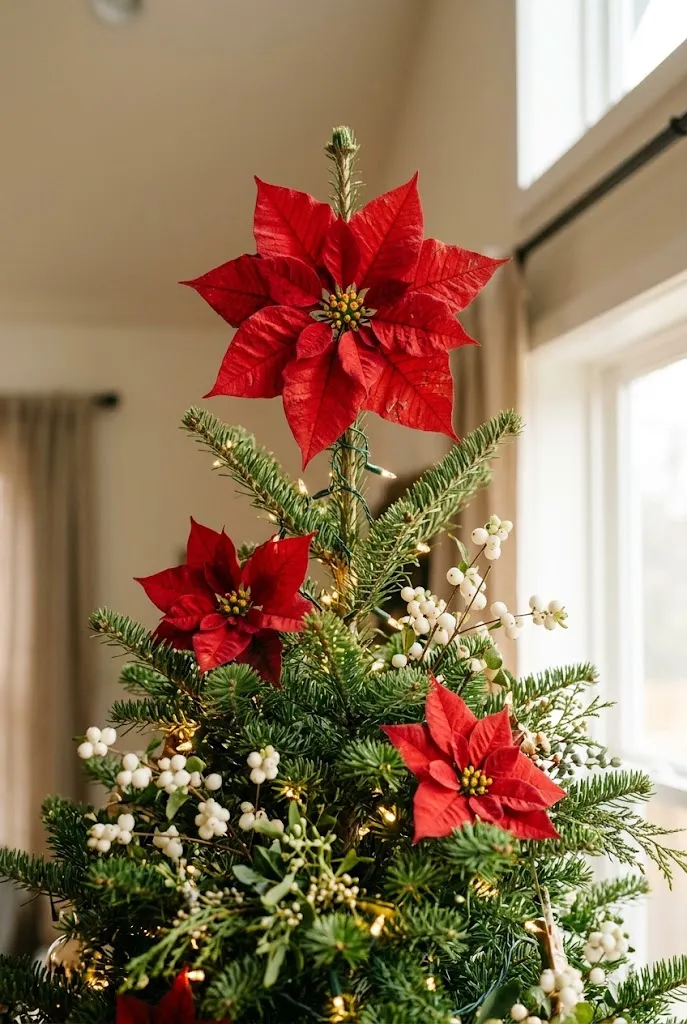
Instead of a star or angel, use a large red poinsettia as the topper. Attach it to the top branch with floral wire, and add two or three smaller blooms lower down to repeat the shape.
It works best on a tree with a looser, more natural silhouette. Pair it with white berries and a little greenery so it doesn’t look perched.
21. Dust Pinecones and Berries for a Snowy Woodland Tree
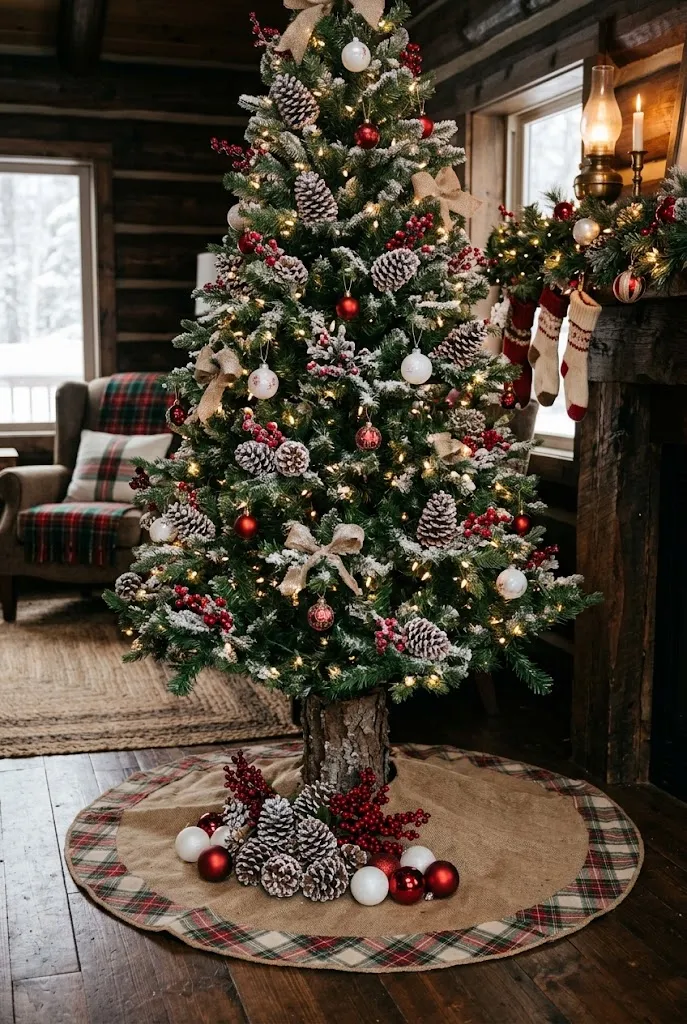
Pinecones, faux snow, and red berries give a tree an outdoor feel. Tuck frosted pinecones throughout, add red berry sprigs between them, and keep ornaments limited to a few white and red balls.
Because pinecones are bulky, place them closer to the trunk to prevent branches from sagging. A burlap or plaid skirt completes the cabin look.
22. Turn Wrapped Gifts Into Ornaments
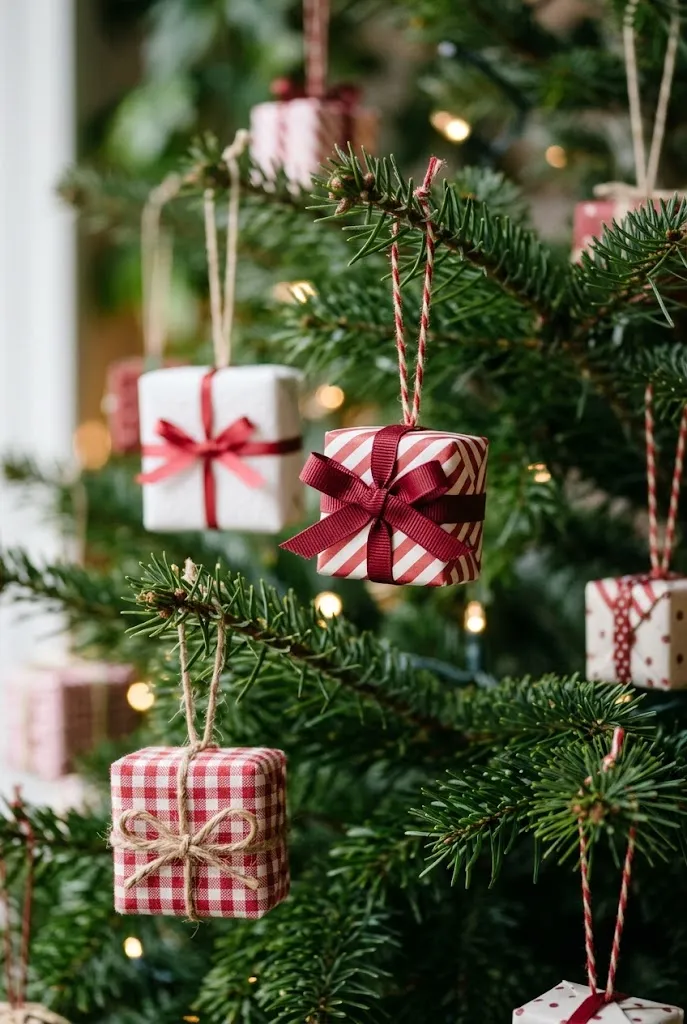
Miniature wrapped-gift ornaments let you play with pattern without overwhelming the tree. Look for small boxes covered in red-and-white striped paper, gingham, or plain white with red ribbon.
You can make your own from lightweight craft boxes and leftover wrapping paper. Hang them at different depths so they look like packages tucked into the branches.
23. Use Shiny Brite-Style Glass With Warm Lights
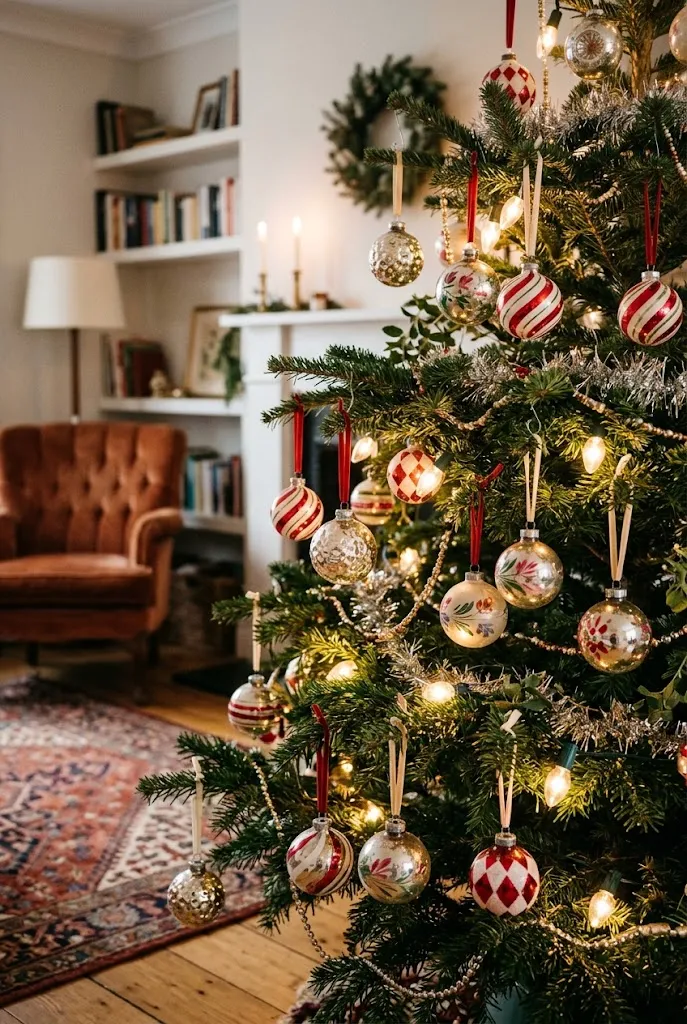
Classic thin-walled glass ornaments with stripes, dents, and diamond patterns carry an old-fashioned charm. In red and white, they pair well with big-bulb lights in warm white.
Handle them carefully and hang them with metal hooks or fine ribbon. Because they’re lightweight, they hang well even from thinner branches near the top.
24. Add a Striped Collar and a Matching Topper
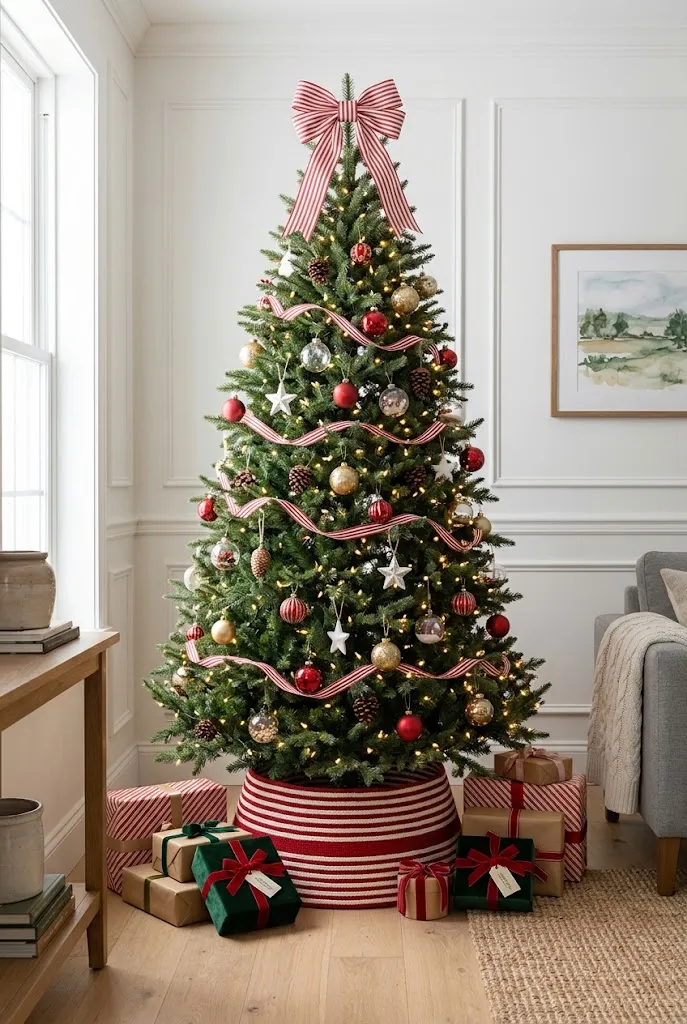
Pay attention to the base and top of the tree, not just the middle. A red-and-white striped tree collar or skirt, plus a topper in a matching stripe or a plain red bow, anchors the whole tree visually.
If you already have a decorated tree, this is one of the quickest ways to push it toward a red and white scheme without redoing the ornaments.
25. Layer Tartan and White Lace for a Victorian Feel
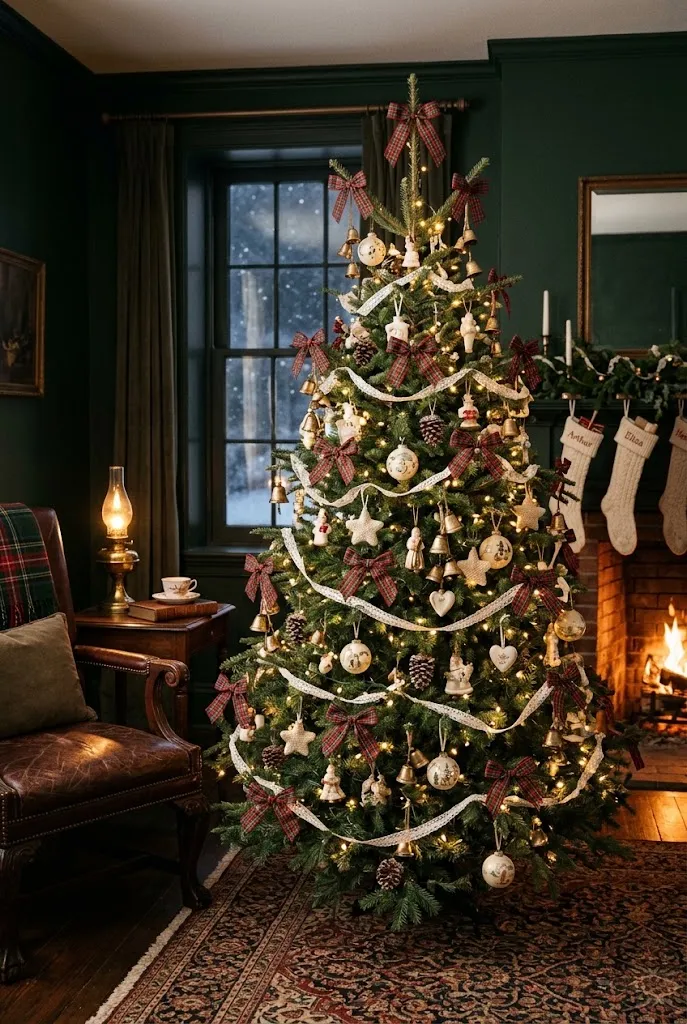
Red tartan ribbon, white lace trim, and small cream-colored ornaments give a tree a traditional parlor look. Tie tartan bows near the branch tips and loop narrow lace between them as a soft garland.
Add a few brass or gold accents, such as small bells, to warm up the palette. This look suits rooms with wood furniture and darker walls.
26. Pair Cool White Lights With Red Ornaments
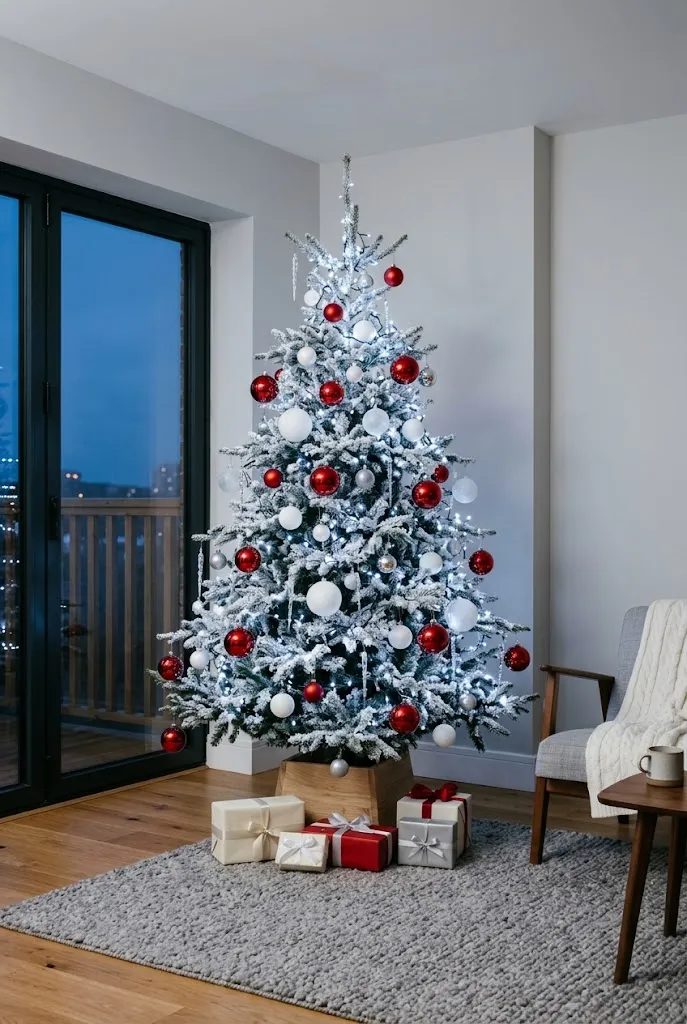
Light color changes how red and white look. Cool white lights make white ornaments appear crisper and can give red a slightly brighter edge. This is the better choice for a modern or flocked tree, where you want a frosty effect.
If you want a cozier feel, stick with warm white instead. It’s worth testing both on a small section before committing to the whole tree.
27. Hang Iced Sugar Cookies and Candy Ornaments
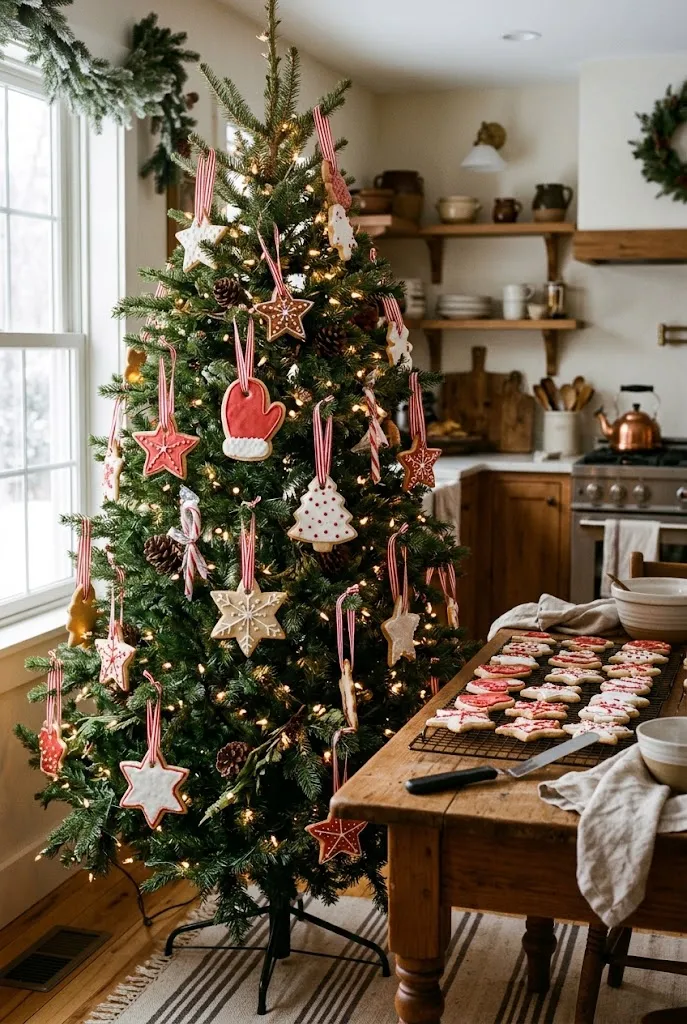
Edible-looking decorations suit a kitchen or dining room tree especially well. Bake or buy sugar cookies cut in stars, mittens, and trees, ice them in red and white, and thread ribbon through a hole made before baking.
For a tree that will stand for weeks, consider faux cookie ornaments instead, as real ones go stale and can attract pests. Mix in wrapped candies for extra color.
How to Balance Red and White on Any Tree
A few simple adjustments keep any of these looks from tipping too far in one direction.
- Choose a lead color. Let red or white take roughly two-thirds of the visual weight, and use the other as the accent.
- Add a third element. Natural greenery, wood, gold, or silver gives the eye a place to rest.
- Vary texture, not just color. Velvet, wool, glass, and paper make a two-color tree feel layered.
- Step back often. Check the tree from across the room, since patterns that look balanced up close can cluster from a distance.