

The ideas below show practical ways to display plants using different heights, textures, stands, shelves, and furniture. Whether you have a bright plant corner living room or a dim bedroom, these house plant display ideas can help you create an organized and attractive arrangement. From simple shelving to creative repurposed pieces, there are plenty of ways to build a plant display that suits your home and personal style.
Tiered Wooden Ladder for Vertical Foliage
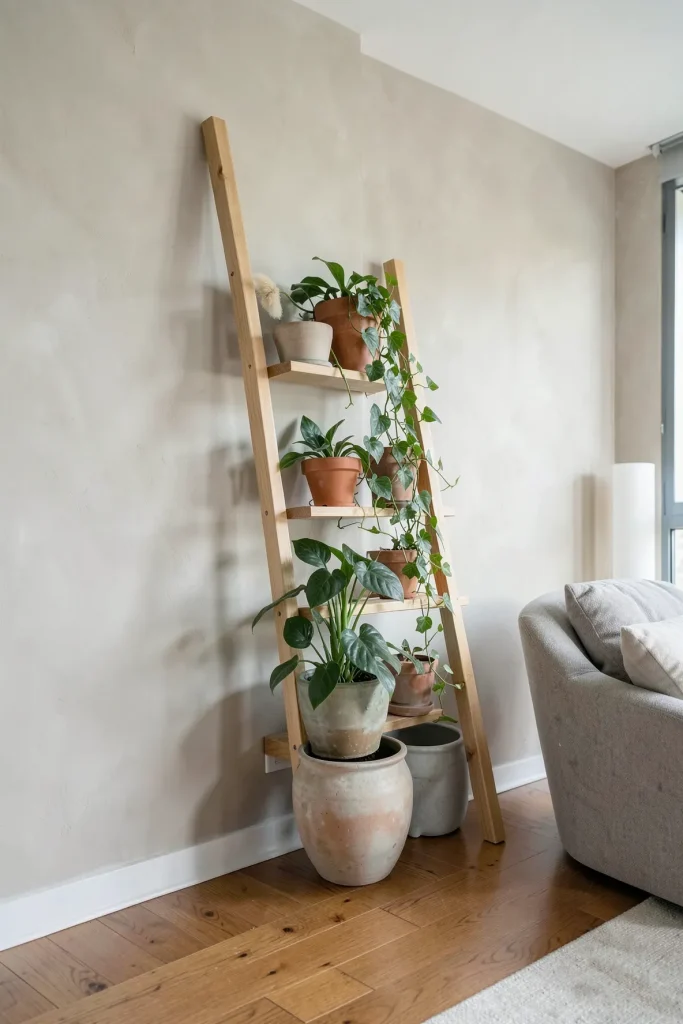
A wooden ladder is an excellent way to create a plant corner living room display while making use of vertical space. Lean the ladder securely against the wall and place larger, heavier pots on the lower rungs for stability. Smaller plants can go higher up, especially varieties with trailing leaves that can cascade downward. Combining different textures, such as soft ferns and glossy hoyas, creates a layered and visually appealing arrangement.
Woven Seagrass Baskets for Floor-Level Greenery
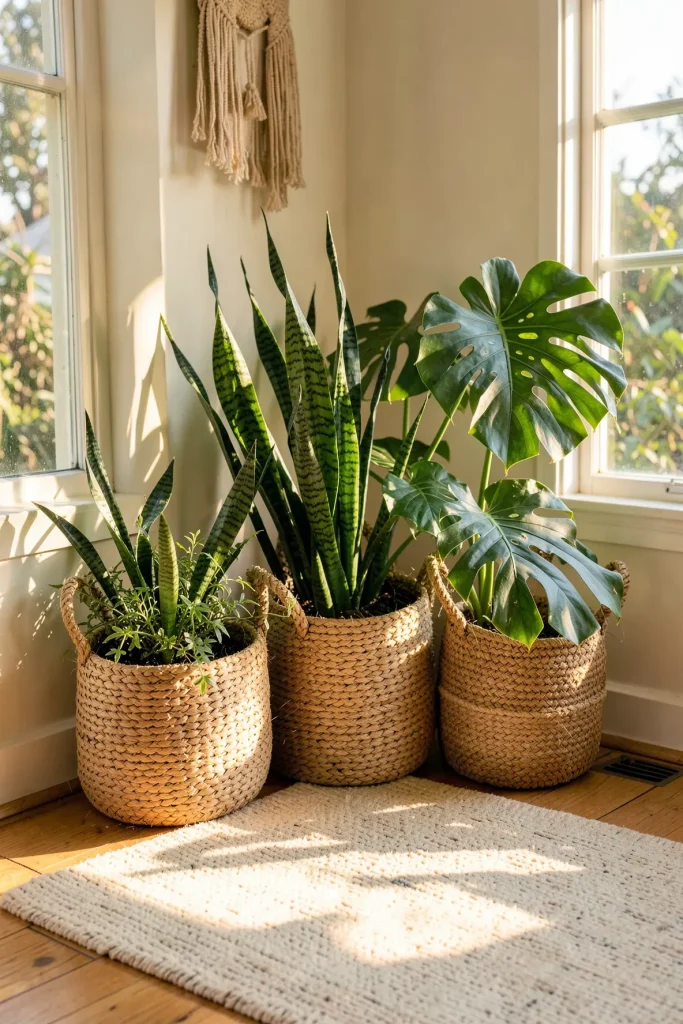
Plain plastic nursery pots can easily be concealed inside woven seagrass baskets. The natural fibers add warmth and texture while creating an attractive contrast against plants with structured leaves, such as Snake Plants. Always place a suitable tray beneath the nursery pot to collect excess water and help prevent moisture from damaging the basket over time.
Macramé Hangers at Varying Heights
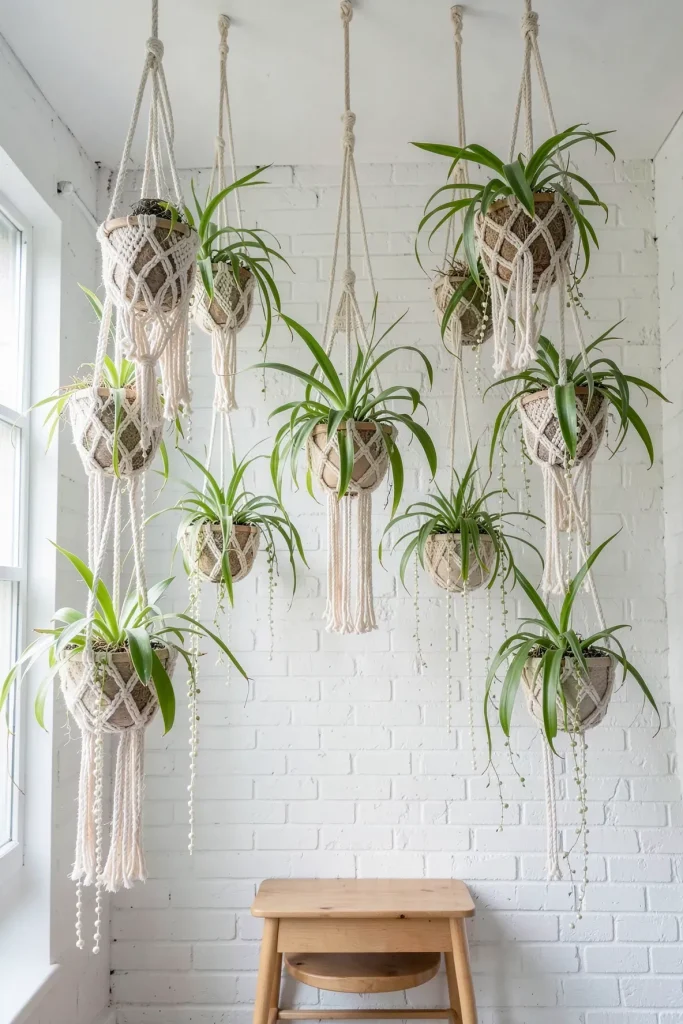
When floor space is limited, hanging plants can be an effective way to create a beautiful plant nook. Install secure ceiling hooks and suspend macramé holders at different heights to form a layered display of greenery. This approach adds dimension while leaving tables, shelves, and other surfaces available for everyday items. Trailing varieties such as Spider Plants and String of Pearls work particularly well in this type of arrangement.
Wall-Mounted Terracotta Pots on Floating Shelves
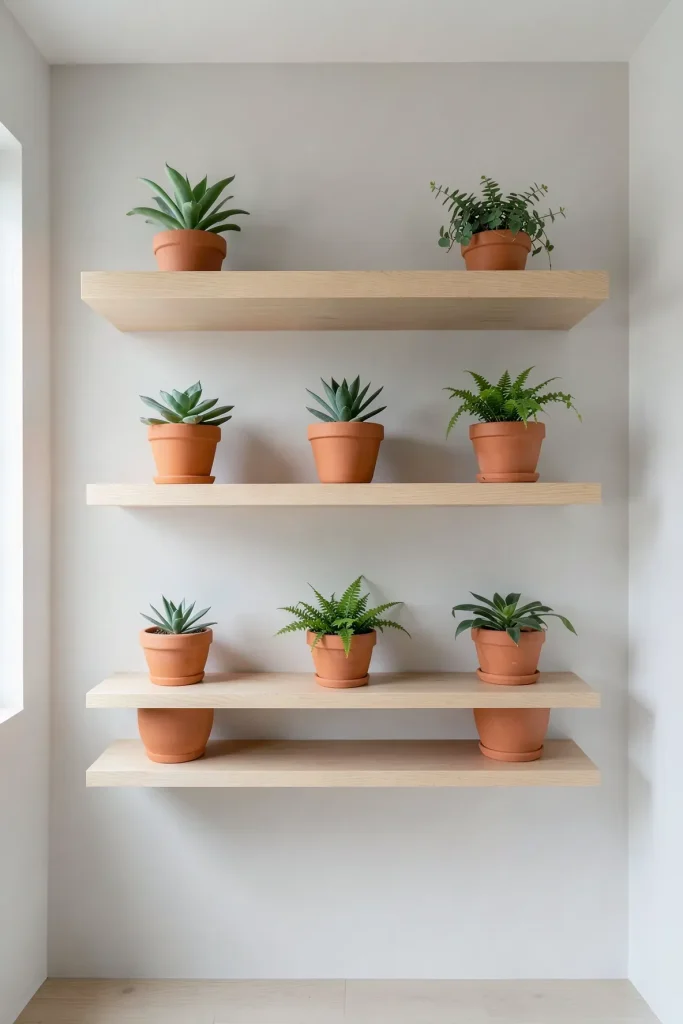
Floating shelves provide a clean and simple foundation for indoor plant shelf ideas. Using terracotta pots in similar sizes or finishes can create a consistent visual rhythm along the wall. The natural clay also provides useful breathability for plants. Leave enough vertical space between shelves so taller plants have room to grow without becoming crowded.
Glass Terrariums on a Low Side Table
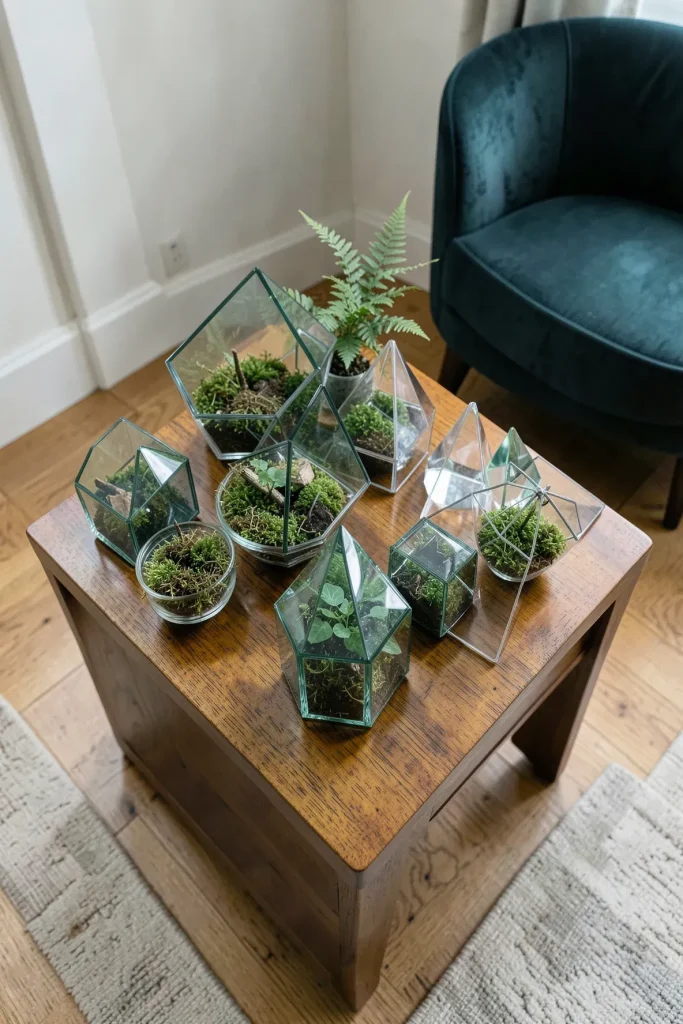
Glass terrariums can bring the appearance of a miniature landscape into an otherwise empty corner. Choose a glass bowl, jar, or geometric terrarium and fill it with suitable small plants, moss, or humidity-loving varieties. Placing the terrarium on a low side table makes the miniature garden easy to view from above and adds a delicate decorative element to the room.
Single Large Potted Monstera as a Focal Point
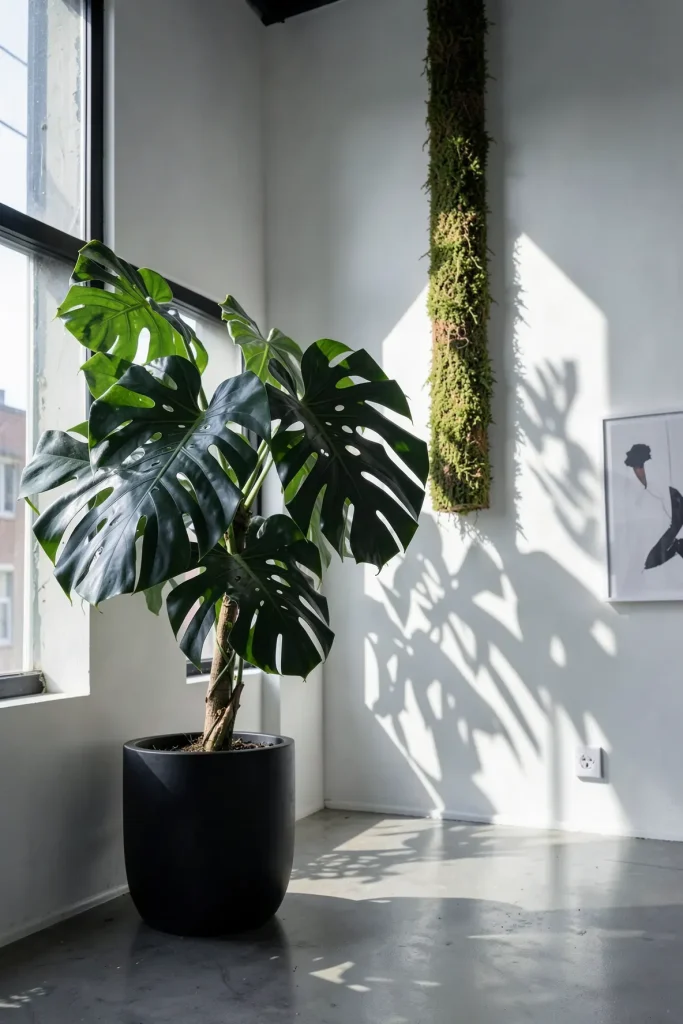
A single large plant can sometimes make a stronger visual statement than a collection of smaller ones. A Monstera Deliciosa, with its broad split leaves, can fill an otherwise empty corner and become an instant focal point. Select a sturdy planter that complements your room’s color scheme. As the plant grows, a suitable support such as a moss pole can help it climb while keeping its growth organized.
Vintage Metal Bar Cart Reimagined as a Mobile Garden
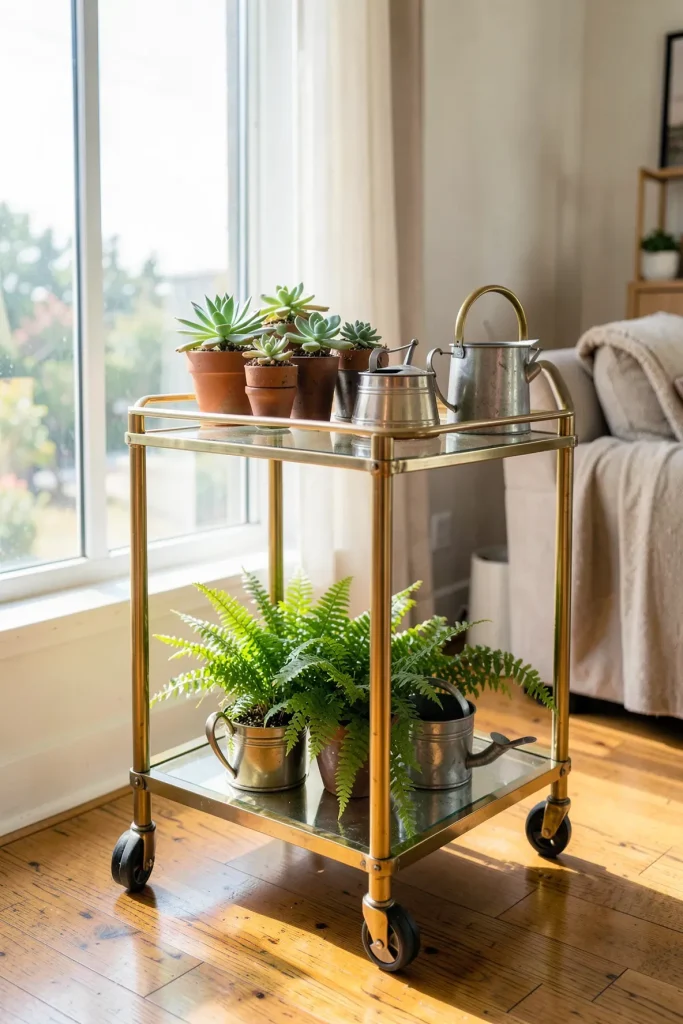
Repurposing a vintage metal bar cart as a plant display provides both style and flexibility. Because the cart can be moved, you can position plants closer to a suitable window when needed and return them to the corner afterward. Use different levels to separate plants according to their light preferences. The wheels also make it easier to move your collection when watering, cleaning, or rearranging the room.
Industrial Pipe Shelving for Trailing Vines
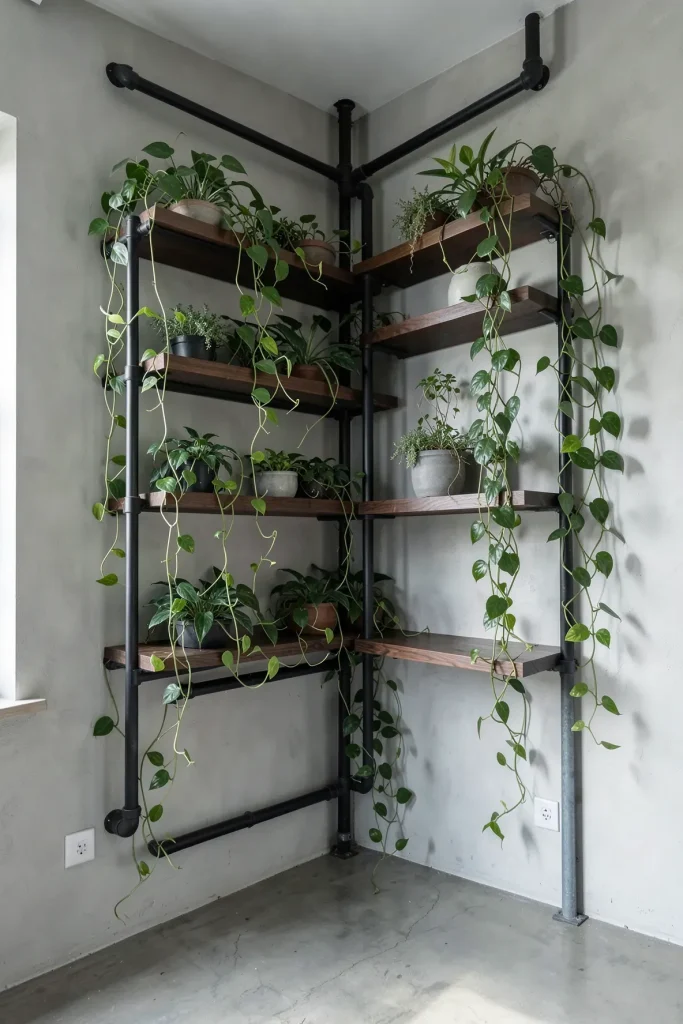
Industrial pipe shelving combines dark metal with wooden boards to create a sturdy and stylish home for plants. This type of plant shelf ideas works particularly well with trailing varieties such as Pothos and Heartleaf Philodendron. As the vines grow, you can guide them around the framework to create a dramatic, living-wall effect. The darker materials also provide an attractive contrast against bright green foliage.
Ceramic Pedestal Stands for Architectural Cacti
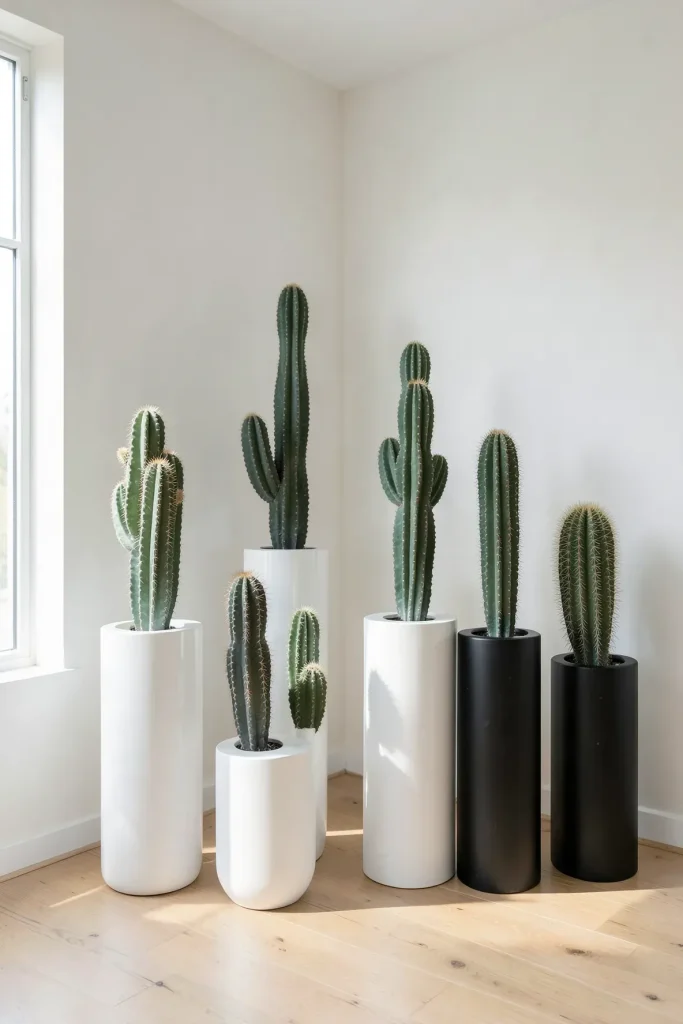
Cacti often have distinctive shapes that can be overlooked when placed directly on the floor. A ceramic pedestal stand raises them closer to eye level, allowing their unique forms to become part of the room’s decor. Elevating the plants can also help keep them away from areas where pets or young children might accidentally touch them. A simple pedestal allows the cactus and its planter to remain the main focus.
Corner Bench with Integrated Planter Boxes
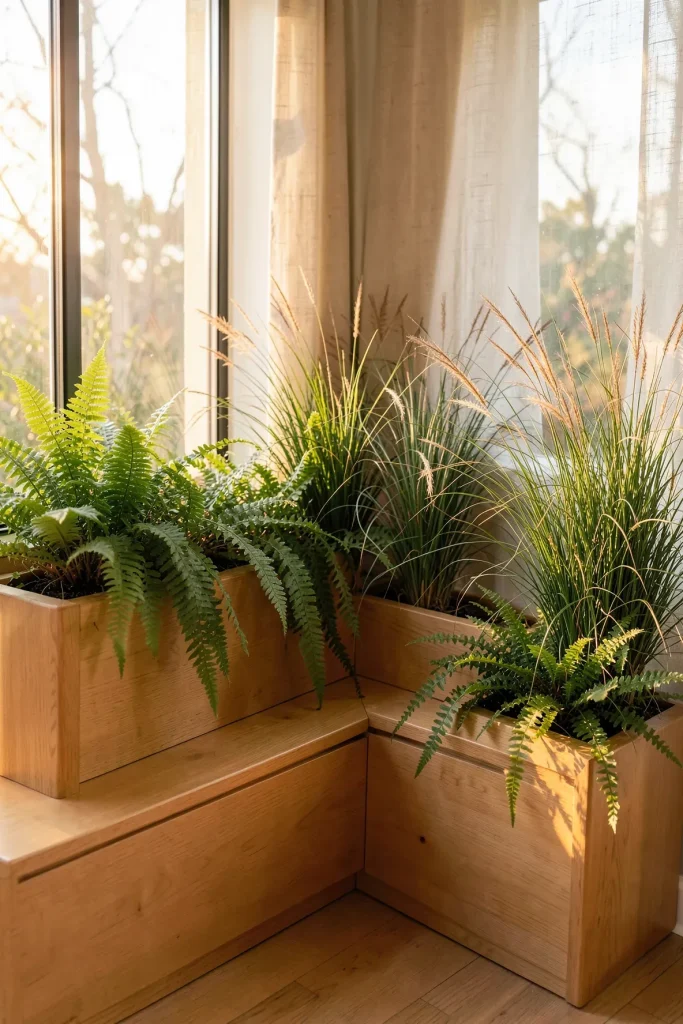
A corner bench can combine seating and greenery in one practical feature. Some designs include built-in planter compartments, while separate planter boxes can be incorporated beside or beneath the bench. Tall grasses, leafy plants, or full ferns can create a natural backdrop around the seating area. This arrangement is especially useful when you want to make a corner feel both functional and connected to nature.
Hanging Branch with Suspended Air Plants
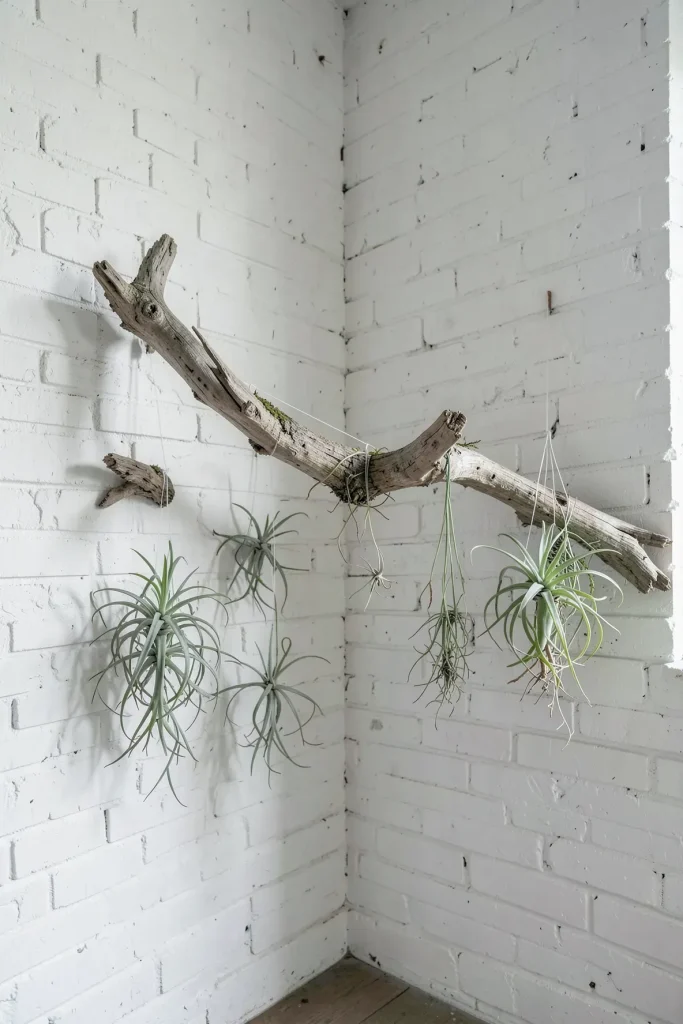
A sturdy dried branch can become a creative natural framework for displaying air plants. Secure the branch horizontally across the corner and suspend Tillandsia plants from it using appropriate wire or transparent line. Because air plants do not require traditional soil, the arrangement remains relatively lightweight and visually clean. Regular care appropriate for the plants can help keep this unusual display healthy and attractive.
Mid-Century Modern Plant Stands with Tapered Legs
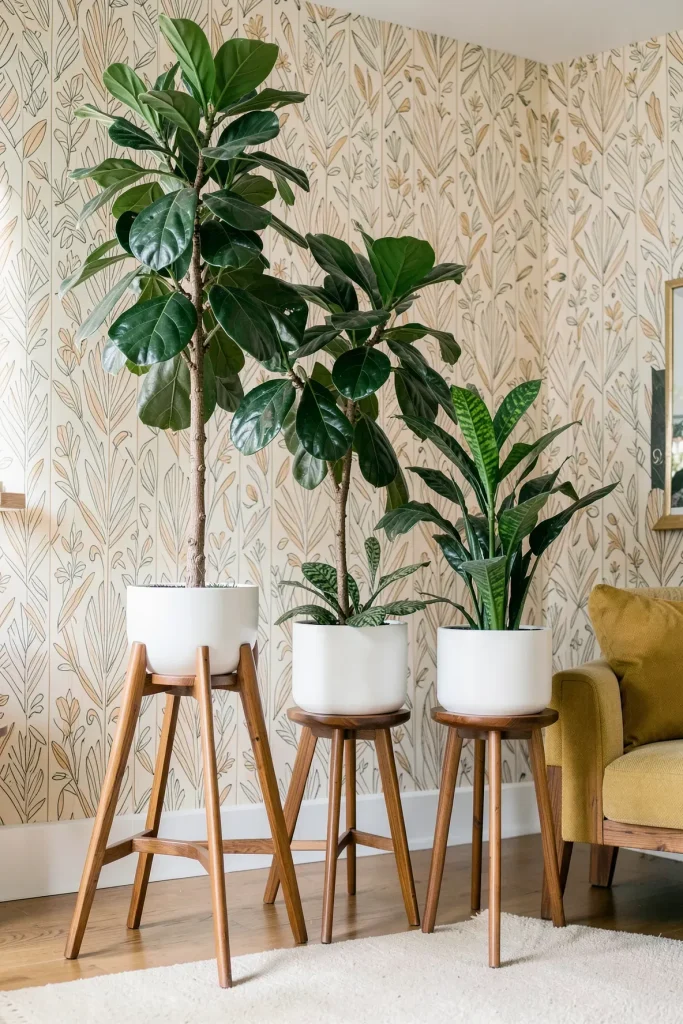
Mid-century modern plant stands are a classic choice for a plant corner living room. Their slim, angled legs add height without making the arrangement appear bulky. They are especially effective for upright varieties such as Rubber Trees and ZZ Plants. Pairing a wooden stand with a simple ceramic pot creates a timeless combination that can work with many different interior styles.
Window Sill Herb Garden in Matching Stone Jars
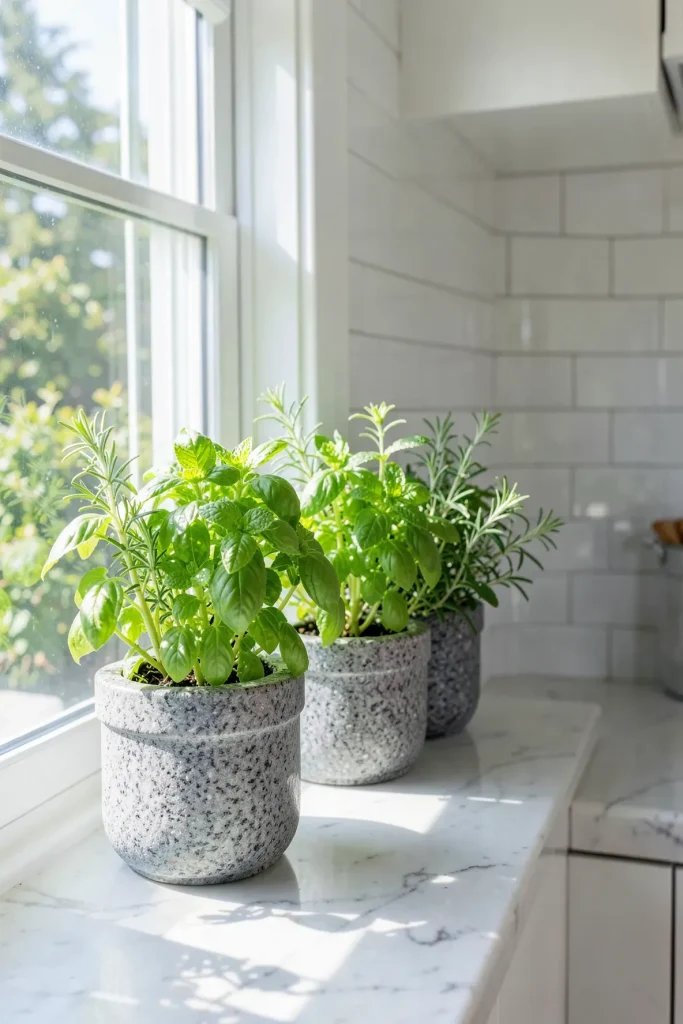
A sunny kitchen or dining room window can provide an ideal location for a small herb garden. Place herbs such as basil, mint, and rosemary in matching stone jars to create a neat and coordinated display. Using containers with a similar appearance helps prevent the area from looking cluttered. This arrangement is also practical because fresh herbs remain within easy reach while preparing meals.
Tall Fiddle Leaf Fig in a Minimalist Concrete Pot
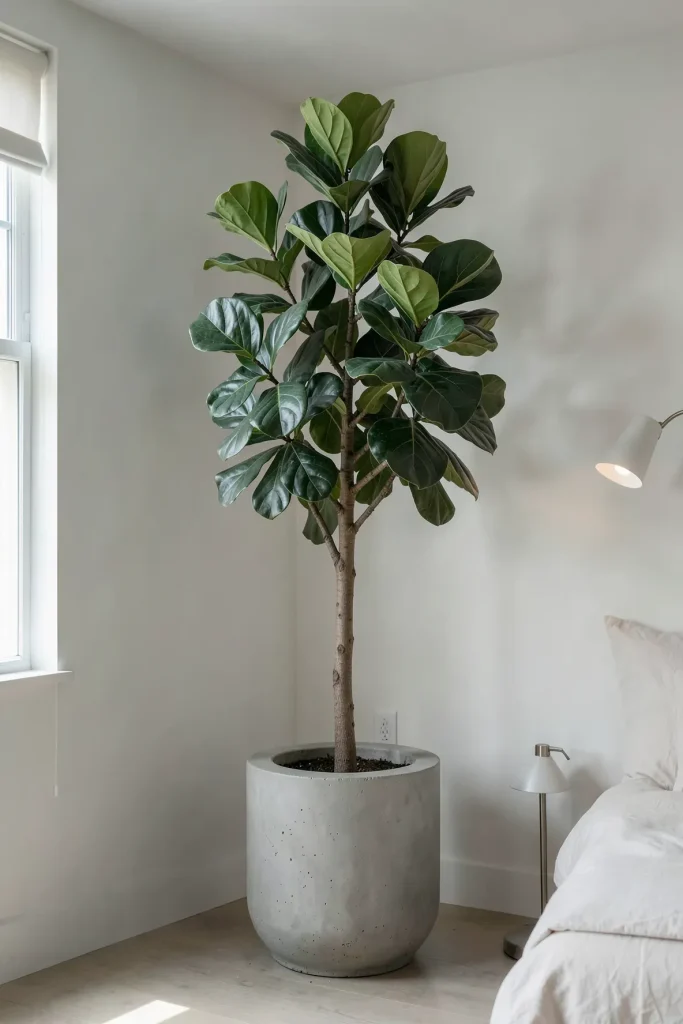
A Fiddle Leaf Fig can make a dramatic statement with its tall growth and large, violin-shaped leaves. Place it in a sturdy concrete planter to provide a stable foundation and reduce the risk of tipping. The neutral gray tone of concrete pairs naturally with rich green foliage. This combination can work especially well in a plant corner bedroom where a simple, calming, and natural aesthetic is desired.
Climbing Ivy on a Narrow Bamboo Trellis
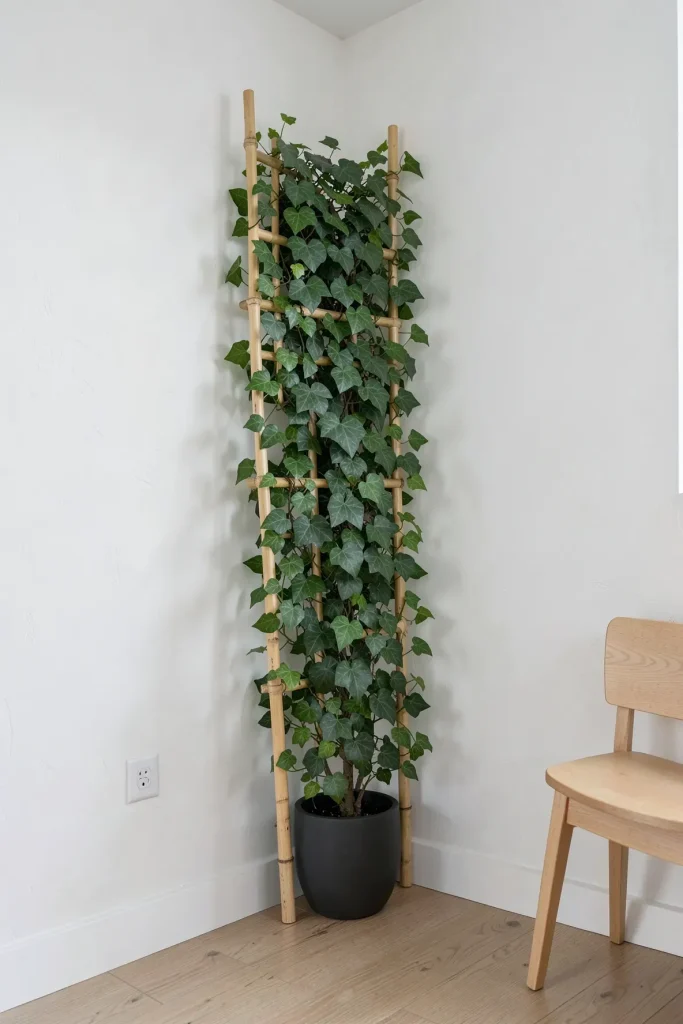
If you are working with a particularly narrow corner, a bamboo trellis can help direct plants upward rather than allowing them to spread across the floor. Plants such as English Ivy or Jasmine can be trained around the bamboo supports as they grow. The result is a tall column of greenery that requires very little floor space. It is a simple solution for adding vertical interest without bringing in another large piece of furniture.
Repurposed Wooden Crate Stack for a Rustic Look
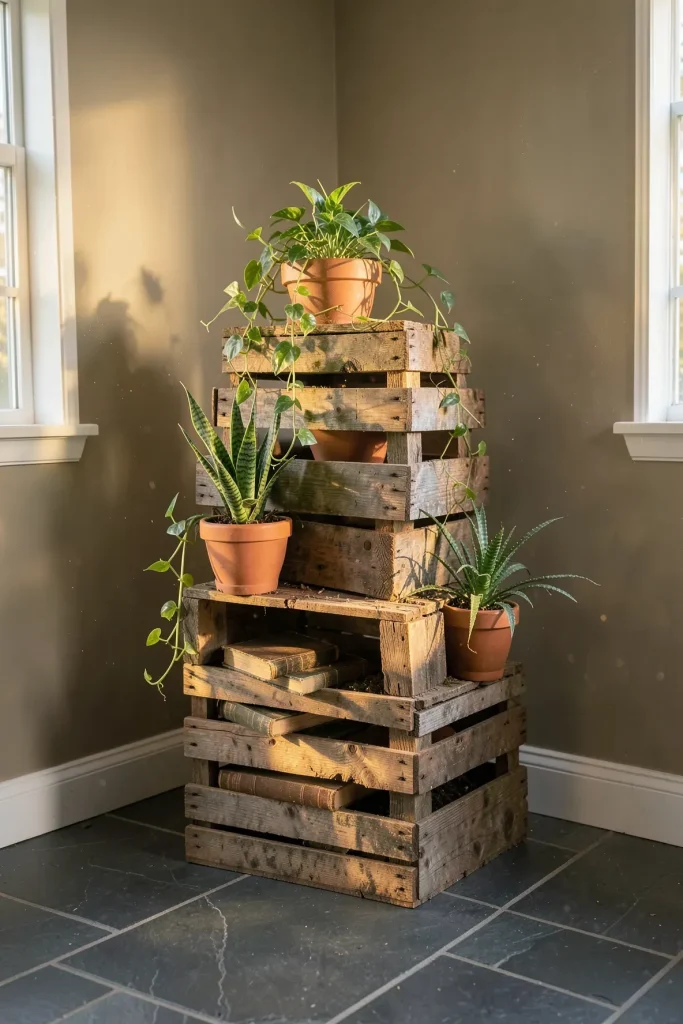
Old fruit or wine crates can be repurposed into a charming and flexible plant display. Stack them in different arrangements, turning some crates sideways to create compartments for smaller pots while using the upper surfaces for larger plants. Their aged wood brings warmth and rustic character to the corner. You can also stain, paint, or leave the crates natural depending on the style of your room.
Floating Corner Shelves for Small Succulents
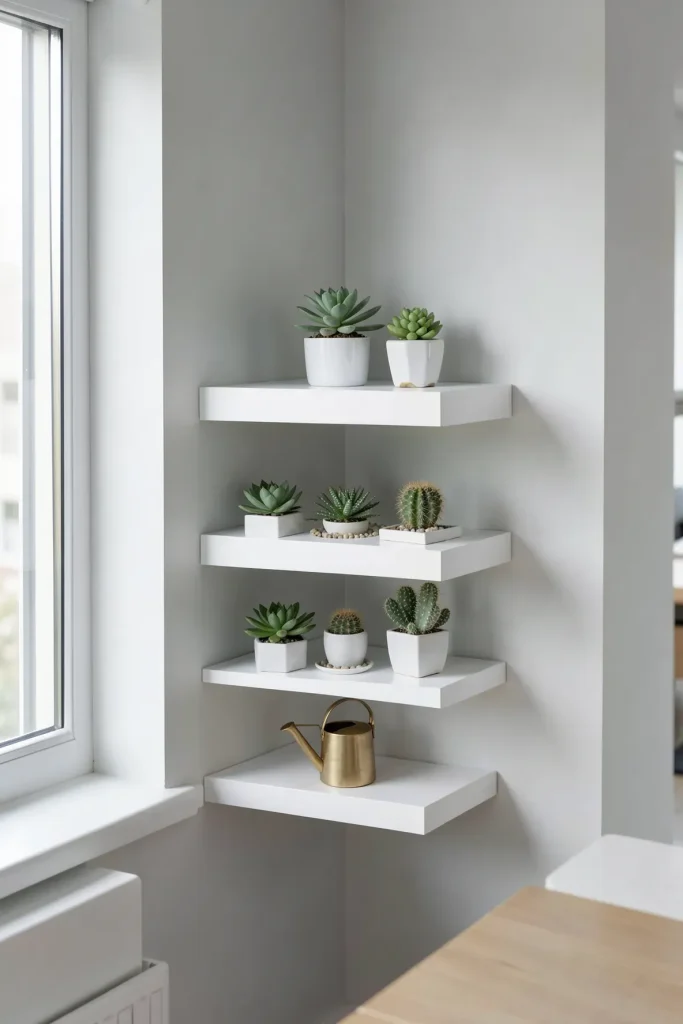
Floating corner shelves are designed to make use of otherwise unused 90-degree wall spaces. They work especially well for small collections of succulents and cacti because these plants generally take up little room and grow relatively slowly. Several small pots can fit across the shelves, turning an overlooked corner into an attractive focal point without using valuable floor space.
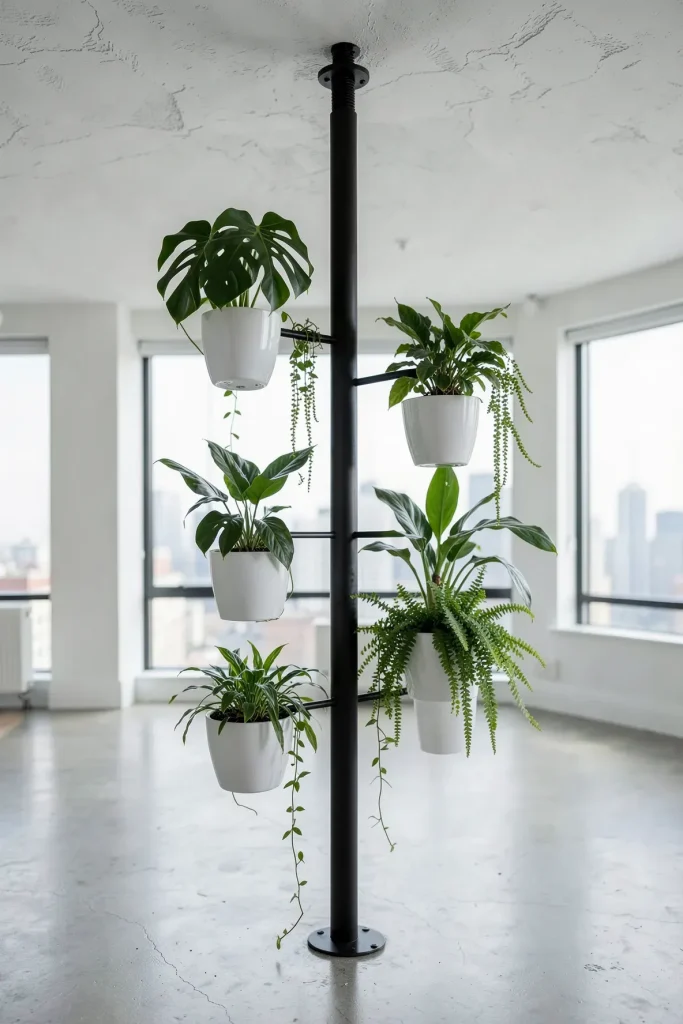
Floor-to-Ceiling Tension Pole Plant Stand
A floor-to-ceiling tension pole is a practical option for renters or anyone who wants to avoid drilling into walls. The pole is secured between the floor and ceiling, with adjustable arms that provide platforms for multiple pots. Several plants can be arranged vertically within a very small footprint. This makes it one of the most space-efficient indoor plant shelf ideas for compact rooms.
Large Mirror Placement Behind a Group of Ferns
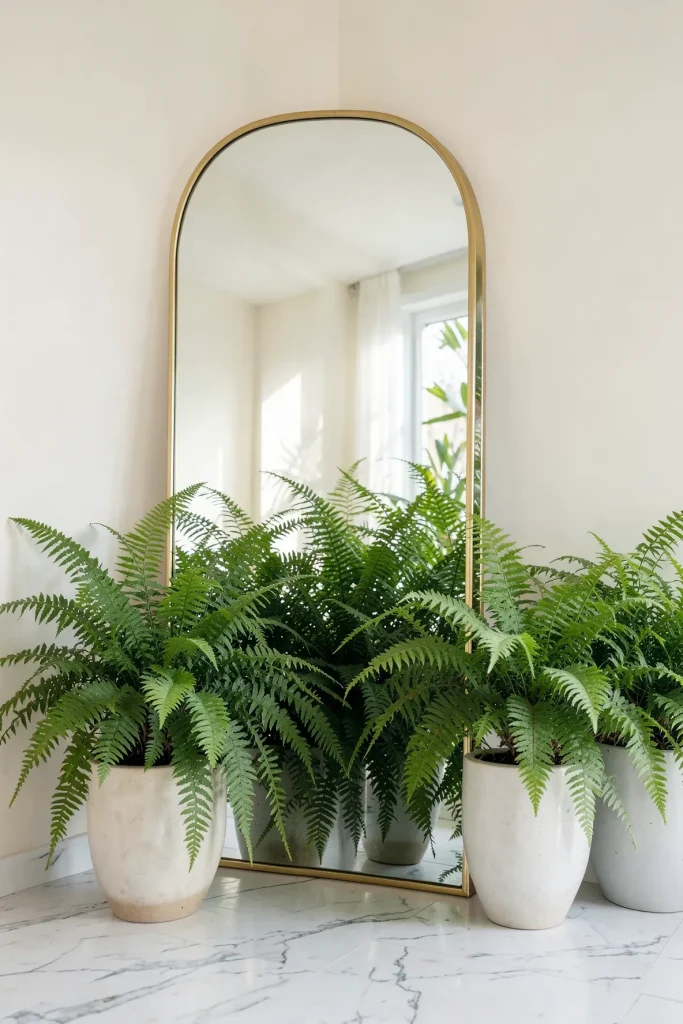
Positioning a large mirror behind a collection of plants can make the display appear fuller while reflecting available natural light. Ferns are especially effective because their delicate fronds create an attractive reflection and add softness to the arrangement. The mirror can also help distribute light around the room, making the corner and surrounding space feel brighter and more open.
Mismatched Vintage Pitchers Used as Vases
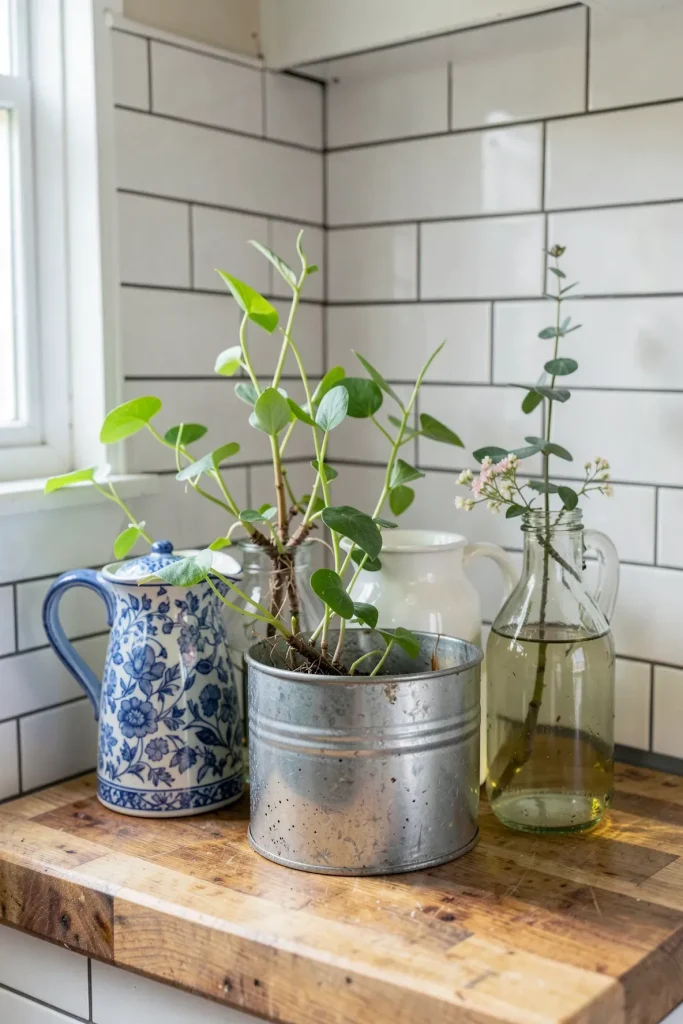
Traditional plant pots are not the only option for creating an attractive plant room. Vintage ceramic pitchers, old metal containers, and milk cans can be repurposed as distinctive plant holders. Their different shapes and finishes create a collected, personal appearance. For containers without drainage holes, use an appropriate inner pot or drainage solution rather than allowing excess water to collect inside the decorative vessel.
Low Coffee Table Dedicated to a Moss Garden
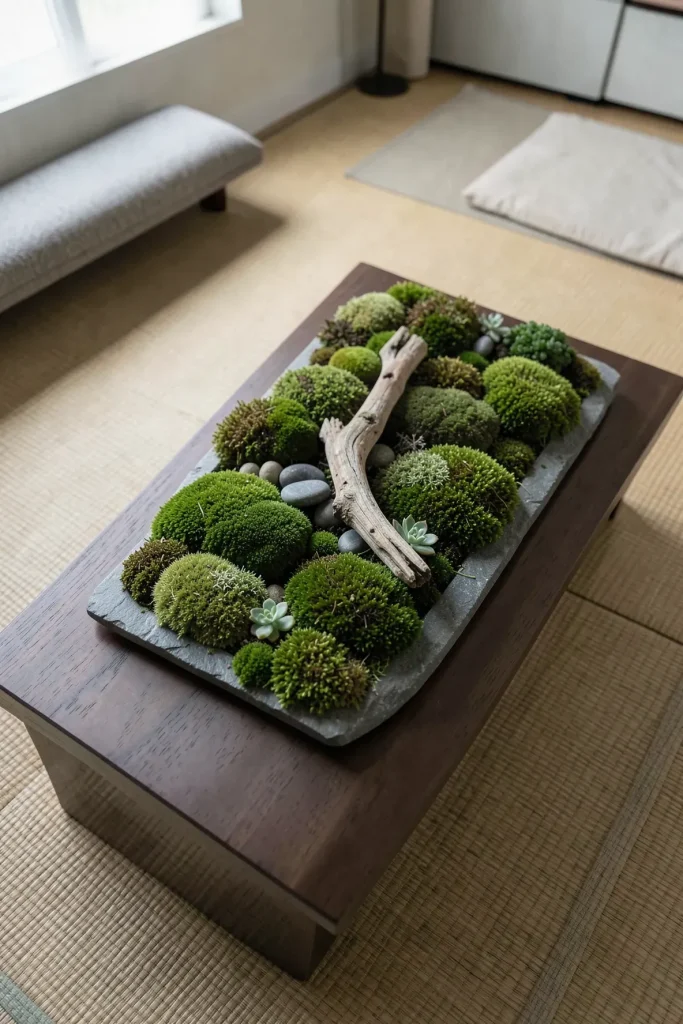
A low coffee table can be transformed into a miniature moss garden or a display for small, low-growing plants. Arrange shallow containers with moss, stones, driftwood, or other natural elements across the tabletop to create a peaceful landscape. Keeping the display close to the table surface maintains an uncluttered appearance and creates a calm, nature-inspired atmosphere without blocking views across the room.
Wrought Iron Baker’s Rack for Full Sun Plants
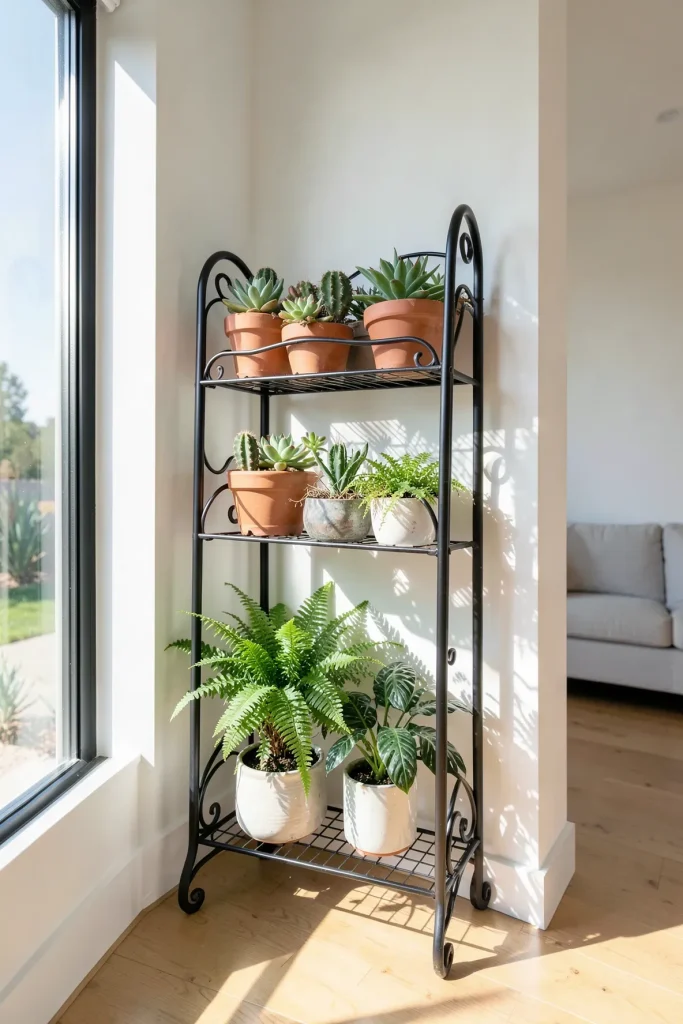
A wrought iron baker’s rack provides several open shelves, allowing sunlight to reach plants at different levels. It is particularly useful for a bright corner where you want to display a larger collection of greenery. The sturdy frame can support heavier pots, while plants with higher light requirements can be positioned toward the top and more shade-tolerant varieties placed on lower shelves.
Hanging Propagation Station with Glass Tubes
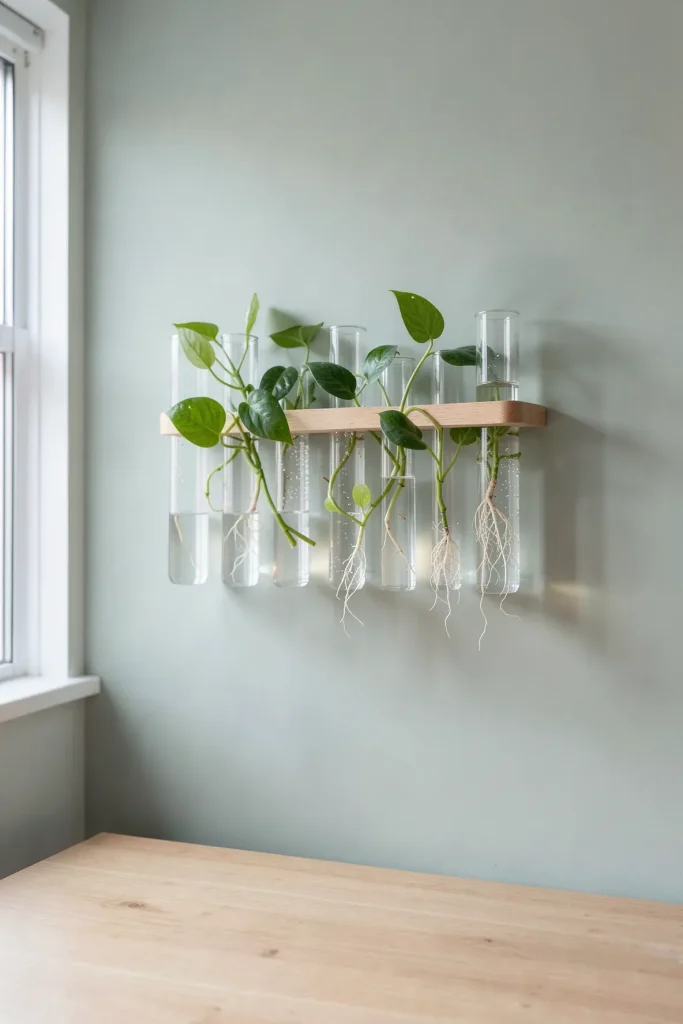
A wall-mounted propagation station adds an interactive element to your plant nook. Install a simple wooden rack fitted with glass tubes, then place suitable plant cuttings in water so you can observe their root development. Pothos and Tradescantia can work well for this type of display. The transparent containers turn the propagation process into part of the decor while adding a delicate botanical touch to your corner plants indoor decor.
Built-in Window Seat Surrounded by Pothos
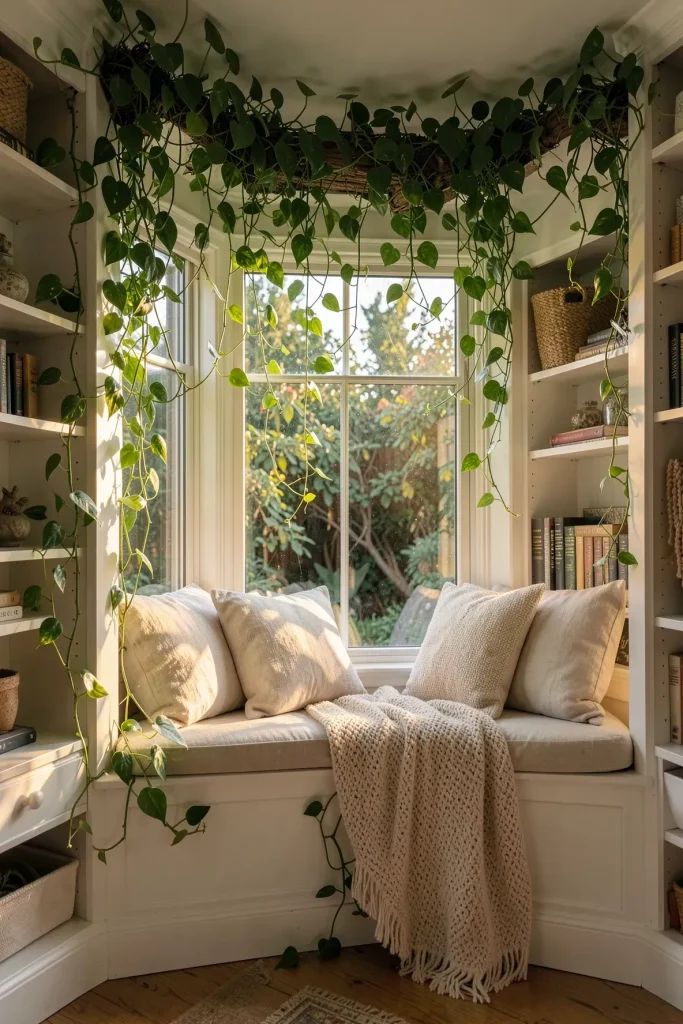
A window seat can become the foundation for a cozy, jungle-inspired corner. Place trailing plants on nearby shelves, ledges, or upper surfaces so their vines cascade around the seating area. Pothos is a popular choice because of its trailing growth and adaptability. The surrounding greenery can make the window seat feel more enclosed and relaxing, creating an inviting place to read or unwind.
Antique Step Stool for a Compact Plant Nook
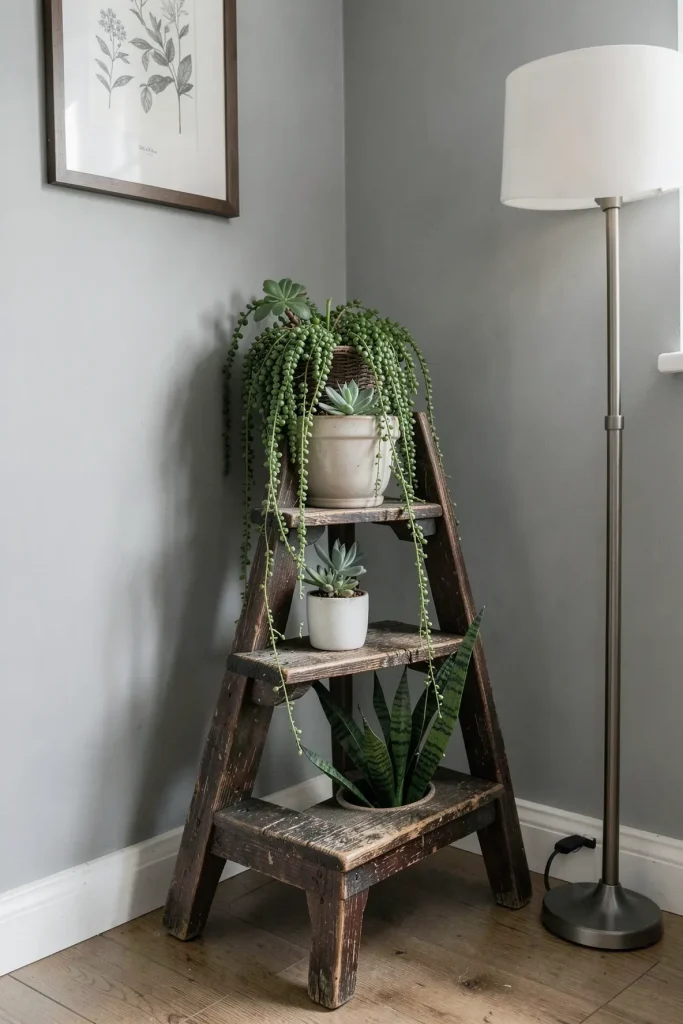
An antique wooden or metal step stool can provide several levels for displaying plants without taking up much room. Place a trailing variety on the highest step so its leaves can spill over the sides, then arrange smaller pots on the lower levels. This creates visual height and layering without requiring a dedicated plant stand. The stool can also be moved easily whenever you want to refresh the room’s layout.
Corner Cabinet with Internal Grow Lights
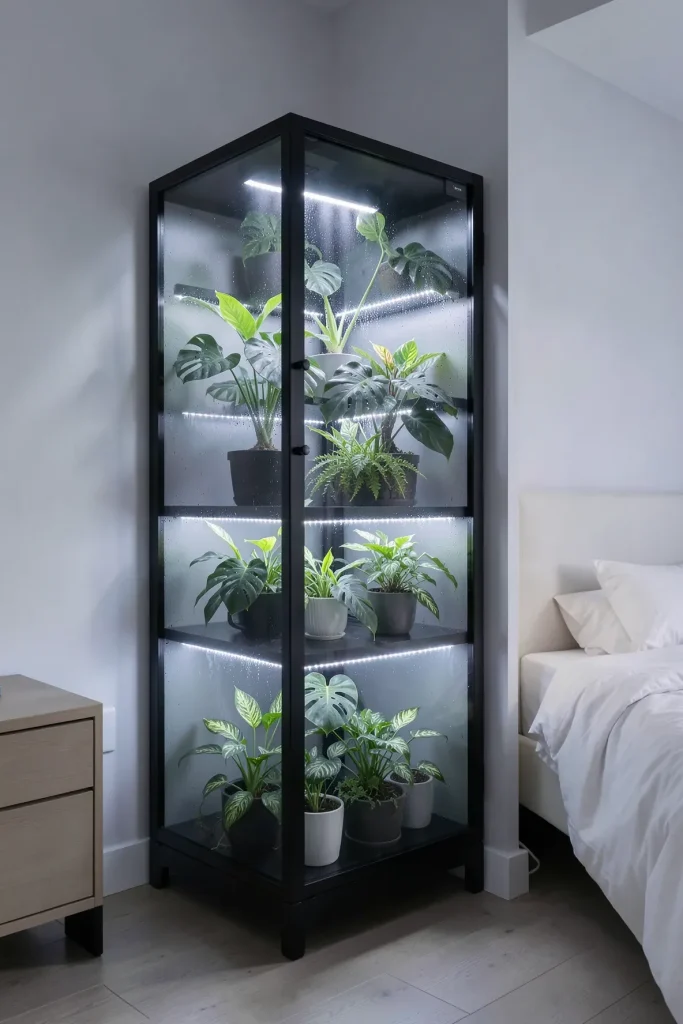
A corner with limited natural light does not necessarily have to remain without plants. A cabinet fitted with suitable LED grow lights can provide additional illumination for plants that can thrive under those conditions. Shelving inside the cabinet allows you to organize several plants vertically. This can be particularly useful in a plant corner bedroom where windows provide limited sunlight, while the enclosed design can also help create a more controlled growing environment.
Large Clay Urn with Ornamental Grasses
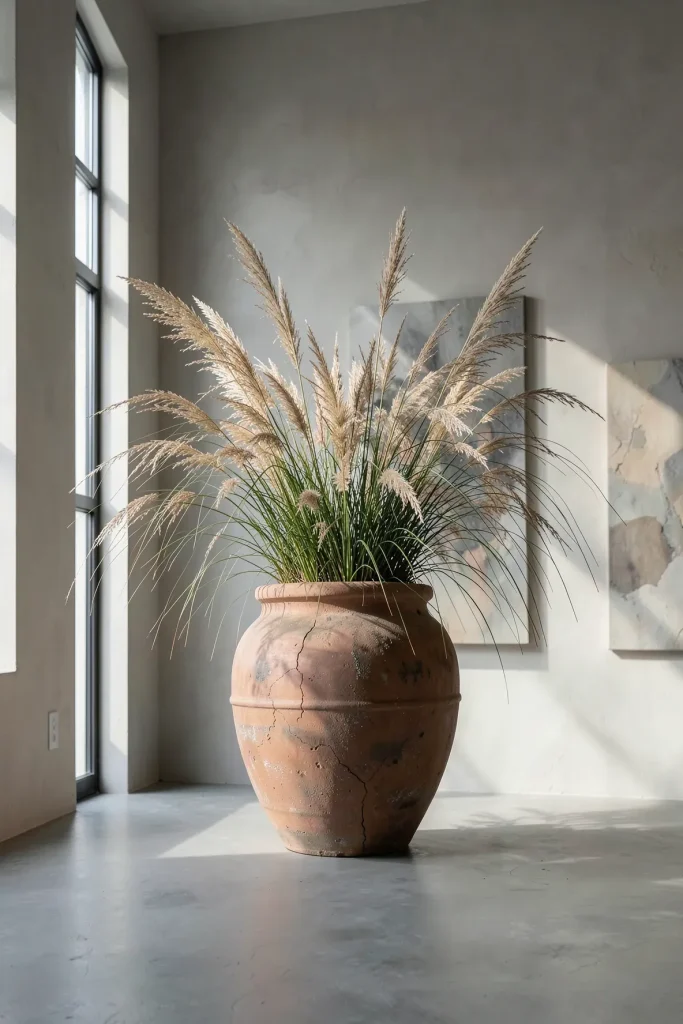
An oversized clay urn can bring the character of an outdoor garden into an interior space. Fill it with tall ornamental grasses or a suitable large plant to create a strong vertical feature. The weight and textured surface of the clay give the arrangement a grounded appearance. In a minimalist room, one large urn can serve as a simple but impactful piece of corner plants indoor decor.
Shadow Box Frames for Pressed Botanical Art
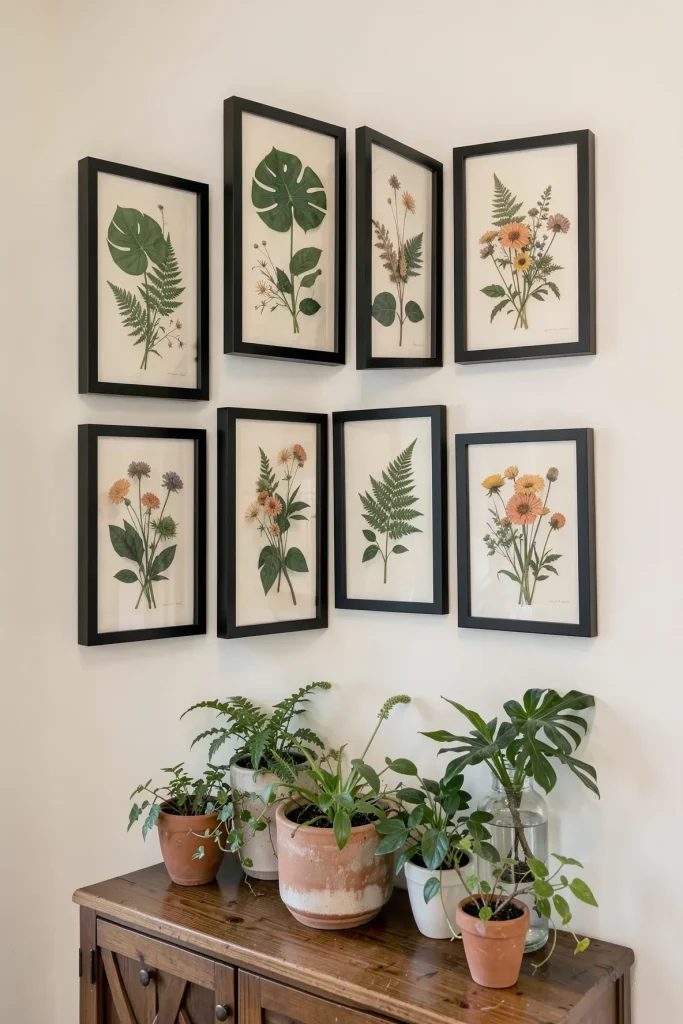
Your plant corner does not have to contain only living greenery. Shadow boxes filled with pressed leaves, dried flowers, or preserved botanical pieces can extend the natural theme onto the walls. These framed displays add texture and fill empty vertical space without requiring additional plant care. They can also provide a creative way to preserve leaves or flowers from plants that have naturally shed them.
Circular Rug Base for a Grouped Container Garden
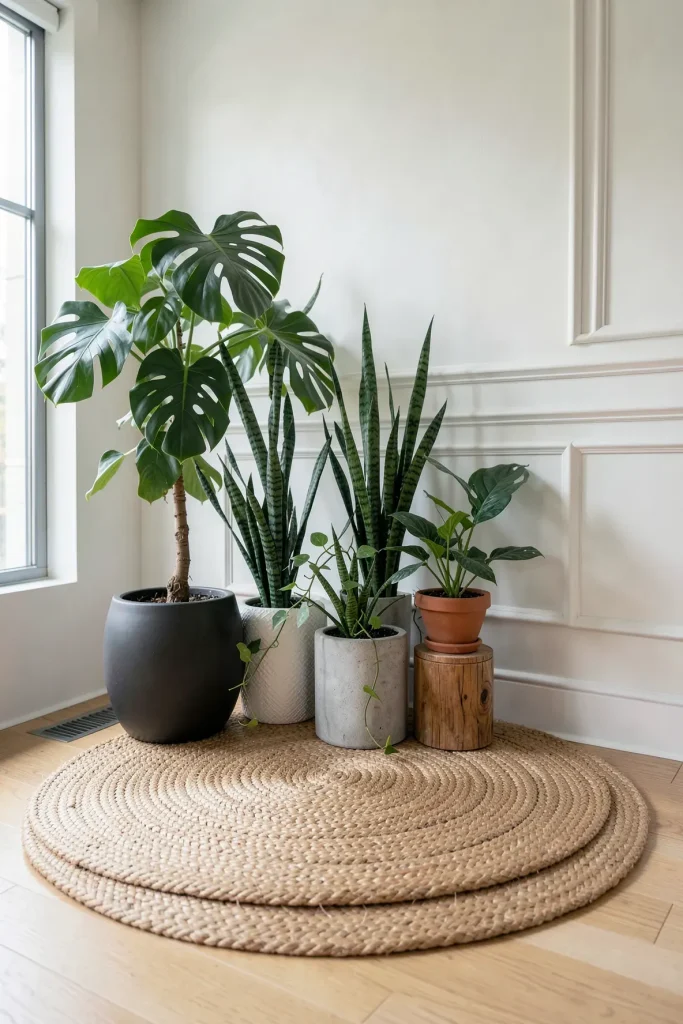
A small circular rug can help visually define a dedicated plant corner. Arrange several pots of different heights, shapes, and sizes on top of the rug to create a cohesive grouping. The rug establishes a clear boundary, making the arrangement feel intentional rather than like a random collection of containers. Natural materials such as jute or sisal can complement the greenery and reinforce an earthy aesthetic.
Velvet Armchair Paired with a Tall Bird of Paradise
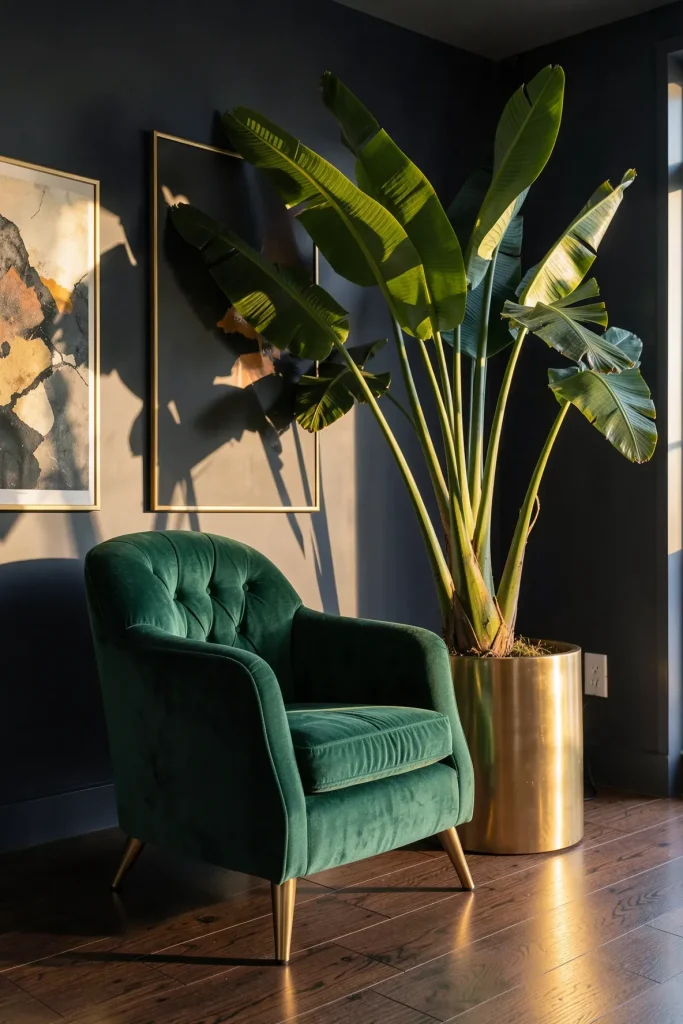
Create a comfortable reading or relaxation spot by pairing a plush velvet armchair with a tall Bird of Paradise. Its large, paddle-shaped leaves can extend around the chair and create a lush, private atmosphere. The contrast between the soft texture of velvet and the bold foliage gives the corner an elegant appearance. This combination can be an especially effective finishing touch for a stylish plant corner living room.