

A tree can have perfectly spaced lights and a carefully edited ornament palette and still look unfinished at the very top. The topper is where the eye lands last, and it quietly sets the tone for everything below it. That’s why the most polished Christmas tree topper ideas rarely depend on a lone plastic star. Designers lean on scale, texture, and one confident material, whether that’s a cascading velvet bow, a spray of dried grasses, or a hand-turned wood spire.
The 22 ideas below work for real and artificial trees, apartment-sized pencil trees and full-height family trees, and budgets that range from a craft-store afternoon to a one-of-a-kind splurge. Each includes practical notes on attaching it, pairing it with your ornaments, and avoiding the small mistakes that leave a topper looking out of proportion.
1. Let a Velvet Bow Spill Down One Side of the Tree
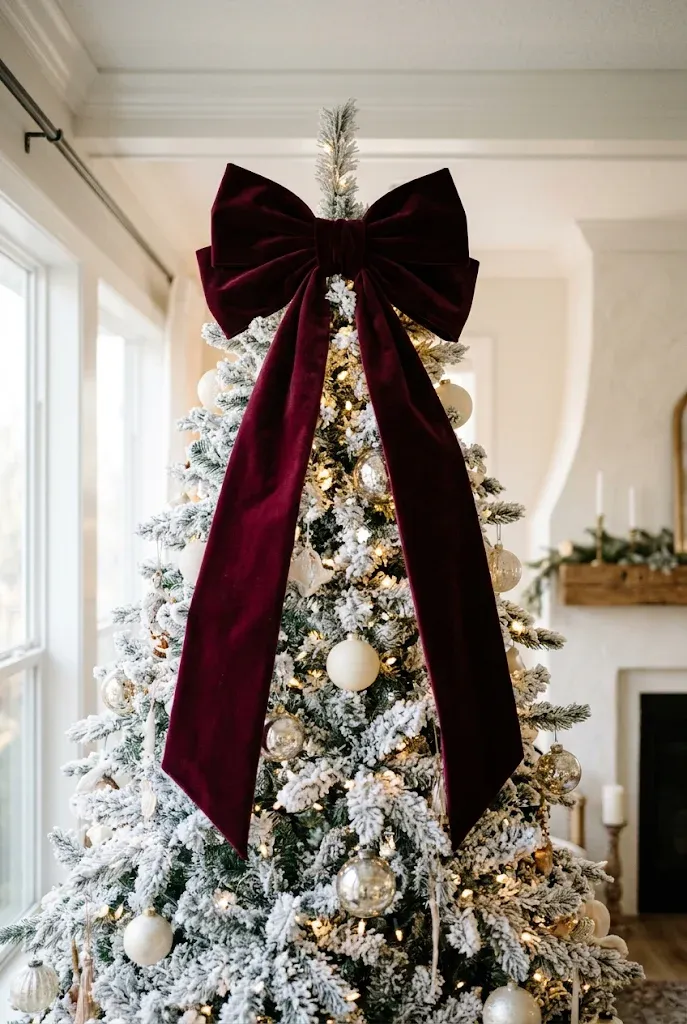
A wide velvet bow with long tails is one of the fastest routes to a boutique-styled tree, because it adds volume, color, and movement in a single gesture. Build the bow fuller than feels necessary; once it’s on a six- or seven-foot tree, the loops look smaller than they did on the table. Let two tails drop down the front and tuck them between branches so they follow the slope of the tree instead of hanging straight. Deep burgundy suits a flocked tree, while forest green reads quietly on a classic one.
| Ribbon | Effect | Best Fit |
|---|---|---|
| Velvet | Soft sheen, heavy drape | Traditional or moody palettes |
| Wire-edged taffeta | Crisp loops that hold their shape | Taller trees, bolder bows |
| Satin | Glossy, lightweight movement | Formal, tone-on-tone schemes |
If you’re new to bow-making, wire-edged ribbon is more forgiving, since you can reshape the loops after the bow is attached.
2. Fan Out Dried Pampas and Bleached Ferns
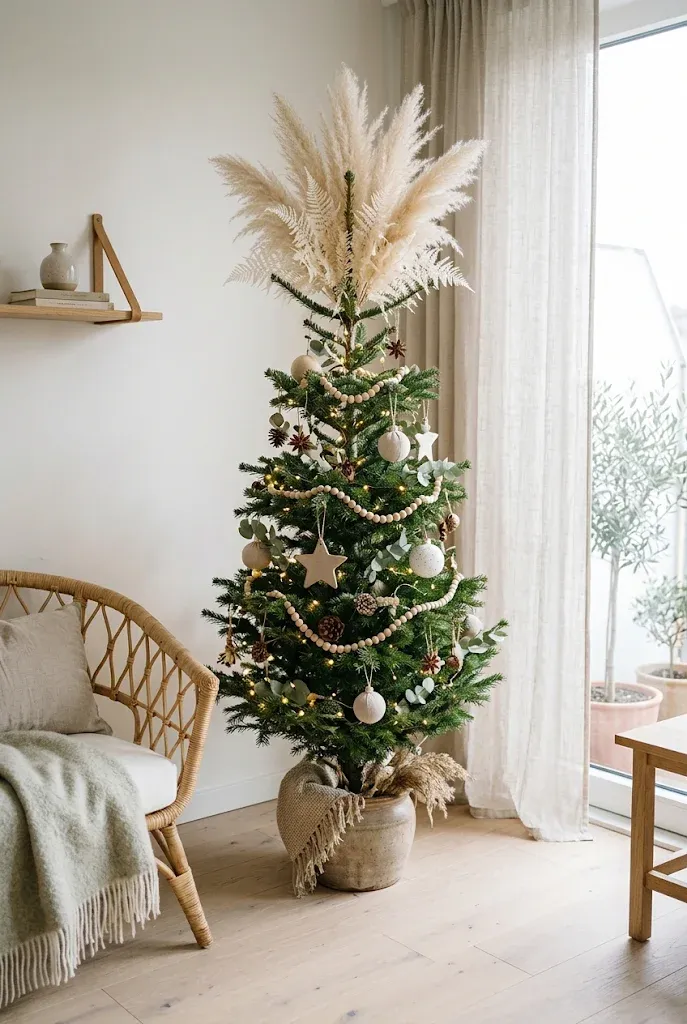
A loose, feathery burst of dried botanicals gives a tree the relaxed, collected look you see in design-forward homes. The mix is simple:
- Five to seven pampas plumes, cut at staggered heights so the top looks natural rather than trimmed
- Two or three bleached or dried ferns for a finer, lacier texture
- A few stems of bunny tail grass to fill gaps
- Floral wire to bundle everything at the base
Wire the bundle to the top branch, then fan the stems outward and slightly backward so the shape reads from the room and not only from the front. This look pairs best with warm white lights, wood beads, and linen or ceramic ornaments. Shake the plumes outdoors first to release loose fluff, and keep dried stems clear of hot bulbs; LED lights are the safer choice here.
3. Choose a Mercury Glass Finial in Antique Silver
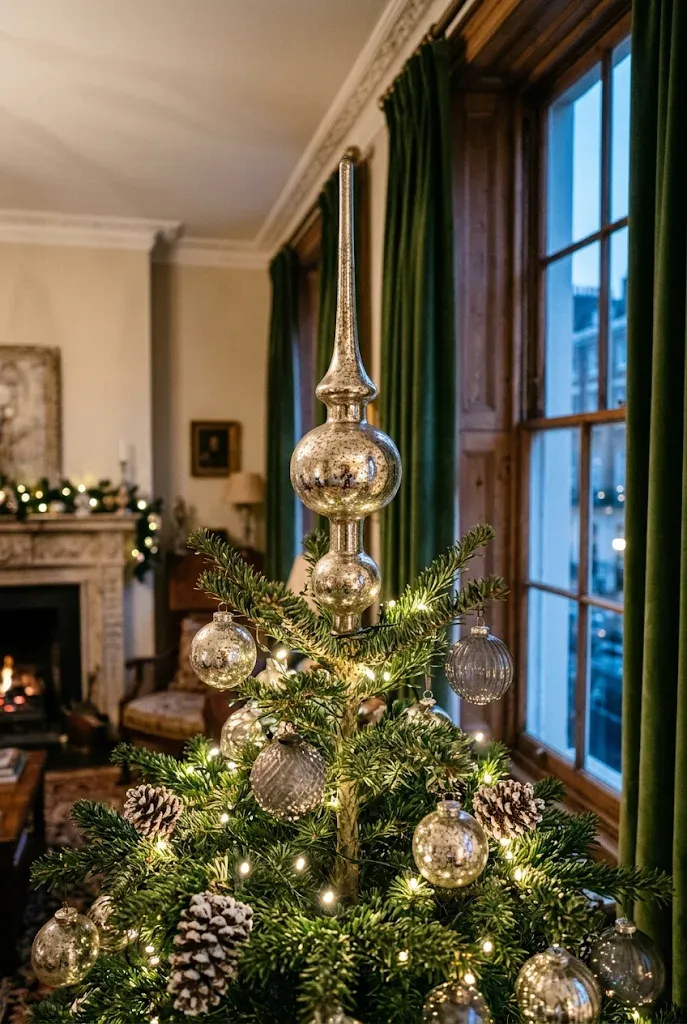
Mercury glass has a soft, mottled finish that looks like it’s been handed down, and a tall finial in that style lends a tree a vintage, collected feel without any fuss. The spire shape draws the eye upward, so it’s especially flattering on trees that feel a little squat. Choose one with a long, tapered neck so it slips over the top branch and stands straight, then echo the finish with a handful of silver and smoky-glass ornaments lower down.
Warm white lights are kinder to antique silver than cool white, which can make the finish feel flat. Keep the rest of the palette restrained, such as cream, soft green, and a little pewter, so the finial doesn’t compete.
Editor’s Note: Glass is heavier than most plastic toppers. On a slim or flexible top branch, check that the tip stays upright with the finial on, and stabilize it with a discreet loop of floral wire if it leans.
4. Top a Pencil Tree With a Slim Brass Cutout Star
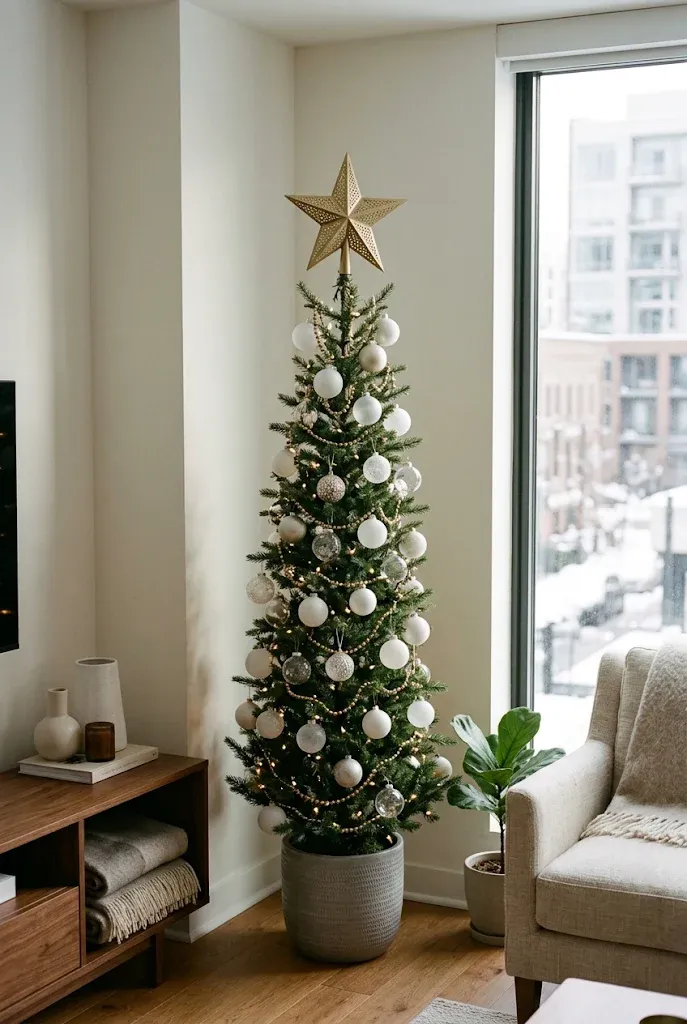
Best For: Pencil trees, narrow corners, small apartments
Investment: Moderate
Visual Effect: A crisp, graphic silhouette with light passing through
A pierced brass star looks more like a sculptural object than a decoration, which is exactly why it feels designed. The cutouts keep the star visually light, so it won’t overwhelm a slender tree the way a solid, oversized topper can. Aim for a width that’s in proportion to the top foot or so of the tree, then position it so the points face straight up and out. Brushed or aged brass sits more comfortably with natural materials than a high-polish finish does.
For a cohesive look, keep ornaments simple and tonal, such as matte white, clear glass, and a few brass beads, and let the star carry the contrast.
5. Build a Fan of Magnolia Leaves and Pearl Sprays
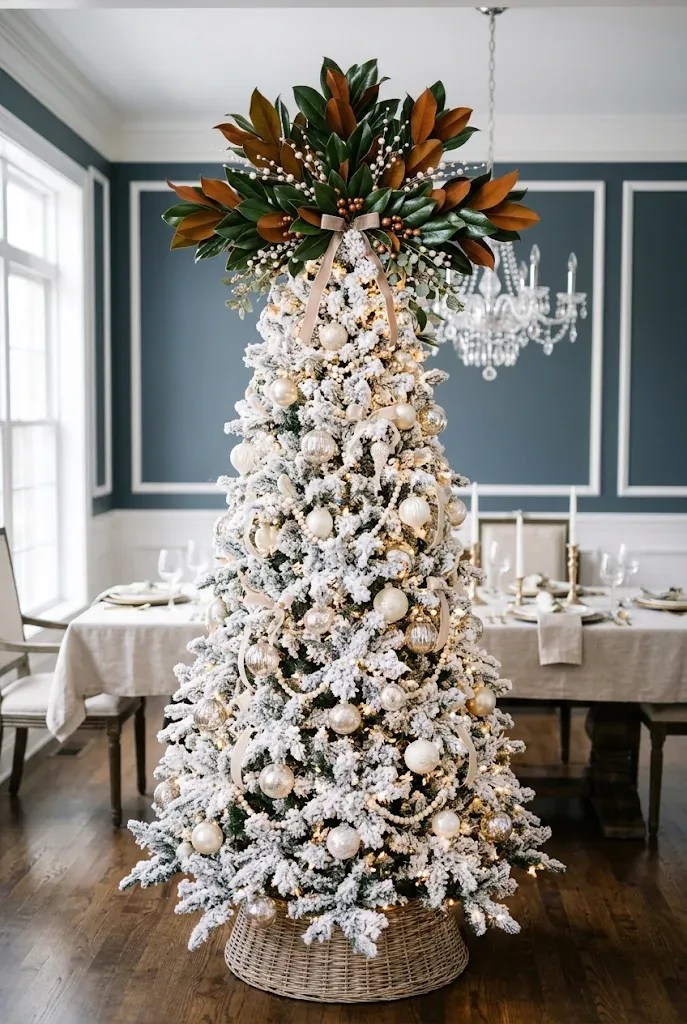
Faux magnolia leaves have a glossy green top and a suede-like, copper or tan underside, which gives a topper dimension from every angle. Here’s a simple way to build one:
- Gather five to seven magnolia stems and wire them together at the base, arranging the leaves into a flat, semicircular fan.
- Tuck in two or three pearl or beaded sprays between the leaves so they catch the light without taking over.
- Anchor the bundle to the top of the tree with floral wire, then bend a few leaves forward to hide the wire.
This topper looks especially rich on a white or flocked tree, where the dark leaves stand out. Pick up the pearl notes with a few ornaments below so the top feels connected to the rest.
6. Fold a Paper Star From Kraft or Vellum
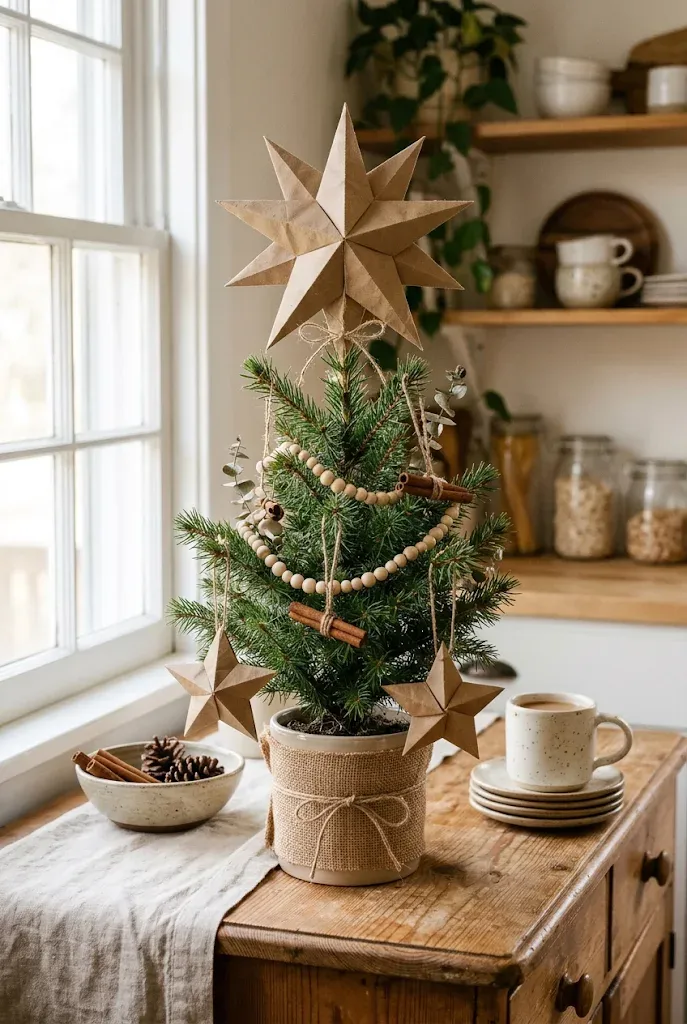
A hand-folded star feels personal and quietly modern, and it’s one of the most budget-conscious ideas on this list. Kraft paper gives a warm, earthy look, while vellum glows softly when lights shine behind it. Choose a heavier weight for kraft so the points hold their shape, and score each fold before creasing for cleaner edges. A flat tool like a bone folder, or even the back of a spoon, helps you press sharp creases.
Tips & Tricks
- Make two or three stars in graduated sizes and hang the smaller ones lower on the tree for a repeated motif.
- Place a warm white LED behind a vellum star rather than a hot incandescent bulb.
- Seal the paper lightly if you want to store it for next year, and keep it flat in a box.
Paper is light, so it suits small and tabletop trees where heavier toppers would tip the tip.
7. Turn to a Wood Spire for Scandinavian Calm
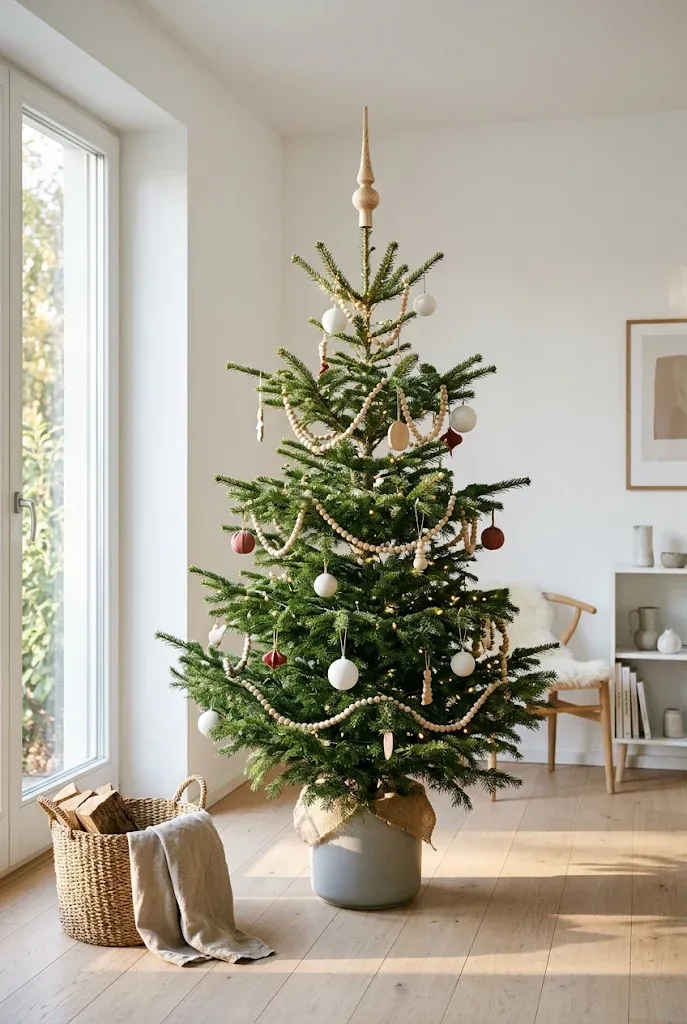
A turned-wood finial in pale ash, birch, or beech gives a tree a quiet, craft-focused look that suits clean-lined and minimalist rooms. The simple, tapering profile echoes the shape of the tree itself, which is why it feels so calm. Pair it with ornaments in matte white, natural wood, and a single accent color such as muted red or deep green.
Do
- Let the wood tone connect with a floor, shelf, or furniture piece in the room.
- Keep surrounding ornaments simple so the grain stays visible.
Don’t
- Match every wood tone exactly; slight variation looks more natural.
- Add a glittery ribbon or heavy ornament cluster right beside it.
8. Dress a Linen Angel With Simple Wings
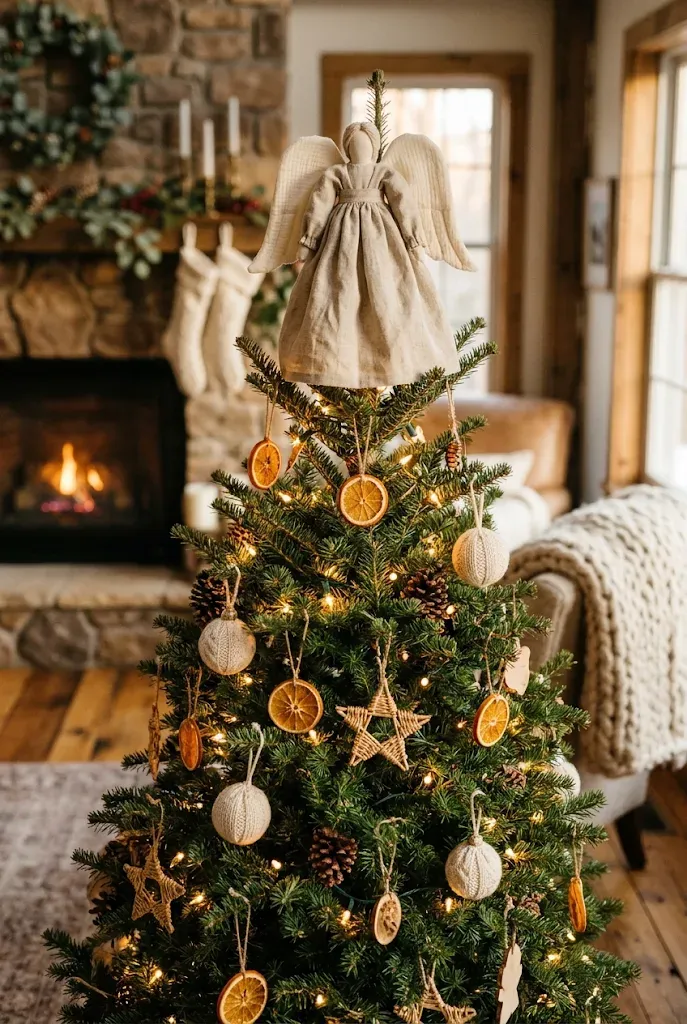
An angel topper can look dated when it’s glossy and heavily decorated, but a softly handmade version in natural linen or muslin feels warm and timeless. Look for a plain, gently gathered gown, understated hair or no detail at all, and wings made from muslin, dried leaves, or soft feathers. The effect is closer to a heirloom doll than a store-bought decoration, which suits tree palettes built around cream, wheat, and sage.
Common Mistake: Choosing a brightly painted angel with metallic trim, which fights a muted ornament palette.
Better Approach: Pick a matte, neutral angel and let a single detail, like a ribbon sash in a deeper tone, tie it to your color scheme.
Secure the angel by sliding its skirt over the top branch and adding a hidden loop of wire at the back.
9. Hang a Rice-Paper Lantern With a Warm LED Glow
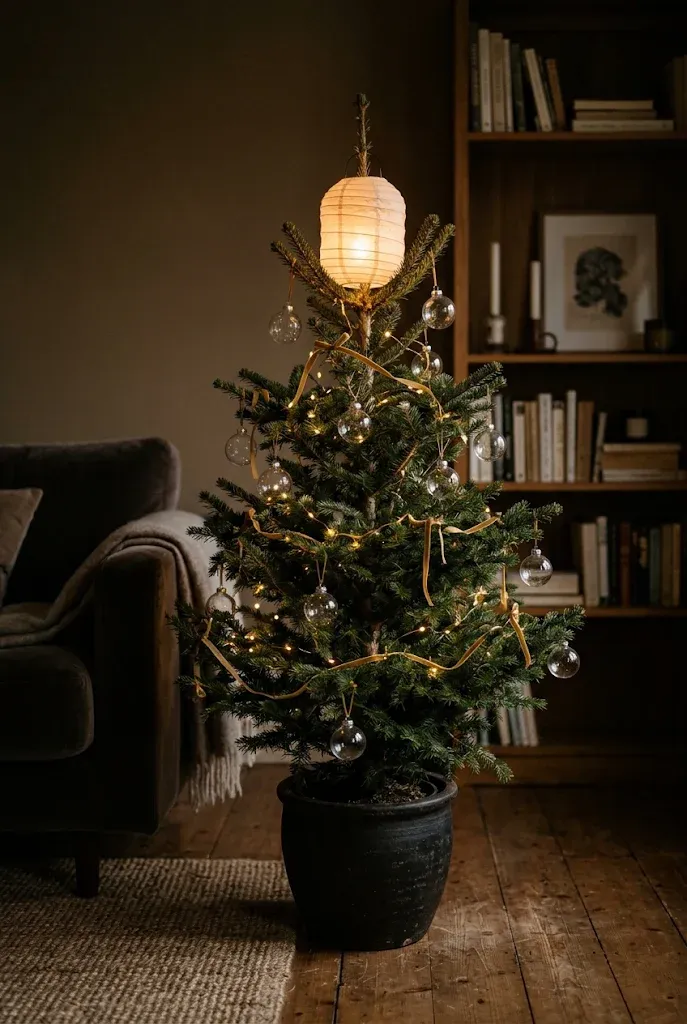
A small paper lantern at the peak turns the top of the tree into a soft light source, which makes the whole tree feel calmer after dark. Use a lantern sized to the tree, roughly in proportion with the top section, and place a battery-powered warm white LED inside instead of anything with a flame. Choose a plain white or cream shade to keep the look clean, or a subtly textured paper for more character.
Because the lantern is lightweight, it works nicely on smaller trees and on trees with thin leaders. Surround it with simple ornaments so the glow remains the star.
Quick Tip: Test the LED before you attach the lantern. It’s much easier to swap a battery on the floor than on a ladder.
10. Anchor a Rattan Starburst on a Coastal or Boho Tree
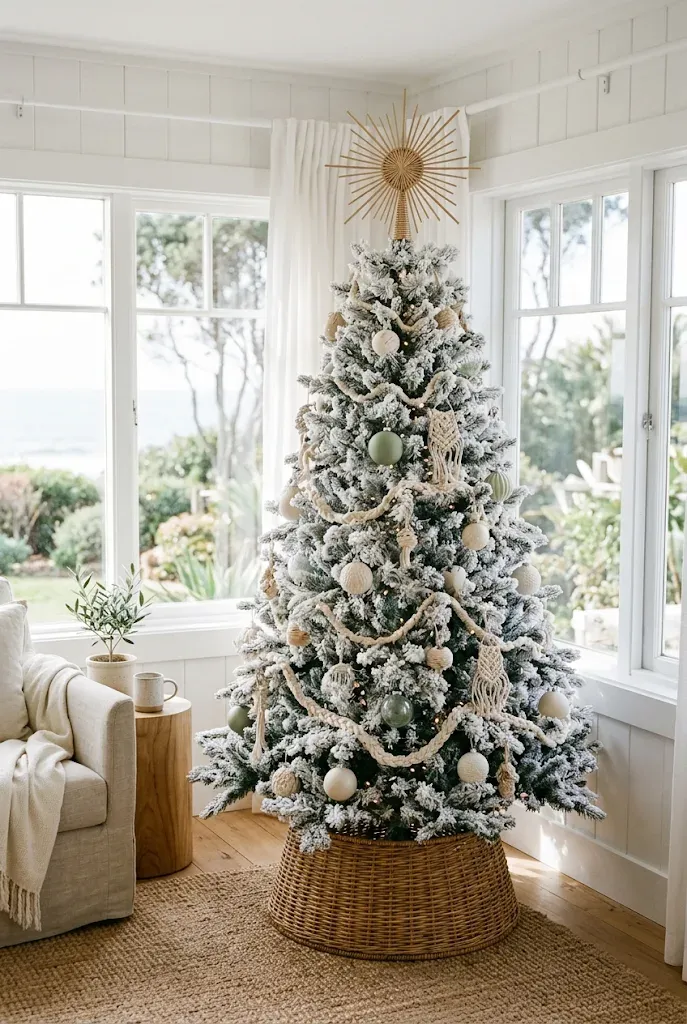
A natural rattan or cane starburst brings texture and a bit of relaxed, sun-faded charm to the top of the tree. The rays spread outward like a sunburst, which gives the silhouette more presence than a standard star without adding much weight. It pairs naturally with shell-toned ornaments, macramé details, and pale wood or white-washed accents, making it a good fit for coastal, boho, and organic modern rooms.
Because the rays are slender, secure the center firmly with floral wire so they stay upright instead of drooping forward. Keep the lights warm and the ornament palette soft, for example sand, cream, and faded sage, so the weave stays the focal texture.
On a flocked or white tree, the warm tone of natural rattan creates quiet contrast without feeling heavy.
11. Wrap a Twig Star in Waxed Jute
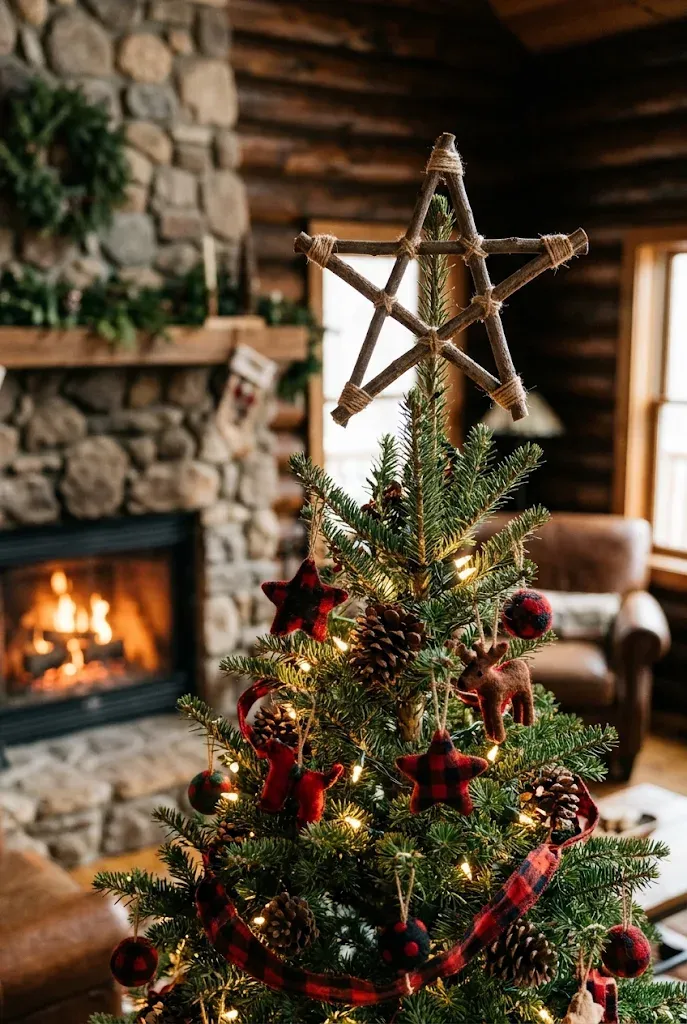
A twig star made from branches you gather yourself looks rustic in the best way, and it’s an easy craft for a quiet afternoon. You’ll need:
- Five straight, similar-length twigs, dry and free of loose bark
- Waxed jute or twine in a natural or deep green shade
- Hot glue or floral wire for the joints
- Small clippers
Lay the twigs in a star pattern, bind each crossing with jute, and glue lightly for strength. Add a loop at the back so the star can sit at the peak. Wrapping the joints with a bit of extra twine hides the glue and makes the piece look intentional. This topper suits trees dressed in pinecones, wool ornaments, and plaid ribbon.
12. Crown the Tree With Champagne Ostrich Plumes
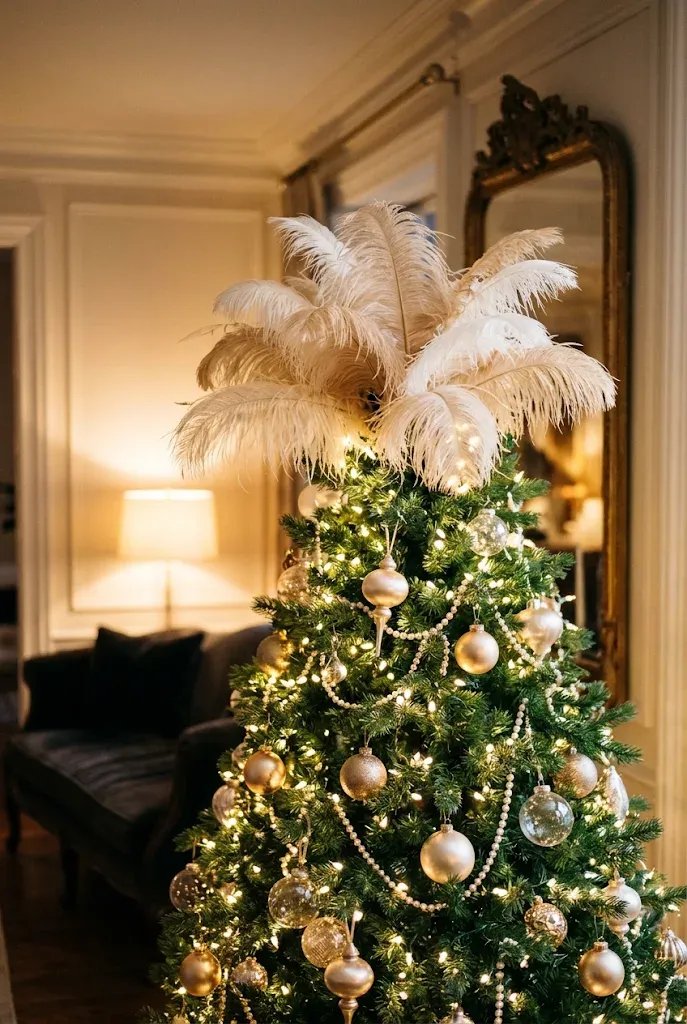
Ostrich plumes bring glamour with a soft edge. Their long, wispy barbs move with the slightest air current, which gives a tree a feeling of life that rigid toppers can’t match. Choose a cluster of five to nine plumes in champagne, ivory, or smoky gray, and let them fan out in a loose crown. The effect is theatrical but still elegant when the ornaments stay restrained: satin balls in soft metallics, pearl strands, and warm white lights.
Feathers do shed, so shake the plumes gently before attaching them and avoid placing the tree where drafts constantly blow past it. If you want a little more structure, wrap the base with a narrow satin ribbon that matches the palette and secure it with floral wire.
13. Splurge on a Faceted Crystal Star
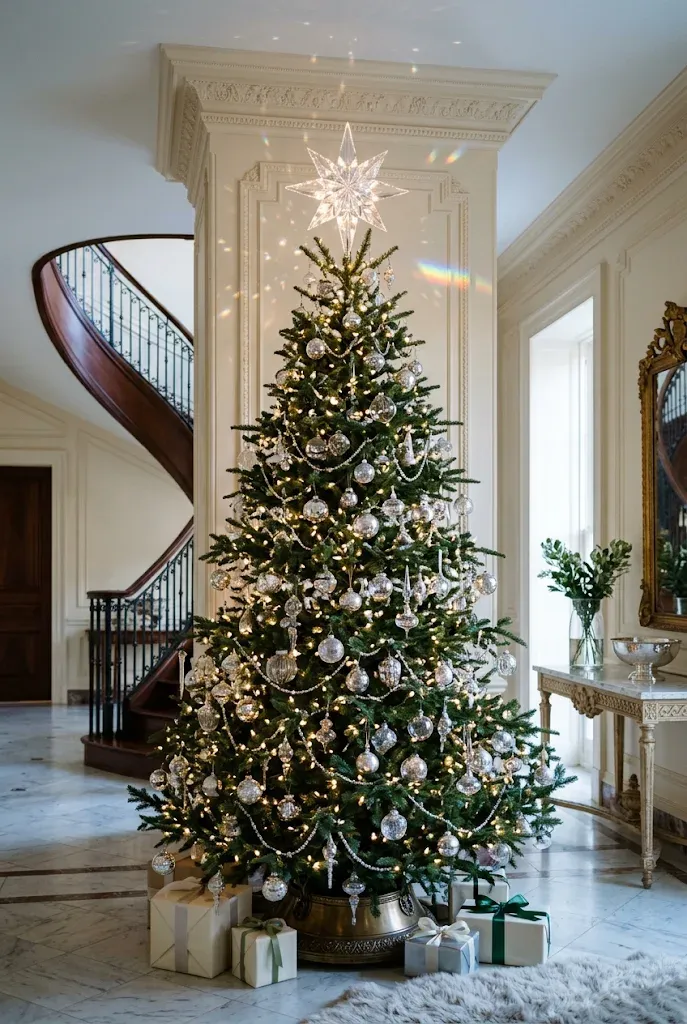
A cut-crystal star is the kind of piece people tend to keep for decades. The faceted surfaces catch the tree lights and scatter small points of brightness across the ceiling and nearby walls, which makes a room feel festive even when only the tree is lit. Look for a star with a solid, balanced base and clean facets rather than a lot of ornamental extras; the beauty is in how it handles light.
Pair it with clear glass ornaments, silver or white accents, and warm white lights, and keep the surrounding palette restrained so the star remains the main sparkle.
Editor’s Note: Before buying a heavier crystal piece, ask about its weight and how it mounts. A slim top branch or a flimsy artificial leader may need extra support so the star sits upright through the season.
14. Select a Hand-Blown Glass Icicle Spire
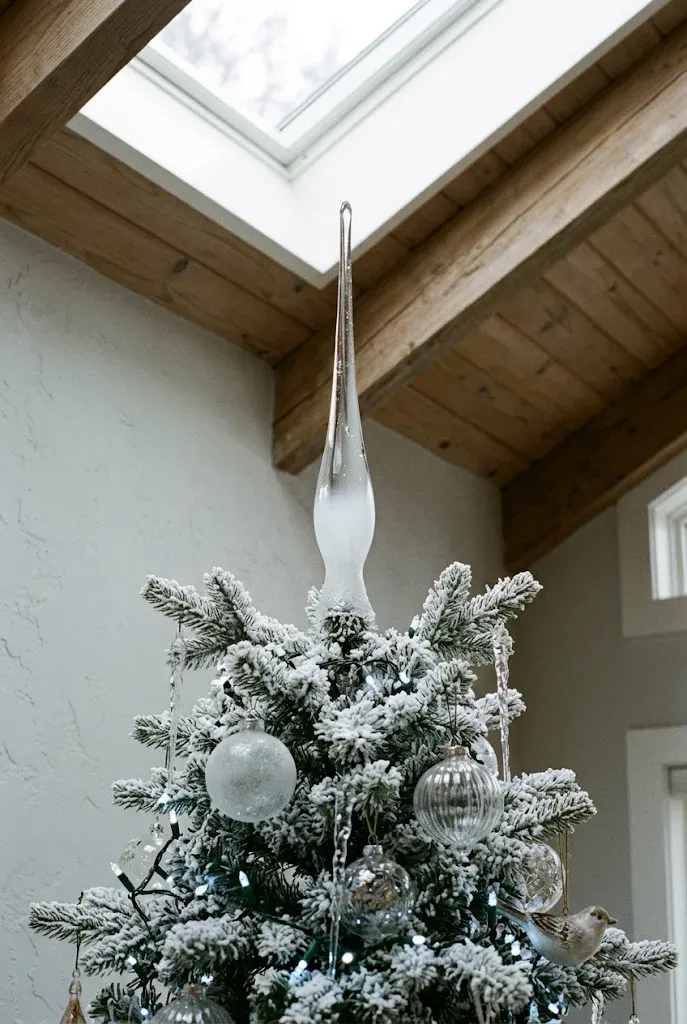
A long, tapering glass spire resembles a frozen icicle, and its elongated shape adds height and a refined line to the very top of the tree. Many are slightly ombré, fading from frosted white into a clear or tinted tip, which gives the piece depth that mass-produced toppers rarely have. Hand-blown pieces vary subtly from one to the next, so expect small differences in thickness and curve.
Before: A generic plastic star that sits flat against the tree and gets lost among the lights.
After: A slender glass spire that extends above the tree and draws the eye upward, with clear or frosted ornaments below that echo its icy finish.
Glass this thin is fragile, so store it in its original padded box and place it on the tree at the end of decorating when no one is working around it.
15. Commission a Matte Ceramic Star in Warm White
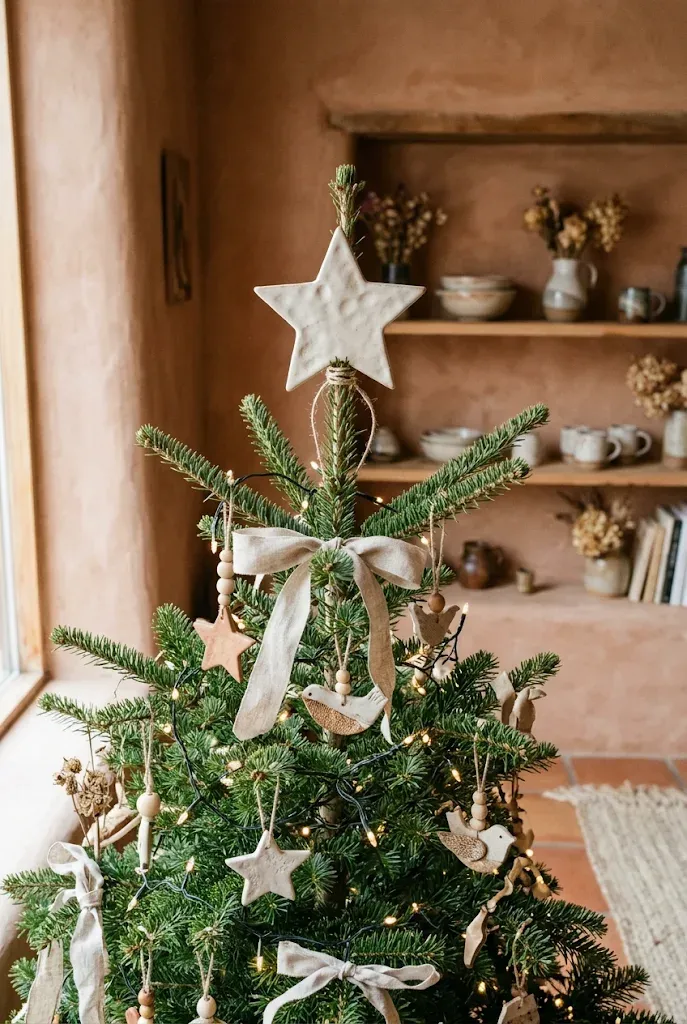
A handmade ceramic star has a quiet, gallery-piece presence that feels more like an object from a studio shelf than a holiday accessory. The matte glaze reflects softly instead of glittering, so it looks calm against twinkling lights and works beautifully with natural and neutral palettes. Slight variations in the surface, such as a visible thumbprint or gentle irregularity in the edges, are part of the appeal.
Ceramic is typically heavier than wire or plastic, so ask any maker how much the piece weighs and how they recommend mounting it before you order. A sturdy leader branch or a custom wire mount may be needed.
Pair it with simple ornaments in linen, wood, clay, and deep green, and it can easily become the piece that moves from tree to mantel after the holidays.
16. Layer Faux Evergreen Sprigs and Pinecones
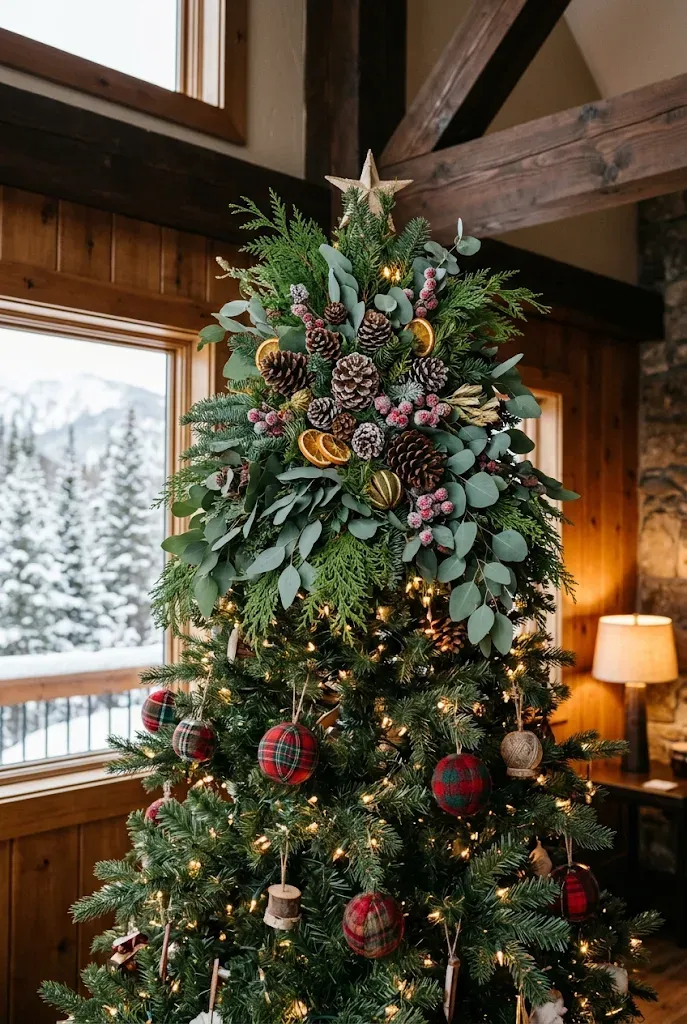
Instead of adding something foreign to the tree, this topper makes the tree look like it keeps growing. Mix a few different textures so it reads as natural, not as a matching accent:
- Faux cedar or noble fir sprigs for a lush base
- Two or three stems of faux eucalyptus or juniper for a softer, bluer note
- A cluster of pinecones wired on short stems
- A few frosted berries or sprigs for small pops of contrast
Wire the stems into a tall, slightly asymmetrical bundle and attach it so some sprigs curve forward and some stretch sideways. On a bare artificial tree, this adds fullness at the top, which is where many trees run thin.
17. Hang a Straw Himmeli Geometric Topper
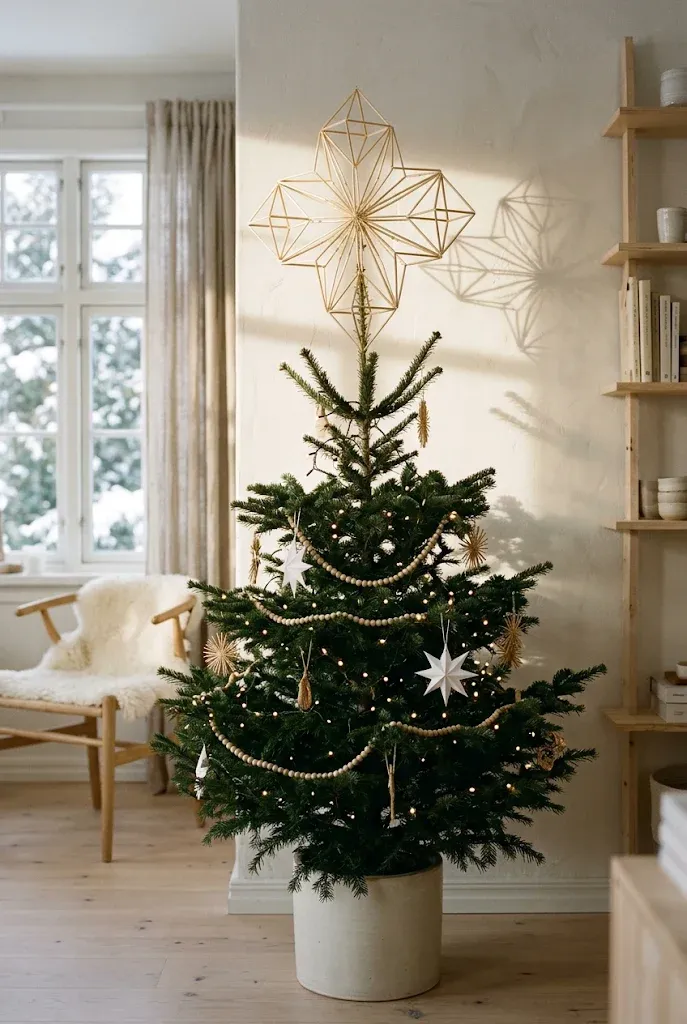
Himmeli are geometric ornaments traditionally assembled from straw and thread in Finland, and a larger one at the peak makes a delicate, sculptural statement. The repeating diamond or octahedron shapes cast fine shadows, and the pale gold color looks soft against deep green branches. You can buy a handmade one, or make a simpler version using paper straws and thread if you want a more approachable project.
Hang it from a short loop at the top branch so it turns slowly with the air in the room, and keep neighboring ornaments simple. Because it’s so light, it works on small and mid-size trees where heavier toppers might lean.
Tip: If it hangs too close to the branch tips, bend the top few branches slightly outward to give the shape room to show.
18. Crown the Tree With a Mini Flocked Tree
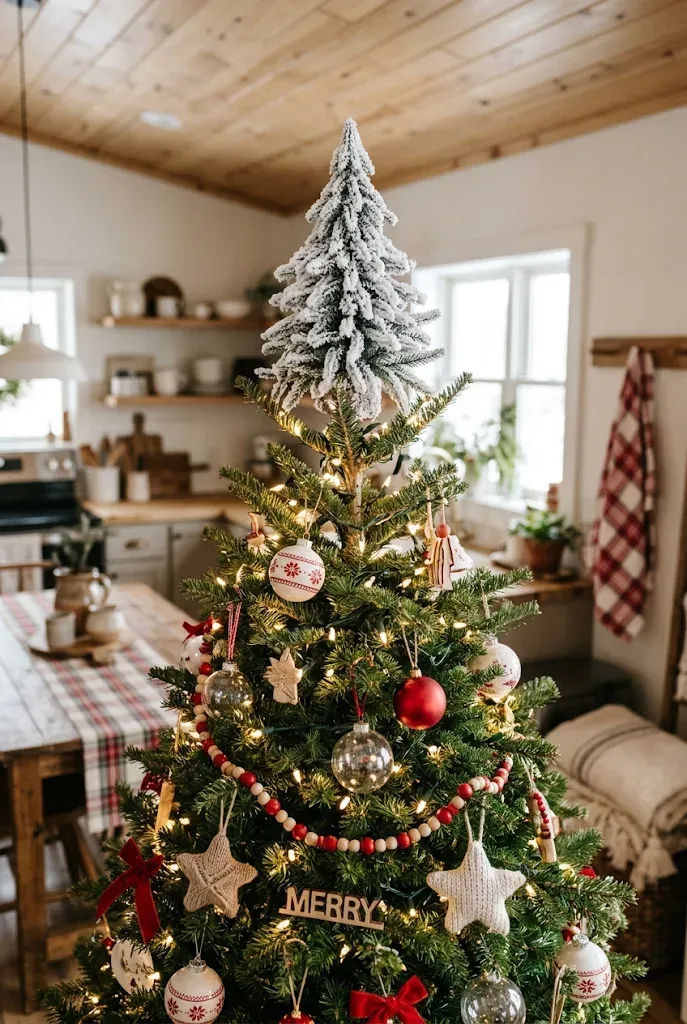
A small flocked tree sitting at the peak of a larger one is playful without being childish, particularly when it’s sized sensibly. A mini tree about a foot tall is usually enough for a standard-height tree, and flocked or glittered finishes read as snow-dusted. It’s an inventive nod to the “tree on a tree” look that works nicely in family rooms and kitchens.
Before: A tall tree with a bare, ordinary tip.
After: A miniature tree anchored at the top with floral wire, echoing the larger tree’s shape and giving the top of the tree a charming, layered silhouette.
Keep the ornament palette simple, such as white, red, and natural wood, so the mini tree reads as an intentional detail and not clutter.
19. Perch a Feathered Clip-On Bird at the Peak
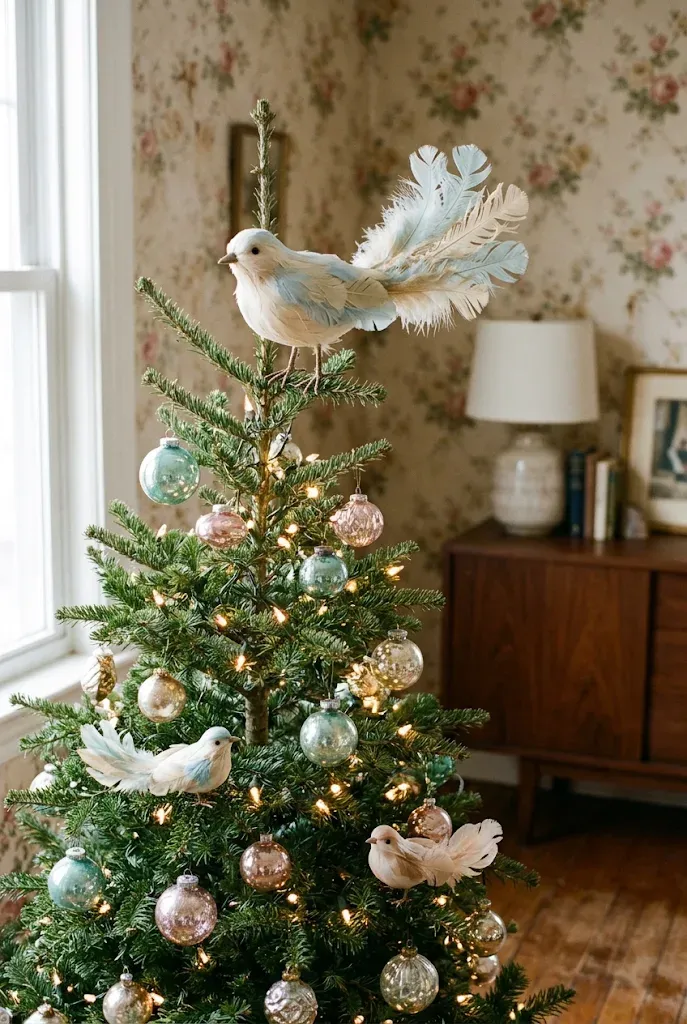
A feathered bird with a spun-cotton or soft feather body has a gentle, mid-century feel that’s easy to love. Choose a bird with a clip base and a tail that fans upward, and set it so it looks as if it has just landed on the top branch. One bird can look sweet; a trio, with the largest at the peak and two smaller companions farther down, feels thoughtfully composed.
This topper suits trees styled with glass reflectors, vintage-inspired ornaments, and soft pastel or jewel tones. It’s also an easy upgrade for small spaces and rentals since birds don’t require much room.
Quick Tip: Angle the bird slightly toward the room instead of directly forward so it reads naturally from across the space.
20. Pile On Silk Peonies and Ranunculus in Blush and Cream
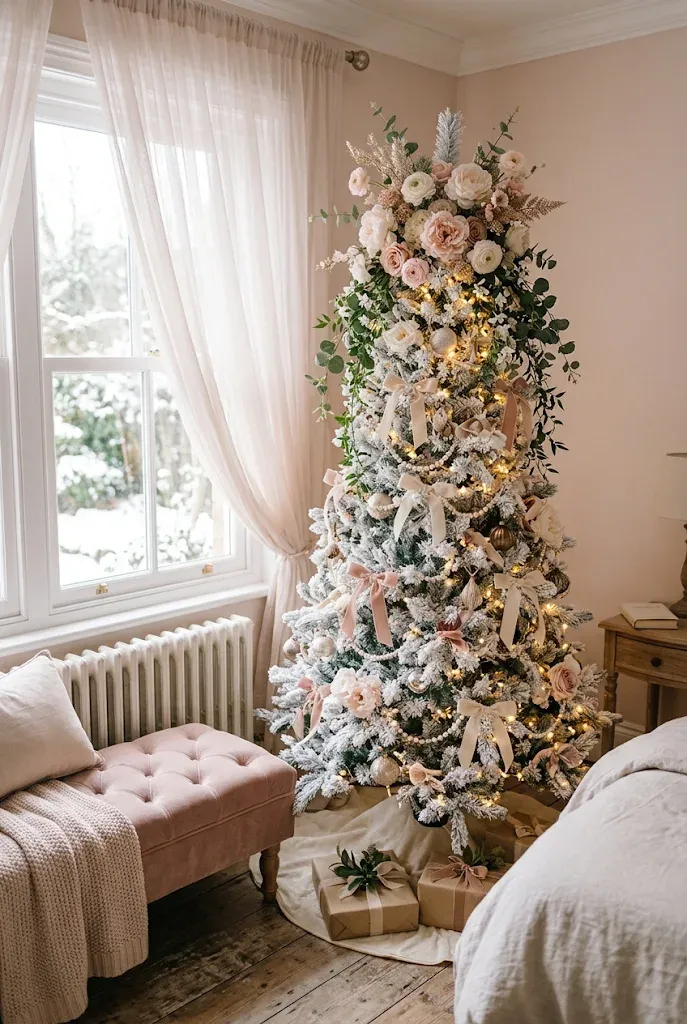
A romantic, flower-heavy topper replaces the usual metallic sparkle with softness. Use large silk peonies with layered petals, a few ranunculus for texture, and a couple of trailing stems of greenery or berries to break up the edges. Keep the palette to blush, cream, and ivory with perhaps a single deeper rose to give dimension.
Wire the blooms together in a slightly asymmetrical mound, then attach it tilted toward the room so the faces of the flowers can be seen. Add pearl or ribbon details lower down so the florals look connected to the rest of the tree.
Common Mistake: Using flowers in too many colors, which can make the topper look like a craft-store arrangement.
Better Approach: Restrict the palette to two or three related tones and choose a variety of petal shapes for interest.
21. Repurpose a Salvaged Bedpost Finial
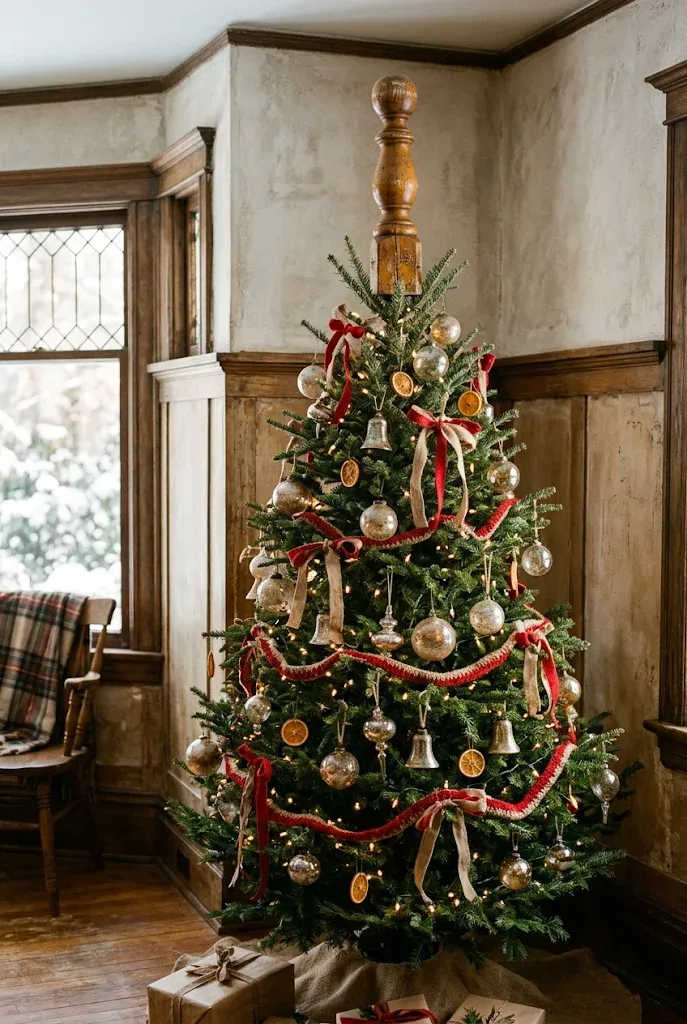
A reclaimed wood finial from an old bedpost or newel post gives the tree a one-of-a-kind, architectural topper that no one else will have. Look at antique shops, salvage yards, and online marketplaces for small turned finials with interesting profiles, then attach a short dowel or sturdy wire to the base so it can slide into the top of the tree.
Tips & Tricks
- Lightly sand rough areas and finish with wax or a clear sealer, which preserves the patina without leaving a sticky surface.
- If the finial has chipping old paint, seal it or choose another piece; older finishes can contain lead.
- Add a small felt pad at the base so it doesn’t scratch the branch it rests against.
- Keep surrounding ornaments simple so the shape remains easy to read.
The warm patina pairs naturally with antique glass, wool, and deep green velvet.
22. Go Playful With a Mirrored Disco Ball
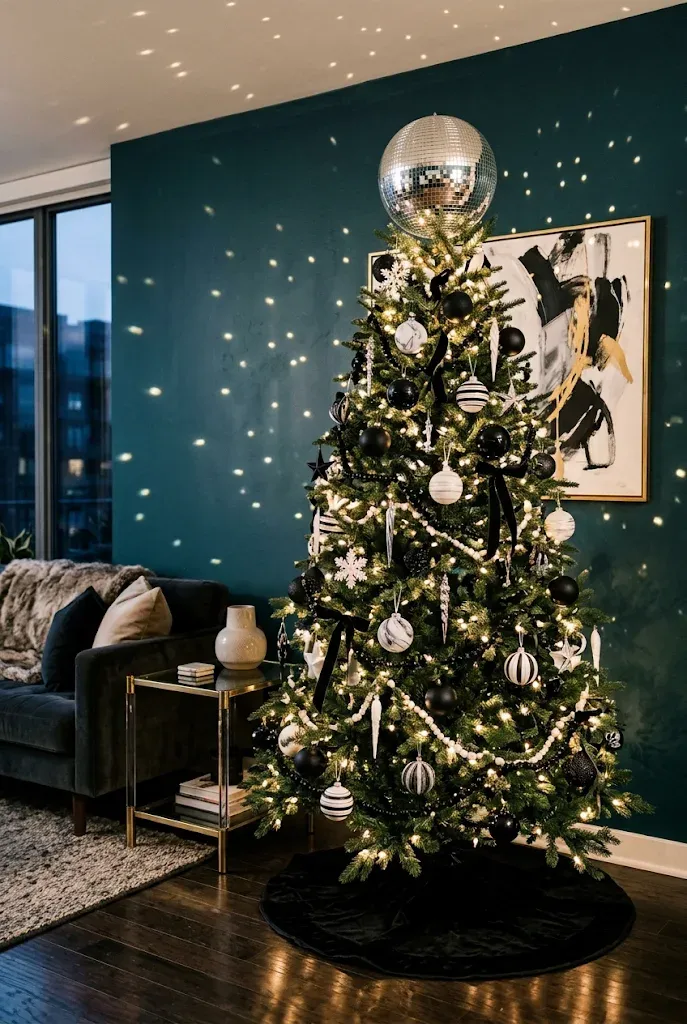
Best For: Modern, eclectic, and party-ready rooms
Investment: Accessible
Visual Effect: Scattered points of light that move around the room
A mirrored ball at the top of a tree feels unexpected, and that’s the point. As the tree lights and room lights hit the tiny mirrored tiles, bright dots drift across walls and ceilings, adding movement even when everything else is still. Pick a ball that’s proportionate to the tree and mount it on a short rod or wire loop, then secure it so it can’t spin off the branch.
It pairs well with a graphic ornament palette such as black, white, and silver, or with bolder colors such as magenta and emerald if the room already leans eclectic.
How to Match a Topper to Your Tree
A topper looks most intentional when it suits the shape and structure of the tree beneath it. Use this as a starting point.
| Tree Type | Topper Direction | Why It Works |
|---|---|---|
| Slim pencil tree | Cutout star, spire, lantern, single bird | Light visual weight keeps the tree from tipping or looking top-heavy |
| Full flocked or white tree | Velvet bow, magnolia fan, ceramic star | Darker or sculptural toppers stand out against pale branches |
| Natural or bare-branch tree | Pampas, twig star, himmeli | Organic textures echo the tree’s open structure |
| Real tree with a bending leader | Lightweight toppers | Soft top branches may not support heavy glass or ceramic |
Securing any topper
- Attach to the central pole or strongest top branch with floral wire or a zip tie, then conceal the fastener with a leaf, ribbon, or sprig.
- On a real tree, straighten the leader branch first and trim competing side shoots so the topper sits upright.
- Test the tree’s lights and the topper’s position before the ornaments go on, so any adjustments are quick.
Choosing Where to Begin
You don’t need to rework the whole tree to see a difference. Pick one topper whose materials already appear lower down, such as wood beads, glass, linen, or velvet, and let it repeat a color or texture. If your tree is small, favor lighter pieces; if it’s tall, go bigger than seems necessary, since tops look smaller from the room than they do in your hands. And if you’re unsure, start with something handmade or secondhand. Those pieces tend to have the individual character that makes a tree feel designed.