

A colorful Christmas tree doesn’t have to look chaotic. The trees people save and revisit usually have one clear organizing idea behind the color: a palette, a repeated shape, a consistent ribbon, or a lighting choice that ties everything together. That’s what separates a joyful tree from a crowded one.
The 19 ideas below cover a wide range of homes and budgets, from a tabletop tree in a rental apartment to a statement tree in a larger living room. You’ll find rainbow, pastel, jewel-tone, retro, and handmade approaches, each with practical notes on what to buy, how to arrange it, and what to avoid. Pick the one that matches your space, then adjust the colors to suit your own home.
1. Mixed-Color Retro Bulbs on a Full Green Tree
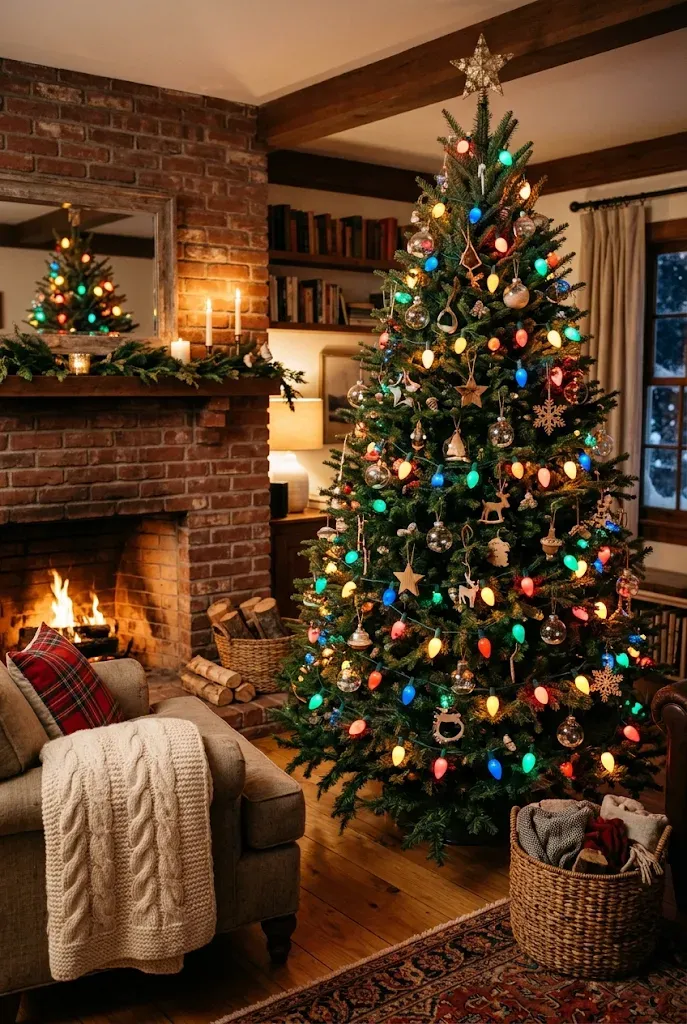
Nostalgic multicolor lights are the simplest route to a colorful tree. Large, old-fashioned bulb shapes in red, blue, green, orange, and yellow give a fuller, more traditional glow than tiny mini lights. Wrap them from the trunk outward so color sits deep in the branches as well as on the tips. Keep ornaments simple, such as clear glass, wood, and a few metallic pieces, so the lights stay the main event.
| Light Type | Effect | Best Fit |
|---|---|---|
| Large retro-style bulbs | Bold, nostalgic, visible color | Full-size trees in larger rooms |
| Mini multicolor lights | Dense, sparkly, finer glow | Slim trees and smaller spaces |
Always check the packaging for how many light strands can safely be connected end to end, and consider LED sets if you plan to leave the tree lit for long stretches.
2. Rainbow Ribbon Swags Instead of Tinsel
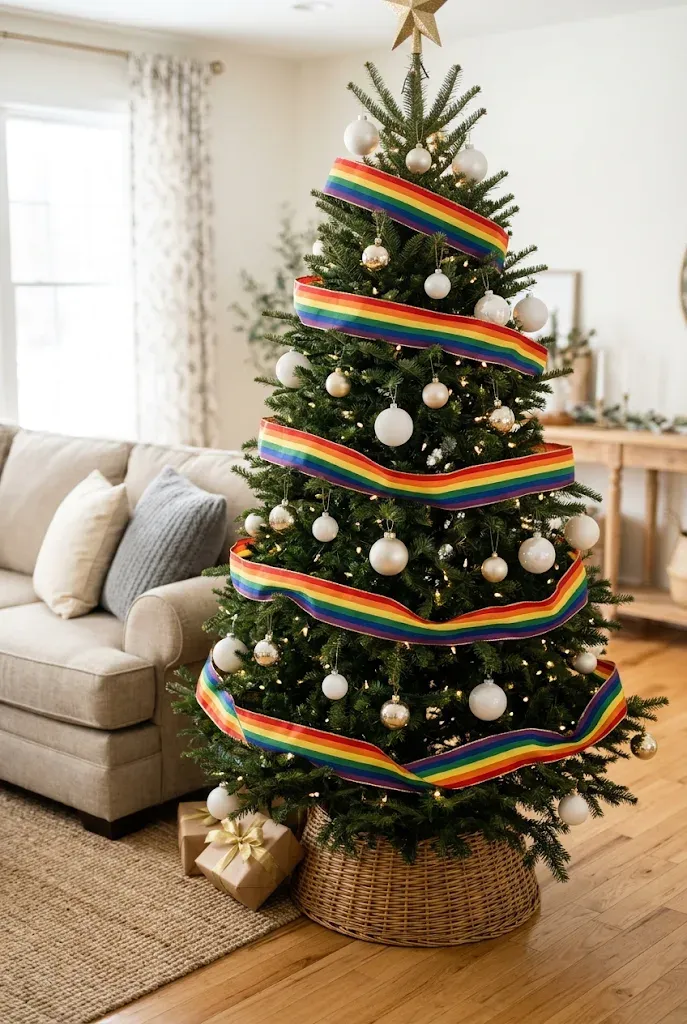
Instead of scattering color randomly, let ribbon do the organizing. Choose a single wide ribbon, or several narrow ones in rainbow order, and drape them in loose swags around the tree in horizontal bands. The repetition makes the colors read as intentional.
Quick Facts
Best For: Medium to tall trees
Investment: Accessible
Visual Effect: Bold, graphic, cheerful
Tips & Tricks
- Cut ribbon lengths long enough to dip softly between branches rather than pulling tight.
- Tuck the ends deep into the branches so they aren’t visible.
- Use wire-edged ribbon so the swags hold their curves.
- Keep ornaments to one or two solid colors so the ribbon remains the star.
3. A Candy-Colored Pastel Tree
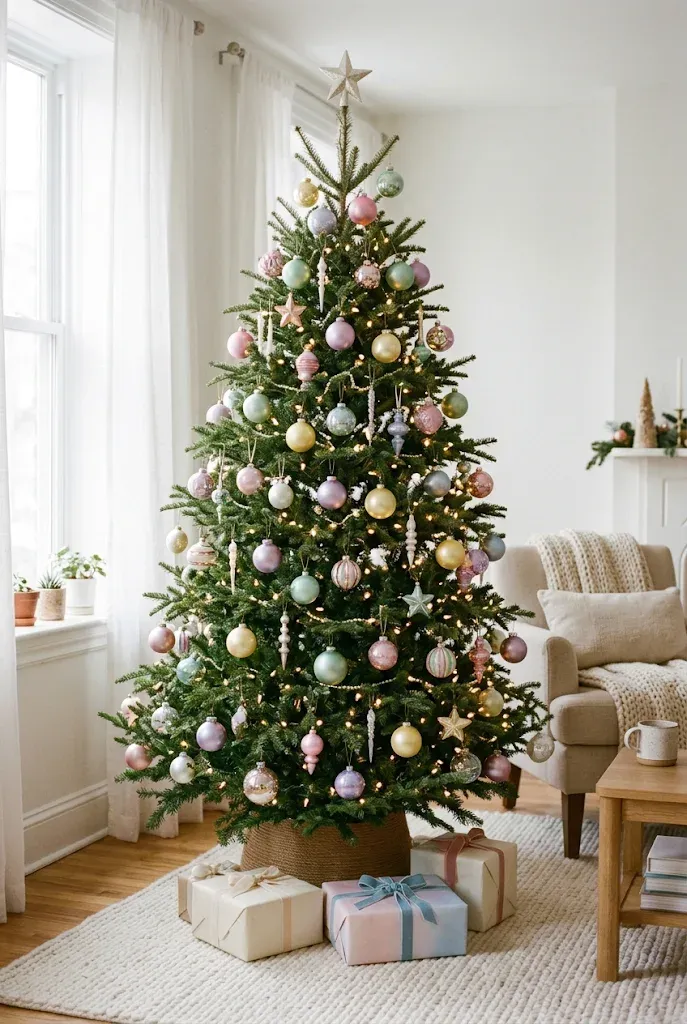
Pink, mint, lavender, baby blue, and butter yellow turn a green tree into something playful and soft. This palette works best when every ornament sits in the same muted, slightly chalky tone family. Matte and pearl finishes keep it gentle, while a few glittery pieces add sparkle without shouting.
Warm white lights are usually kinder to pastels than cool white, which can make them look washed out. Keep the tree skirt neutral, like cream or soft gray, so the pastels have room to stand out.
Common Mistake: Mixing bright primary colors into a pastel scheme.
Better Approach: Keep every shade in the same muted range so the palette stays cohesive.
4. Jewel-Tone Velvet and Glass
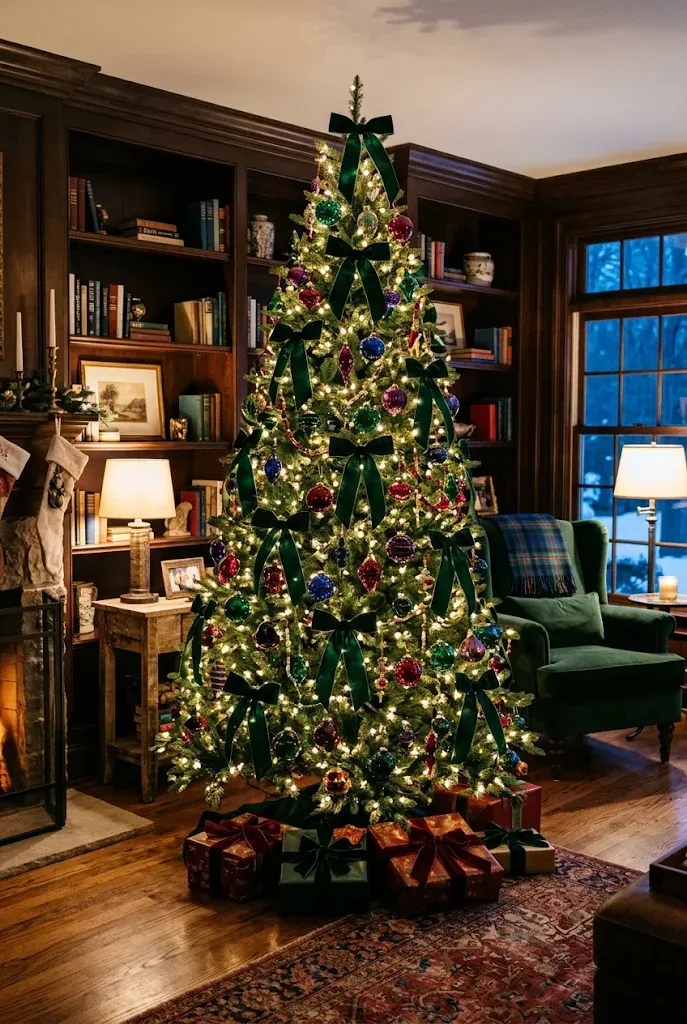
Emerald, sapphire, ruby, and amethyst feel richer and more grown-up than bright primaries. Velvet ribbon in these shades adds depth, and mercury-style glass ornaments catch the light beautifully. This is a good option if you want color but still prefer something polished.
In practice, the look improves when you hang a handful of darker ornaments deep inside the tree first. That depth makes the brighter pieces near the surface look more dimensional.
- Mix matte velvet bows with shiny glass balls for contrast in texture.
- Use warm white lights to bring out the saturation.
- Add a few antique gold accents rather than heavy metallic everywhere.
5. A Flocked White Tree With Bright Ornaments
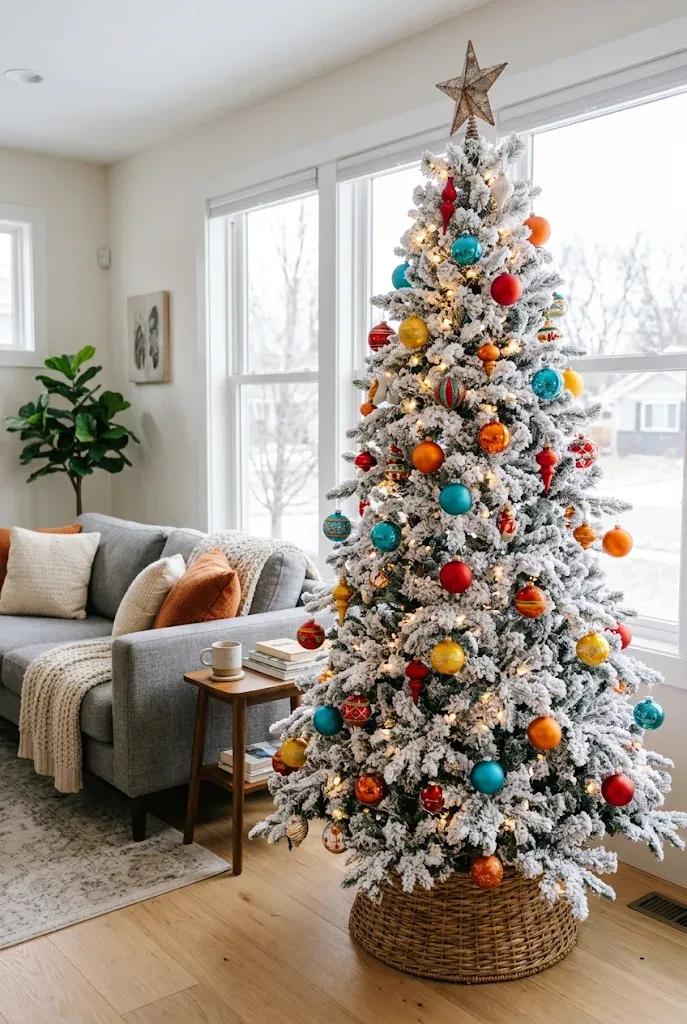
White flocking acts as a blank canvas, so the colors on it look more vivid. Red, turquoise, orange, and yellow ornaments pop against the pale branches in a way they don’t on dark green.
| Base Tree | Effect | Best Fit |
|---|---|---|
| Flocked white | Colors look more vivid and graphic | Modern or minimalist rooms |
| Natural green | Colors blend into a fuller, traditional look | Classic or family-style rooms |
Editor’s Note: Flocking can shed slightly, so place the tree where you won’t be brushing past it often, and consider a protective tree skirt to keep your rug or flooring clean.
6. A Kid-Made Tree With Paper Chains and Pom-Poms
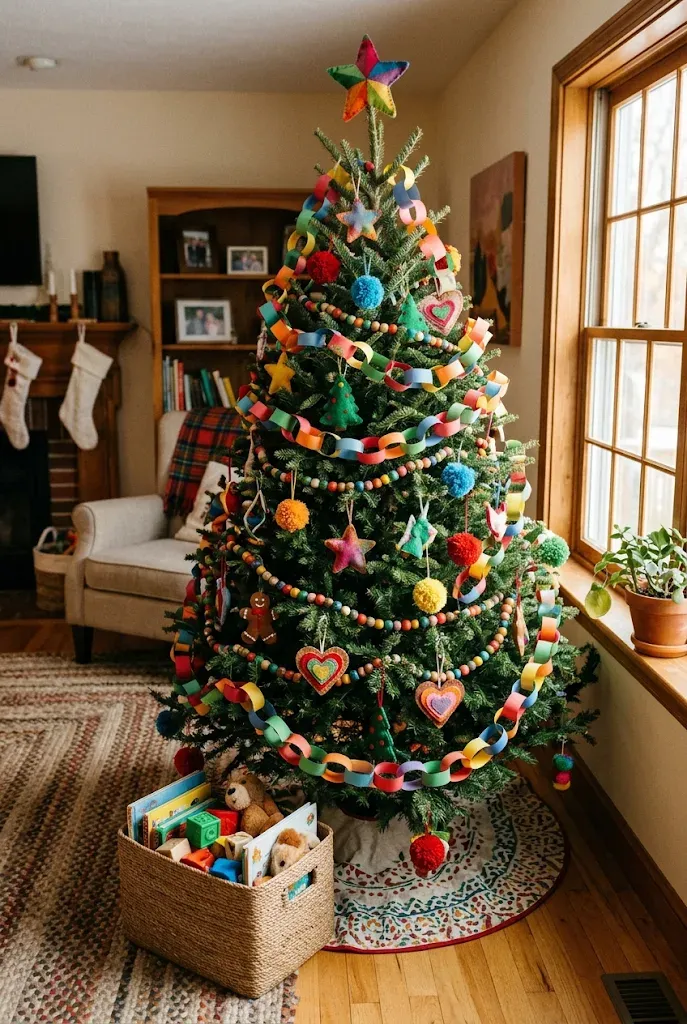
Children’s craft projects give a tree more personality than store-bought sets ever could. Paper chains in bright construction-paper colors, felt shapes, pom-poms, and painted wooden beads make an easy, low-cost scheme. The key is to hang kid-made pieces at a mix of heights so the tree doesn’t look bottom-heavy.
Steps for a simple paper chain garland
- Cut construction paper into strips of equal width.
- Loop and glue the first strip into a ring.
- Thread each new strip through the previous ring before gluing it closed.
- Drape the finished chain loosely from top to bottom.
7. A Pink Tree With Turquoise and Red Accents
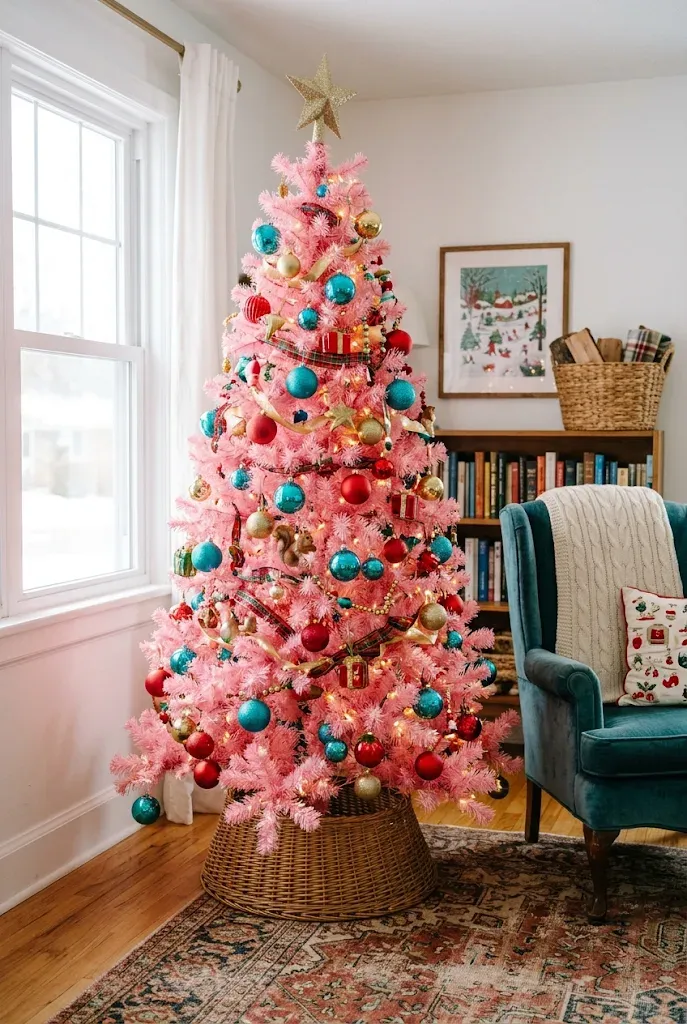
An artificial pink tree makes a statement, and pairing it with turquoise and red creates a lively, retro-leaning contrast. Gold or silver accents tie the colors together. This works best in a room with simple walls, since the tree itself carries so much visual weight.
Do: Repeat the turquoise and red elsewhere in the room, such as a pillow or a small vase, so the tree feels connected.
Don’t: Add every color at once. Pick two accent colors and let one lead.
8. Vintage Glass Ornaments and Bottle-Brush Accents
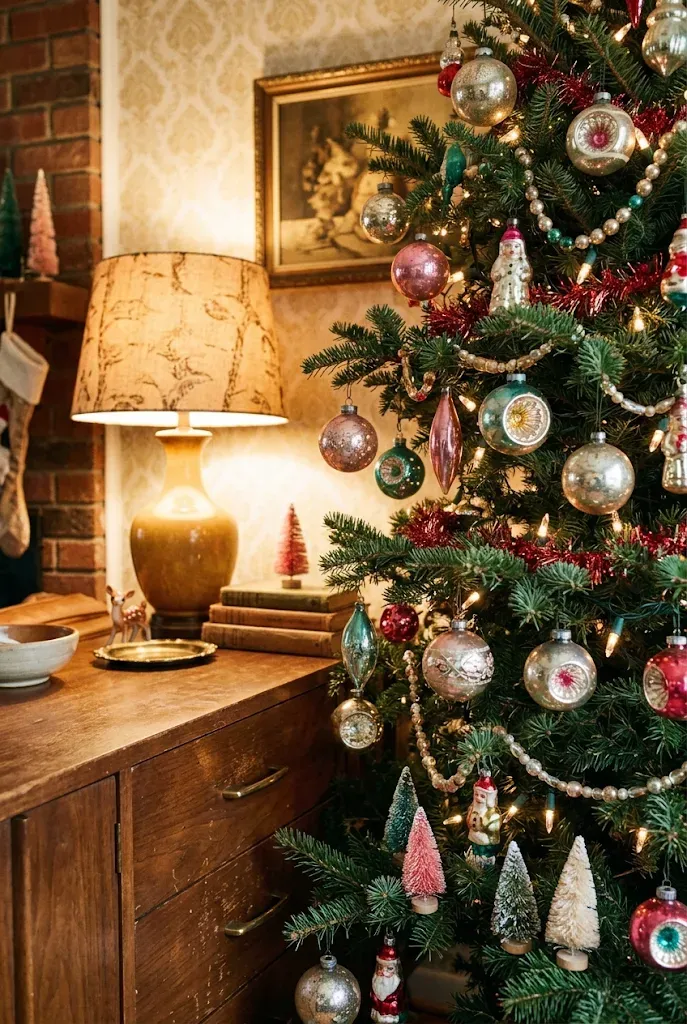
Mid-century-style glass ornaments in pink, teal, gold, and red, mixed with small bottle-brush trees tucked into the branches, give a tree a vintage feel without needing real antiques. Many reproduction sets are widely available, and secondhand shops often carry the real thing.
Quick Tip: Place the most delicate or valuable ornaments higher or deeper in the tree, away from pets and small hands.
9. An Ombré Tree With Color Flowing Top to Bottom
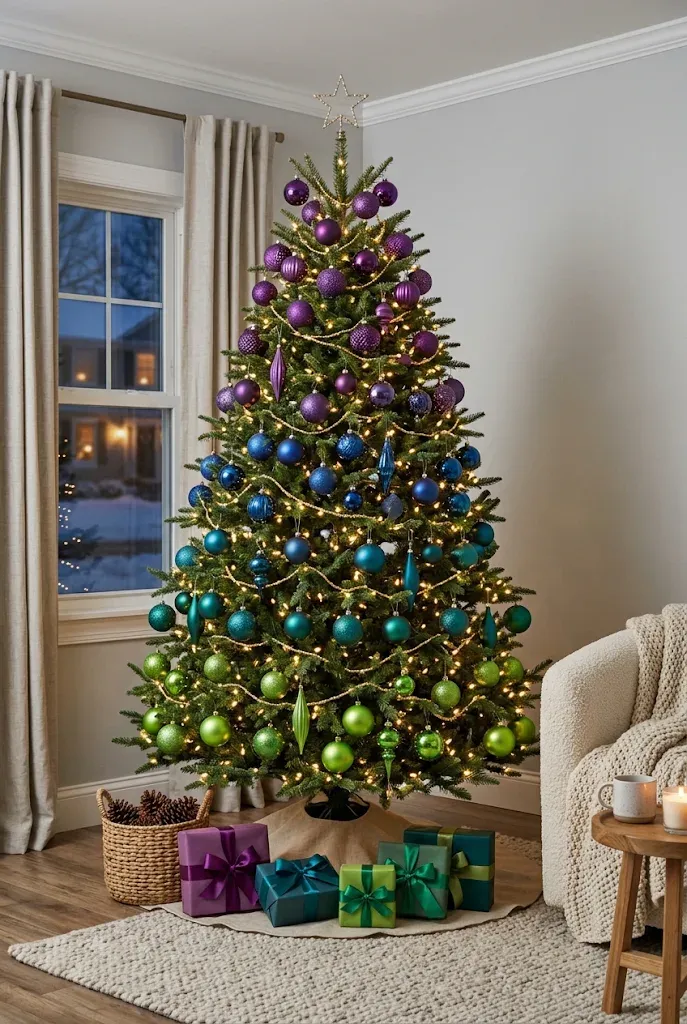
Instead of mixing everything, arrange ornaments in a gradient. For example, move from deep purple at the top through blue and teal to green near the bottom, or from warm red through orange to yellow. The gradient creates movement and a clear visual story.
Steps
- Sort your ornaments by color before you start.
- Place the darkest shade at the top and lightest at the bottom, or reverse it.
- Fill in the transitions with in-between shades.
- Step back and adjust any spots where the gradient breaks.
10. A Rainbow Tabletop Tree for Small Spaces
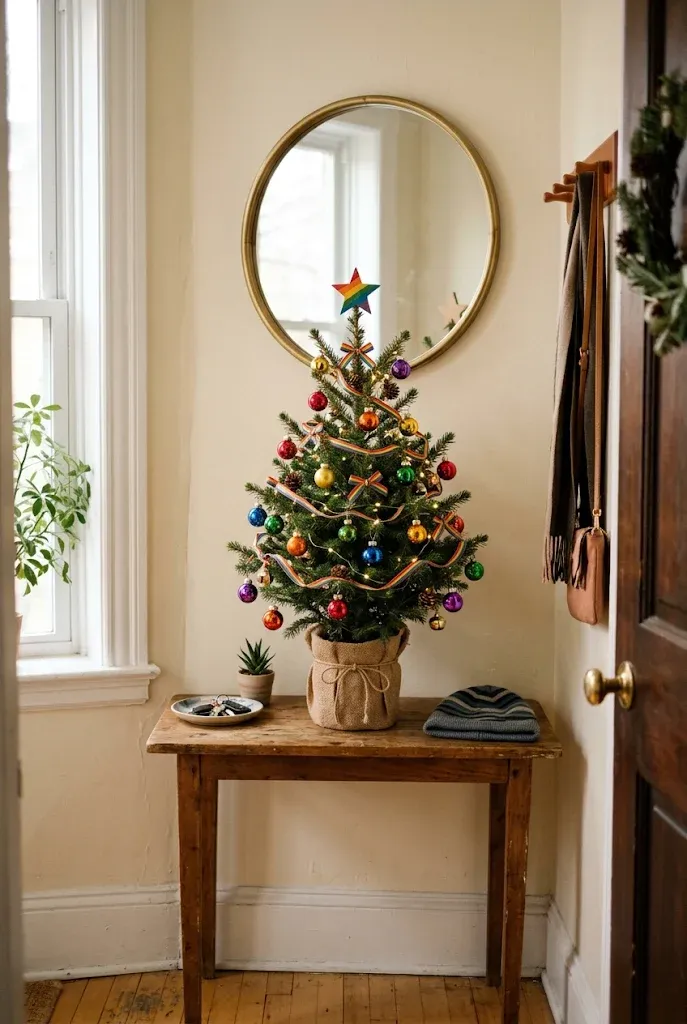
Apartment and rental living call for compact solutions. A tabletop tree on a console, bookshelf, or sideboard can hold the same bright, cheerful scheme as a full-size one. Choose small ornaments and thin ribbon so everything stays in scale.
- Use a tree between about two and four feet tall so it doesn’t crowd the surface.
- Keep ornaments small, lightweight, and shatterproof if the surface is near foot traffic.
- Add a small tree collar or basket to hide the base.
11. Boho Yarn, Wood Beads, and Multicolor Pom-Poms
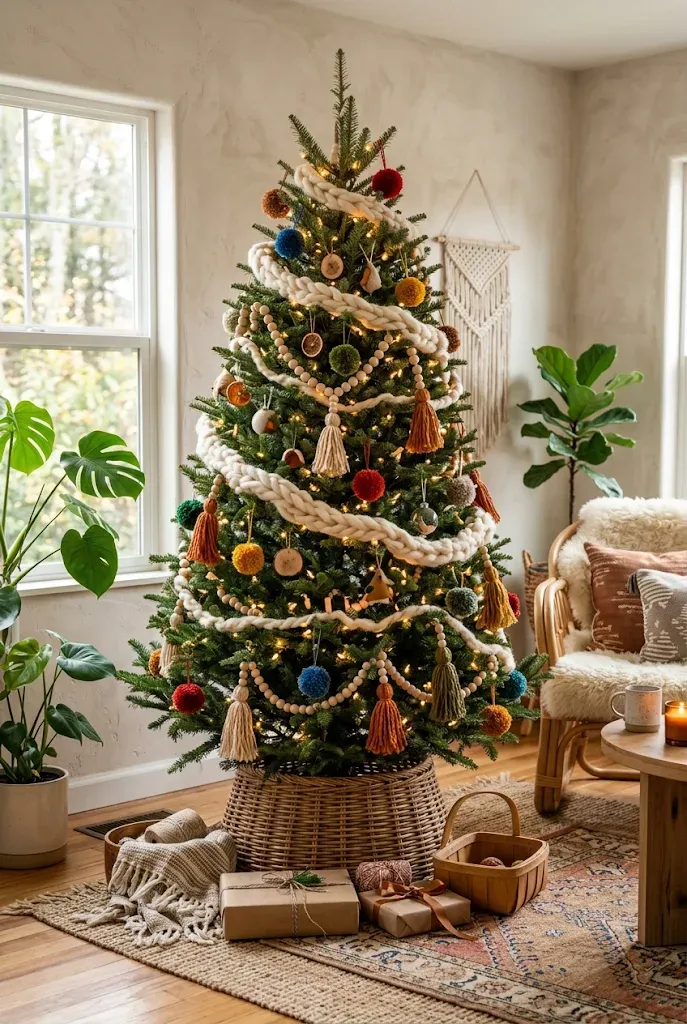
A boho tree swaps shine for texture. Chunky yarn garlands, wooden beads, tassels, and multicolor pom-poms make a warm, handmade look, often paired with a woven basket base and a macramé or knit tree skirt.
Common Mistake: Hanging so many textured pieces that the tree looks heavy.
Better Approach: Leave visible gaps of green between clusters so each handmade piece has room.
12. Bright Faux Florals Tucked Into the Branches
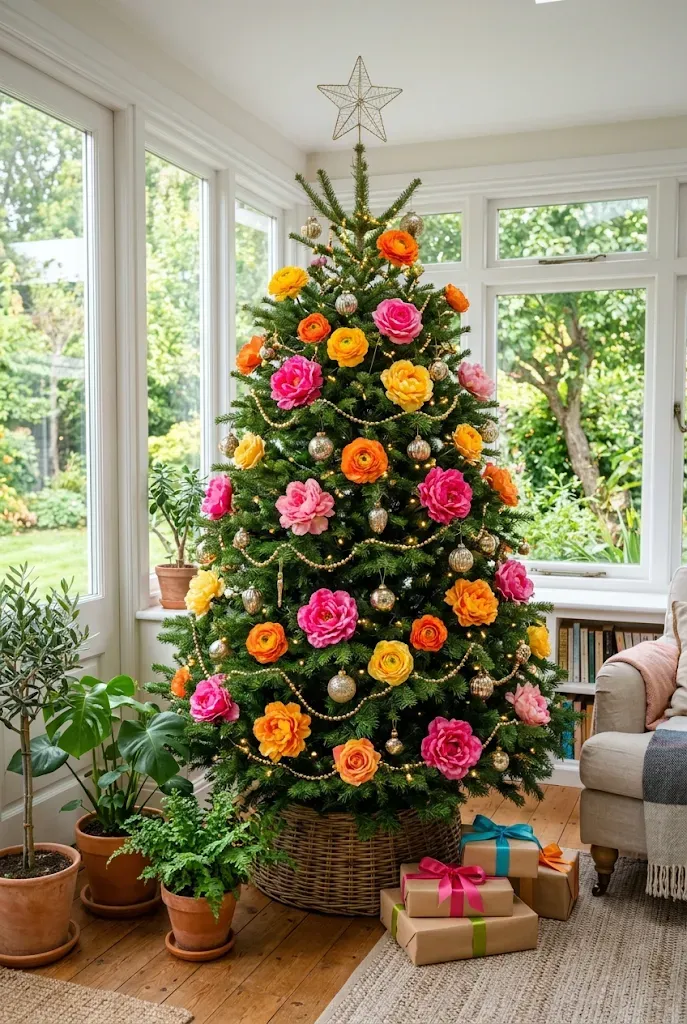
Oversized faux blooms in hot pink, orange, and yellow bring a spring-like energy to a winter tree. A few stems per section are usually enough, and fuller, long-stemmed pieces look best placed in clusters of three.
Editor’s Note: Faux flowers vary widely in quality, so check that petals look matte rather than shiny and plasticky before you buy in bulk.
13. A Candy Shop Tree With Peppermints and Lollipops
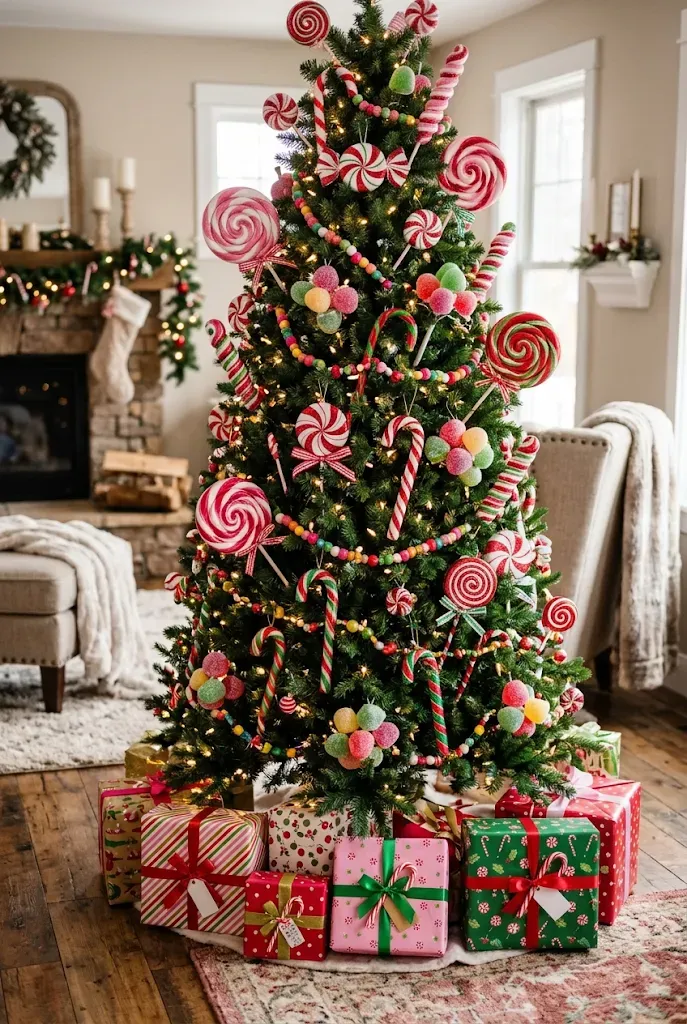
Oversized faux lollipops, peppermint swirls, candy canes, and gumdrop ornaments make an obvious hit with kids. Use plastic or resin candy pieces rather than real candy, which can attract pests and soften over time.
Quick Facts
Best For: Family rooms and playrooms
Investment: Accessible to moderate
Visual Effect: Sweet, saturated, playful
14. Folded Paper Stars and Origami Ornaments
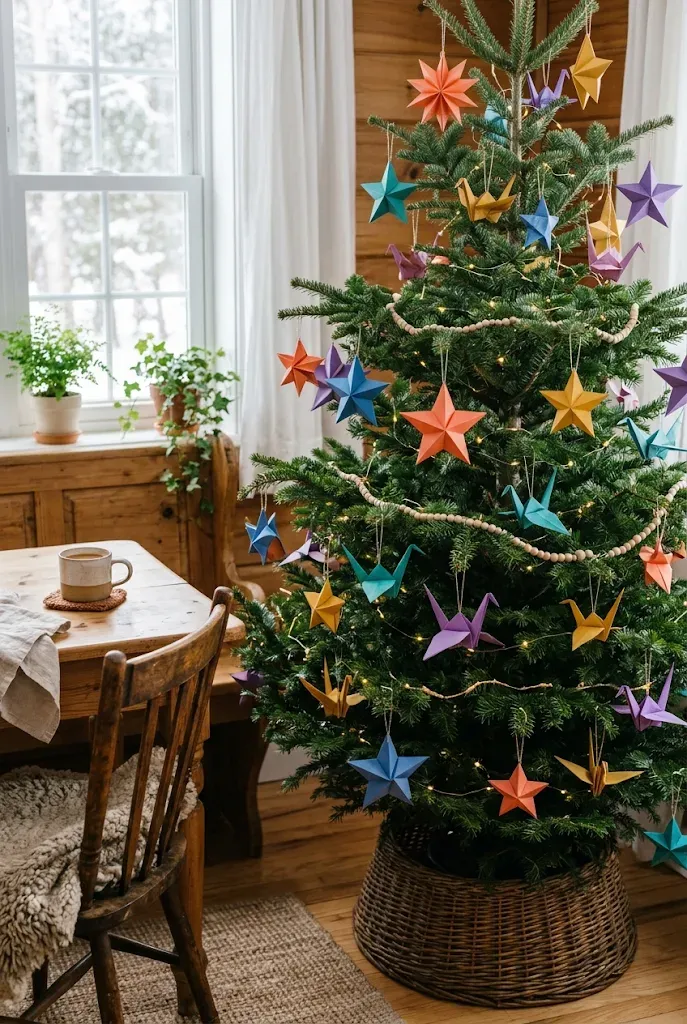
Paper ornaments cost little and let you control the exact palette. Folded stars, origami cranes, and layered paper snowflakes in saturated colors look surprisingly refined when kept to a small set of shapes.
Steps
- Choose three to four paper colors that suit your palette.
- Fold or cut one shape at a time to keep a consistent size.
- Attach thread or thin ribbon for hanging.
- Space them evenly so the tree doesn’t clump.
15. A Quilted Tree Collar as the Color Anchor
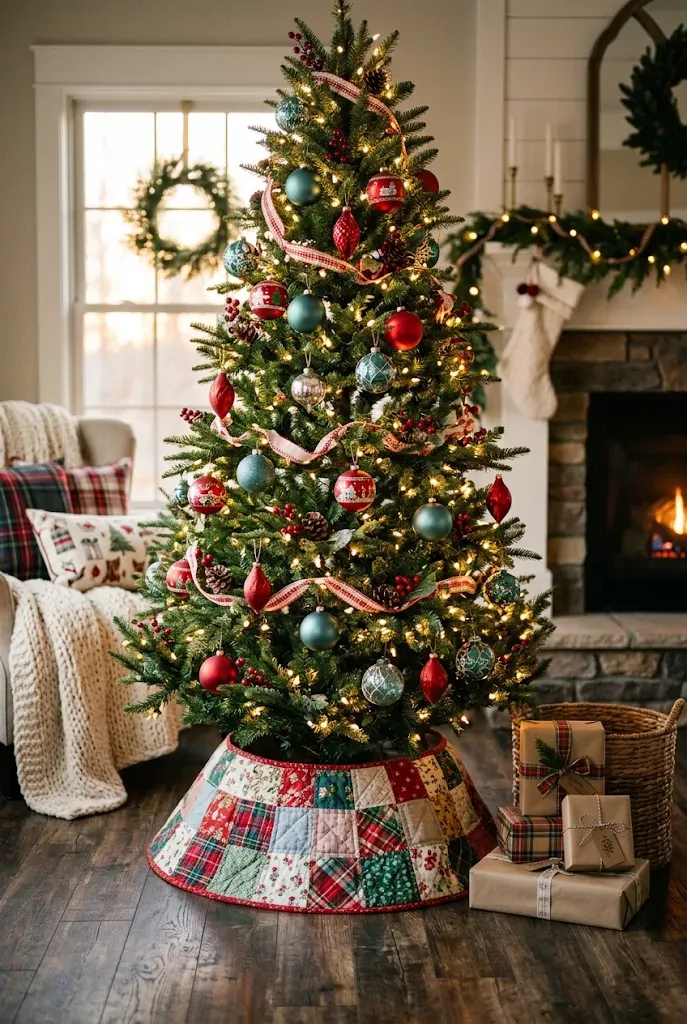
Sometimes the boldest color belongs at the base. A patchwork or quilted tree collar in multicolor fabric ties a simpler tree to the room and hides the stand. Keep ornaments to two colors pulled from the fabric.
Tips & Tricks
- Measure your stand before buying or sewing a collar.
- Pull ornament colors directly from the patchwork pattern.
- Keep the lights a single color so the collar stays the focus.
16. A Peacock-Inspired Tree in Teal, Purple, and Gold
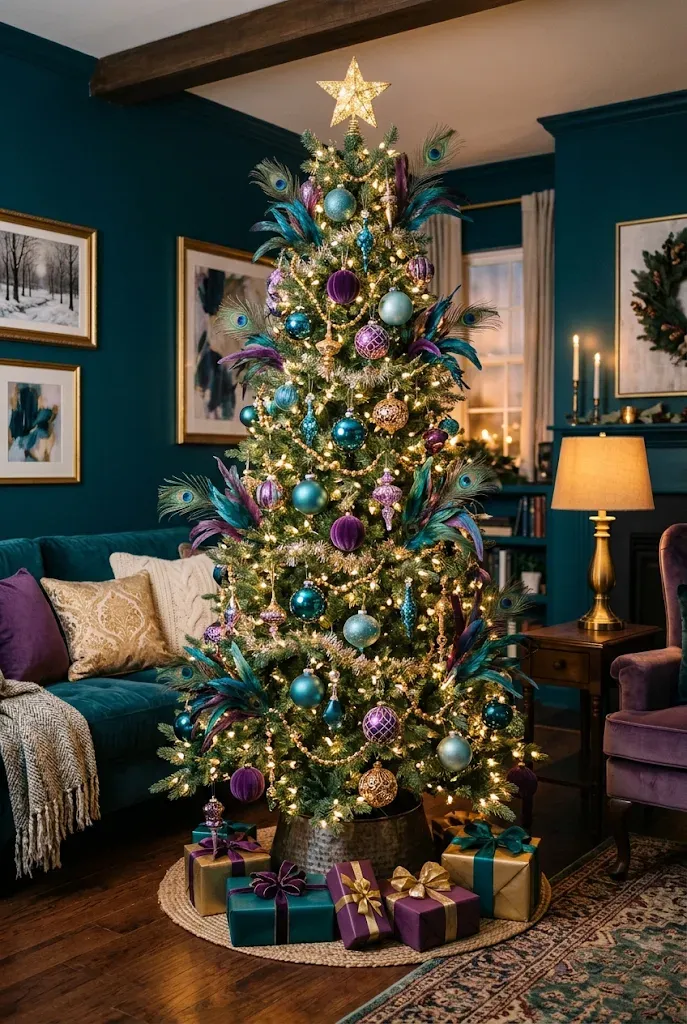
Feathers, teal and purple glass balls, and gold accents give a more dramatic palette with a rich, jewel-like feel. Feather picks look best clustered in odd numbers and angled upward along the branches.
Editor’s Note: This is a more premium-feeling look, but you can achieve it affordably by sticking to a tight color range rather than buying specialty ornaments.
17. A Slim Pencil Tree Against a Bold Wall
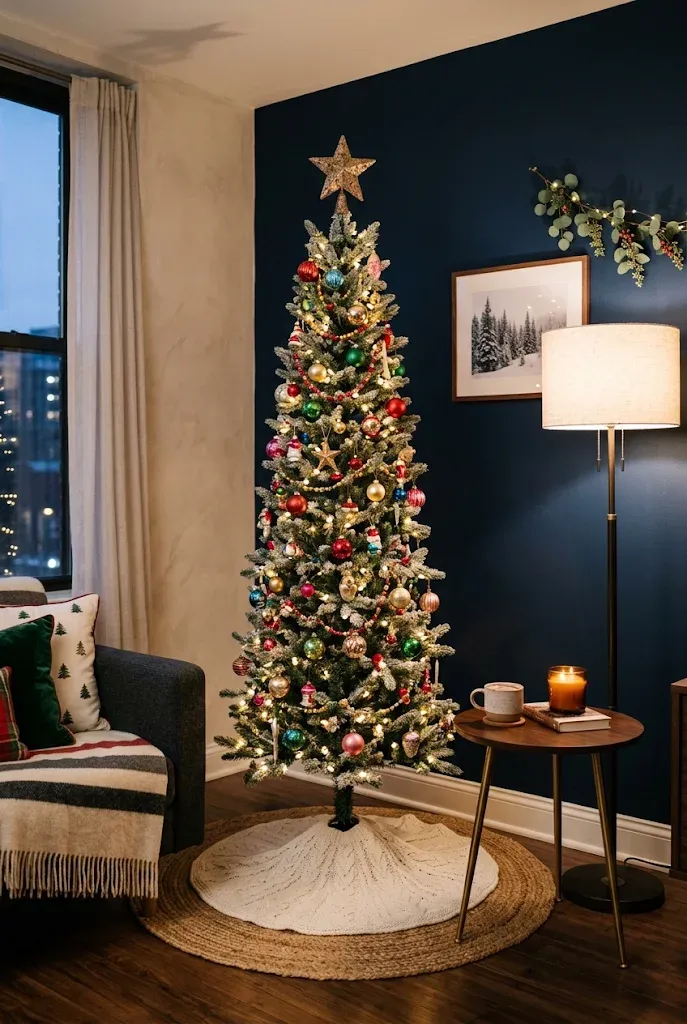
Narrow trees suit apartments and hallways, and a painted accent wall behind one can double the color impact. A deep green, navy, or pink wall behind a slim tree with multicolor ornaments creates a built-in backdrop.
Do: Check that the paint color doesn’t clash with your ornaments.
Don’t: Place a very busy ornament mix against a very busy wall pattern.
18. A Premium Layered Tree With Hand-Blown Glass and Wide Ribbon
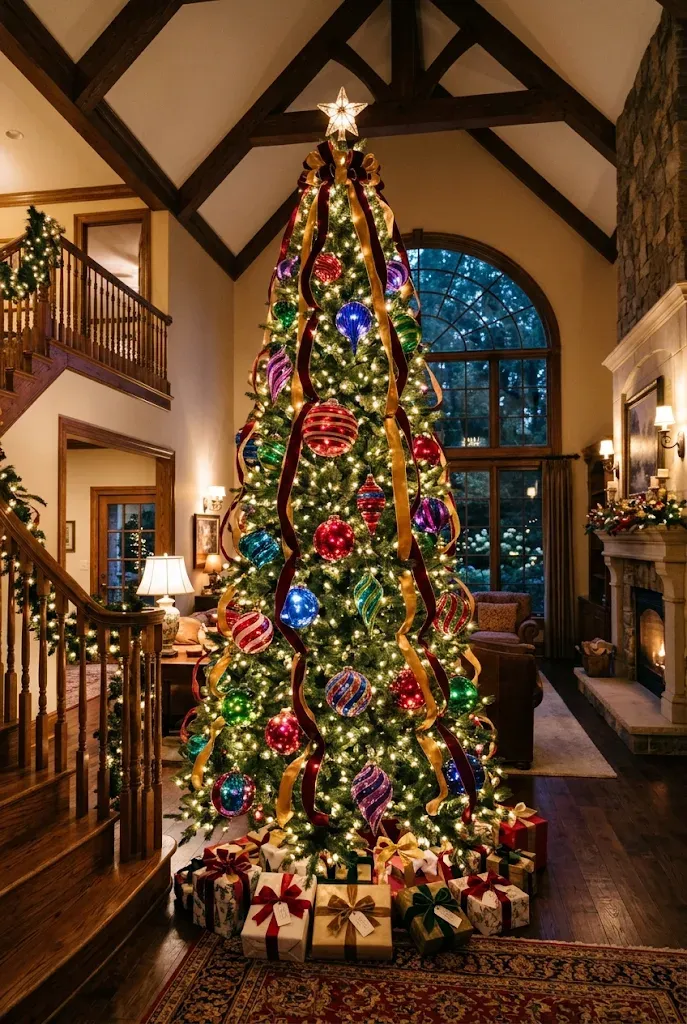
For a larger living room, a full tree with oversized hand-blown glass ornaments in saturated colors and wide ribbon cascades makes a high-end statement. The key is scale: bigger ornaments for the lower branches, medium in the middle, and smaller at the top.
Quick Facts
Best For: Larger rooms with high ceilings
Investment: Premium
Visual Effect: Layered, rich, gallery-like
19. A Colorful Porch Tree With Painted Planters
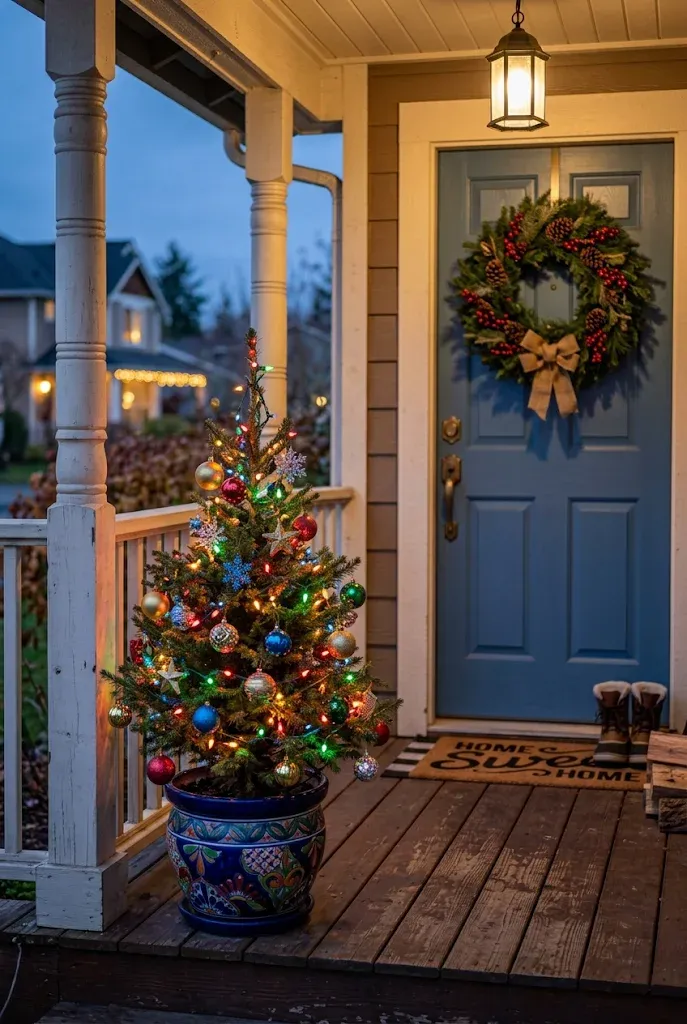
An outdoor tree adds welcome cheer to a covered porch. Use weather-appropriate lights and ornaments, and set the tree in a painted wooden planter or metal bucket in a bright color for extra contrast.
Editor’s Note: Check that lights and decorations are rated for outdoor use, and secure the tree against wind.
Choosing Your Starting Point
Start with one decision: do you want the color to come from the lights, the ornaments, or the ribbon? Then choose a palette of three to five shades and stick to it. If you’re short on space, start with the tabletop or pencil-tree ideas. If you want a family project, the paper chain and origami options are easy entry points.