

A traditional Christmas tree doesn’t depend on a theme. It depends on layers: warm light glowing from inside the branches, ribbon in a few familiar colors, ornaments that feel collected rather than bought as a set, and a topper that finishes the silhouette. That’s why a classic tree looks right in a 700-square-foot apartment and in a two-story colonial alike.
The ideas below cover traditional Christmas tree decorating from the inside out, including lighting, garlands, ornaments, toppers, and the space around the base. Some use things you may already own, like a strand of lights or a roll of ribbon. Others are small investments, such as a good set of glass ornaments or a heavy tree collar. Mix a handful of them and you’ll have a tree that looks classic without looking like a catalog page.
1. Warm White Lights Layered Deep Into the Branches
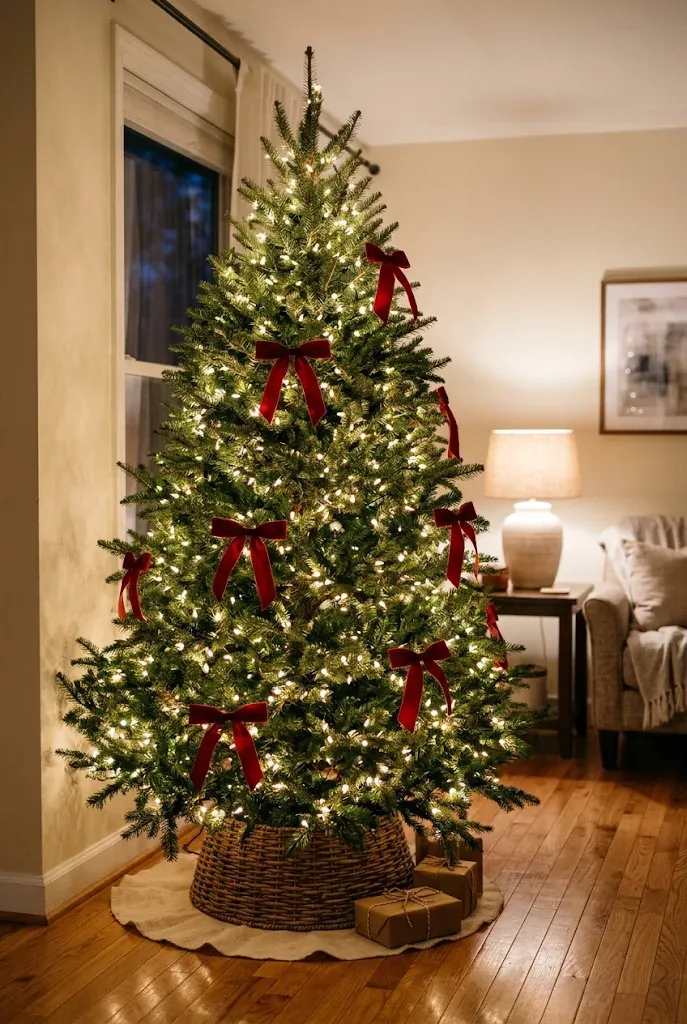
Lighting is the foundation of a traditional tree, and it’s easiest to get right at the start. Instead of draping strands around the outside, tuck lights toward the trunk and work outward in sections so the glow comes from within the tree. The branches pick up the light, and the tree reads as full even before ornaments go on.
Warm white bulbs give the familiar amber glow most people associate with a classic tree. Cooler white can look flat next to red and gold ornaments.
Quick Facts
Best For: Every tree, and the first step in any traditional look
Investment: Accessible
Visual Effect: Soft inner glow with visible depth
Tips & Tricks
- Test every strand before it goes on the tree.
- Plan on more strands than you think you need for a full-looking tree.
- Work from the bottom up in vertical sections rather than spiraling around.
- Use LED strands rated for indoor use to keep heat down.
2. Red Velvet Ribbon in Cascading Swags
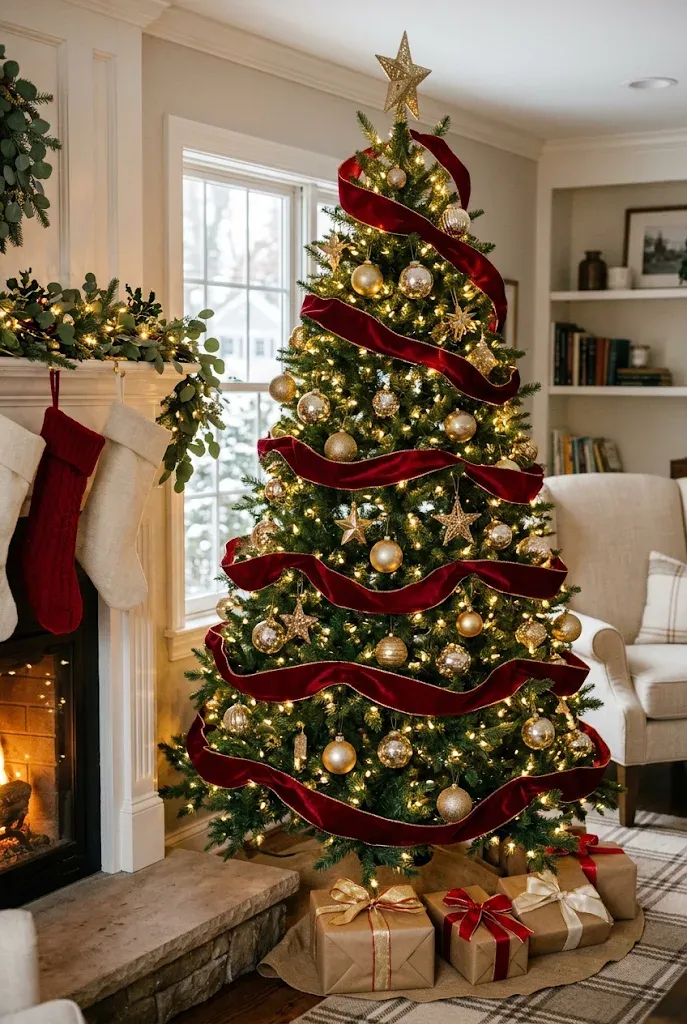
Velvet ribbon gives a tree a rich, old-fashioned finish that plain satin doesn’t. Wired ribbon about 2.5 inches wide holds its shape well, and a deep cranberry or true red reads as traditional without turning bright.
Instead of wrapping the ribbon around the tree in a single spiral, make loose swags: anchor the ribbon high, let it dip between branches, tuck it in, and continue. Letting each swag hang a little lower than the last creates movement that follows the tree’s cone shape.
Do: Cut the ribbon ends at an angle or in a V for a finished look.
Don’t: Pull the ribbon taut. A little slack is what makes it look draped.
3. Red and Gold Glass Ball Ornaments
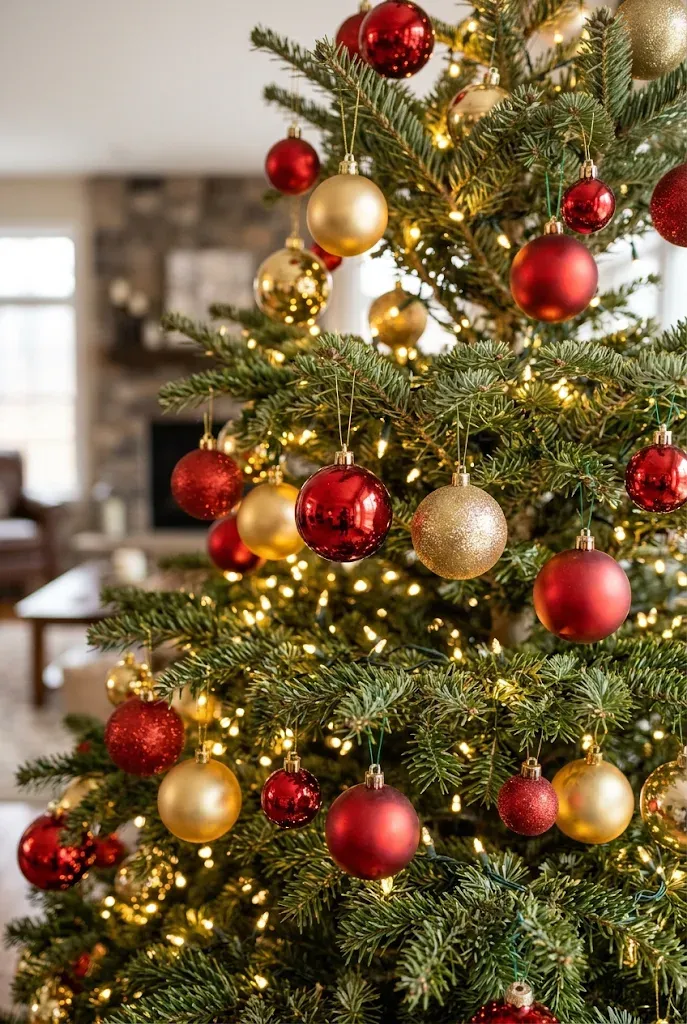
Red and gold is the best-known traditional Christmas tree color scheme, and it works because the two colors play different roles. Red supplies the saturation, and gold adds warmth and reflects the lights. Use a mix of finishes: shiny, matte, and glittered in both colors give the tree texture even though the palette is narrow.
Vary the sizes too. Large balls, around 3 to 4 inches, go deeper in the tree to fill gaps, while smaller ones hang near the tips of the branches.
| Finish | Effect | Best Placement |
|---|---|---|
| Shiny | Reflects the lights | Mid-branch, where light reaches |
| Matte | Adds depth without glare | Near the trunk |
| Glitter | Adds sparkle | Outer branch tips |
4. Cranberry and Popcorn Garland
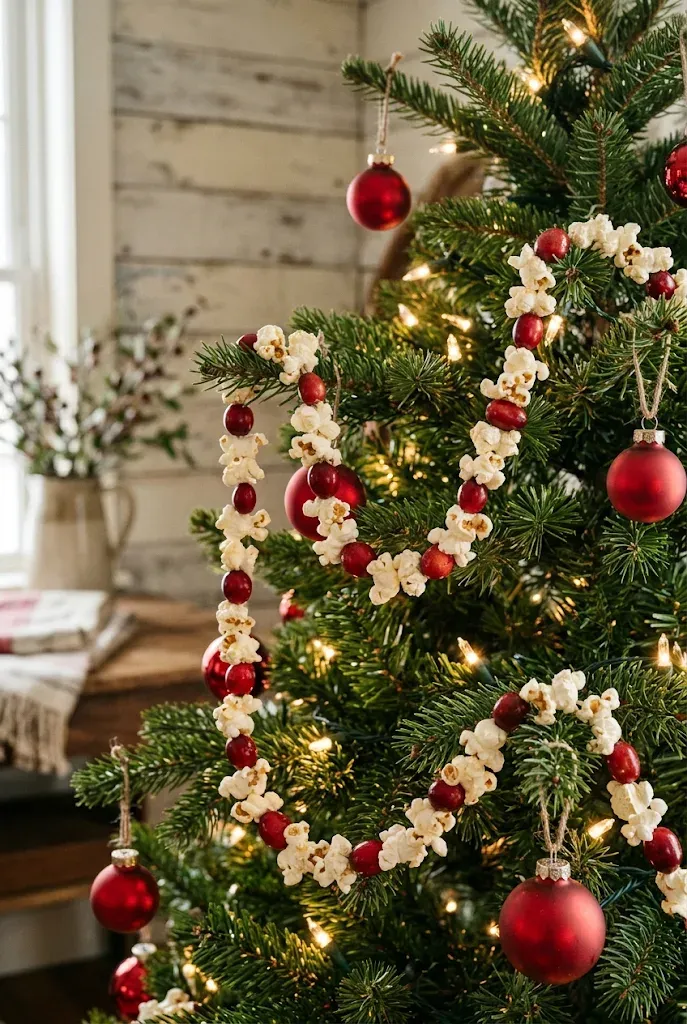
This is one of the oldest handmade tree trimmings, and it still looks charming against a green tree. Alternate fresh cranberries and air-popped popcorn on a length of sturdy thread, and the red-and-cream pattern gives the tree a soft, rustic contrast to shiny glass.
For the stringing itself:
- Pop the corn a day ahead so it dries slightly and is less likely to crumble.
- Use a long, sturdy needle and strong thread, such as upholstery or quilting thread.
- Alternate two or three popcorn pieces with one cranberry.
- Drape the garland loosely, since it’s heavier than ribbon.
Editor’s Note: Real food garlands are best for a short display. Faux cranberry and popcorn strands are a sensible alternative if the tree will stay up for weeks, and they can be stored and reused.
5. Natural Wood Bead Garland With a Touch of Red
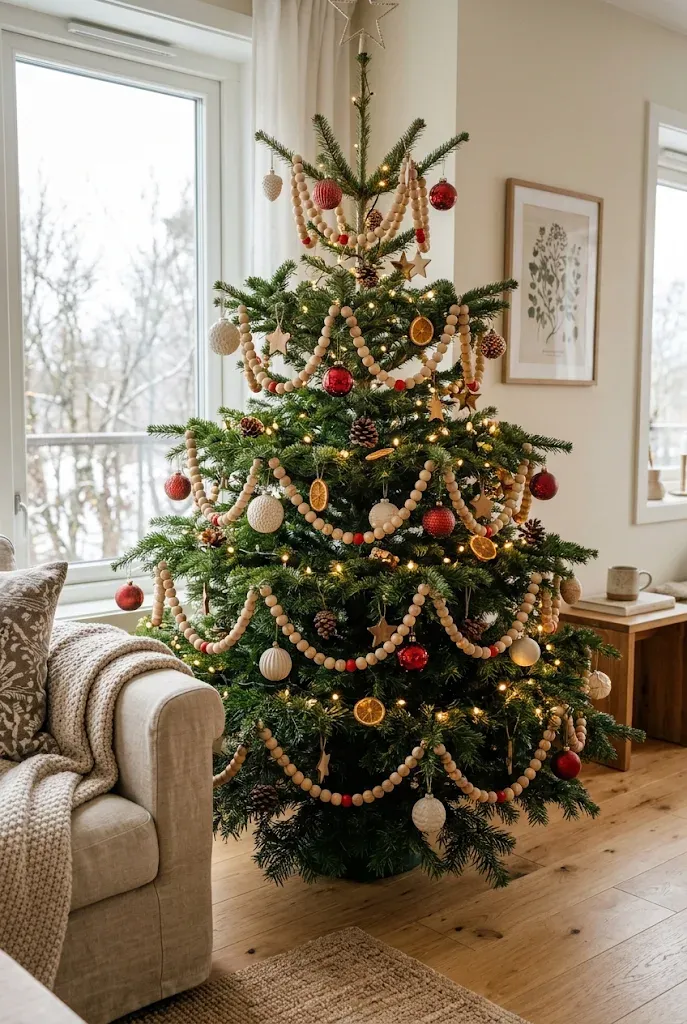
Wooden bead garlands work as a quieter alternative to tinsel or heavy ribbon. Natural wood tones sit well beside red and gold, and the beads add a handcrafted element. Look for beads in medium to large sizes, since tiny beads disappear into the branches.
Hang the garland in even, scalloped loops, and consider a mixed strand with a few red wood beads for a connection to the rest of the tree. It’s an accessible choice and easy to reuse year after year, because wood doesn’t crush or fade like paper does.
Quick Tip: Use two or three separate shorter strands rather than one very long one, so the loops stay even and you can adjust sections without redoing the whole tree.
6. Candy Canes and Peppermint Accents
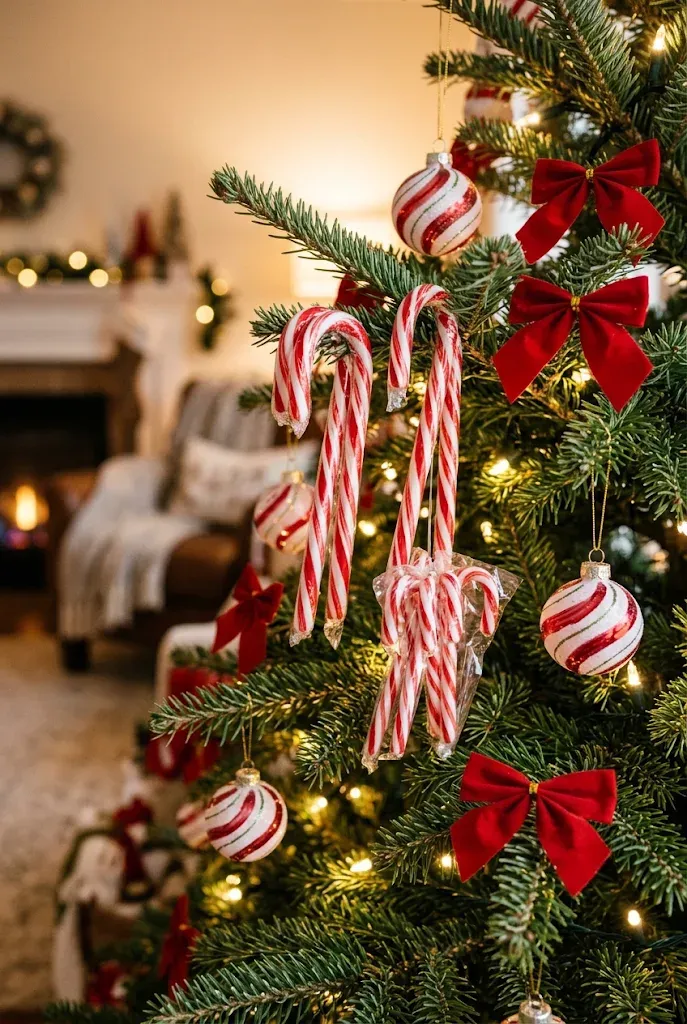
Candy canes are a familiar tree decoration, and the trick is to use them with restraint. Hung in a clustered pattern, say three or four canes in the same area, they read as a deliberate accent. Scattered one at a time across the tree, they can look random.
Pair them with red and white ornaments, and vary the sizes: standard canes, jumbo canes, and a few peppermint-style round ornaments in glass or resin. Hang canes near the front where they’re visible, and keep them away from the lowest branches if young children or pets are around, since they’re tempting.
7. Gingerbread Cookie Ornaments
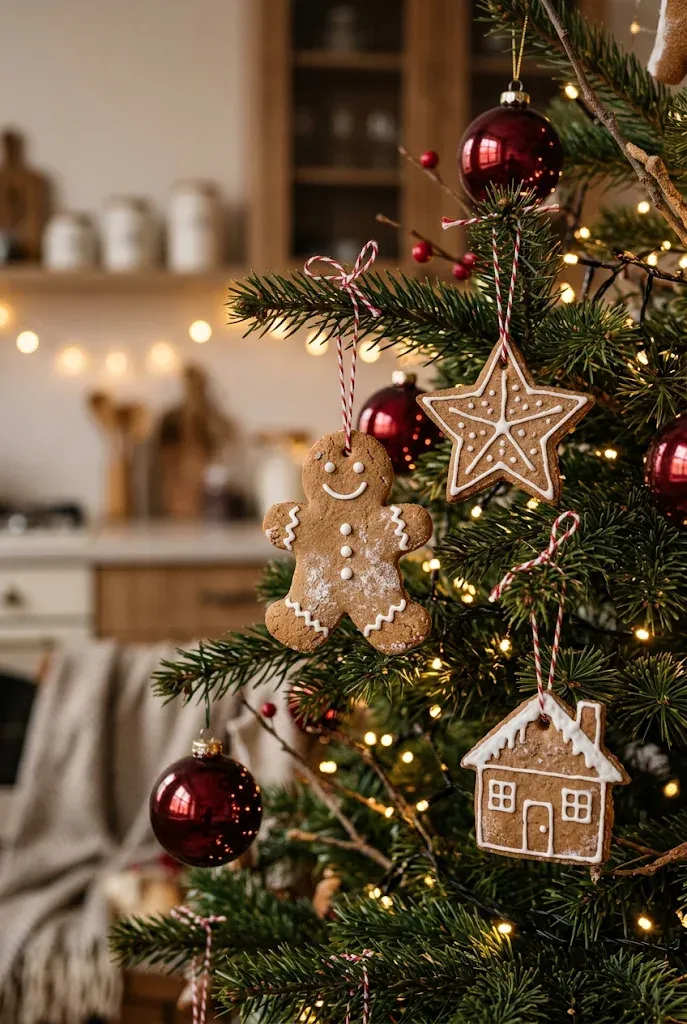
Gingerbread ornaments bring a warm brown tone to a tree dominated by red, green, and gold, and they add something handmade. You can bake real ones with a sturdy, low-moisture dough that’s meant for hanging, or buy faux versions made from felt, wood, or resin.
Real baked ornaments are fine for a season but aren’t meant to be eaten once they’ve hung on a tree. Decorate with simple white icing lines, which look classic, instead of heavy candy decoration.
Common Mistake: Hanging soft, edible gingerbread cookies.
Better Approach: Use a dedicated craft-style dough that dries hard, or choose reusable faux ornaments, and punch the hanging hole before baking.
8. Vintage-Style Mercury Glass Ornaments
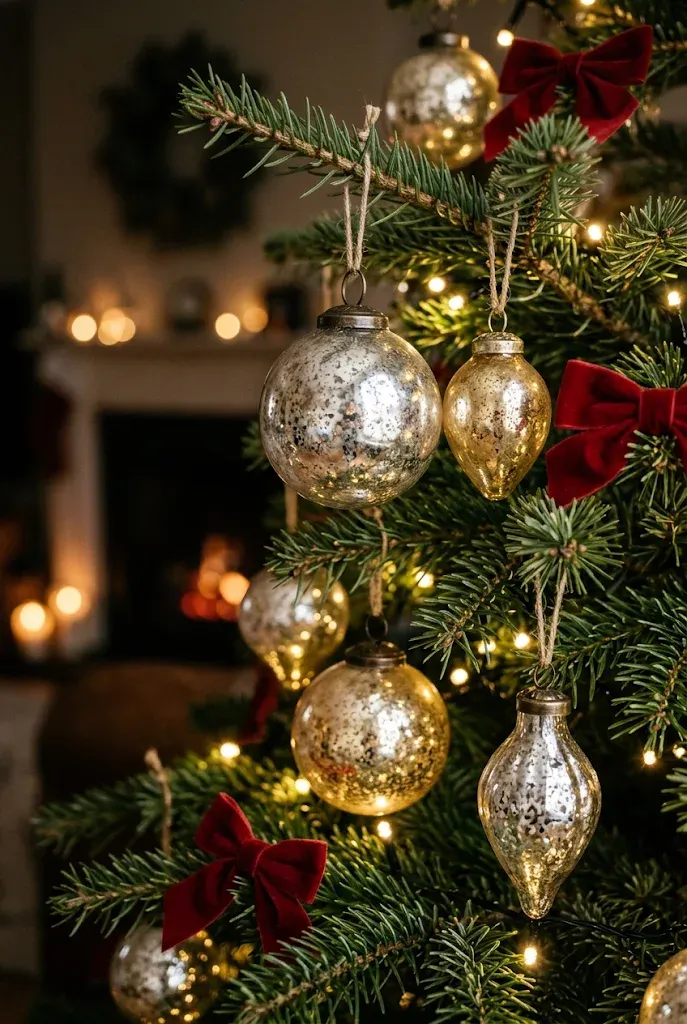
Mercury glass has a soft, aged-silver finish that adds a gentle antique feel without looking worn. In silver, gold, or champagne, these ornaments add a muted shimmer that sits well beside brighter red ornaments. Because the finish is more subdued than standard mirrored glass, it works especially well in mid-sized groupings.
This is a good place to spend a little extra. A set of good-quality mercury glass ornaments looks noticeably different from thin plastic imitations, and glass stored carefully in dividers lasts for years.
Editor’s Note: Hang mercury glass where lights can reach it. In a dim area of the tree the finish looks dull, but a nearby bulb brings out its soft glow.
9. Nutcrackers and Toy Soldier Ornaments
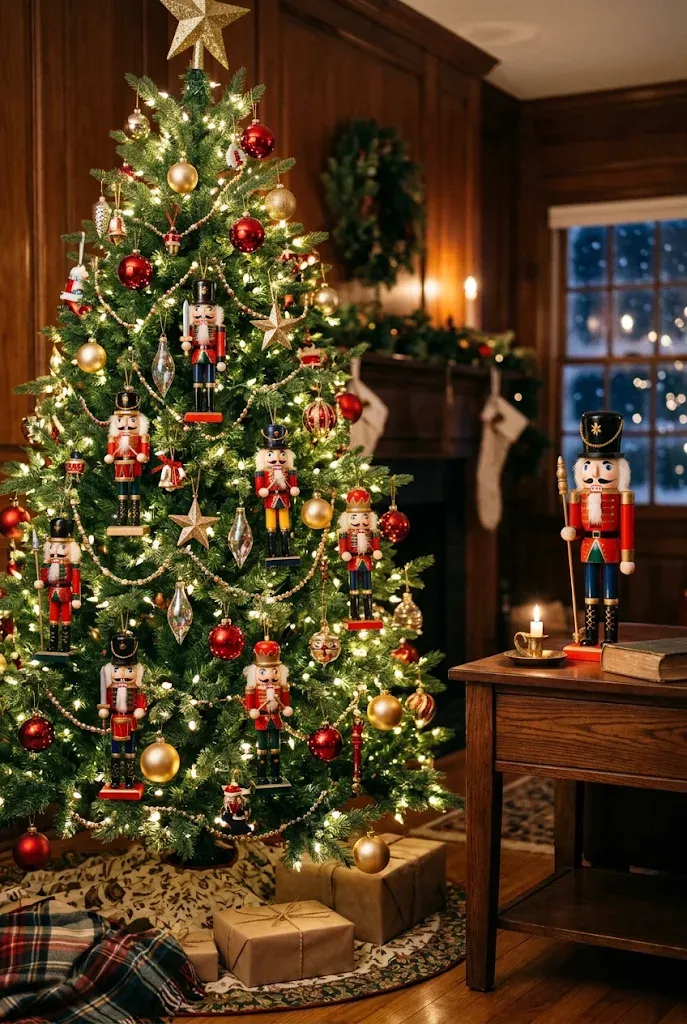
Nutcracker and toy soldier ornaments add a storybook element with traditional red coats, black boots, and gold trim. Because they’re figures rather than shapes, they work best as focal points, spaced out across the tree instead of grouped.
Look for ornaments in wood, resin, or painted metal, and choose a few in varied sizes. Placing the larger ones a little lower and the smaller ones higher creates a natural visual rhythm.
10. Clip-On Candle-Style Lights
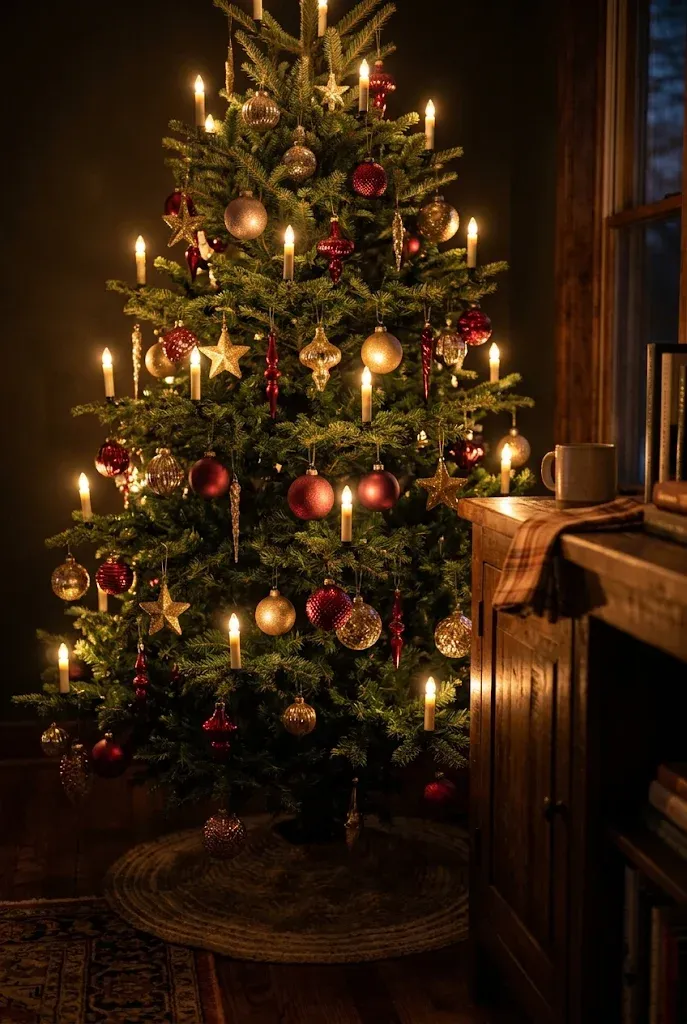
Candles on a tree are part of Christmas history, and today the look is easy to get safely with battery-operated LED candle clips. They’re smaller than regular bulbs and give a flickering, upright glow that feels distinct from standard string lights.
Use them as an accent layer on the outer branches, over a base of warm white strands, rather than as the only light source. Space them evenly on sturdy branches so they sit upright.
Editor’s Note: Never use real flame candles on a tree, particularly a cut one. LED versions give the look without the risk.
11. A Gold Star Topper
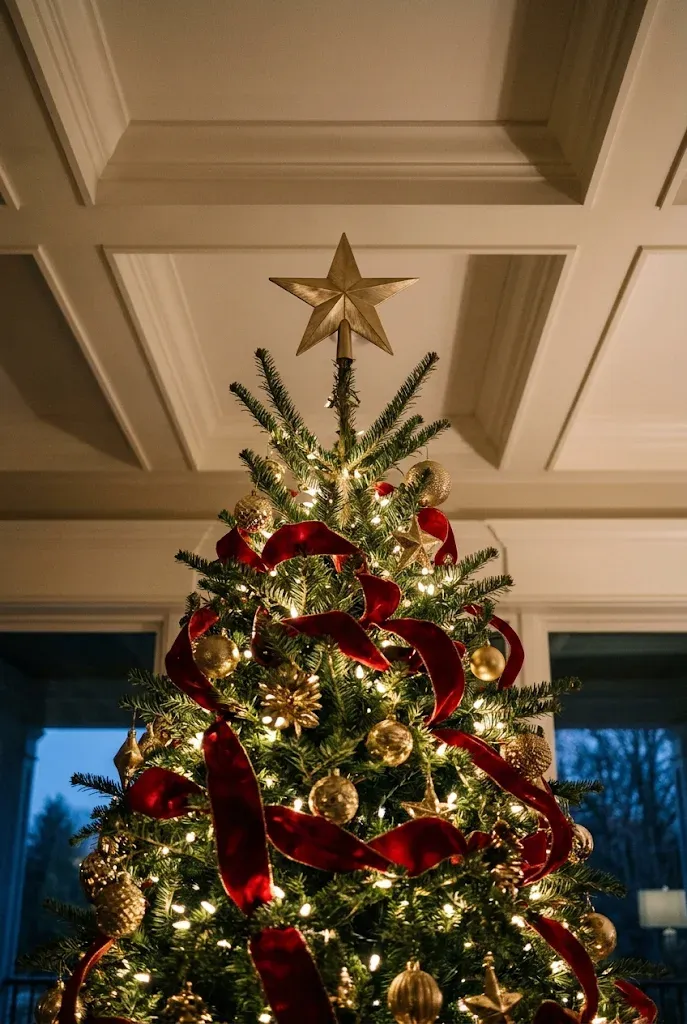
A star is the most recognizable tree topper, and a gold one fits a traditional palette. The key is scale: the topper should be proportional to the top third of the tree. A star that’s too small disappears, and one that’s too large makes the tree tip.
Choose a finish that suits the rest of the tree. Brushed or matte gold looks softer next to velvet and wood. Mirror-polished gold pairs better with glass and glitter.
Tips & Tricks
- Trim or bend the top branches so the topper sits straight.
- Secure it with floral wire or twist ties if it leans.
- Run a bit of ribbon down from the star to connect it to the garland.
12. An Angel Tree Topper With Soft Details
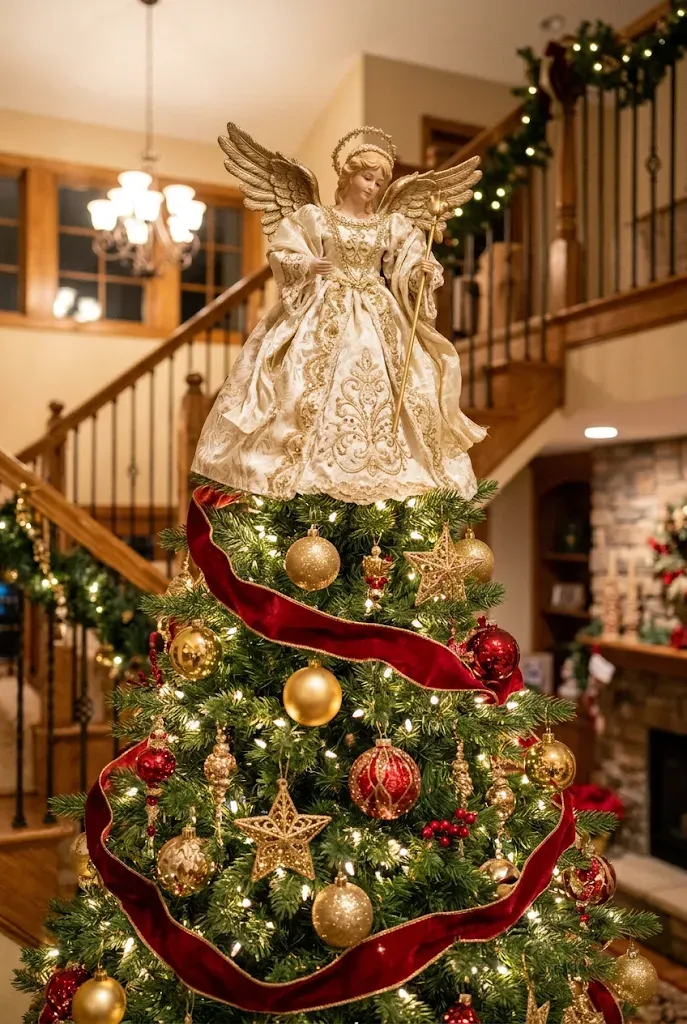
An angel topper is a more sentimental alternative to the star. Look for details such as a fabric gown, gold wings, or a porcelain face, and choose a topper that fits the tree’s height. Heavier toppers need a sturdy top branch.
Cream, white, and gold angels work best with a red-and-green tree because they stand out without competing. Place a few smaller angel ornaments lower on the tree to carry the theme down.
Common Mistake: A heavy topper bends the leader and tilts forward.
Better Approach: Reinforce the top branch with a stiff wire or a short dowel along the trunk, and tie the topper on securely.
13. Tartan Plaid Bows
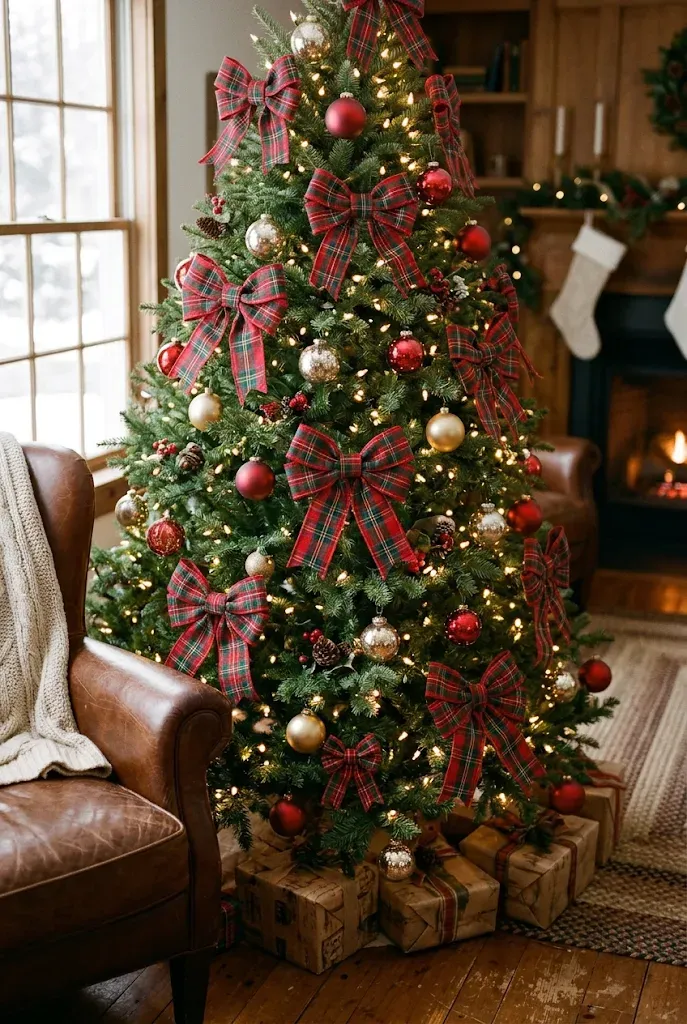
Plaid ribbon in red and green or red and black is one of the quickest ways to make a tree look classically Christmas. Bows made from wired plaid ribbon in a medium width hold their shape and can be tucked into the tree wherever there’s a gap.
Make them in a consistent style, say a simple looped bow with two tails, but vary the sizes. Large bows near the middle and smaller ones near the top give the tree a layered finish.
Do: Repeat the same plaid throughout so it reads as intentional.
Don’t: Mix several competing plaids on one tree unless they share a color.
14. Pinecones and Dried Orange Slices
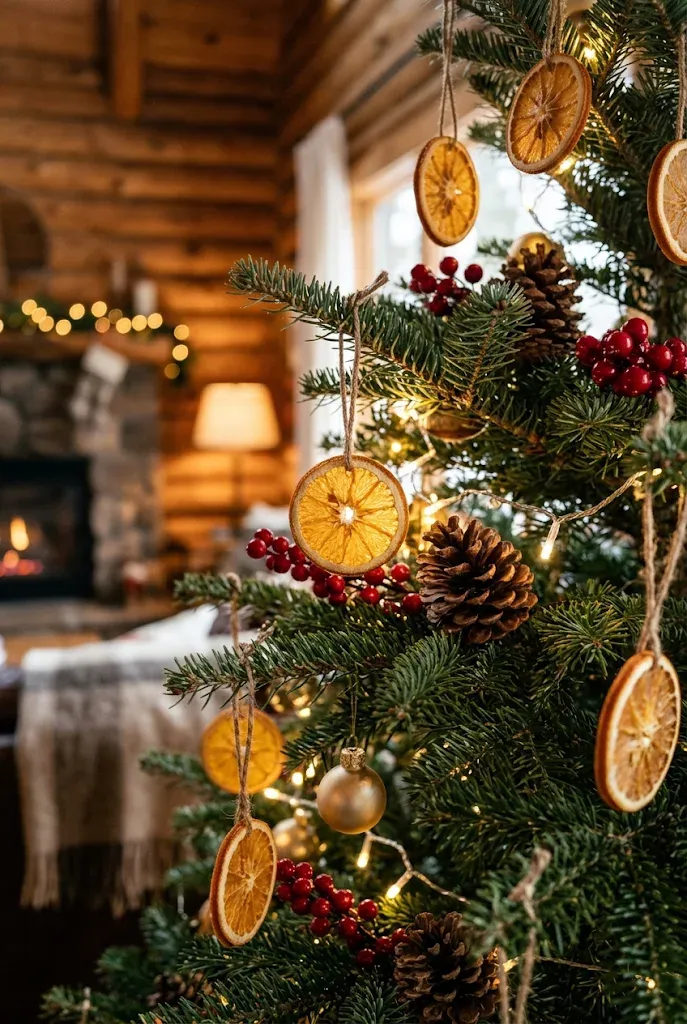
Natural elements ground a traditional tree and tie it to the season. Pinecones in varied sizes add texture, and dried orange slices bring a translucent amber color that glows when lights shine through them.
Both are accessible, and both can be made at home. Slice oranges thin and dry them in a low oven until they’re no longer sticky, then thread twine through for hanging. Wire small loops onto pinecones so they hang securely.
Place orange slices where a light can sit behind them, and put pinecones nearer the trunk to give the tree weight and depth.
15. Silver Icicle Tinsel for a Retro Shimmer
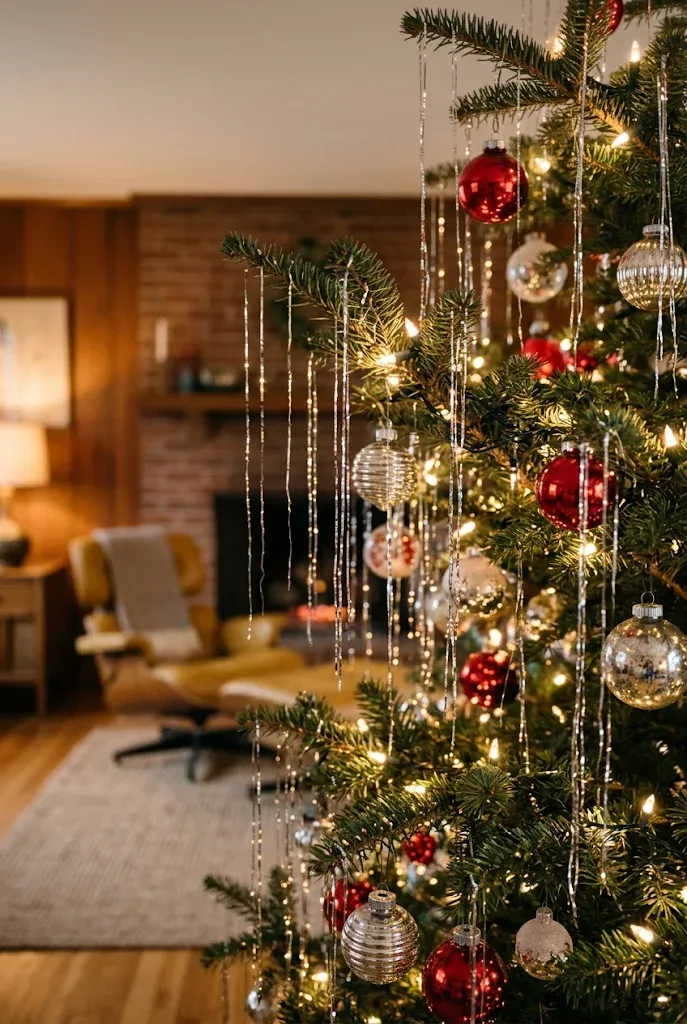
Tinsel icicles are a nostalgic touch from earlier decades, and a few strands add movement and sparkle to a tree. The old method, hanging them one strand at a time, still looks best: drape each one over a branch tip so they hang straight down rather than clumping.
Use them with restraint. A light touch adds shimmer, and heavy coverage can overwhelm the ornaments. Silver pairs well with red and green and with warm lights.
Quick Tip: Hang tinsel last, after the ornaments, so you can place it where it catches light without covering anything.
16. A Plaid Tree Skirt and Kraft-Wrapped Gifts
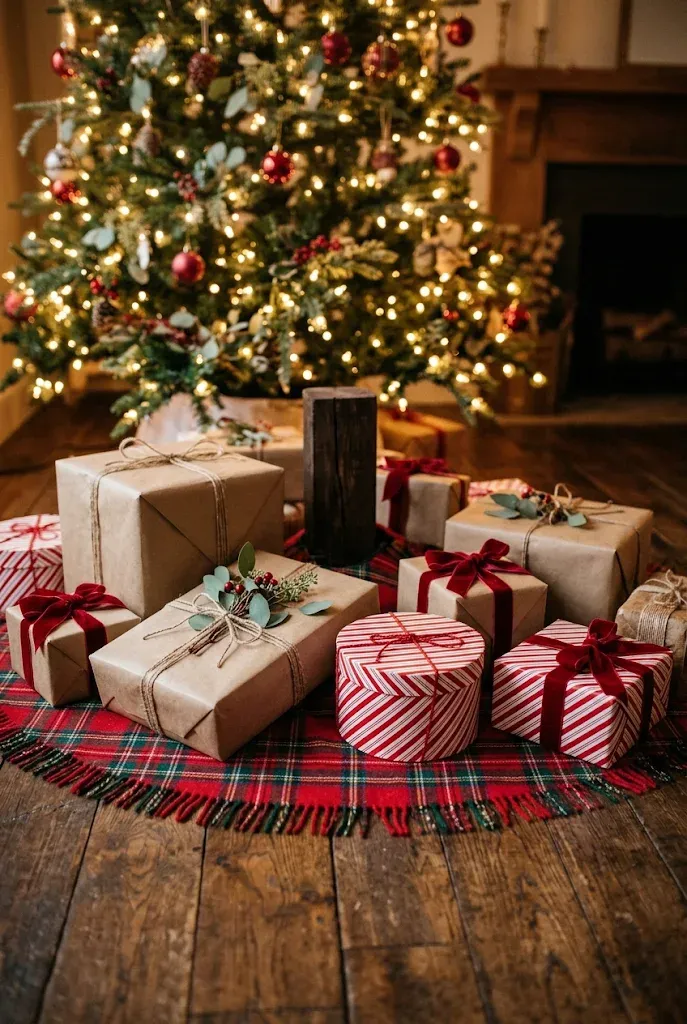
What sits at the base finishes the tree as much as what hangs on it. A red or tartan tree skirt hides the stand and defines the base, and gifts stacked on top add height and color.
For a classic look, wrap gifts in kraft paper tied with red twine or velvet ribbon. The brown paper adds warmth and ties in with wood and natural elements, and mixing a few red-and-white-striped packages keeps it traditional. Stack in layers, with larger boxes at the back and smaller ones in front.
| Base Option | Look | Practical Note |
|---|---|---|
| Fabric tree skirt | Soft, traditional | Can be shaken out and stored flat |
| Wicker or galvanized collar | Rustic, structured | Easier to reach water for a real tree |
17. Heirloom and Family Ornaments, Placed First
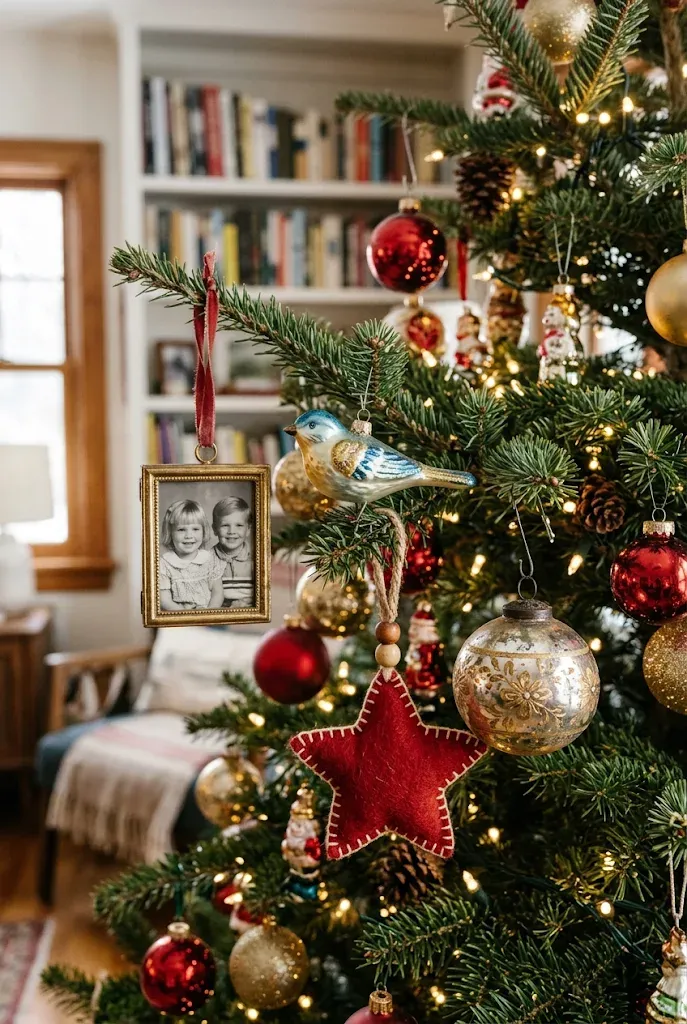
For many families, the most traditional tree is the one that holds the ornaments they already own: gifts from relatives, souvenirs, handmade pieces from children. The way to make these work with a cohesive look is to hang them first and fill in with matching ornaments after.
Place meaningful ornaments at eye level, where they’re easiest to see. Then build the color scheme around them. Photo ornaments in simple gold or wood frames are a good addition because they blend in with a classic palette.
Tips & Tricks
- Use sturdy hooks for heavier ornaments so they don’t slip.
- Keep fragile glass pieces away from the lowest branches.
- Wrap and label each ornament in storage so next year’s setup goes faster.
Editor’s Note: A tree that mixes ornaments from several decades can look more intentional than a single matched set, as long as a consistent color thread, such as red or gold, runs through it.
Putting the Look Together
You don’t need all 17 ideas on one tree. A reliable order is lights first, then ribbon or garland, then large ornaments, then smaller accents, and finally the topper and base. Pick one color pair, such as red and gold, and two or three textures, such as velvet, glass, and natural wood, and the tree will look cohesive even if you add a few personal pieces.
If you’re starting with a budget in mind, put the money into lights and a quality set of glass ornaments, and make the garland and natural pieces yourself.