

A Scandinavian Christmas tree rarely relies on a lot of glitter. The look comes from restraint: a few materials repeated with intention, soft light, and ornaments that feel handmade even when they aren’t. Straw, wool, wood, linen, paper, and clay do most of the work, and the tree itself stays the star.
That approach suits American homes well. It works on a full-size fir in a suburban living room, a tabletop tree in a rental, or even a bundle of branches in an apartment corner. Below are 20 Scandinavian Christmas tree ideas, each built around a different natural texture or design principle. Some cost almost nothing and can be made in an evening. Others are worth saving up for. Pick one idea to copy exactly, or borrow a detail or two and mix them.
1. Dress a Slim Spruce in Straw Ornaments
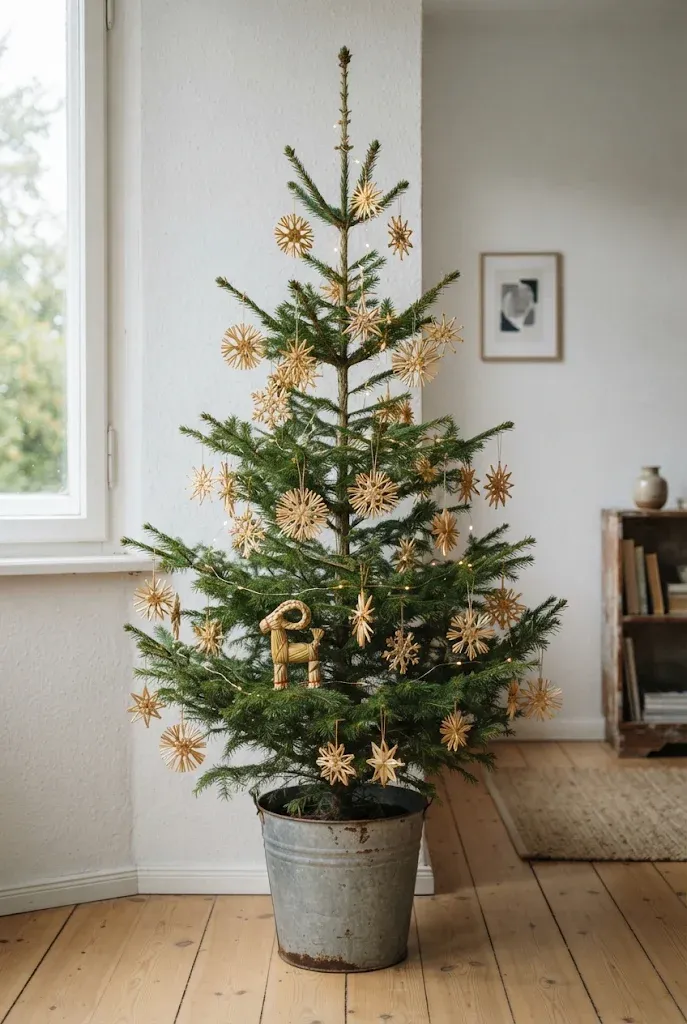
Straw is probably the most recognizable material in Nordic Christmas decorating. Small stars, snowflakes, hearts, and the traditional Yule goat (julbock) all take well to it, and the pale gold color glows against dark green needles. Keep the ornaments in a narrow range of sizes so the tree reads as calm rather than busy.
Hang larger straw pieces on the lower and middle branches, and tuck smaller stars closer to the trunk where they catch the light. A narrow, pencil-style spruce or fir shows them off better than a very full tree, because the ornaments aren’t swallowed by dense branches.
Quick Facts
Best For: First-time minimalist trees, apartments
Investment: Accessible
Visual Effect: Warm, matte, softly golden
2. Hang Woven Paper Hearts in Red and White
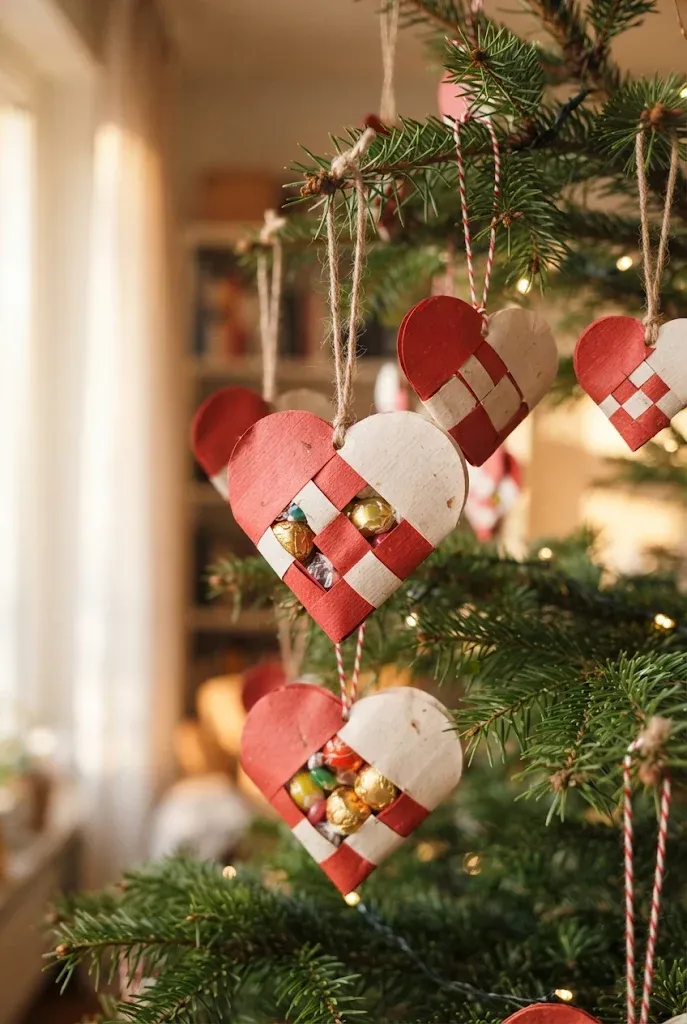
Woven paper hearts are a classic Danish-style ornament, and they’re one of the easiest ways to bring in color without breaking a natural palette. Two interlocking layers of paper form a small pocket, which means each heart can hold a candy, a nut, or a tiny note.
Because the red and white pairing is so graphic, the rest of the tree can stay quiet. Think plain branches, a wooden-bead garland, and perhaps a few straw pieces.
Simple method:
- Cut two identical paper strips, one red and one white, with a rounded end on each.
- Make parallel cuts along the length of each strip, stopping short of the fold.
- Weave the strips together, alternating over and under, until the heart closes.
- Add a thin loop of cotton thread at the top for hanging.
Quick Tip: Use heavier paper than ordinary printer paper. Lightweight sheets sag and lose their heart shape once they hold anything.
3. String a Wooden Bead Garland Through the Branches
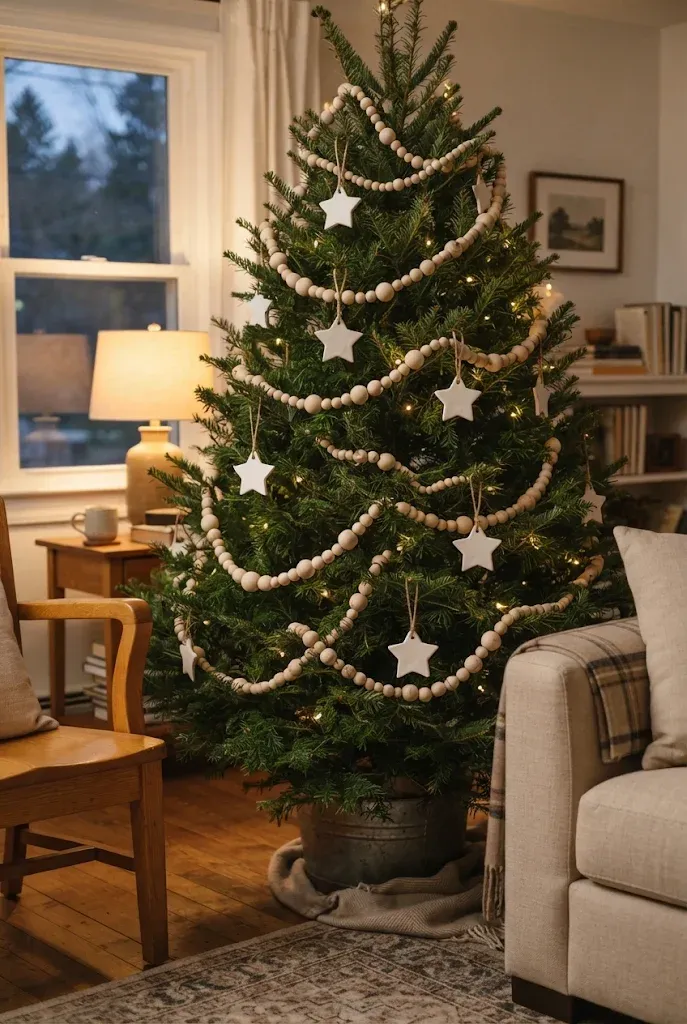
Instead of draping a garland in a heavy swag, run natural wood beads in loose, uneven loops from top to bottom. The rounded shapes add a gentle rhythm, and the wood tone ties the tree to the floor, shelving, or furniture nearby.
Choose beads in two or three sizes and a single tone, such as birch, beech, or lightly stained oak. Mixing very different wood colors can look scattered. Where beads are strung on thin cord, let the cord tuck behind the needles so the beads seem to float.
Common Mistake: Wrapping the garland tightly around the tree like a spiral.
Better Approach: Drop it in looser, varied scoops. The irregular spacing looks more relaxed, and the tree keeps its natural silhouette.
4. Use a Branch Bundle in a Crock Instead of a Full Tree
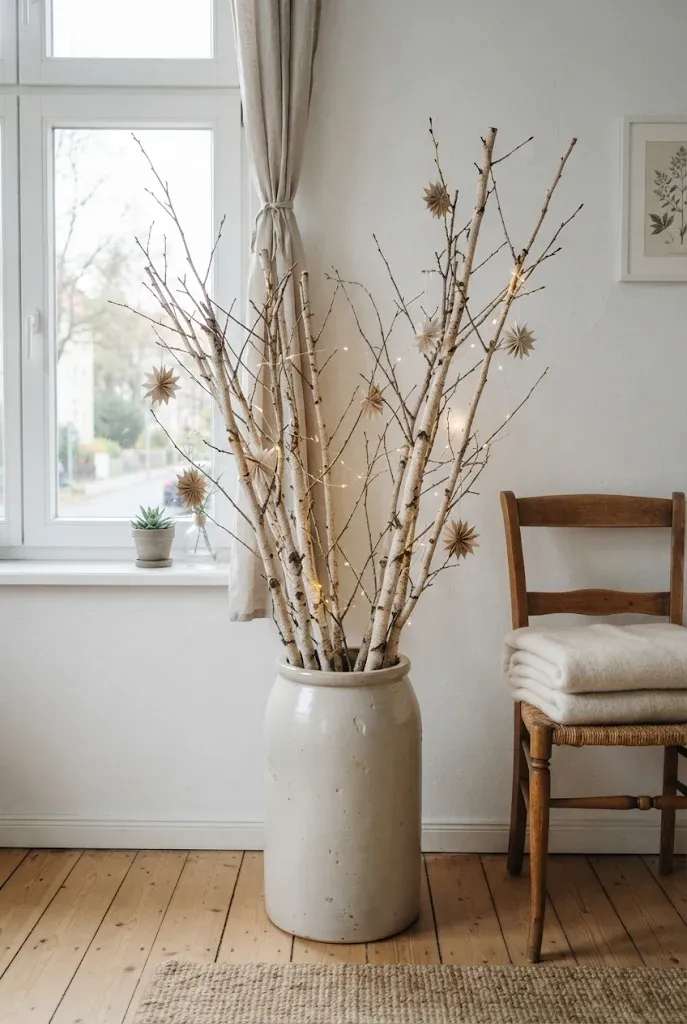
For renters, small apartments, and anyone who dislikes handling a large tree, a bundle of bare birch or similar branches in a heavy stoneware crock gives the same Nordic feel with less commitment. It takes up little floor space and works beautifully with a few light ornaments.
Hang small paper stars, tiny wooden shapes, or white porcelain pieces from the branches, and weave in a battery-powered micro-LED strand. The bare, pale branches suit the Scandinavian preference for open space and negative room around the decoration.
Tips & Tricks
- Fill the crock with stones or sand to keep the branches upright.
- Keep ornaments very light; thin branches bend under heavy glass.
- Choose a vessel with a matte finish rather than a glossy one.
- Anchor the base by wrapping the bottom of the branches with twine.
5. Light the Tree With Warm White, Not Colorful Bulbs
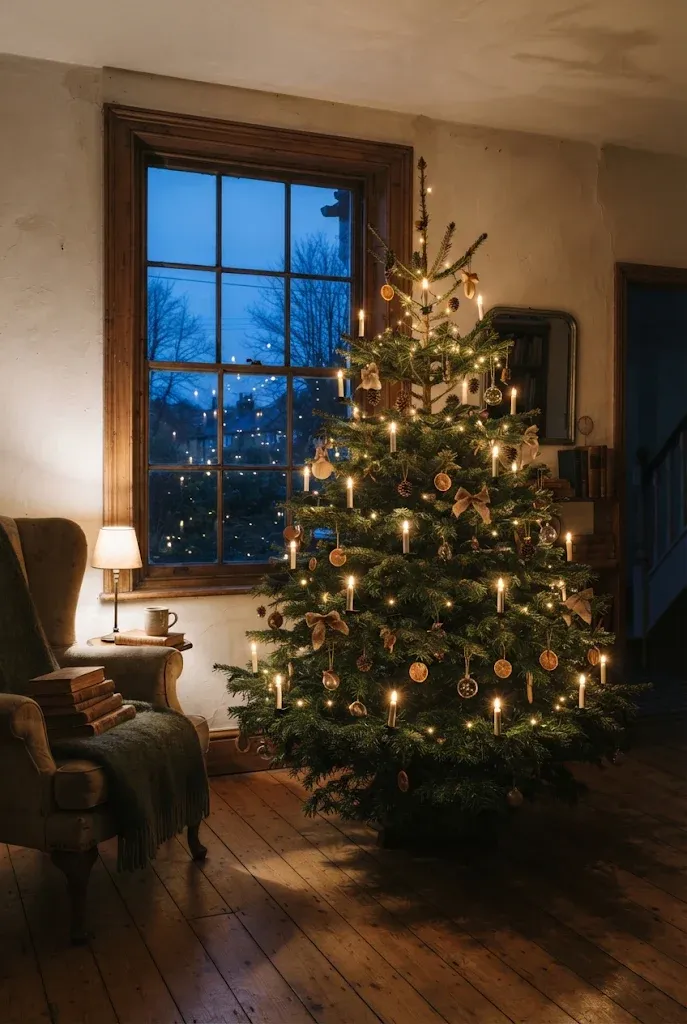
Tree lighting matters more than most ornaments in this style. Warm white lights, spaced evenly and woven deep into the branches, give the tree an amber glow that echoes candlelight. Traditional Nordic trees were lit with real candles, but those carry a genuine fire risk on cut trees, so most homes today use modern alternatives.
| Lighting Option | Effect | Best Fit |
|---|---|---|
| Warm white mini lights | Even, soft glow | Most trees and budgets |
| Clip-on LED candle lights | Candle-like look without flame | Trees that want a traditional silhouette |
| Micro-LED wire strands | Delicate, almost invisible wires | Branch bundles and tabletop trees |
Do: Check cords and plugs before use, and keep lights well away from dry needles if the tree is real.
Don’t: Place open flame candles on or near any cut tree.
6. Hang Dried Orange Slices and Cinnamon Sticks
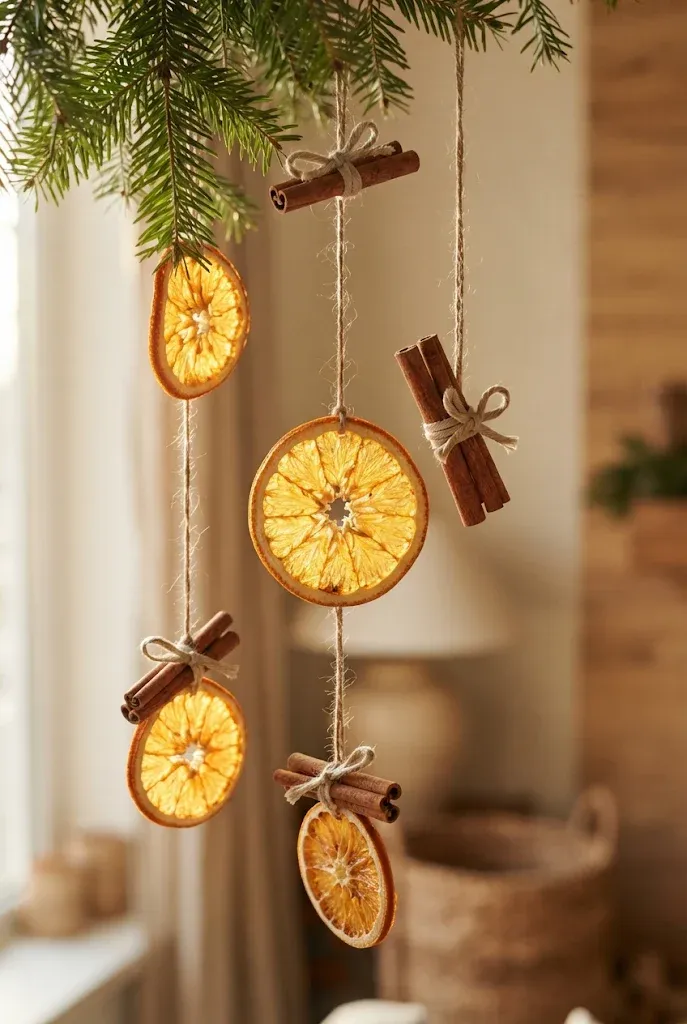
Dried citrus adds a translucent, amber quality that no plastic ornament imitates. Slice oranges thinly, dry them in a low oven (many home bakers use around 200°F for a few hours, turning occasionally) until the slices are firm and no longer sticky, then thread each one with twine.
Pair the slices with bundled cinnamon sticks and a few cedar or pine sprigs for a tree that smells as good as it looks. The color is warm but subtle, so it fits a natural palette of green, brown, and cream.
Tips & Tricks
- Slice evenly, as thin slices dry faster and look clearer.
- Dry in the oven rather than relying on air alone to prevent mold.
- Store leftover slices in a dry box for next year.
- Expect natural scent to fade over time; it’s a bonus, not a guarantee.
7. Replace Shiny Ribbon With Undyed Linen Bows
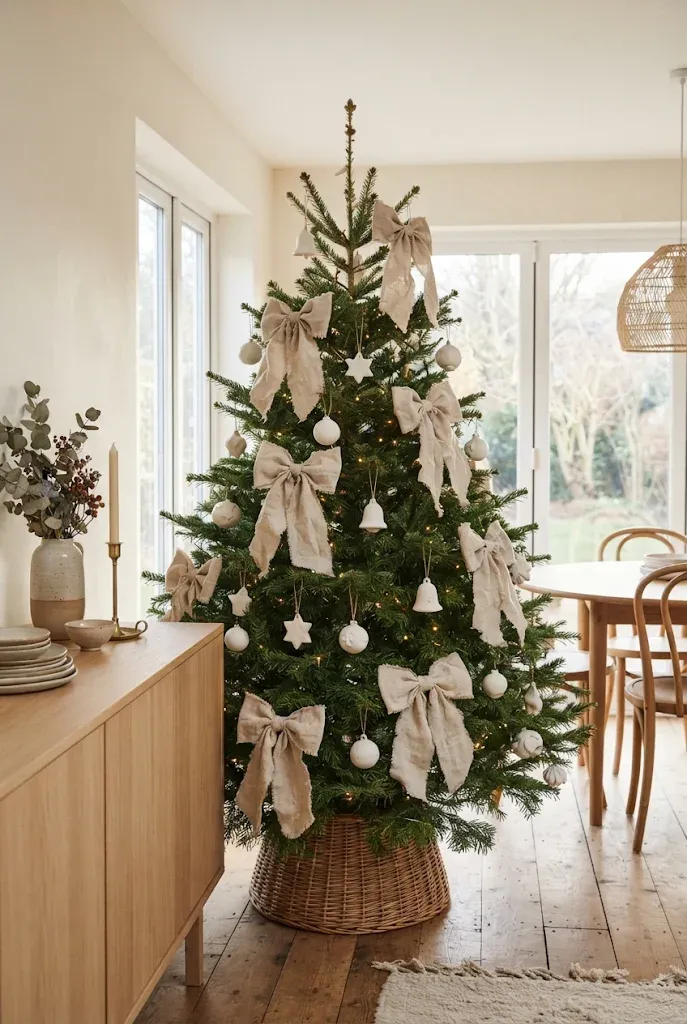
Linen has a dry, slightly rough texture that suits Scandinavian interiors, and it looks refined without being formal. Tie oversized bows from wide, raw-edged linen ribbon and place them at intervals, with the tails left slightly uneven.
Natural, oatmeal-colored linen works best. Because the fabric is matte, it contrasts nicely with a glass or ceramic ornament nearby. A single bow near the top and a few scattered lower down give the tree structure without overloading it.
Editor’s Note: Wired ribbon holds its shape better, but unwired linen drapes more naturally. If you want the relaxed look, use a bit of floral wire hidden in the knot to hold the bow position.
8. Add Wool Felt Ornaments in Muted Tones
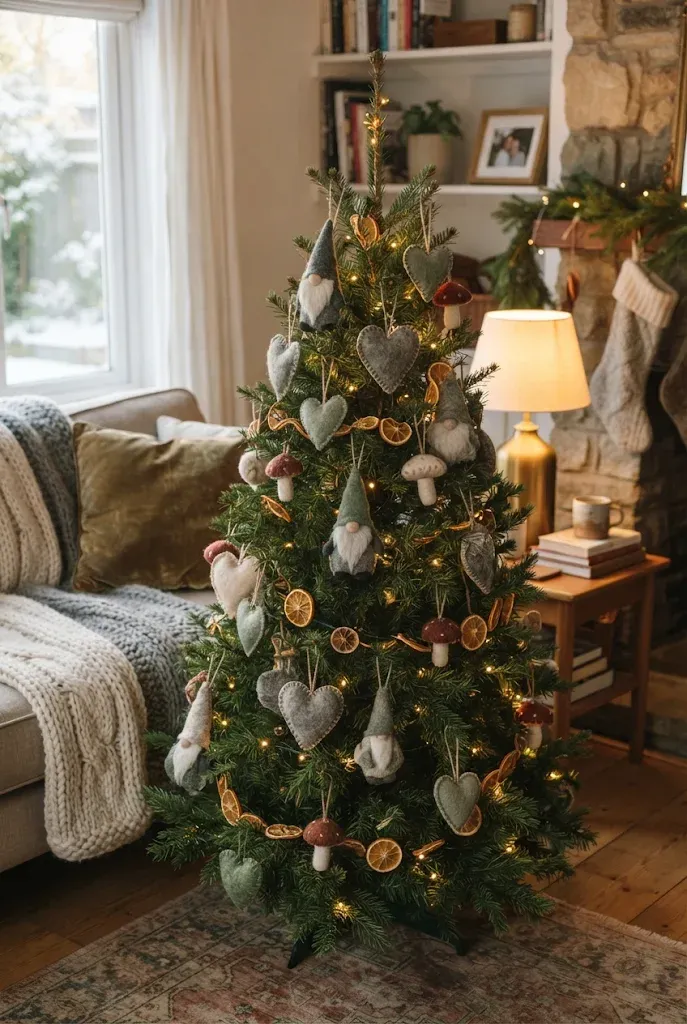
Wool felt gives the tree a soft, tactile layer. Small gnomes (tomte), hearts, mushrooms, and simple tree shapes in dusty grey, sage, cream, and a touch of faded red all feel at home on a Nordic tree.
Stick with a muted palette to keep the effect cohesive. Hand-stitched edges add character, but even machine-cut shapes look good when kept simple. Felt ornaments are lightweight, so they sit comfortably on tabletop trees and thinner branches.
Quick Facts
Best For: Families, anyone who likes handmade details
Investment: Accessible to moderate, depending on whether you buy or make them
Visual Effect: Soft, cozy, slightly whimsical
9. Style a Tabletop Tree on a Wooden Crate
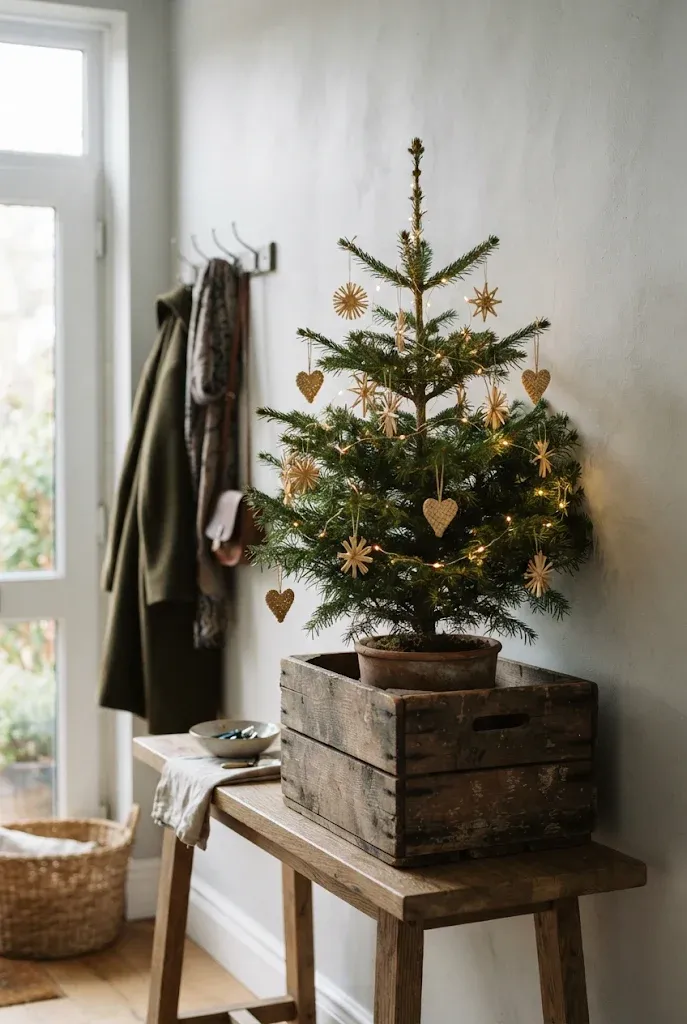
A small tree fits where a full-size one won’t: a console, window ledge, or entry bench. Raise it on a vintage-style wooden crate or low stool so it has presence, then keep the decoration scaled to match. Tiny straw stars, miniature paper hearts, and a very fine light strand are enough.
Because the scale is small, a single natural texture repeated carefully reads better than several competing ones. Place the tree where the light can reach it from a nearby window and the glow will carry across the room in the evening.
Quick Facts
Best For: Apartments, dorm-sized rooms, entryways
Investment: Accessible
Difficulty: Easy
10. Hang Pinecone and Acorn Ornaments
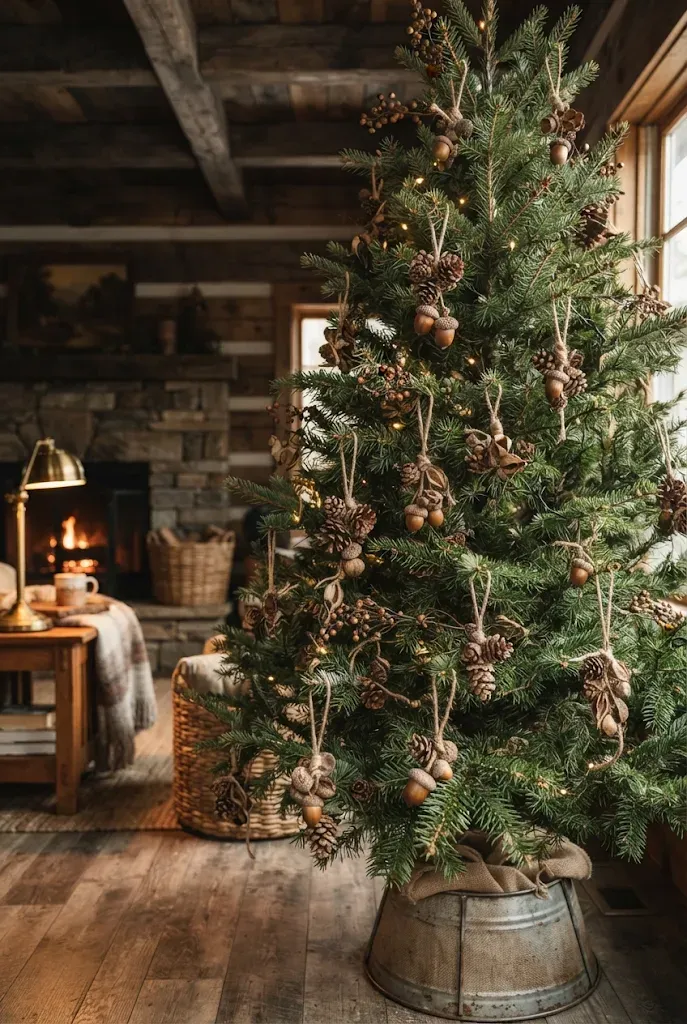
Foraged pinecones, acorn caps, and dried seed pods supply the sort of forest-floor texture that suits a Nordic tree. Cluster two or three small pinecones with a ribbon bow, or glue acorn caps to a felt circle, and hang them in small groups.
If you collect your own, pinecones can carry insects or sap, so many crafters bake them briefly on a low setting before using them indoors. Clean, dry material also keeps the tree’s needles from picking up resin.
11. Wrap the Base in a Chunky Knit Tree Skirt
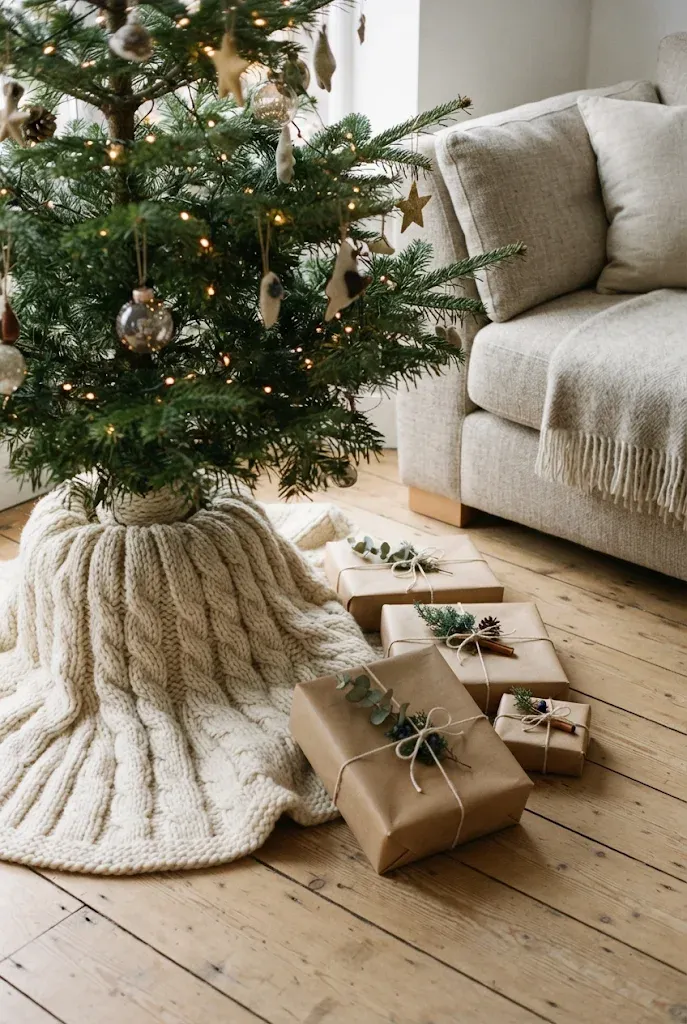
A knit tree skirt softens the line where the tree meets the floor and carries the wool texture down to eye level. Choose cream, oatmeal, or light grey, and look for a loose, chunky stitch that has visible depth.
Fit matters. A skirt that’s too small leaves the stand exposed, while one that’s too large looks like a rug. Let the edges fall naturally and keep gifts wrapped in plain paper so the base looks cohesive.
| Base Option | Effect | Best Fit |
|---|---|---|
| Chunky knit skirt | Soft and cozy | Living rooms with rugs or wood floors |
| Woven basket collar | Structured and natural | Smaller trees |
| Plain linen wrap | Clean, quiet | Minimal rooms |
12. Choose Matte Handmade Ceramic Ornaments
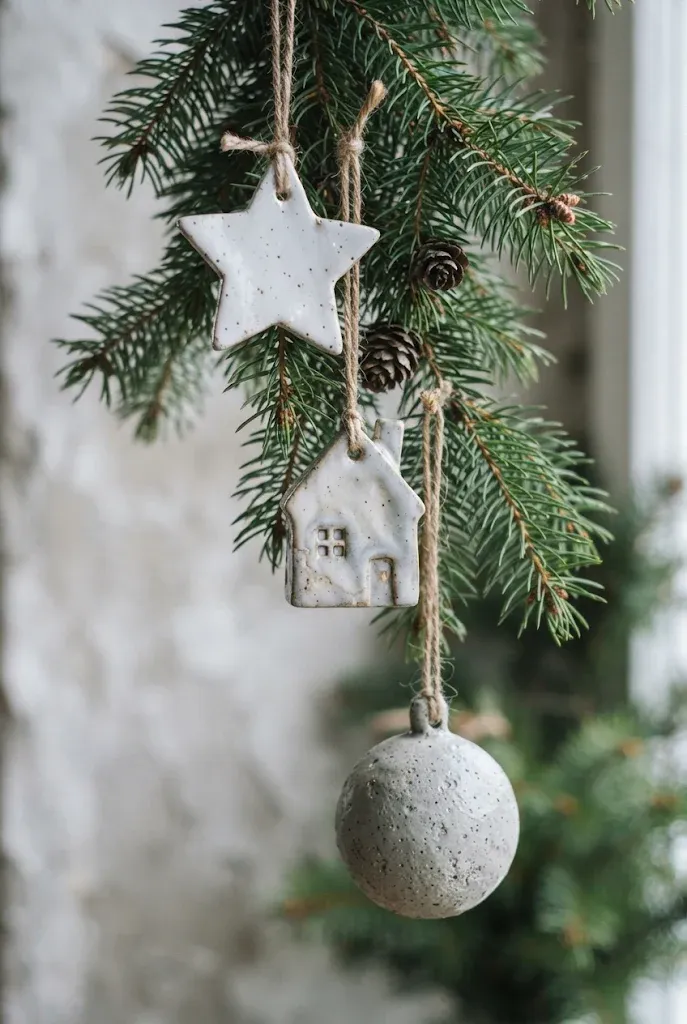
For a more investment-minded tree, handmade ceramic ornaments in matte white, soft grey, or speckled clay bring a refined, collected quality. They’re heavier than felt or straw, so they sit best on sturdy branches, and their slight irregularities show the hand of the maker.
Buy a few at a time from craft fairs or independent potters, and build the collection over several years. Mix simple shapes, such as stars, rounds, and small houses, rather than a theme with too many characters.
| Material | Effect | Practical Note |
|---|---|---|
| Matte ceramic | Quiet, heirloom feel | Heavier; choose strong branches |
| Wool felt | Soft and light | Good for thin branches |
| Straw | Warm and delicate | Fragile when stored |
13. Tuck Dried Grasses and Cotton Stems Into the Branches
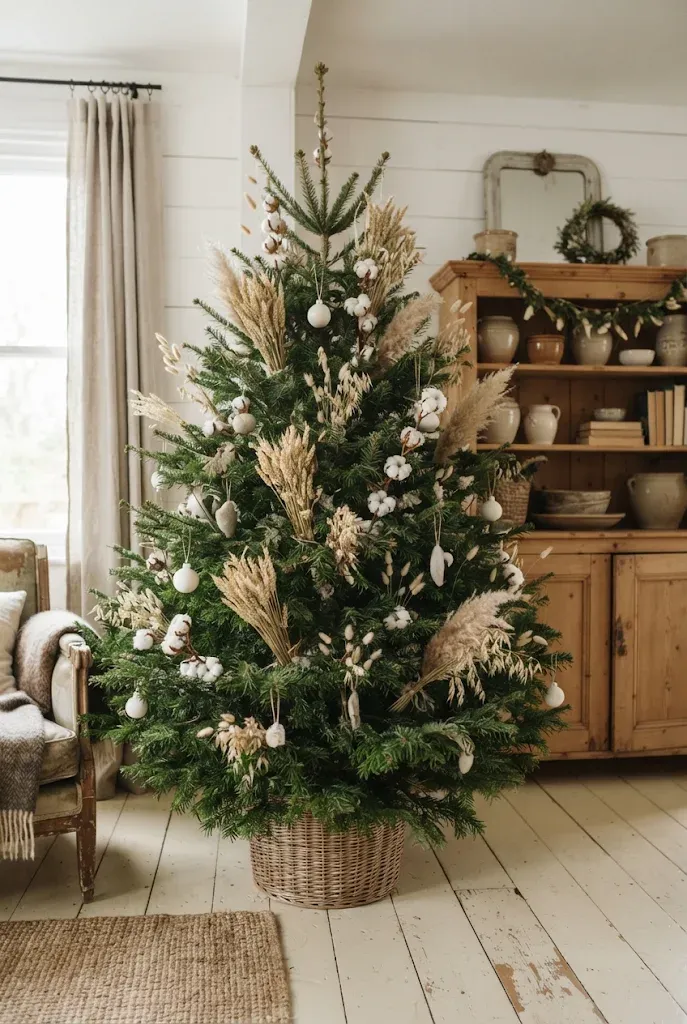
Dried botanicals are a quick way to add height and a soft, wild quality. Wheat stems, dried grasses, and cotton stems pushed gently between the branches create a loose, meadow-like outline that suits Nordic simplicity.
Use odd numbers and vary the heights so the tuck-ins don’t look like a formal arrangement. Keep the palette neutral, and add only a few ornaments so the stems remain visible.
Quick Tip: Place stems after the lights go on. It’s easier to keep the cords hidden and avoid snagging delicate botanicals.
14. Cut Birch Slice Ornaments for a Forest Feel
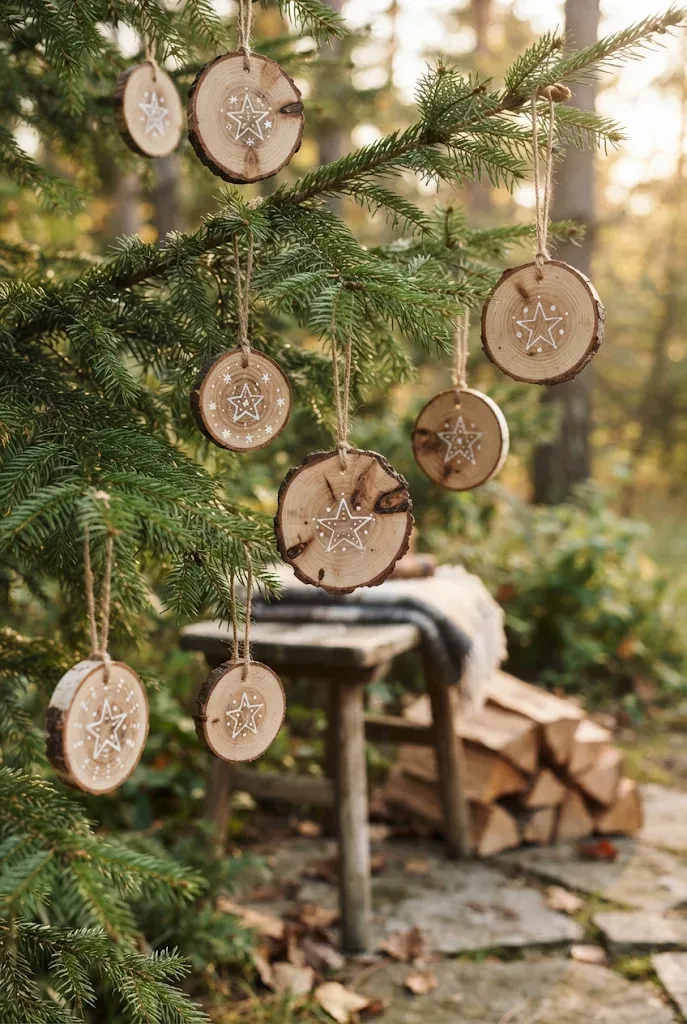
Thin slices of birch or similar wood make flat, rustic ornaments that suit a tree with a lot of green behind them. Drill a small hole near the top, add a cotton loop, and leave the bark edge visible.
You can leave the surface plain or add a simple pattern, such as a small star, a few dots, or a single line, in black or white paint pen. Keep the decoration minimal; the wood grain is the point.
Simple method:
- Sand each slice lightly to remove rough edges.
- Mark and drill a small hole near the top.
- Decorate with a minimal pen design, if wanted.
- Thread twine and hang.
15. Hang a Paper Star Lantern in the Window Beside the Tree
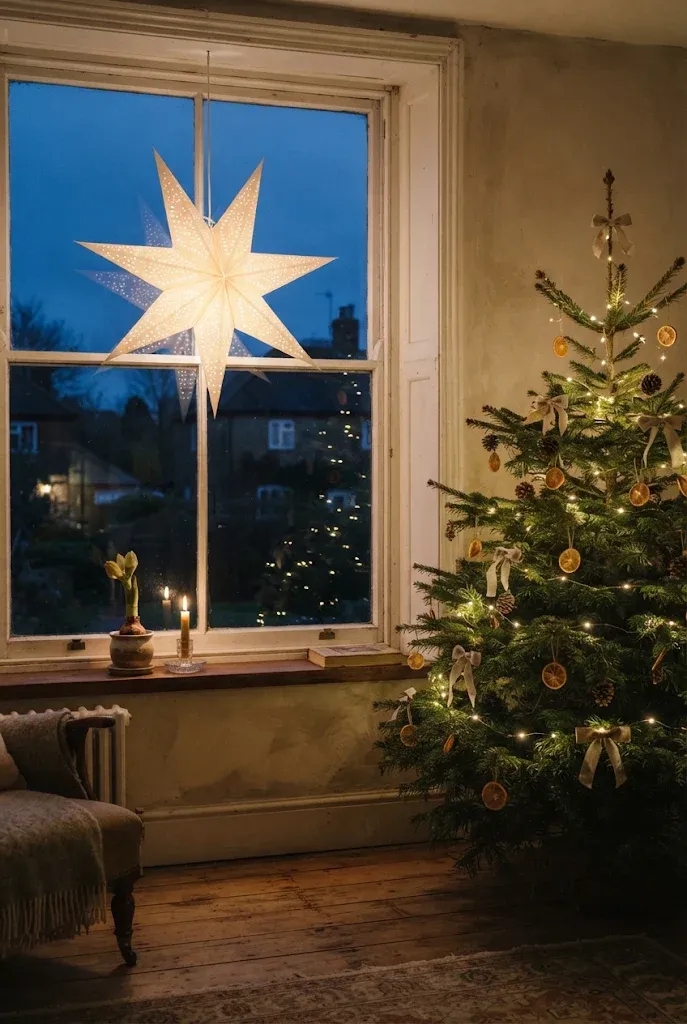
Pair the tree with a large paper star in the window, a common Nordic holiday detail. The star glows from within when lit, and its geometric points offer a sharp counterpoint to the tree’s soft needles.
Place the lantern in the same window where the tree is visible, so the two read as a single scene from the street. Choose a white or cream paper star rather than a colored one to keep the palette consistent.
Editor’s Note: A paper lantern needs a safe, cool light source. Battery-powered LED bulbs are the practical choice.
16. Build an All-White Palette With Warm Wood
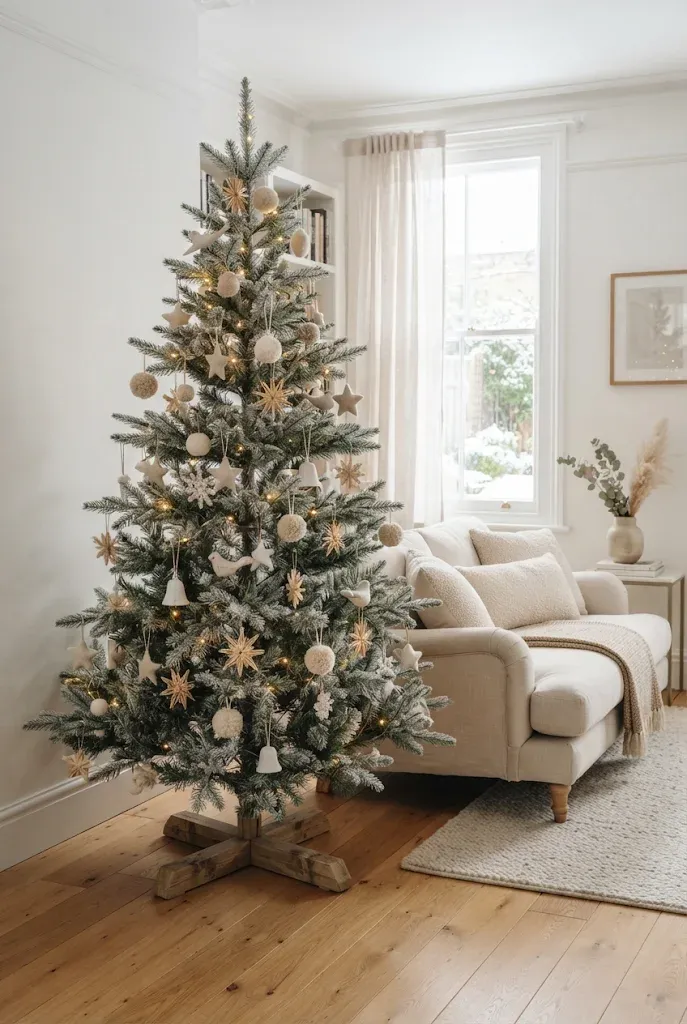
A pale tree needs warmth so it doesn’t feel cold. Use a frosted or lightly flocked tree, then add white ceramic, off-white wool, and bleached straw, and let natural wood trim, a wooden stand, or a nearby oak table provide the contrast.
The result is a very light, calm scene. It works best in rooms with plenty of daylight, since white decorations can look flat in dim spaces.
Do: Keep a few wood or dark green details to prevent the look from becoming washed out.
Don’t: Mix cool bright white with creamy off-whites in the same tree unless you want a deliberate contrast.
17. Go Moodier With Black Iron and Deep Green
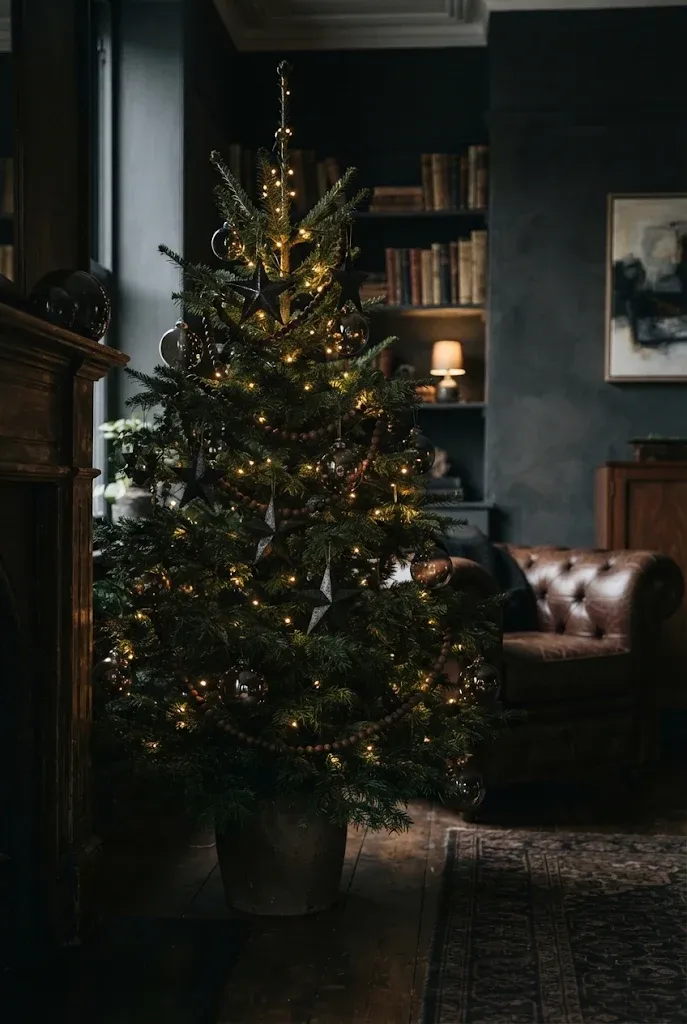
Not every Scandinavian tree is pale. Dark green needles, black iron stars, smoked glass, and deep walnut or stained wood create a more dramatic mood that still feels natural.
Keep the decoration sparse. A few iron ornaments, a dark wooden bead garland, and warm lights are enough. This look works especially well in rooms with dark paint, brick, or moody evening light.
| Palette | Mood | Best Fit |
|---|---|---|
| Pale wood and white | Airy, light | Bright rooms |
| Black iron and deep green | Dramatic, grounded | Darker or older rooms |
18. Commission a Wooden Slat Tree
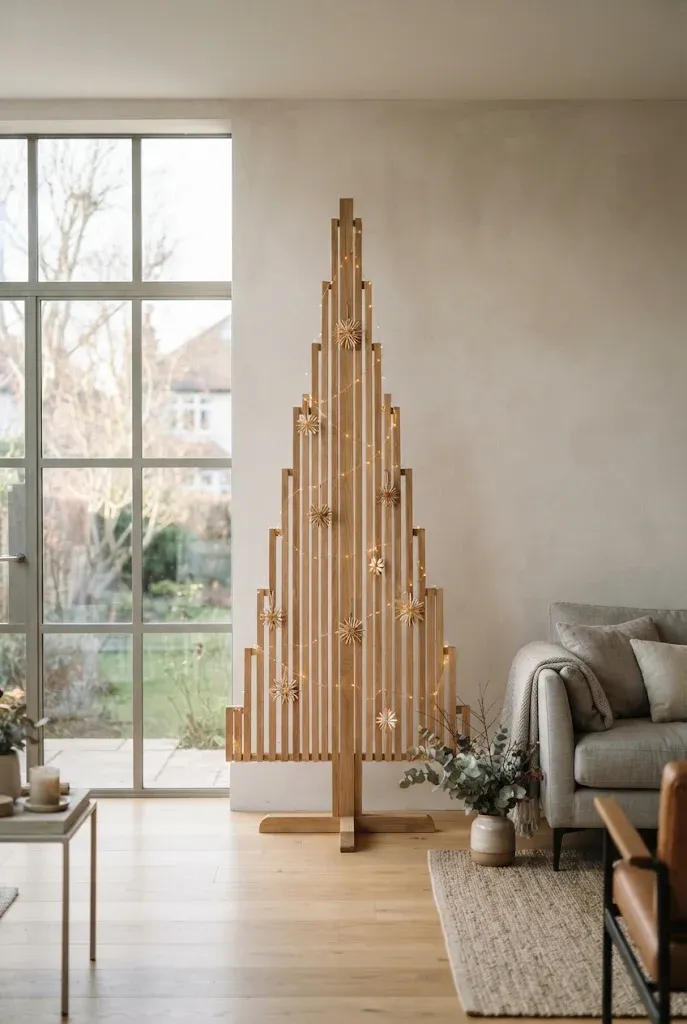
For a premium, sculptural option, consider a tree built from slim vertical wooden slats in oak or ash, shaped into a stepped triangle. It stands as a piece of furniture, and it can be reused each year without needles or shedding.
It works well in modern homes and offers a surface for hanging only a few ornaments or small lights. Custom woodworking has a higher price, so this suits people who want a long-term centerpiece rather than a seasonal purchase.
Quick Facts
Best For: Modern homes, allergy-conscious households
Investment: Premium
Visual Effect: Sculptural, architectural, very calm
19. Use a Woven Basket as a Tree Collar
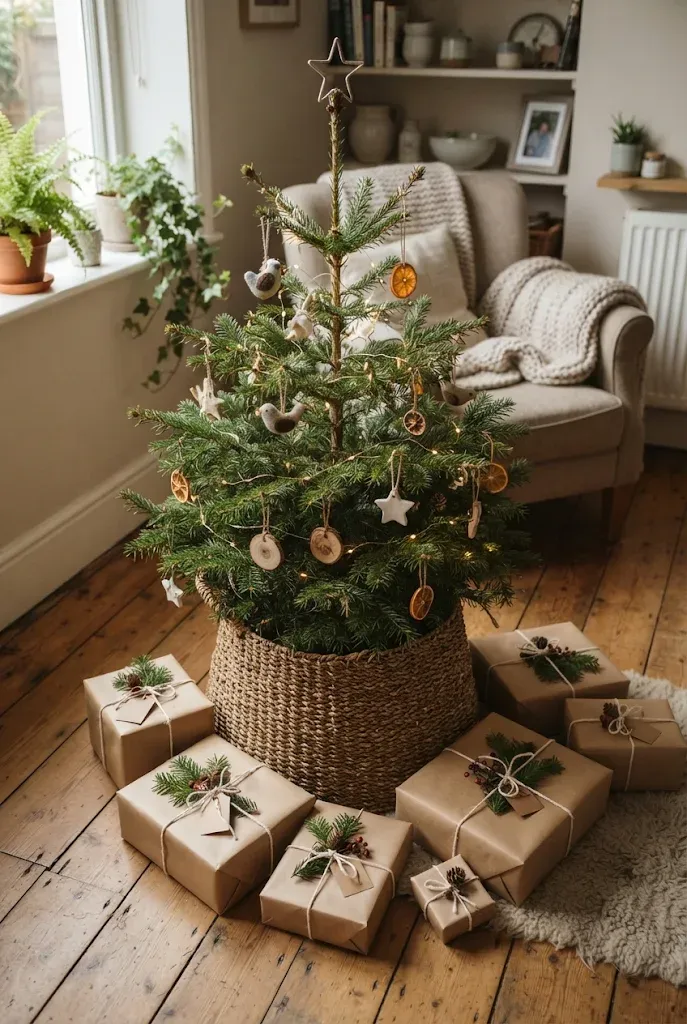
A woven seagrass or willow basket hides the stand and ties the tree into a natural palette at once. It’s an easy upgrade for a small tree, and it makes the base feel finished without a tree skirt.
Choose a basket slightly wider than the stand, and add wrapped parcels in brown kraft paper tied with cotton twine around it. Make sure the basket is stable and the water reservoir (for real trees) stays accessible.
Common Mistake: Choosing a basket that crowds the tree and leaves no space for watering.
Better Approach: Leave a gap at the back so you can refill a real tree’s stand easily.
20. Top the Tree With a Simple Wooden or Straw Star
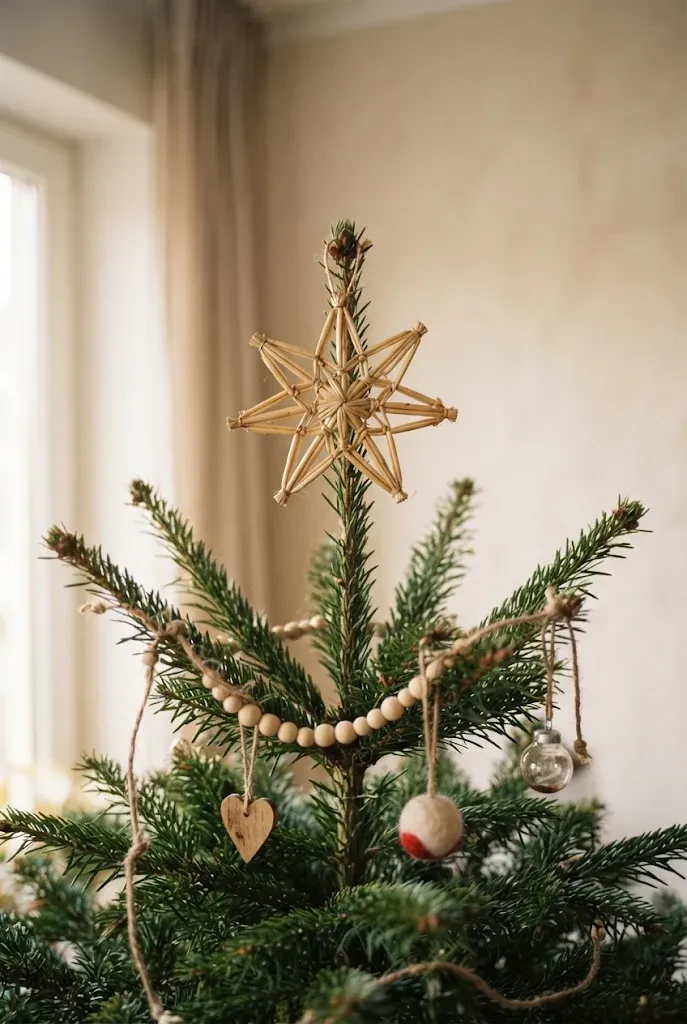
The topper sets the tone for everything below it. A plain wooden star, a straw star, or a small hand-cut paper star keeps the Nordic look consistent. Choose one that matches the main ornament material so the tree reads as one set.
Keep the scale in proportion. A topper that’s too large pulls the tree forward, while one that’s too small disappears. If the top branch is weak, a lightweight straw star will sit more securely than a heavy wooden one.
Tips & Tricks
- Test the topper’s weight against the top branch before decorating.
- Match the topper’s tone to your garland or ornaments.
- Use a small piece of floral wire to secure it without damaging the branch.
How to Choose Where to Start
If you’re building a Scandinavian Christmas tree from scratch, start with the lights and one repeating material. Warm white lights plus straw or wood ornaments will give you the look at low cost, and you can add wool, ceramic, or linen over the years.
For small spaces, consider the branch bundle (idea 4) or tabletop tree (idea 9). For a bigger investment, the ceramic ornaments (idea 12) or slat tree (idea 18) will last for many seasons.