

A magazine-worthy Christmas tree rarely depends on having more ornaments. It usually comes down to a clear color story, the right scale of decorations, and a few habits that make the tree look full from every angle: fluffed branches, layered lights, and ornaments set at different depths. The ideas below cover a wide range of tastes and budgets, from a slim tree in an apartment corner to a tall, custom-styled centerpiece. Each one explains what the look is made of, how to recreate it, and what tends to go wrong. Pick one palette, borrow a technique from another, and treat the rest as a starting point for your own tree.
1. Cascade Velvet Ribbon From Top to Bottom

Ribbon falling in loose, vertical waves gives a tree the tailored look of a department-store display. Wired velvet in deep red or forest green holds its shape best. Tuck one end near the topper, then let the ribbon dip into the branches and come back out every foot or so, so the strand looks like it’s flowing rather than wrapped.
- Choose wired ribbon at least 2.5 inches wide so it reads from across the room.
- Keep the same ribbon color all the way down, and let ornaments do the contrasting.
- Cut a V-notch in each loose end for a cleaner finish.
Quick Tip: Fix the ribbon in place with floral wire or pipe cleaners twisted around a branch, not tape, so it stays put when you adjust it.
2. Snowy Flocked Tree With Pearls and Clear Glass
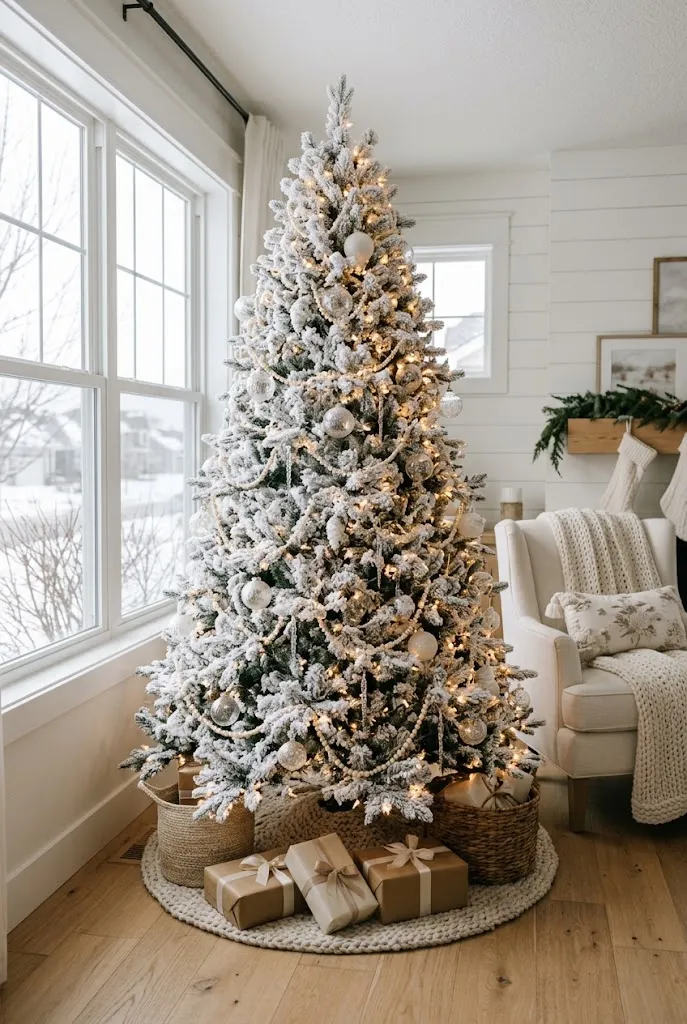
Flocking gives a tree a frosted, just-snowed look that needs very little added. Keep the ornaments restrained: pearl strands, clear and frosted glass balls, and a few silver icicle drops. Flocked trees are available pre-lit or unlit, and flocking can shed a little, so it’s worth placing the tree on a washable mat or tree skirt that’s easy to shake out.
| Option | Effect | Best Fit |
|---|---|---|
| Pre-flocked artificial tree | Even coverage, reusable | Households that want low upkeep |
| Spray-flocked real tree | Softer, more irregular snow | Those who want a fresh scent and don’t mind the mess |
Pearls look best draped in loose swags rather than pulled tight, which would flatten the branch layers.
3. Burgundy, Plum, and Mauve in Layered Velvet
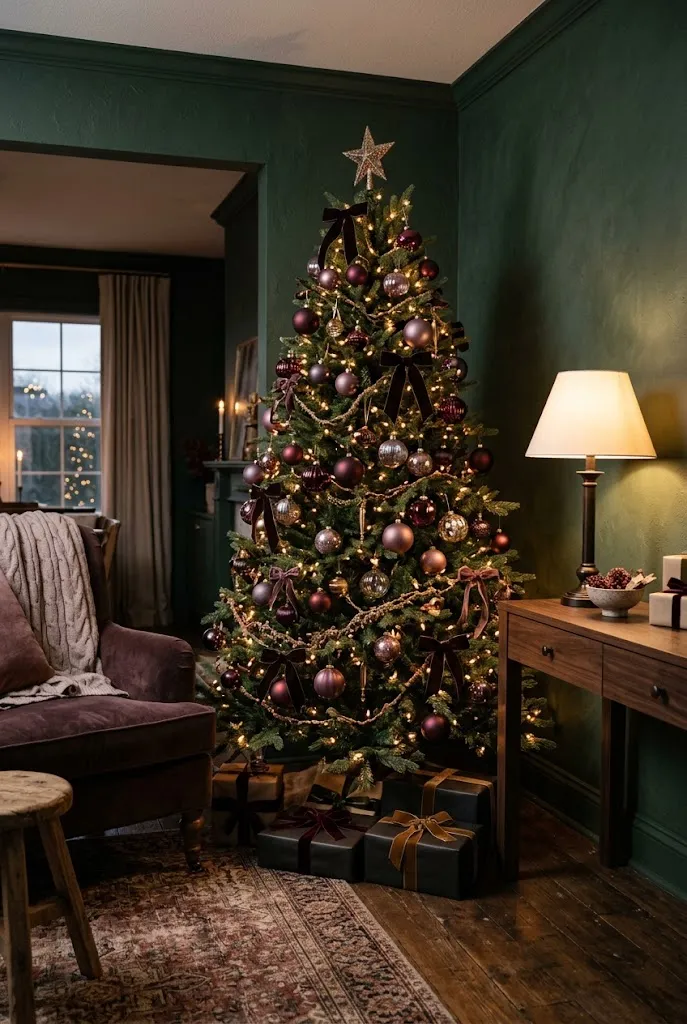
Deeper berry tones feel moodier than traditional red and green, and they look good in rooms with dark walls or warm wood. Build the palette from three related shades: burgundy as the main color, plum for depth, and a dusty mauve to soften the mix. Add matte and shimmer finishes in each shade so the tree has texture, not just color.
Common Mistake: Mixing too many unrelated purples and pinks, which can look muddy under warm lights.
Better Approach: Keep to one undertone, such as red-leaning berry shades, and add a single metallic like antique brass to tie everything together.
4. Dried Oranges, Pinecones, and Cinnamon Sticks

A natural-material tree is one of the most approachable DIY looks, and it suits kitchens, farmhouse rooms, and cabins. The scent is part of the appeal.
- Slice oranges about ¼ inch thick and pat them dry.
- Bake on a rack in a low oven, around 200°F, for a few hours, flipping once, until fully dry and slightly translucent.
- Thread with twine, then mix with pinecones and cinnamon stick bundles.
Dry the slices thoroughly, because any lingering moisture can lead to mold in storage. A string of plain warm lights keeps the focus on the textures.
5. A Slim Pencil Tree in an Apartment Corner

Narrow trees solve a real problem: floor space. A slim 6- or 7-foot tree fits beside a window or in a corner without blocking a walkway, and it takes ornaments well if you size them down. Use small ornaments, between 1.5 and 2.5 inches, so the tree isn’t overwhelmed.
Best For: Apartments, condos, entryways
Investment: Accessible
Visual Effect: Vertical, tailored, easy to place near furniture
A mirror on the adjacent wall doubles the lights and makes the corner feel larger.
6. Classic Red and Gold With Mixed Ornament Sizes
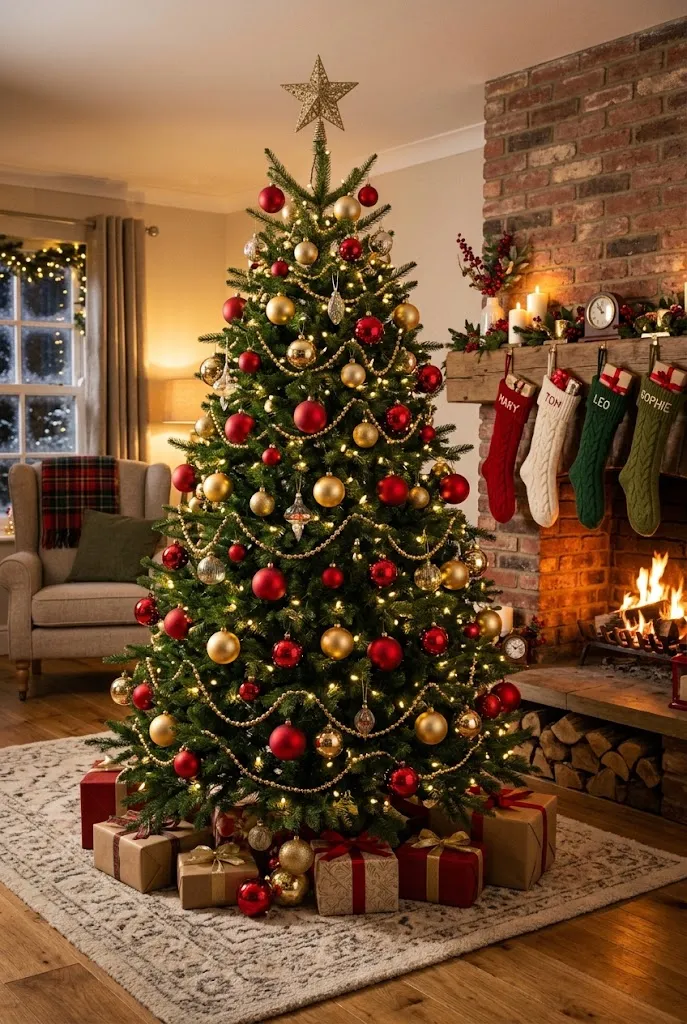
Red and gold looks traditional, but the difference between a flat version and a polished one is scale. Use at least three ornament sizes: large (4 inches or more) near the center, medium throughout, and small to fill gaps. Alternate matte and shiny finishes so the light catches unevenly.
Group ornaments in odd numbers and vary the repeat distance so no color forms a stripe. Stand back every few minutes, squint, and look for visual “holes.”
7. Icy Blue and Silver Winter Palette

Cool tones give a tree a clean, wintry feel, especially in rooms with gray or white walls. Combine pale blue, navy, and silver, and use cool white lights if you want the palette to stay crisp. Warm lights shift blue ornaments toward green, so test a few strands against the ornaments before committing.
- Add a few clear glass or mercury-style silver balls for sparkle.
- Include one deeper navy tone so the tree doesn’t look washed out.
- Keep the tree skirt neutral, such as white or light gray wool.
8. Oversized Plaid Bows

Large bows do much of the decorating on their own, which makes this a good option when you’d rather buy fewer pieces. Wired plaid ribbon in red, black, or green forms a full bow, with 8 to 12 bows spaced around a 7-foot tree. Fill in with a few solid-color ornaments.
Do: Make the bows with 2–3 loops and long tails, and wire them firmly to a sturdy branch.
Don’t: Mix several different plaids, which can compete with each other.
9. Scandinavian Paper Stars and Wood Bead Garland

This tree is light, simple, and mostly handmade. Folded paper stars in white and kraft brown, a chunky wood bead garland, and a few small wooden ornaments are enough. Use a real or sparse artificial tree so the branches have room to show.
Paper stars can be made from heavy cardstock using basic folding templates available from craft sources. Keep the palette to two or three natural colors, and avoid glitter so the matte textures stay clean.
10. Sage Green, Cream, and Eucalyptus Stems
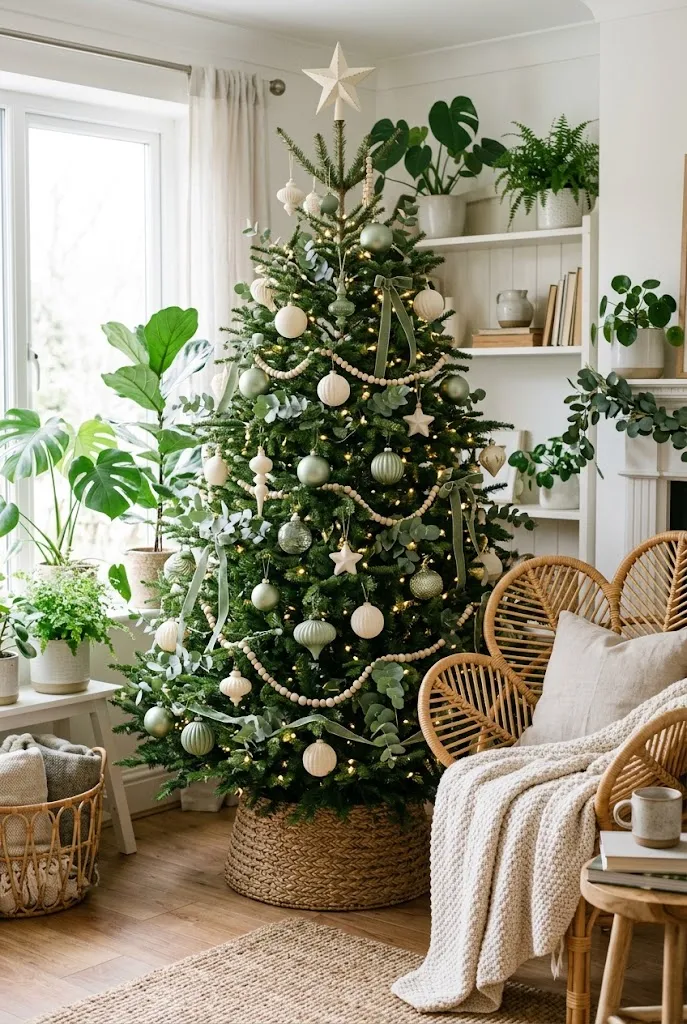
Soft green and cream ornaments pair naturally with faux eucalyptus stems tucked between branches. The result feels fresh and a little botanical, and it suits rooms with light wood and plants. Faux stems last across seasons, while real eucalyptus dries out and can drop leaves.
| Option | Advantage | Tradeoff |
|---|---|---|
| Faux stems | Reusable, consistent | Can look stiff if not bent |
| Real stems | Natural scent and shape | Dry out; short lifespan |
11. Vintage Mercury Glass and Glass Bead Garland
Antique-style ornaments bring a quiet, collected look. Mercury glass in silver and gold, glass bead garland, and a few shaped ornaments, such as birds or teardrops, work together. Secondhand stores, estate sales, and online resale are common sources for real vintage pieces, and reproduction sets offer a similar look at lower cost.
Editor’s Note: Old glass ornaments are fragile. Place them on sturdy inner branches rather than the tips, especially around children or pets.
12. A Black Tree With Gold and Champagne Accents

A black artificial tree is a bold choice, and it looks best when the accents are rich and few. Gold, champagne, and clear crystal pop against dark branches. This is a more dramatic, design-forward direction, so it fits modern or moody rooms.
Use warm lights, which glow nicely against black needles. Keep ornaments simple and well spaced, since dark branches absorb visual detail.
13. Blush Pink and Cream With Soft Ribbon

A pink tree can read as sophisticated if the shade is muted. Blush, cream, and soft gold feel gentle, not candy-bright. Ribbon in satin or velvet adds softness, and matte ornaments help keep the palette calm.
Keep it grounded with natural materials nearby, such as a wooden bench or a woven basket, so the tree doesn’t feel isolated from the room.
14. A Memory Tree of Handmade and Heirloom Ornaments
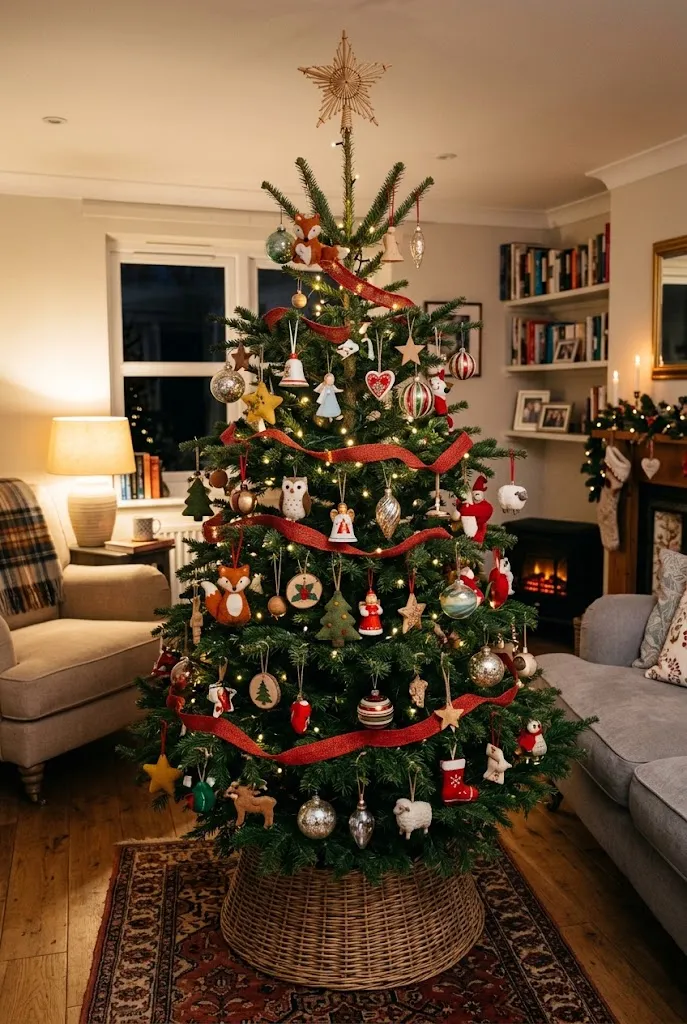
Not every tree needs a strict palette. A tree built from handmade, inherited, and travel-collected ornaments has its own character. To keep it from looking chaotic, use a unifying element, such as one color of lights, one ribbon, or one type of garland, and let the ornaments vary.
- Start with the lights and garland.
- Place the largest or most meaningful ornaments first.
- Fill in around them with smaller pieces.
15. Dress the Base With a Basket or Metal Collar
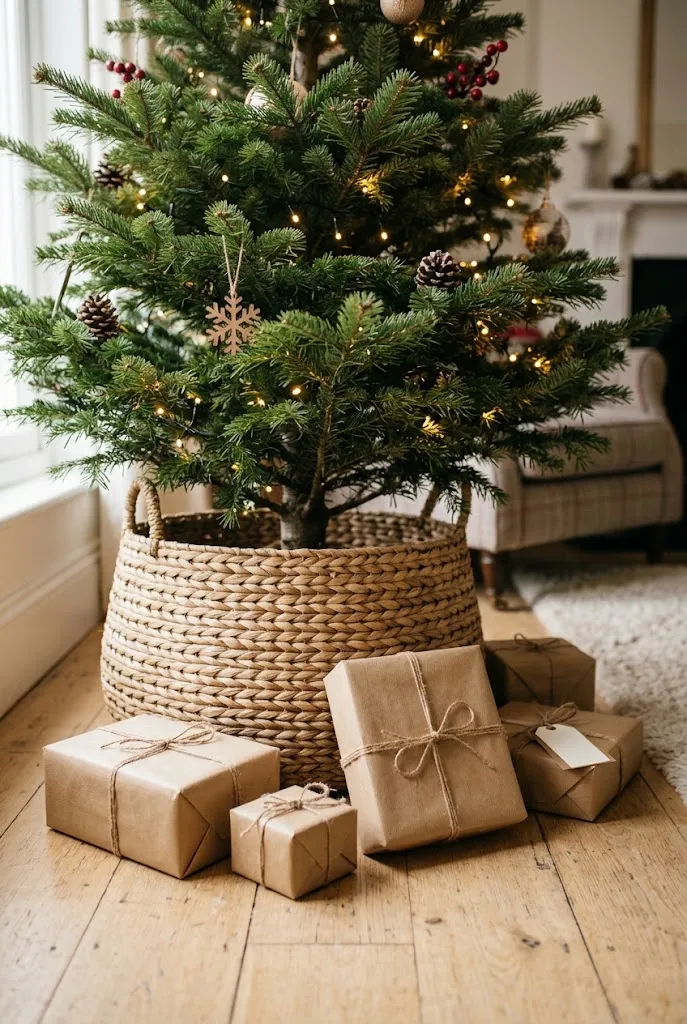
A tree skirt is traditional, but a woven basket, a galvanized collar, or a wood ring gives the base a more finished, architectural look. These can hide the tree stand and add texture at floor level.
Common Mistake: Choosing a collar too small, which leaves the stand visible.
Better Approach: Measure the stand’s widest point, then pick a collar a few inches wider.
16. Build Depth by Tucking Ornaments Into the Branches

Many trees look flat because every ornament hangs at the tips. Try placing some close to the trunk, which adds shadow and dimension and makes the tree look fuller.
- Use larger or darker ornaments deeper inside.
- Put shinier ones toward the outside.
- Fluff each branch before decorating, bending individual tips upward and outward.
17. Pampas, Feathers, and Neutral Boho Textures
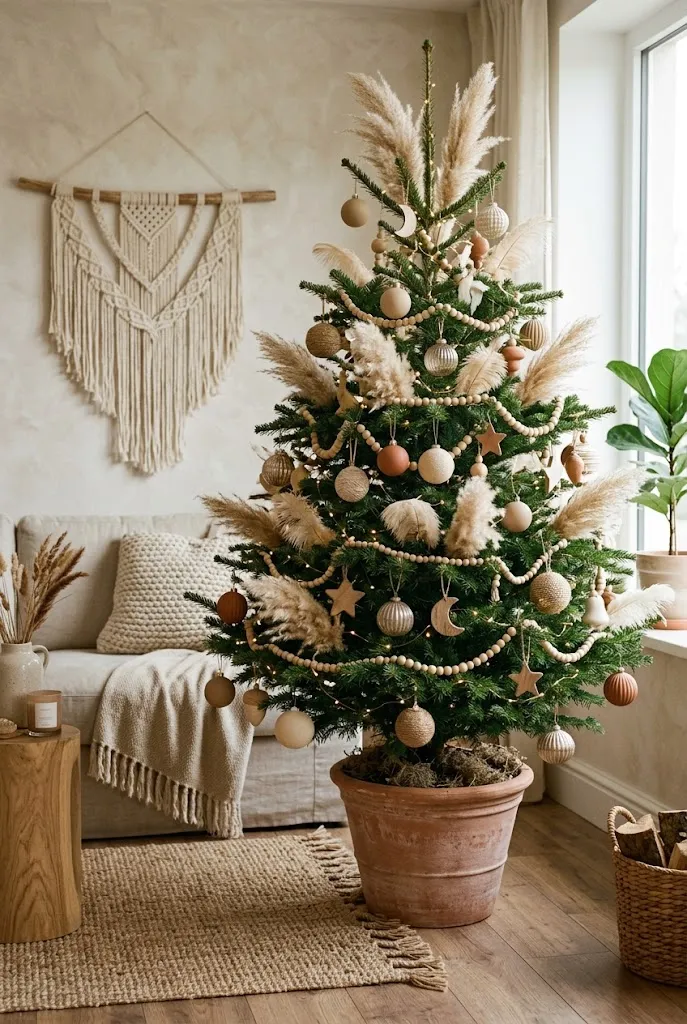
Dried grasses, feathers, and wood beads give a relaxed, bohemian look. Keep a neutral palette, such as cream, sand, and soft terracotta, and use warm lights. Dried materials can shed, so place them where they won’t be brushed often.
18. A Statement Topper With Ribbon Streamers
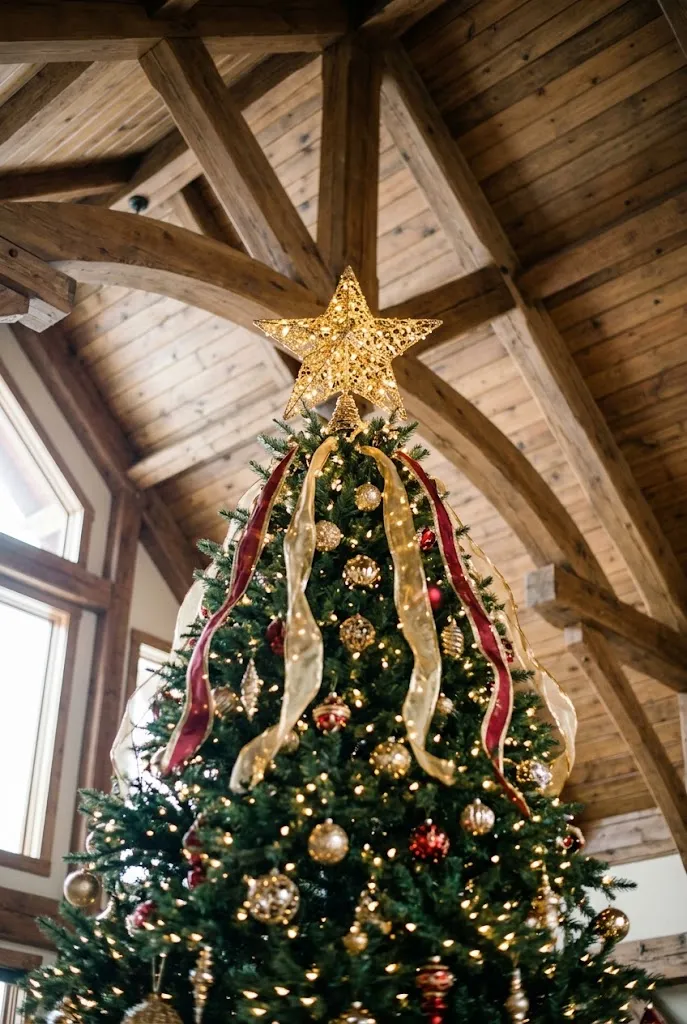
A large topper can anchor the whole design. Choose one in proportion to the tree, such as a big star, a bow, or a cluster of stems, and let ribbon streamers fall from it.
Quick Tip: Secure the topper with floral wire around the top branches so it doesn’t tilt.
19. A Tall, Custom-Styled Tree at a Staircase Landing
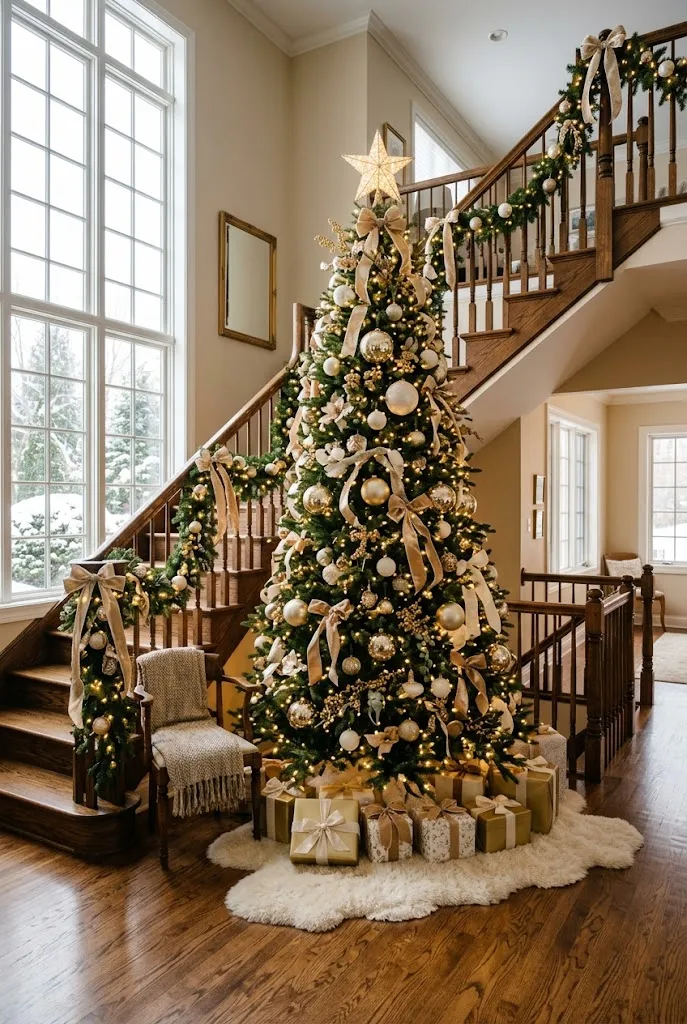
A 9-foot or taller tree makes a dramatic impression in an entry or staircase landing. It usually involves a larger investment: the tree itself, commercial-grade lights, oversized ornaments, and sometimes professional installation. The principle can be borrowed on a smaller scale by using larger ornaments than you think you need.
20. A Playful Candy and Gingerbread Tree

For households with kids, a candy-themed tree is fun. Use shatterproof ornaments shaped like candy canes, lollipops, and gingerbread cookies in red, white, and mint. Keep edible items out of reach of pets.
21. Rust, Terracotta, and Brass Warm Neutrals
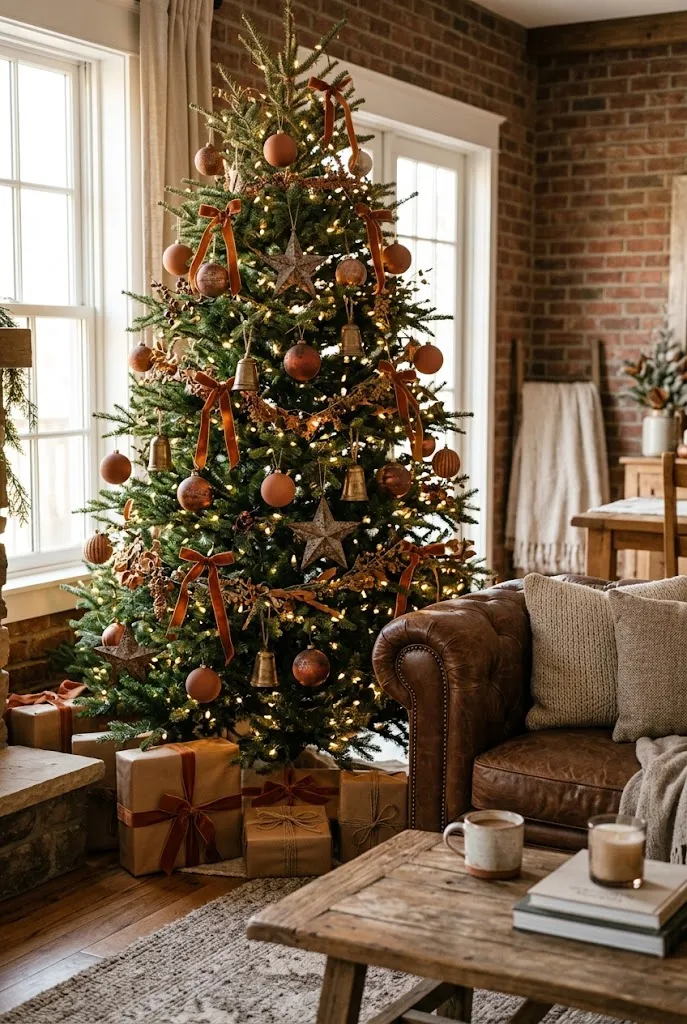
This palette bridges fall and winter. Rust, terracotta, and brass look warm together, and it suits rooms with leather or wood.
22. A Light-Forward Tree With Minimal Ornaments
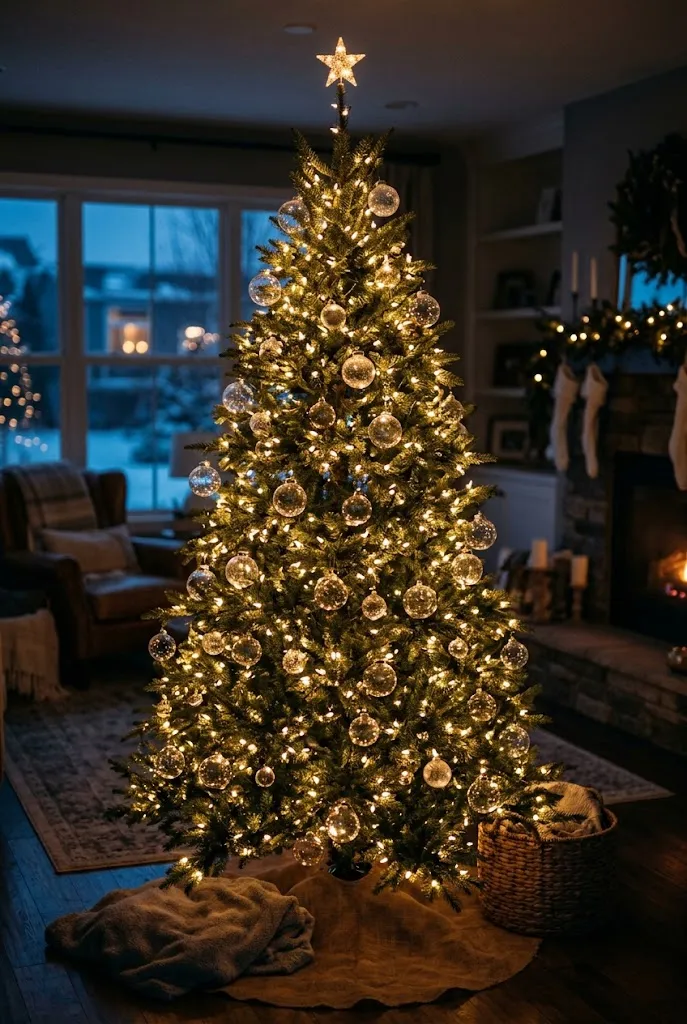
If you prefer simplicity, focus on lighting. Layer warm white lights densely, and add only a handful of clear glass orbs. A common guideline is to use roughly 100 lights per foot of tree for a full glow.
23. A Tabletop Tree on a Console

When floor space is limited, a tabletop tree on a console or sideboard works well. Choose a 2- to 3-foot tree, and use miniature ornaments. Add a tray beneath it to protect the surface.
Choosing Where to Start
Start with your space. A narrow room points toward a slim tree, while a tall entry can handle bigger ornaments. Pick a single palette, fluff the branches, add lights first, and layer ornaments from large to small. You can always add ribbon or a topper last.