

By late autumn, most bedrooms are still dressed for summer: light sheets, bare windows, and cool-toned lighting that feels flat once the sun sets at 4:30. Winter bedroom decor works best when it focuses on how the room feels at night and first thing in the morning, not just how it looks in daylight. Texture, soft light, and a few well-chosen colors do most of the work.
The 23 ideas below cover that whole range. Some take ten minutes and a trip to the linen closet, some suit renters who can’t touch the walls, and a few are bigger investments for anyone planning a longer-term refresh. Pick two or three that fit your space, or build the full cozy bedroom layer by layer.
1. Drape a Chunky Knit Throw Across the Foot of the Bed
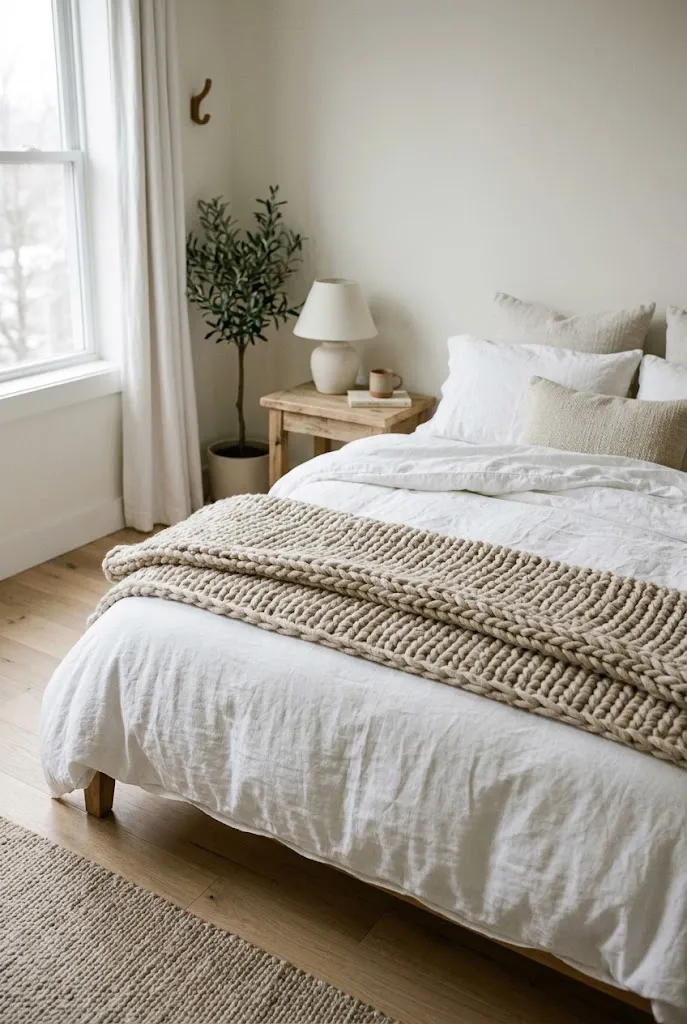
A thick knit throw is the fastest way to make a bed look ready for a cold night. Fold it lengthwise and lay it across the bottom third of the mattress rather than bunching it in the middle, which keeps the line of the bed clean and the throw easy to pull up.
Cream, oatmeal, and soft gray wool-blend knits suit most bedding. If you want more contrast, try a deep green or charcoal against white sheets. Choose a weight you’ll actually use, since a throw that’s too bulky ends up on the floor.
Quick Tip: Check the care label before buying. Washable acrylic or cotton-blend knits are easier to live with than hand-wash-only wool.
2. Switch to Flannel or Brushed Cotton Sheets
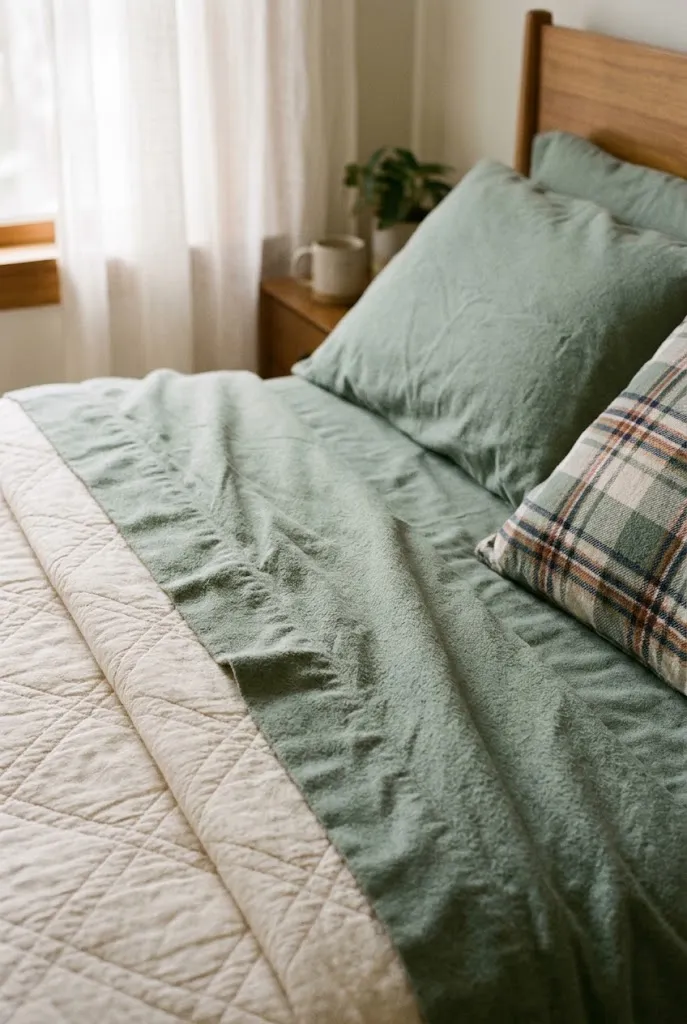
Cold sheets are the biggest letdown on a winter night, and a fabric swap solves it without changing how the room looks. Napped fabrics trap a little more warmth against the body than crisp weaves, which is why they feel cozier the moment you climb in.
| Fabric | Feel | Best Fit |
|---|---|---|
| Flannel | Fuzzy, snug, slightly heavy | Cold bedrooms, sleepers who run chilly |
| Brushed cotton | Soft and smooth with a light nap | Those who want warmth without bulk |
| Jersey knit | Stretchy, T-shirt-like | Easy care and a casual look |
Plaid flannel reads cabin-like, while solid ivory, slate, or sage keeps the bed calm. Wash new flannel before first use, as it can shed lint at first.
3. Build a Bed With a Duvet-and-Quilt Stack
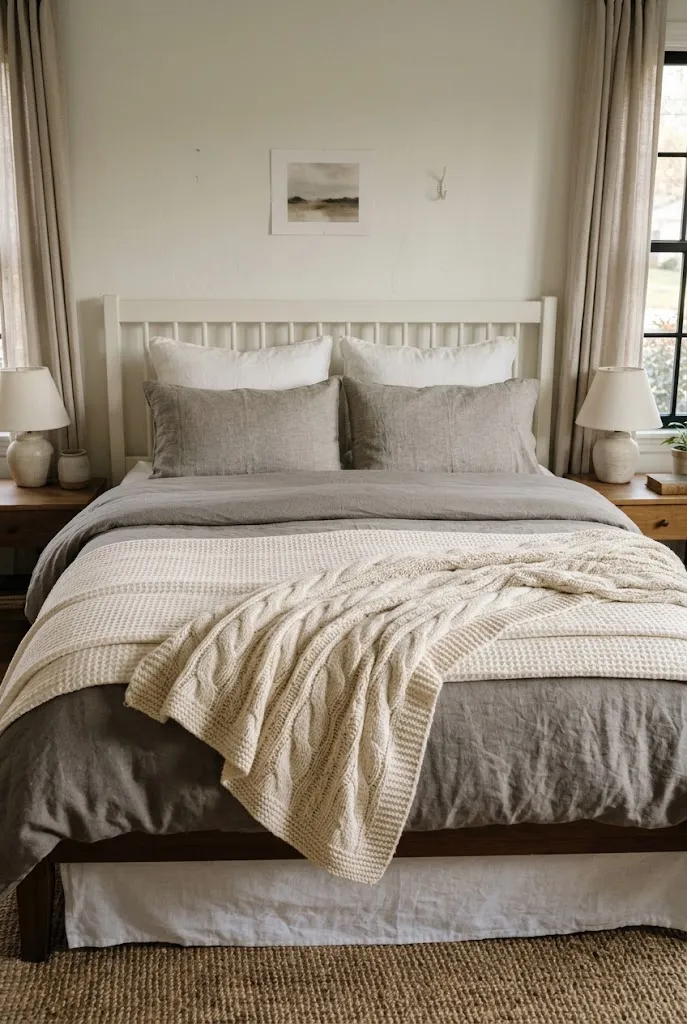
Layered bedding gives the bed visible depth and lets you adjust warmth through the night. Build it in order:
- Start with fitted and flat sheets, tucked neatly.
- Add a quilt or coverlet, folded back about two-thirds of the way down.
- Layer the duvet over it, then fold the top edge down to show the quilt beneath.
- Finish with a throw at the foot.
Keep the palette tight, such as three tones of one color family, so the layers read as intentional rather than busy. Textures do the visual lifting: a waffle-weave quilt, a smooth duvet cover, a nubby throw.
4. Hang Lined Curtains to Soften Drafty Windows
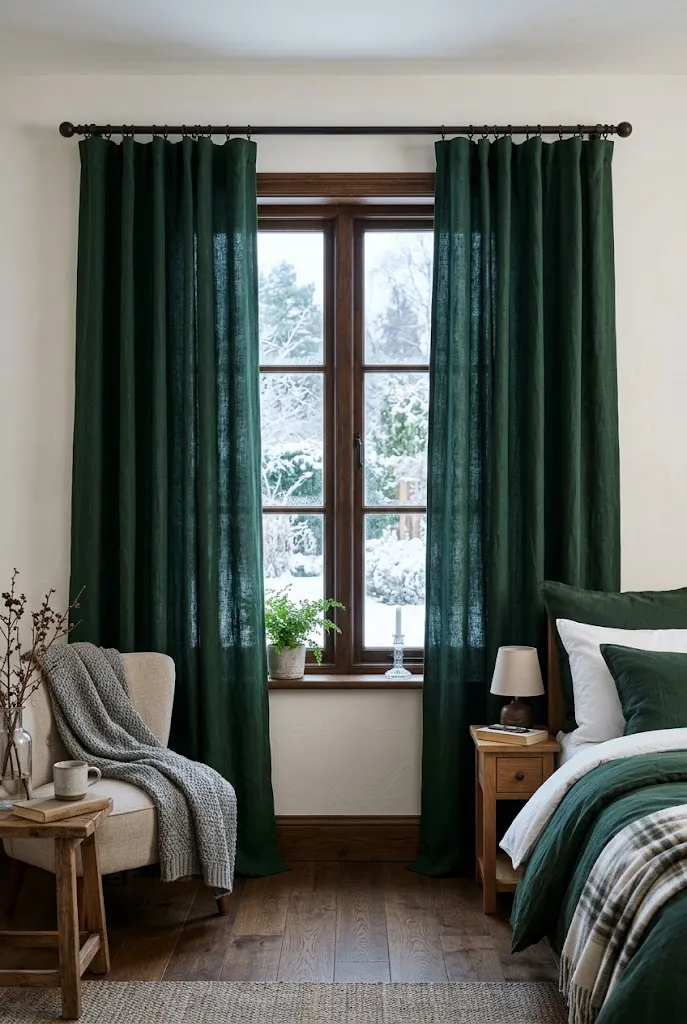
Bare or sheer windows make a bedroom feel exposed in winter. Lined or thermal-backed curtains add visual softness and can help cut down on drafts and early-morning light, though they won’t replace proper window sealing in a very drafty room.
Mount the rod a few inches above the window frame and extend it past the sides so the glass stays uncovered during the day. Curtains that just brush the floor look tailored, while puddled hems collect dust. Heavy linen-look fabrics in oatmeal, slate blue, or forest green work in nearly any style.
Editor’s Note: Rental-friendly tension rods and adhesive hooks handle lightweight curtains, but heavy lined panels usually need proper brackets screwed into studs or anchors.
5. Anchor the Bed With a Wool-Blend Rug
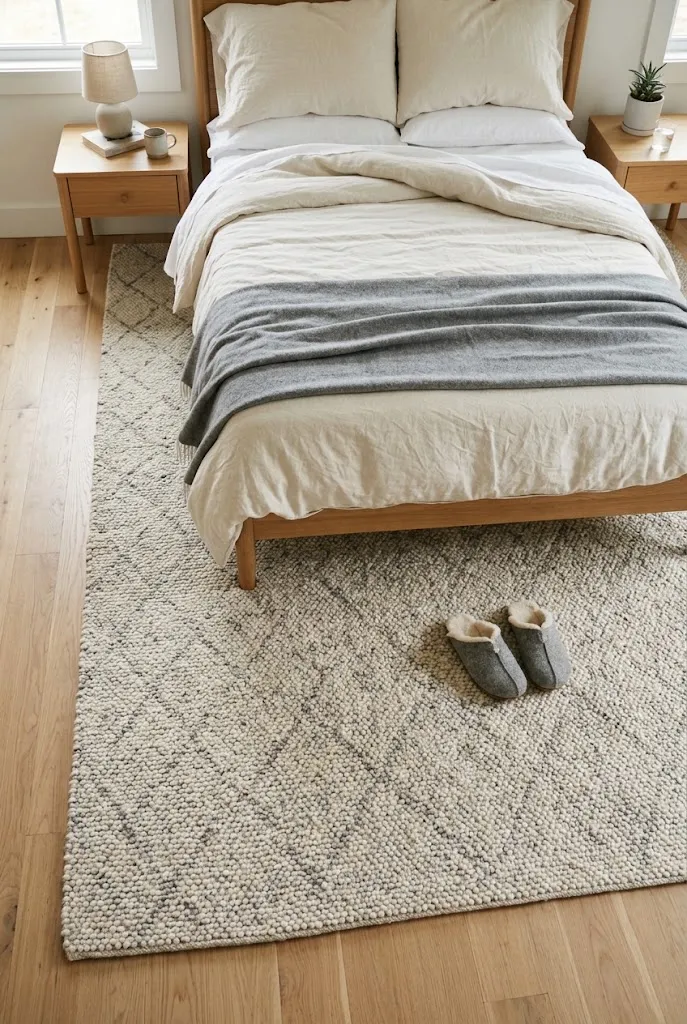
Stepping onto a cold floor first thing in the morning is a winter bedroom problem a rug solves immediately. A wool or wool-blend rug also absorbs sound and makes the whole room feel more settled.
A common guideline is for the rug to extend roughly 18 to 24 inches beyond each side of the bed, with the bottom third or more of the bed resting on it.
Do: Choose a rug large enough to reach past the nightstands on both sides.
Don’t: Float a small rug under only the foot of the bed, which makes the room look undersized.
In a smaller bedroom, two runners along either side can work in place of one large rug.
6. Throw a Faux Sheepskin Over an Accent Chair
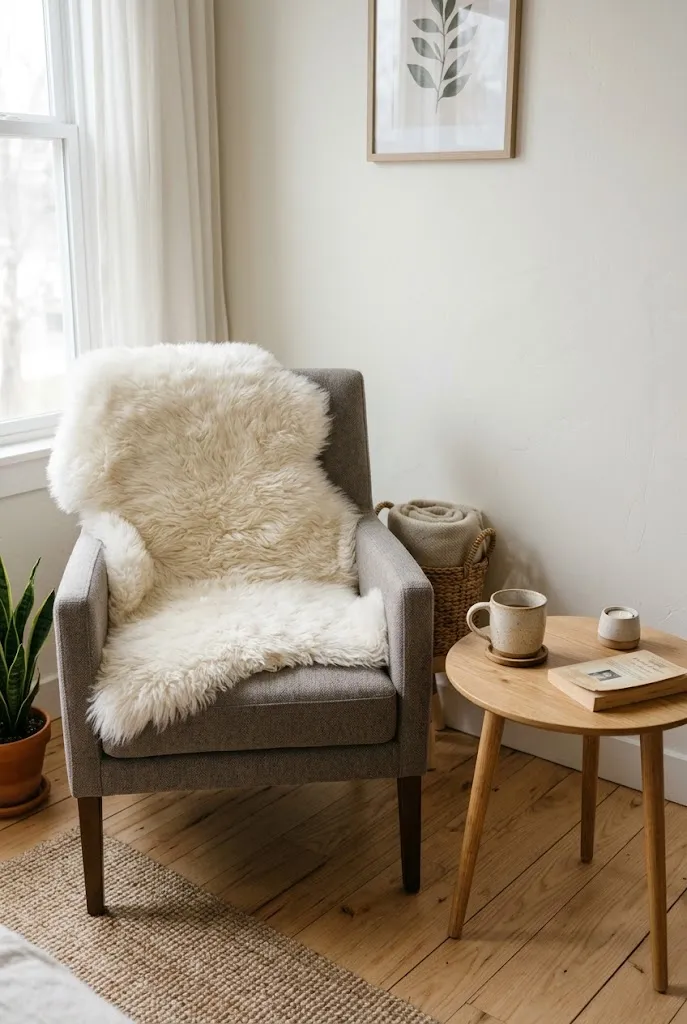
Even a plain chair in the corner becomes a destination once a faux sheepskin is draped over the seat and back. The fluffy texture contrasts with smooth walls, wood floors, and linen bedding, and it takes almost no effort to set up.
Ivory and light gray are the safest choices, but a deeper camel or charcoal throw looks more grounded against pale walls. Faux versions are generally easier to care for than real sheepskin and a good fit if you’d rather avoid animal products. Secure the throw with a few discreet fabric tape strips if it keeps sliding off.
7. Swap Cool Bulbs for Warm Bedside Lamps
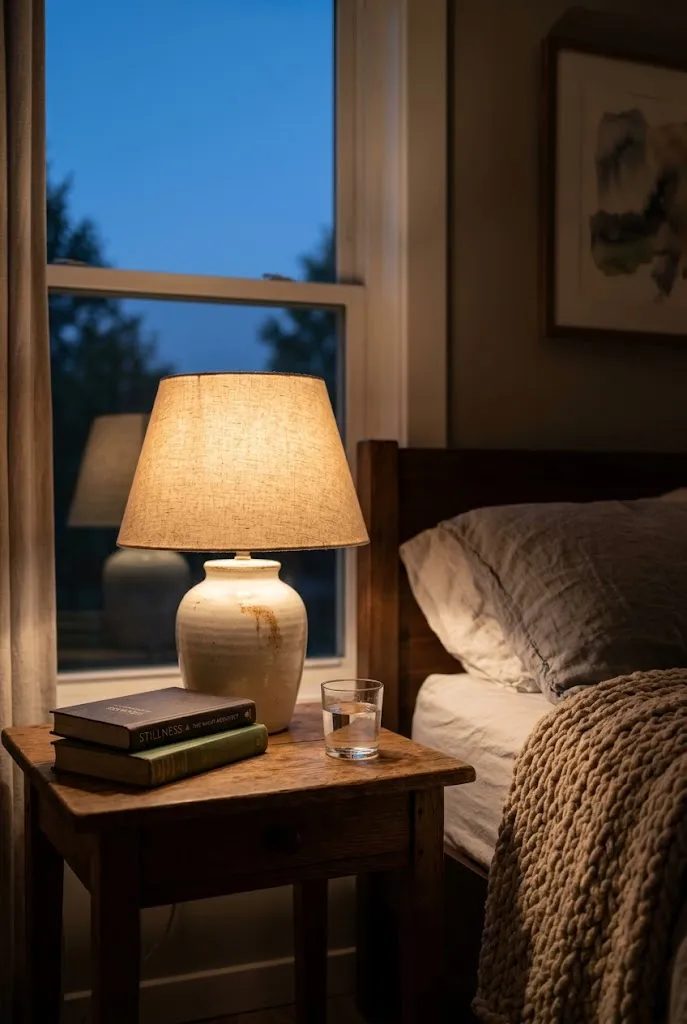
Lighting changes the temperature of a room more convincingly than almost any other decor choice. Bulbs around 2700K give off the soft, amber-leaning glow that suits winter evenings, while cooler white bulbs make a bedroom feel clinical.
- Choose a lamp with a fabric shade, which diffuses light more gently than glass or metal.
- Place lamps at roughly shoulder height when you’re sitting up in bed.
- Use matching bulbs on both sides so the glow stays even.
Ceramic or textured-glass bases in cream, terracotta, or smoky gray look especially good against winter bedding.
8. Line a Dresser With Flameless Candles
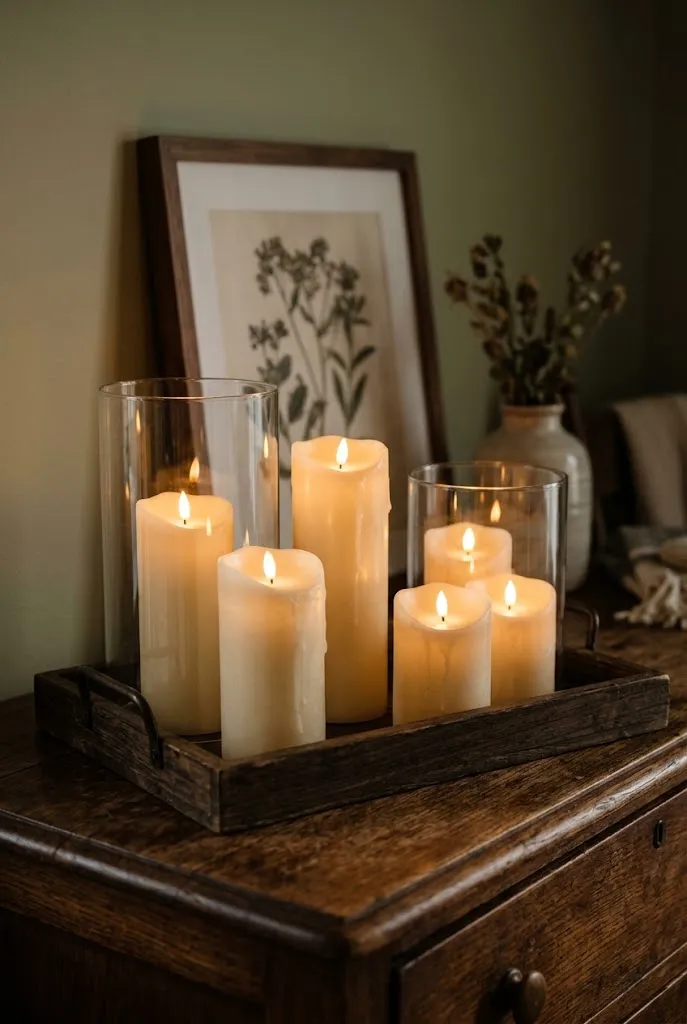
Candlelight is one of the most recognizable winter cues, and flameless versions deliver it without the safety concerns of open flames in a room where you fall asleep. Look for ones with a warm, flickering glow rather than a bright white one.
Group three to five in varying heights on a dresser, tray, or wide windowsill. Mix cream pillars with a couple of glass hurricanes for variety. Many models come with remote timers, so they switch off automatically after you’ve drifted off.
Quick Tip: Set them to a four- or six-hour timer. That way the room glows while you wind down, and nothing stays on all night.
9. Paint One Wall in a Deep Winter Color
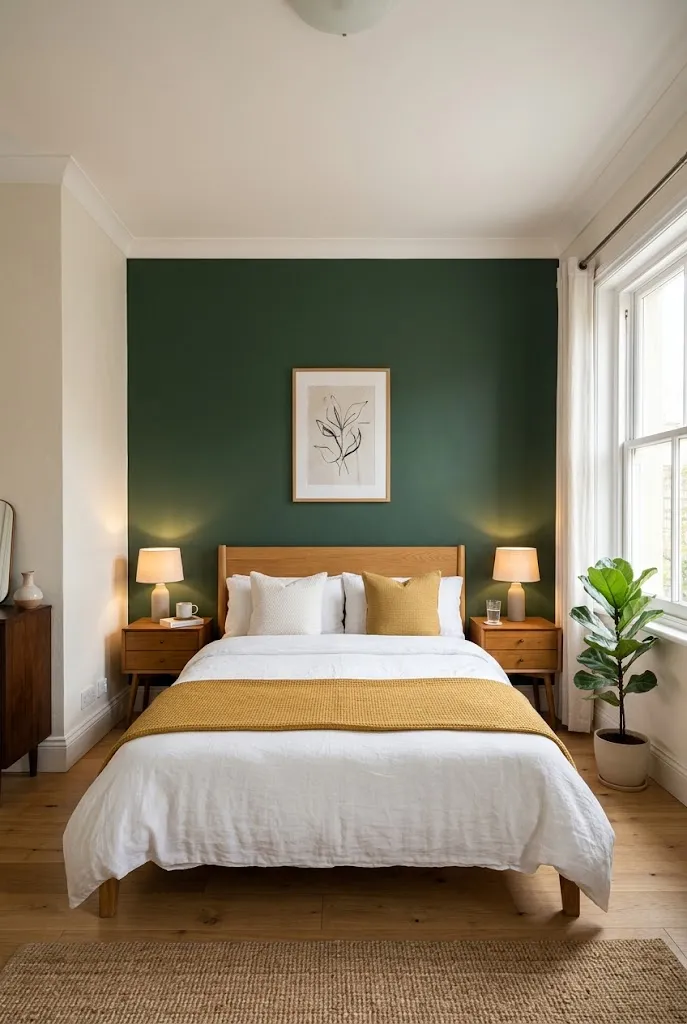
A saturated wall behind the bed makes a bedroom feel enclosed in the best way. Deep forest green, ink blue, aubergine, and warm charcoal all absorb light and add instant coziness, and a single accent wall limits the commitment and the paint cost.
Common Mistake: Painting all four walls a dark color in a small, dim room without enough lighting, which can make the space feel cave-like rather than cozy.
Better Approach: Paint just the headboard wall, keep the remaining walls a soft off-white, and add warm lamps. Renters can get a similar effect with removable peel-and-stick wallpaper in a dark, textured pattern.
10. Hang Bed Curtains for a Canopy Effect
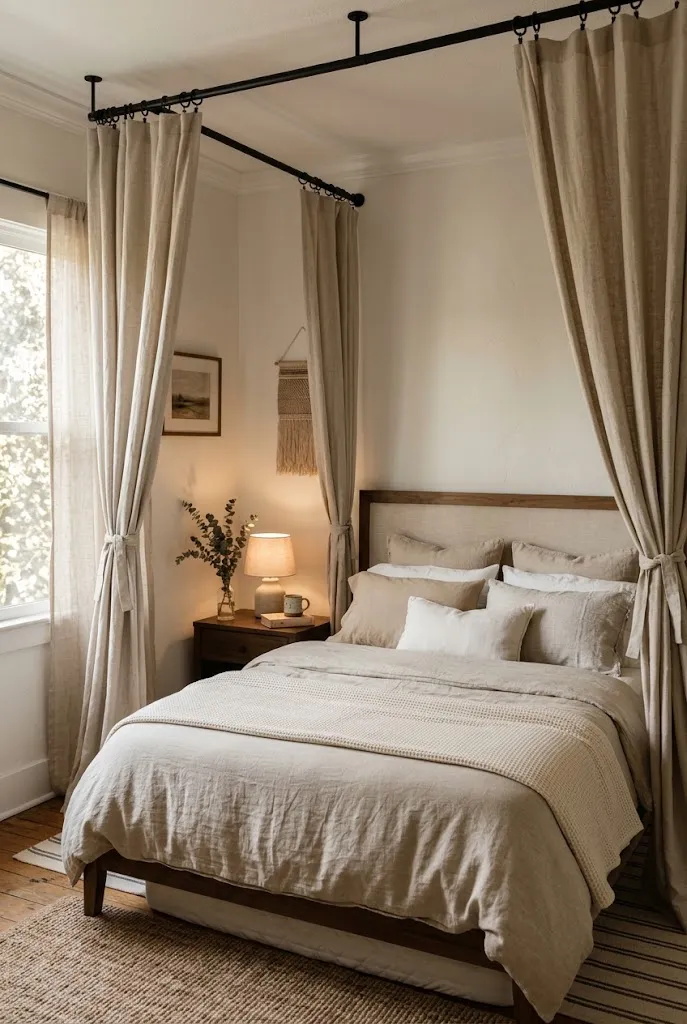
Bed curtains turn a regular bed into a retreat. A simple ceiling-mounted or wall-mounted rod frames the headboard, and sheer or linen panels fall softly at either side. It’s a premium-looking touch that doesn’t need a four-poster frame.
Linen in oatmeal or warm white keeps the look airy, while a heavier velvet in a deep tone makes the bed feel enclosed and dramatic. Make sure the panels hang away from lamps and heaters, and that the rod is anchored securely into the ceiling or studs.
11. Upholster the Headboard in Bouclé or Velvet

A soft headboard gives you somewhere comfortable to lean while reading and adds a tactile focal point. Bouclé has a nubby, snowy texture that suits a neutral winter palette, while velvet reads richer and works well in forest green, burgundy, or navy.
Wall-mounted or bolt-on upholstered panels are a more affordable route than replacing a whole bed frame. If you’re buying new, a tall headboard that reaches well above the pillows makes the bed look more substantial and keeps drafts off your head.
12. Fill a Ceramic Vase With Evergreen Branches
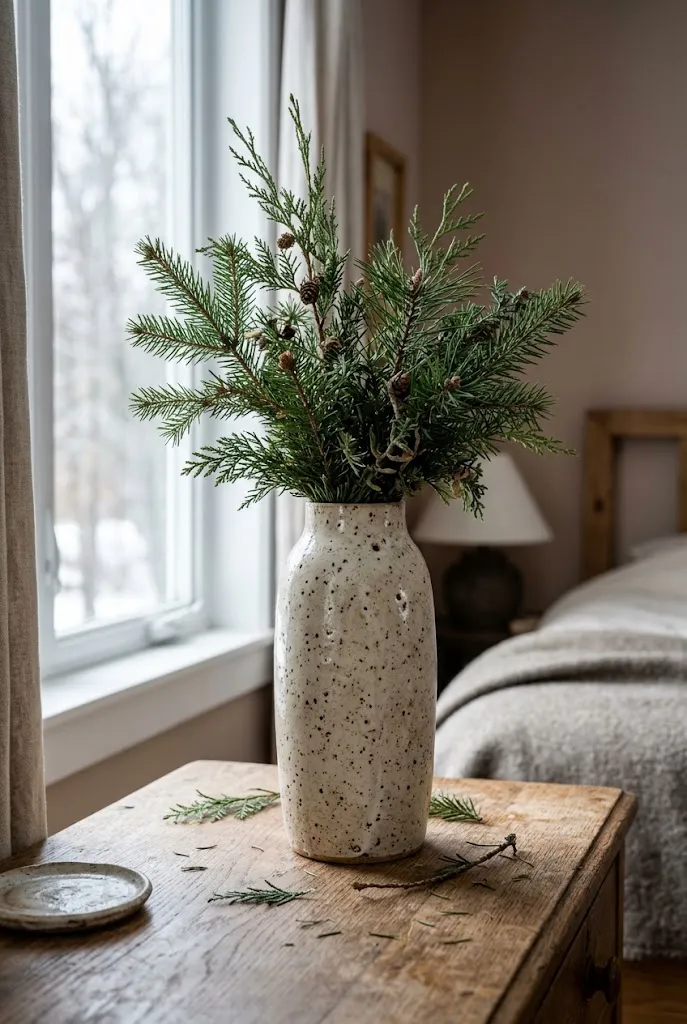
Bringing in greenery keeps a winter bedroom from feeling bare once the holidays pass. A tall ceramic or stoneware vase filled with pine, cedar, or fir branches adds height, scent, and a natural contrast to soft textiles.
Place it on a dresser or a corner floor stand. Real branches smell wonderful but drop needles, and some holiday greenery, including holly and mistletoe, can be harmful to pets, so check before placing it where animals can reach. Faux branches are a low-maintenance alternative, and you can reuse them each year.
13. Frame Quiet Winter Landscapes Above the Bed
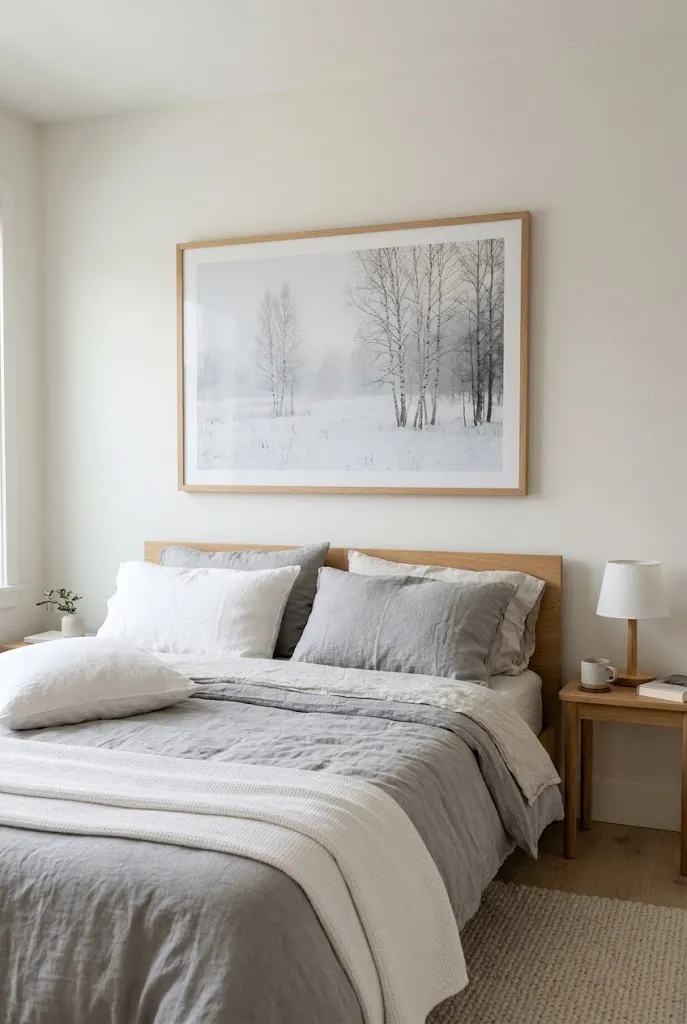
Art that mirrors the season gives a bedroom a calm, finished feeling. Think snow-dusted fields, bare birch trees, misty mountains, or a moody abstract in gray and white. Avoid anything too busy, since a bedroom works best with art that settles the eye.
Hang one large piece centered above the headboard, or a pair of vertical frames flanking a lamp. Leave around six to eight inches between the top of the headboard and the bottom of the frame so the pieces feel connected. Matte black or natural oak frames work with most palettes.
14. Create a Reading Corner With a Chair and Floor Lamp
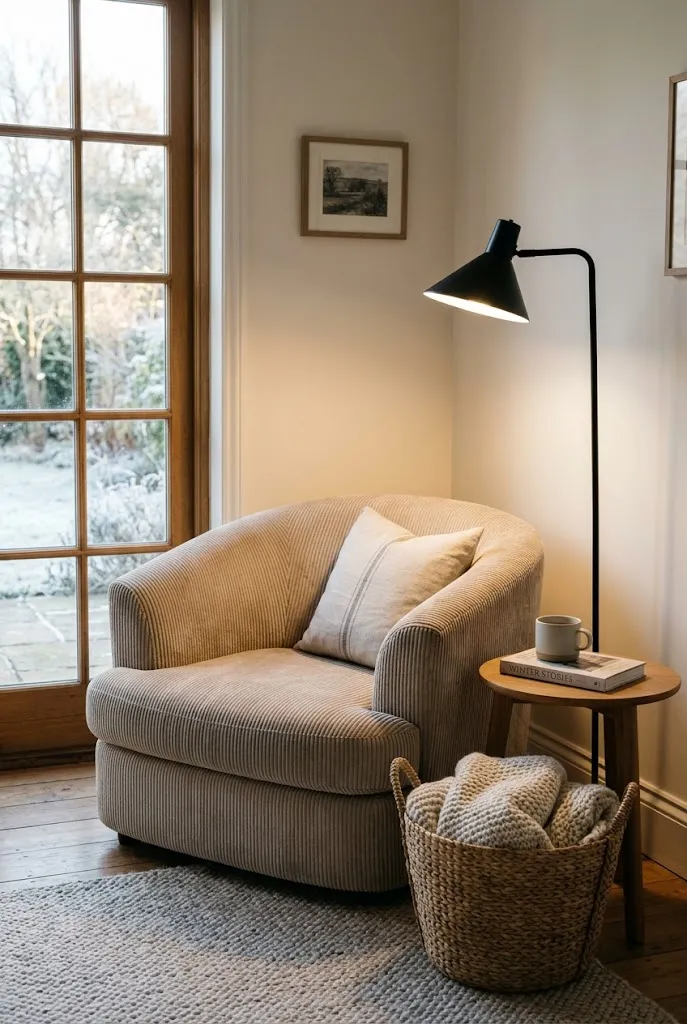
Not every winter bedroom has room for a full sitting area, but a single chair, a small side table, and a floor lamp are enough to define one. A deep armchair with a rounded back feels more inviting than a stiff accent chair.
Choose fabric in a tactile weave such as bouclé, corduroy, or chunky linen. Position the lamp so the light falls over your shoulder onto the page, and keep a basket nearby for a throw and a few books. It’s a practical use of a corner that would otherwise stay empty.
15. Set Up a Bedside Tea Tray
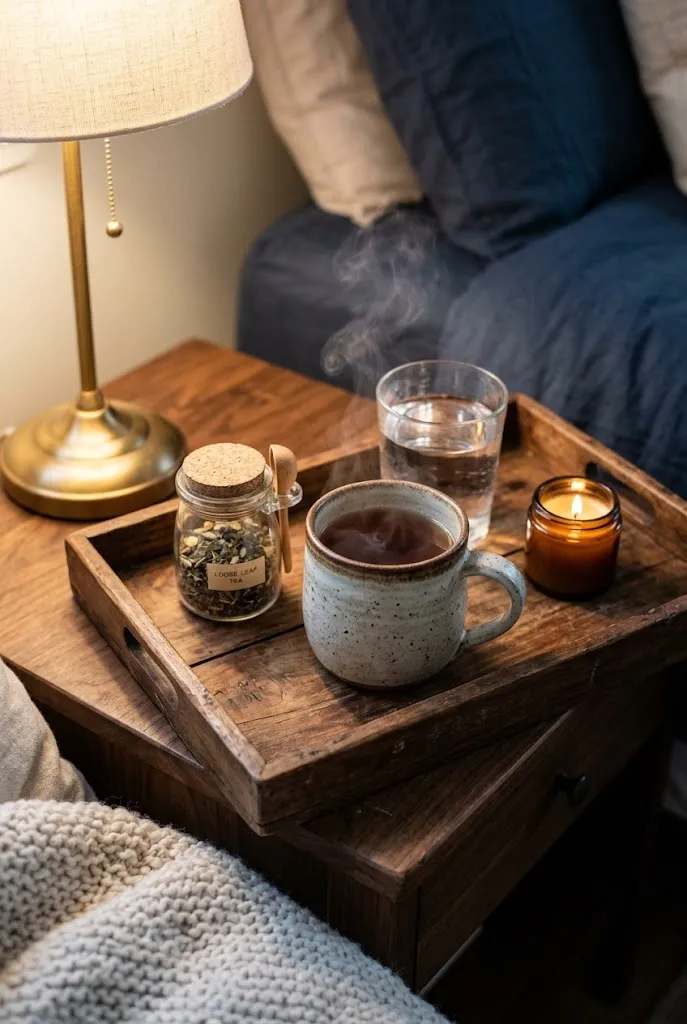
A small tray on the nightstand turns a winter evening routine into part of the decor. A wooden or marble tray holds a ceramic mug, a small jar of loose tea or cocoa, and a glass of water, keeping surfaces tidy and giving the table a clear, styled look.
Add a coaster and a small candle or amber glass jar for warmth. The practical advantage is that spills and rings stay contained on the tray rather than on the wood, and you can carry everything to the kitchen in a single trip.
16. Lean a Blanket Ladder Against the Wall
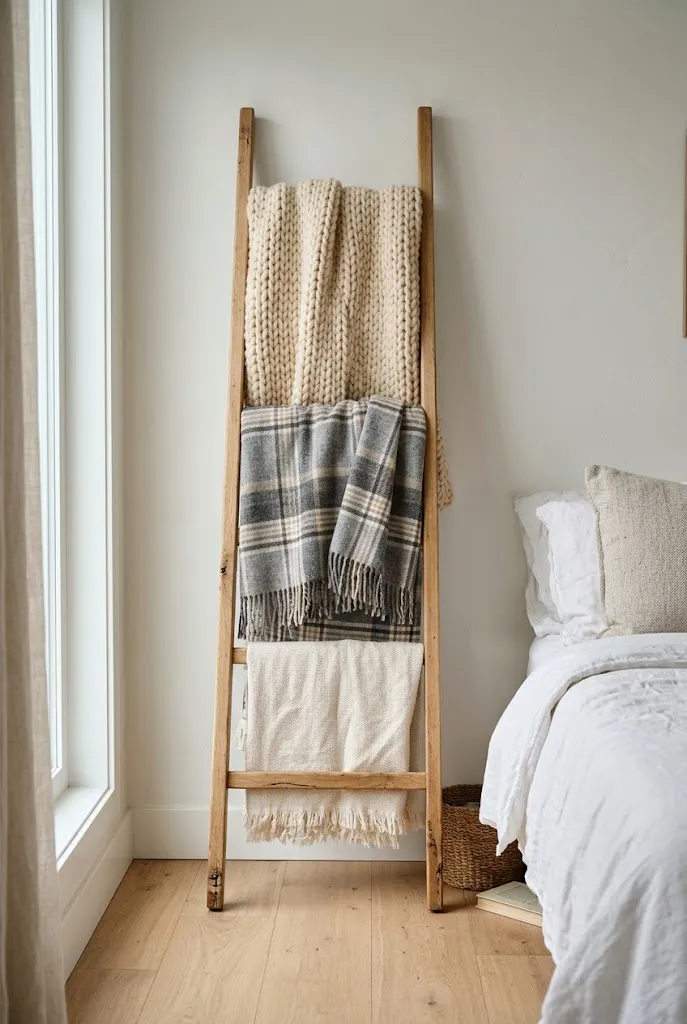
A blanket ladder is part storage, part display, and it keeps extra layers within reach on cold nights. Lean a slim wooden ladder against an empty wall near the bed or beside a chair, then drape it with three or four throws in varied textures.
Mix a chunky knit, a plaid wool, and a smooth cotton in a related palette so the display feels collected rather than random. Make sure the ladder’s base is stable and that heavy blankets don’t make it top-heavy, especially in a home with children or pets.
17. Mix Jewel-Tone Velvet Pillows Into Neutral Bedding
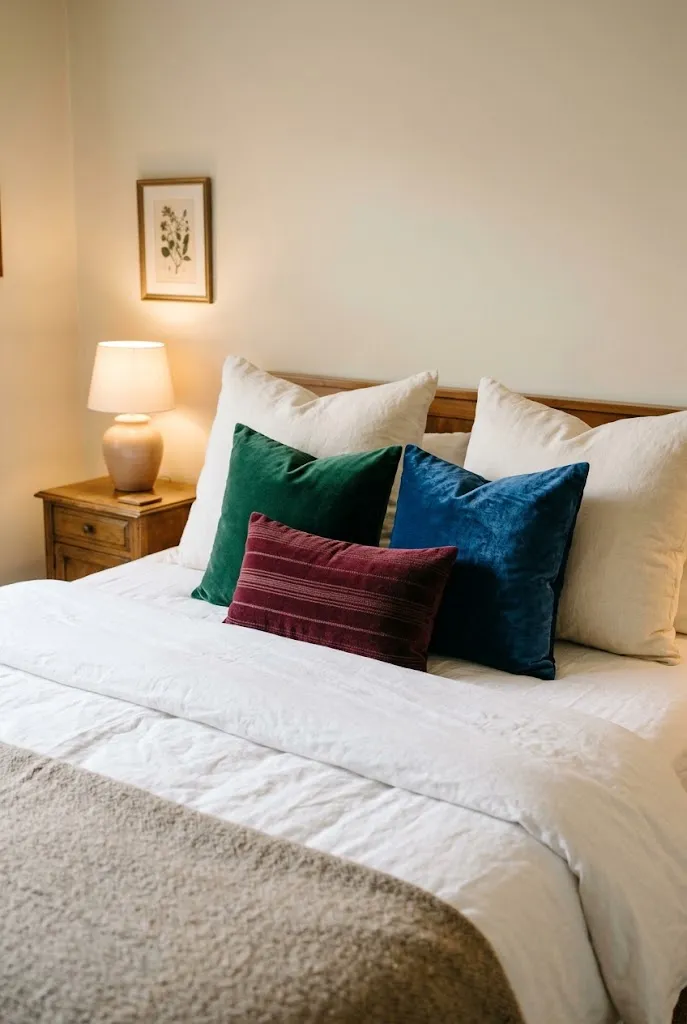
If your bedding is mostly white or beige, velvet pillows in emerald, sapphire, and deep burgundy bring richness without a major purchase. The sheen of velvet catches lamplight in a way cotton doesn’t, which is especially effective at night.
Use odd numbers, such as three or five pillows, arranged in two sizes. Keep one pillow in a pattern, like a subtle stripe or small geometric, and pull one accent shade from a rug or curtain so the group feels connected.
18. Create a Snow-White Bedroom Built on Texture
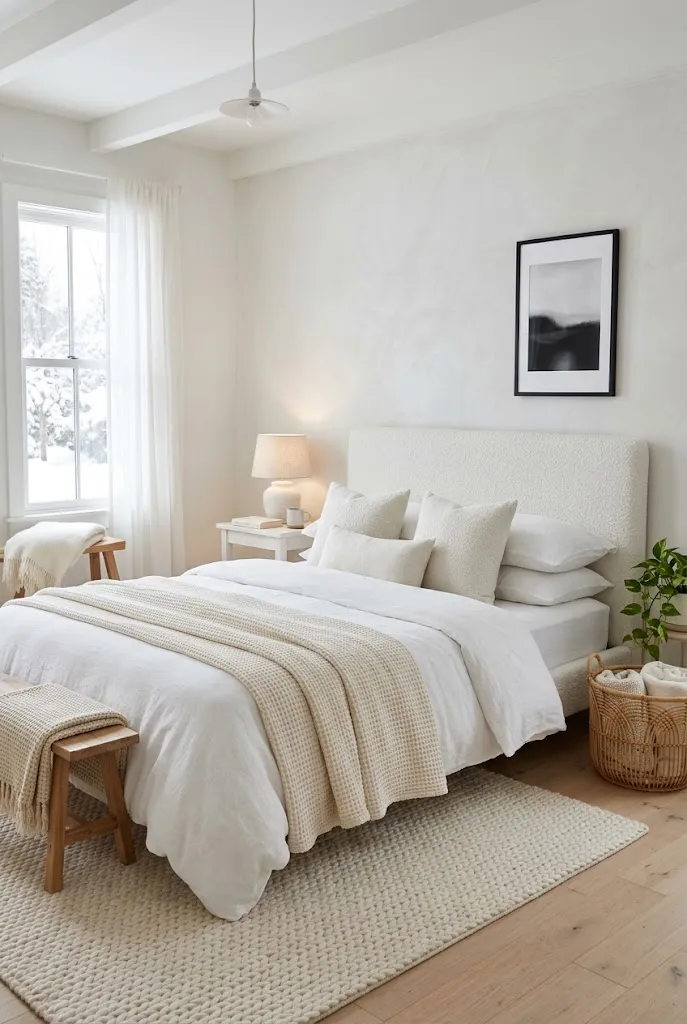
A white winter bedroom feels fresh and quiet, but only works if the textures vary. Layer ivory bouclé, cream waffle knit, white linen, and a woolly rug so the room has dimension rather than looking flat or sterile.
- Use warm whites, which have a hint of cream, instead of stark bright white.
- Add pale wood or woven baskets to keep the room from feeling cold.
- Include one dark accent, such as a black picture frame or iron lamp base.
Warm lighting matters even more in a white room, since cool bulbs can make it feel clinical.
19. Warm the Room With Terracotta and Cinnamon Accents
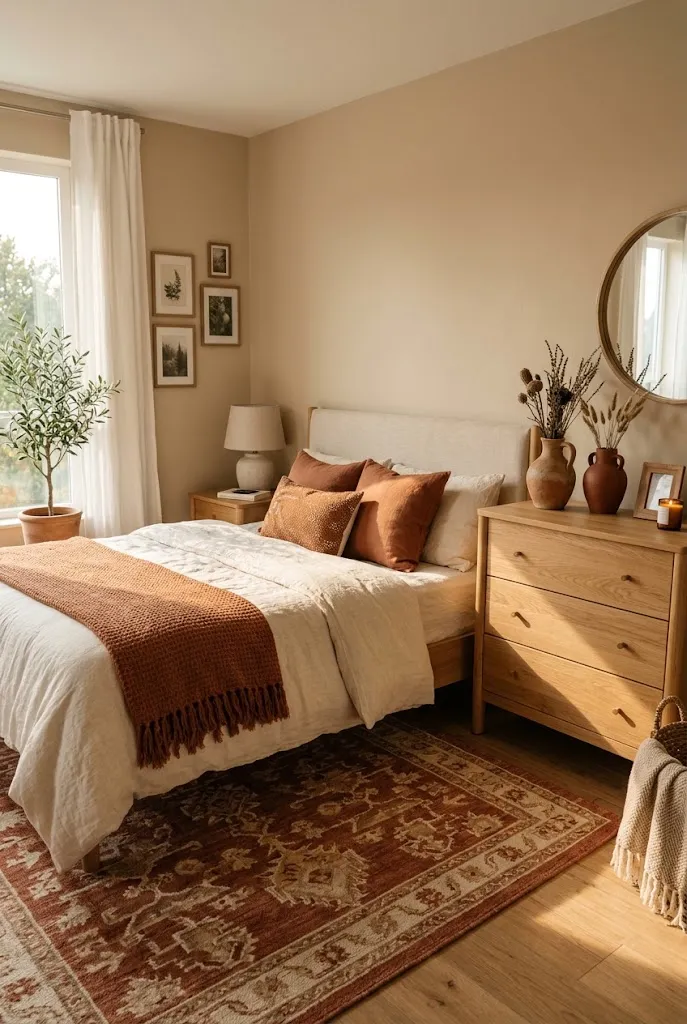
Rust, terracotta, and cinnamon tones bring a warmth that blues and grays can’t match, and they pair well with cream, oak, and soft green. Introduce them through a throw, a couple of pillows, ceramic vases, or a patterned rug rather than painting the walls.
This palette suits bedrooms with natural wood floors or furniture, since the tones echo each other. A little goes a long way, so aim for three or four accent pieces and let the bedding stay calm underneath.
20. Add Plug-In Wall Sconces Beside the Bed
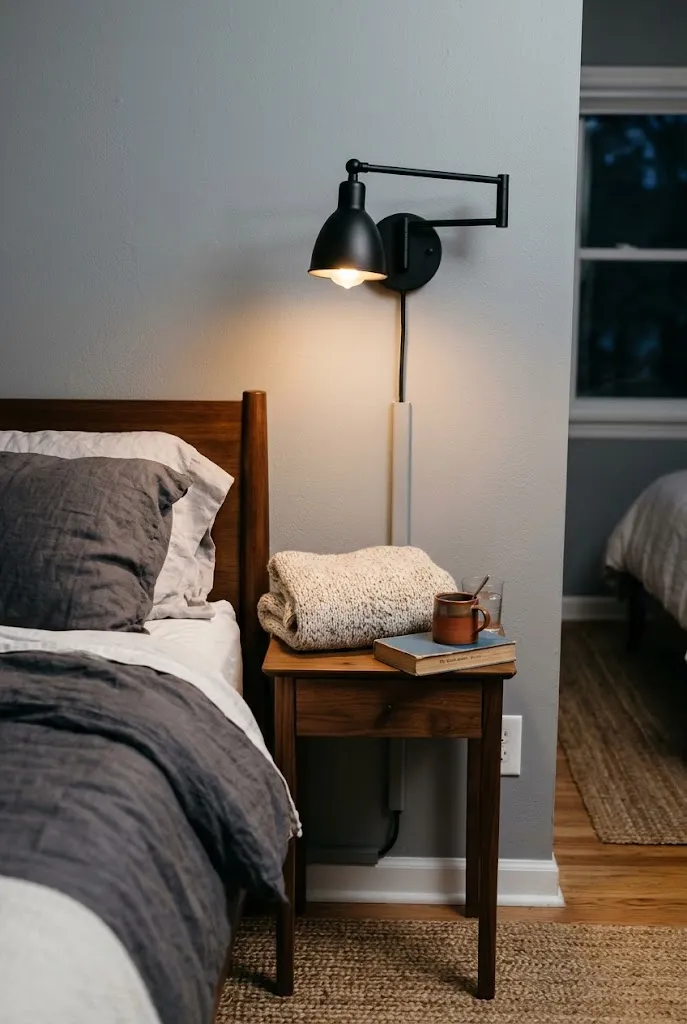
Plug-in sconces free up nightstand space and add a layer of warm light at eye level. They’re particularly useful in a small bedroom where a table lamp crowds a narrow nightstand, and many models can be installed without hardwiring, which makes them a good option for renters.
Choose a swing-arm style if you read in bed, or a simple fabric-shaded sconce for softer glow. Hide the cord with a paintable cord cover in the wall color, or run it neatly down a headboard for a tidy finish. Install them at a height that puts the light just above your shoulder when you’re sitting up.
21. Layer Plaid and Wool Without Going Full Cabin
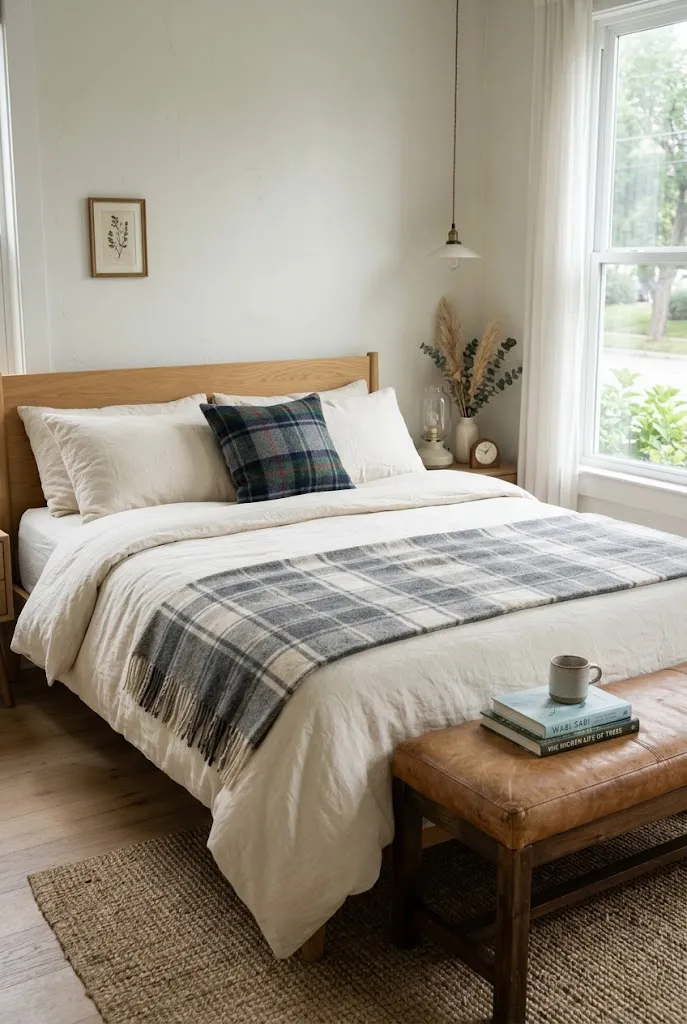
Plaid says winter, but too much can tip the room toward costume territory. Keep it to one or two pieces, such as a wool plaid throw or a tartan pillow, and surround them with solid colors in matching tones.
Gray-and-cream or navy-and-forest combinations feel quieter and more modern than traditional red tartan. Pair plaid with smooth materials like linen and leather, which keeps the contrast fresh and grown-up.
22. Style the Dresser With a Winter Vignette
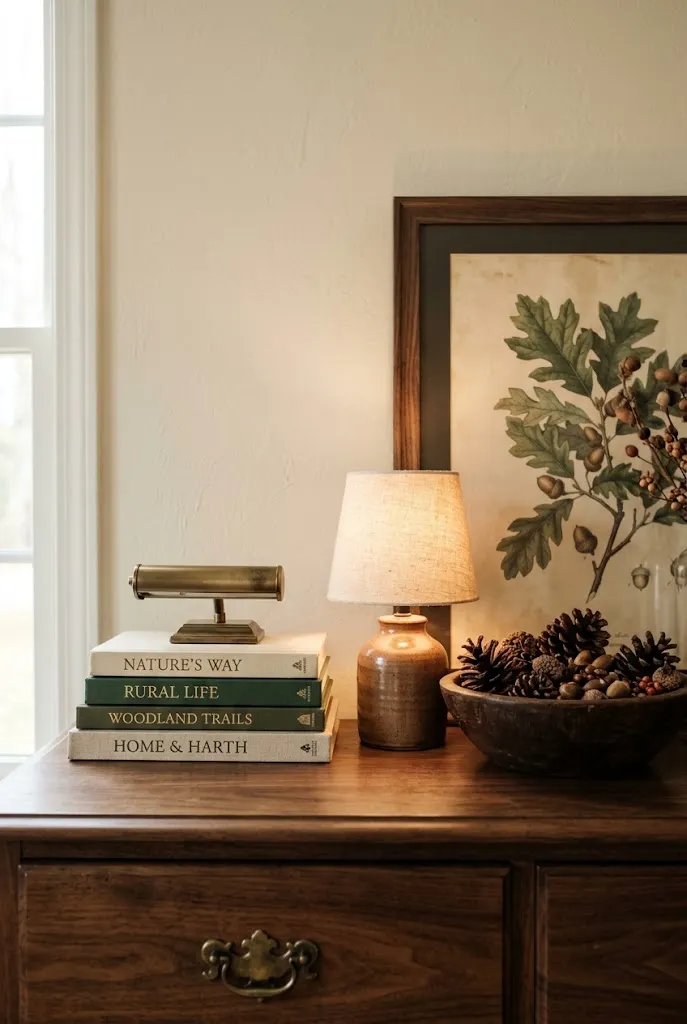
A dresser top is one of the most visible surfaces in the room, so it makes sense to style it for the season. A simple arrangement might include a stack of books, a small lamp, a bowl of pinecones, and a framed print leaned against the wall.
Vary heights, with something tall at one end, something mid-height in the center, and something low on the other side. Keep the palette limited to three colors so the surface doesn’t read as clutter, and wipe it down regularly since dust shows quickly on dark wood.
23. Turn a Window Into a Cushioned Seat
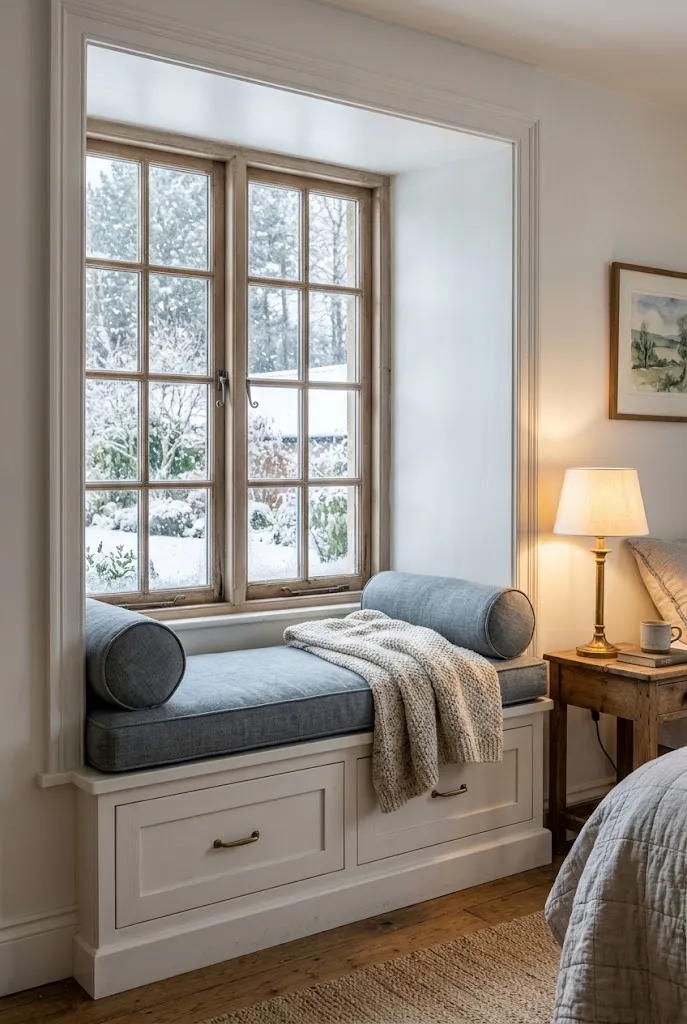
A window seat gives you a place to curl up with a book and watch the snow, and it adds a surprising amount of function to a bedroom. If you have a deep sill, a fitted cushion and a few bolsters are enough to make one. Otherwise, a built-in bench with drawers underneath provides seasonal bedding storage too.
Choose a firm, supportive cushion in a durable fabric, and keep curtains or shades nearby to control drafts. This is a larger investment than most ideas here, but it’s one of the few that adds both seating and storage.
Where to Start
You don’t need all 23. If the room feels cold, begin with the basics: a rug, warm bulbs, and flannel sheets. If it feels flat, add color through velvet pillows or a deep accent wall. For a small bedroom, pick lighting and layering first, since both add warmth without taking up floor space.
Change one layer at a time and see how the room feels after a few evenings. The coziest bedrooms tend to come together gradually, through textures and light you actually enjoy living with.