

A cozy living room rarely comes from one big purchase. It comes from small decisions that make a room feel soft, warm, and easy to sink into: the glow of a lamp at eye level, a rug that holds the sofa in place, a throw within reach of every seat. These 25 cozy living room decor ideas cover the full range, from renter-friendly swaps you can finish in an afternoon to custom pieces worth saving for. Each one is specific enough to picture and practical enough to try, whether you’re in a one-bedroom apartment, a suburban starter home, or an older house with quirky walls.
1. Layer a Chunky Knit Throw Over a Linen Sofa
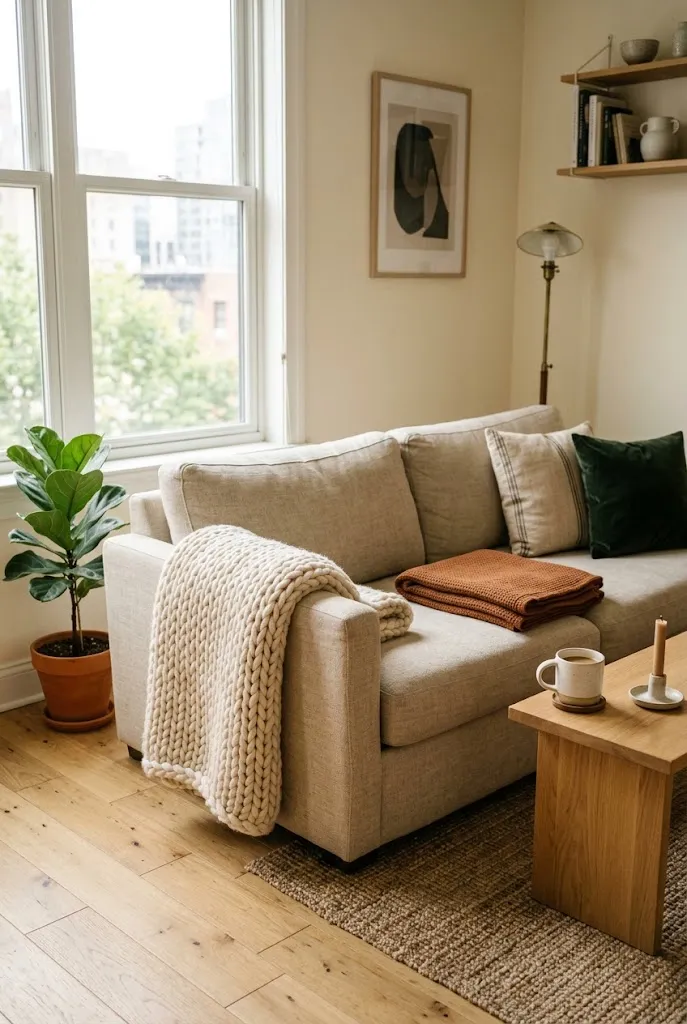
Linen upholstery has a relaxed, slightly rumpled look, and a heavy knit throw adds the weight and warmth it needs. Drape the throw over one arm or fold it loosely across the back cushion rather than spreading it flat. The uneven fall of the fabric looks casual and invites people to pull it over their legs.
Quick Facts
Best For: Apartments and rentals
Investment: Accessible
Visual Effect: Soft texture against a calm, light base
Cotton-wool blends are easier to clean than pure wool, which matters if the sofa gets daily use.
2. Paint the Walls Warm White and Add Honey Oak

Stark white walls can feel cool, especially in rooms that don’t get much direct sun. A warm white with a slight cream or yellow undertone makes the room feel softer in both daylight and lamplight. Pair it with honey-toned oak, such as a coffee table, a shelf, or picture frames, so the wood warms up against the walls.
- Test two or three whites on the wall and look at them in the morning, at midday, and at night.
- Repeat the wood tone in at least three places so it looks intentional.
- Choose a satin or matte finish to hide minor wall imperfections.
Editor’s Note: Whites shift dramatically with light direction. A north-facing room usually needs a warmer white than a south-facing one to avoid looking gray.
3. Anchor the Seating Area With an Oversized Wool-Blend Rug
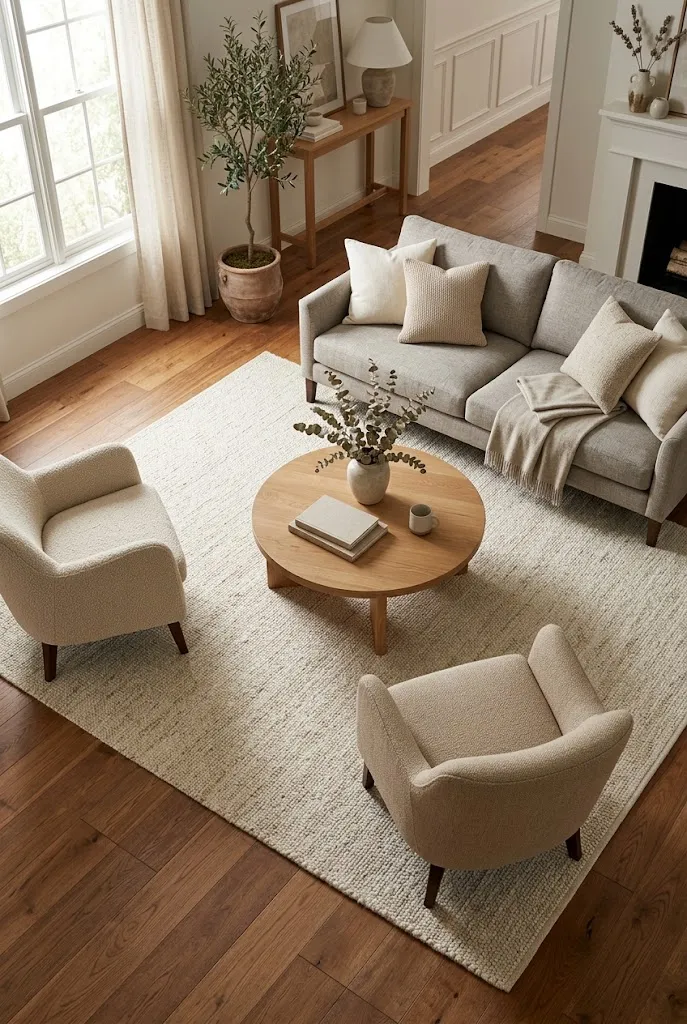
A rug that’s too small makes furniture look like it’s floating. Go larger than feels natural: ideally the front legs of the sofa and chairs should sit on the rug, which pulls the group together and makes the space feel intentional. Low-pile wool blends feel good underfoot and hold up well to foot traffic.
| Rug Type | Advantage | Best Fit |
|---|---|---|
| Wool or wool blend | Soft, resilient, warm underfoot | Main living areas |
| Flatweave cotton | Easy to wash or vacuum, lower profile | Rentals, pet households |
| Shag or high pile | Very plush, but harder to clean | Low-traffic reading corners |
For a room that’s 12 by 14 feet, an 8 by 10 rug is a common starting point, though layout matters more than a formula.
4. Build Three Layers of Lamp Light

Overhead lighting flattens a room. Cozy spaces usually rely on lamps at different heights, creating pools of warm light that feel like a series of small, welcoming zones. A plan that works in most living rooms:
- Place a table lamp on a side table or console at roughly eye level when seated.
- Add a floor lamp in a corner to wash light up the wall.
- Finish with a small accent light, such as a shelf light or a candle-style lamp, near the TV or bookcase.
Choose bulbs around 2700K for a warm, amber glow, and use dimmers or smart bulbs when you can.
Quick Tip: Fabric lampshades diffuse light more softly than glass or metal, which can cast harsher shadows.
5. Tuck a Boucle Accent Chair by the Window

Boucle’s looped, nubby texture adds visual softness even in a neutral color. A rounded chair, set at a slight angle near a window, creates a spot to read with natural light and breaks up the straight lines of the sofa and walls. Add a small side table within arm’s reach so it works as a real seat, not just a decoration.
Common Mistake: Pushing the chair flat against the wall.
Better Approach: Angle it 20–30 degrees toward the room. It creates a conversational feel and makes the corner look planned.
Boucle can show wear and snag easily, so it works best in rooms without climbing cats or heavy daily use.
6. Hang a Gallery Wall in Mismatched Wood Frames

Frames in varied wood tones, such as walnut, oak, and black, feel collected over time rather than bought as a set. Lay everything on the floor first and arrange it until the spacing feels even, then trace each frame on paper and tape those templates to the wall to check placement before drilling. Keep gaps between frames consistent, around two to three inches.
- Mix sizes, but keep one or two larger anchor pieces.
- Use family photos, small paintings, and botanical prints together.
- Use white or off-white mats to unify the mix.
- For rentals, picture-hanging strips rated for the frame weight avoid wall damage.
7. Build a Window Seat With Hidden Storage
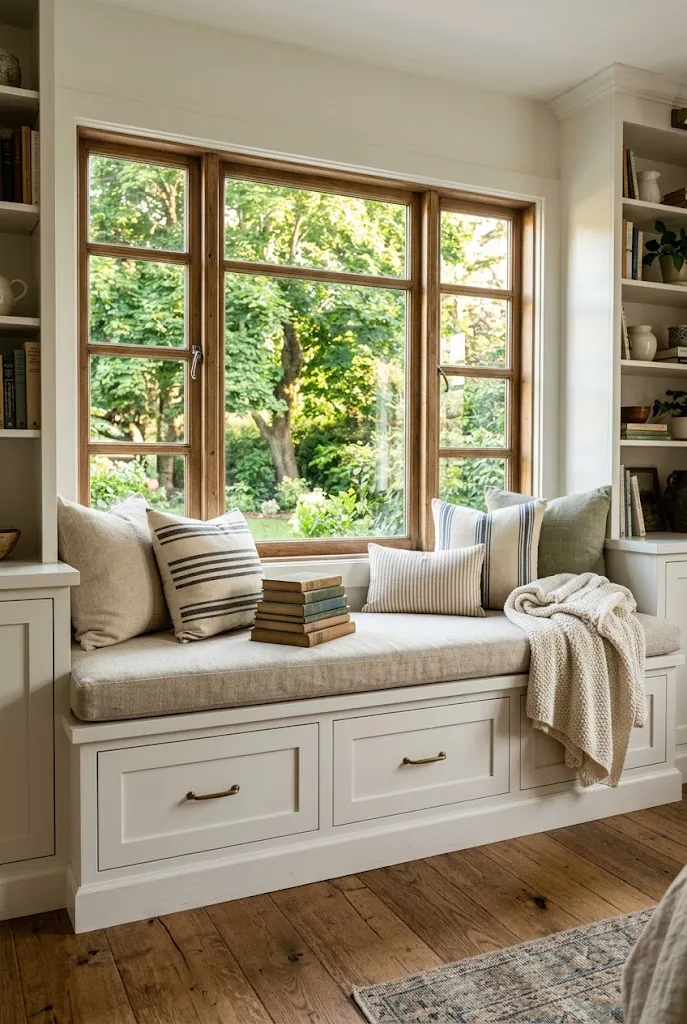
A built-in window seat gives you a place to curl up and extra storage for blankets, games, or books. It’s a custom or semi-custom project, but it can be done with stock cabinetry as a base and a custom cushion on top. Add a few pillows and a throw, and the window becomes the most inviting spot in the room.
Quick Facts
Best For: Rooms with a bay or wide window
Investment: Moderate to premium
Visual Effect: Architectural, built-in, long-term feel
Editor’s Note: Seat height around 17–19 inches feels comfortable for most adults, and a firm cushion of about three to four inches is easier to sit on than a very soft one.
8. Style the Mantel With Layered Greenery and Candlelight
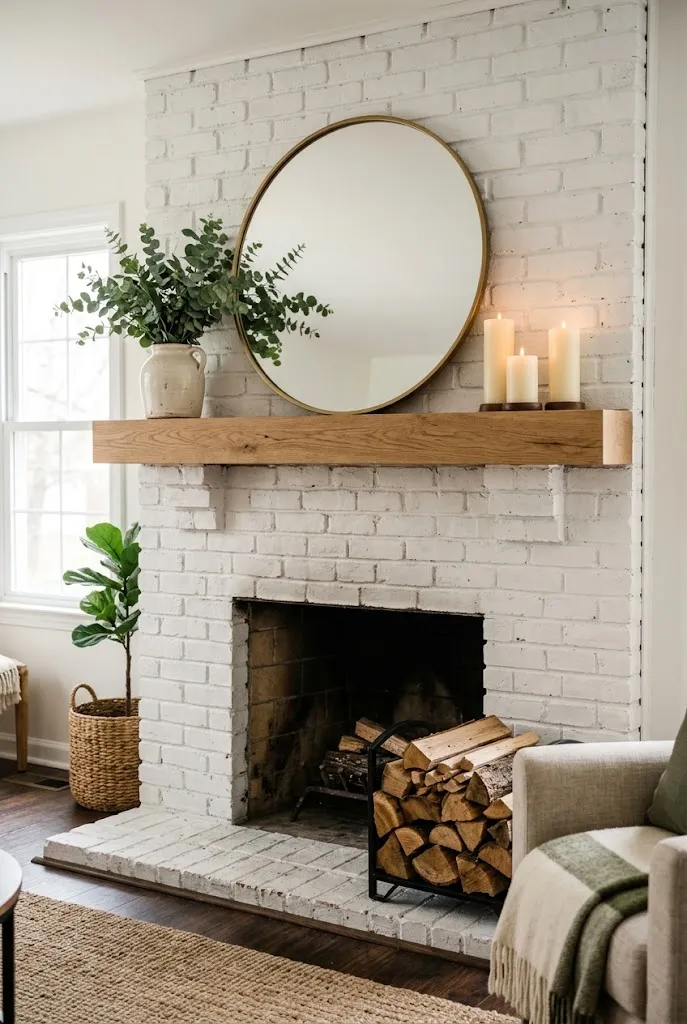
A fireplace mantel can look overloaded quickly. A more effective approach is a loose, asymmetrical arrangement: one large mirror or artwork leaning at the back, a few branches of eucalyptus or dried stems in a vase on one side, and a cluster of candles of varying heights on the other. Keep the center of the mantel slightly open.
Faux greenery is practical for rooms with little light, and mixing it with a few real stems adds natural variation. Use LED candles if the mantel is in a high-traffic family room.
9. Wrap an Alcove in Deep Olive Green
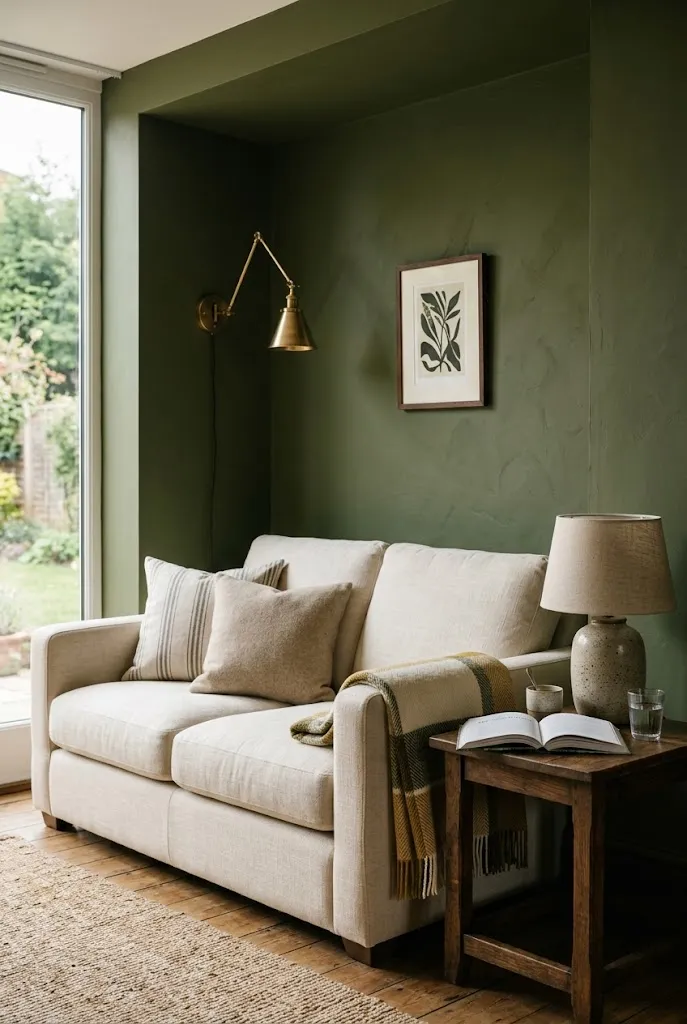
A dark color on a small, enclosed area feels deliberate and snug. An alcove, a bookcase niche, or the wall behind a sofa can take a deep olive or forest green without making the whole room feel heavy. Paint the trim in the same color or a slightly lighter one for a soft, enveloping effect.
| Approach | Effect | Best Fit |
|---|---|---|
| Full wall in dark green | Bold, enveloping | Rooms with good natural light |
| Alcove only | Defined, cozy nook | Smaller rooms or rentals with limited painting |
| Dark trim, lighter wall | Subtle contrast | Cautious first-timers |
Brass or aged-wood accents look especially good against deep green.
10. Carve Out a Reading Corner
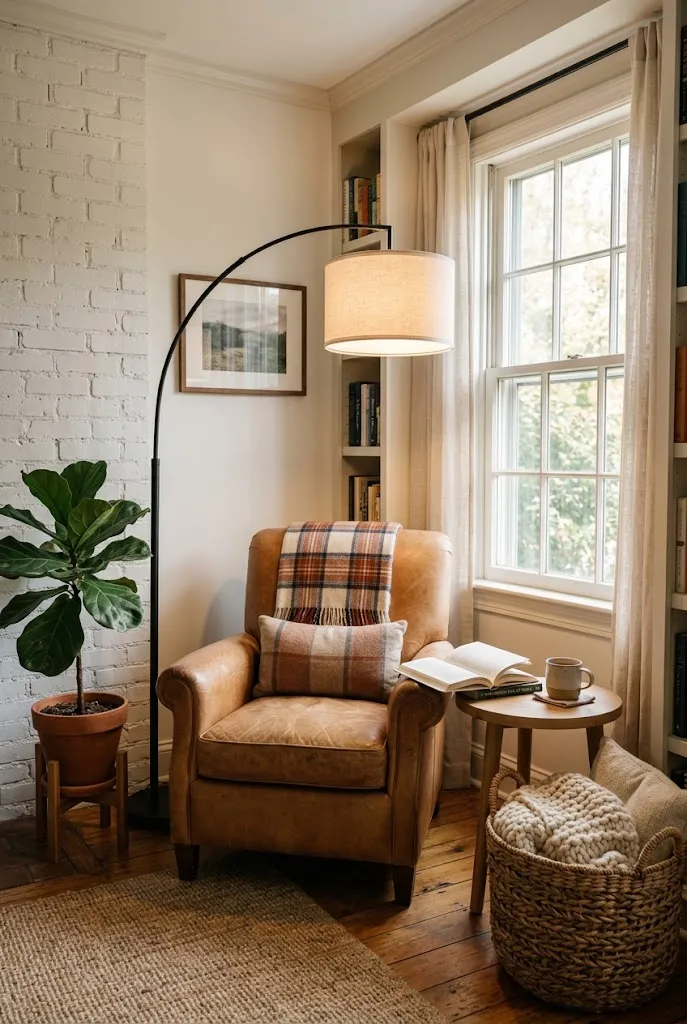
A cozy corner doesn’t need a lot of space. A comfortable chair, a floor lamp that throws light over the shoulder, a small side table, and a nearby basket for books or a blanket are enough. Position the chair so you can see the rest of the room if you like, or face a window for a quieter feel.
Do: Keep a surface within reach for a drink and book.
Don’t: Place a lamp so close to the chair that it glares on the page.
Arc floor lamps work well when there’s no outlet near the chair, since the light can reach over the seat from behind.
11. Choose a Round Coffee Table With Soft Edges

Sharp corners can make a living room feel tight, especially in smaller spaces where people walk close to the table. A round or oval coffee table softens the room, makes the walking path easier, and works well with sectionals. Wood, travertine-look, and stone finishes each bring a different tone.
When styling, group a low stack of books, a small bowl, and a candle, and leave open space for drinks and everyday use.
12. Corral Clutter in Woven Baskets

Baskets are one of the most practical ways to make a living room look calm. A large lidded basket handles blankets or kids’ toys, while smaller ones can sit on shelves for remotes and chargers. Natural fibers like seagrass, rattan, and jute add warmth and texture without competing with other pieces.
- Place one large basket near the sofa for throws.
- Use matching baskets on a shelf for a tidy look.
- Pick baskets with handles so they’re easy to move.
Keep the styling edited. A room full of baskets starts to look like storage rather than decor.
13. Give Walls a Limewash or Plaster Finish
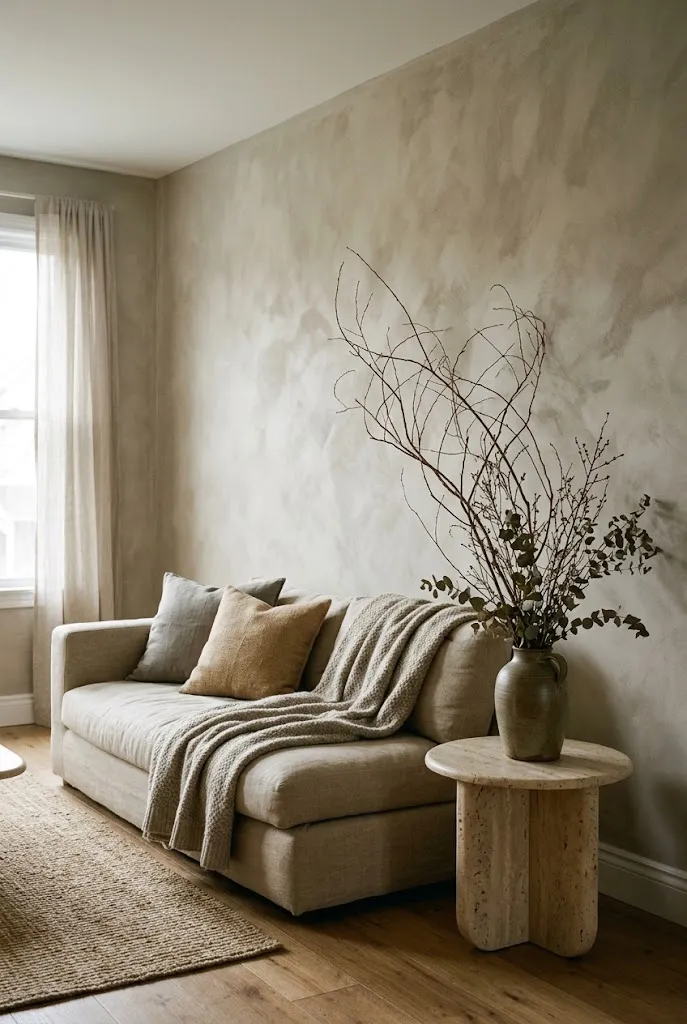
Limewash and plaster-style finishes have a soft, cloudy depth that flat paint can’t match. The surface shifts with the light, so the room feels warmer and more organic. Professional application is a premium option, and DIY limewash paints are available for those willing to practice on a test area first.
Common Mistake: Using it on every wall with heavy-handed brush strokes.
Better Approach: Start with one feature wall and apply thin, crisscrossed coats for a subtle, natural variation.
14. Let a Trailing Pothos Spill From the Bookshelf

A trailing plant softens the hard lines of shelving and adds life to the room. Pothos handles a range of indoor light and is easy to find. It is toxic to cats and dogs, so in pet households, consider a pet-safe option such as a spider plant or place it out of reach.
Set the plant on the top shelf or a bracket so the vines can hang down. Rotate the pot occasionally so growth stays even.
15. Add Floor Cushions and a Leather Pouf for Flexible Seating
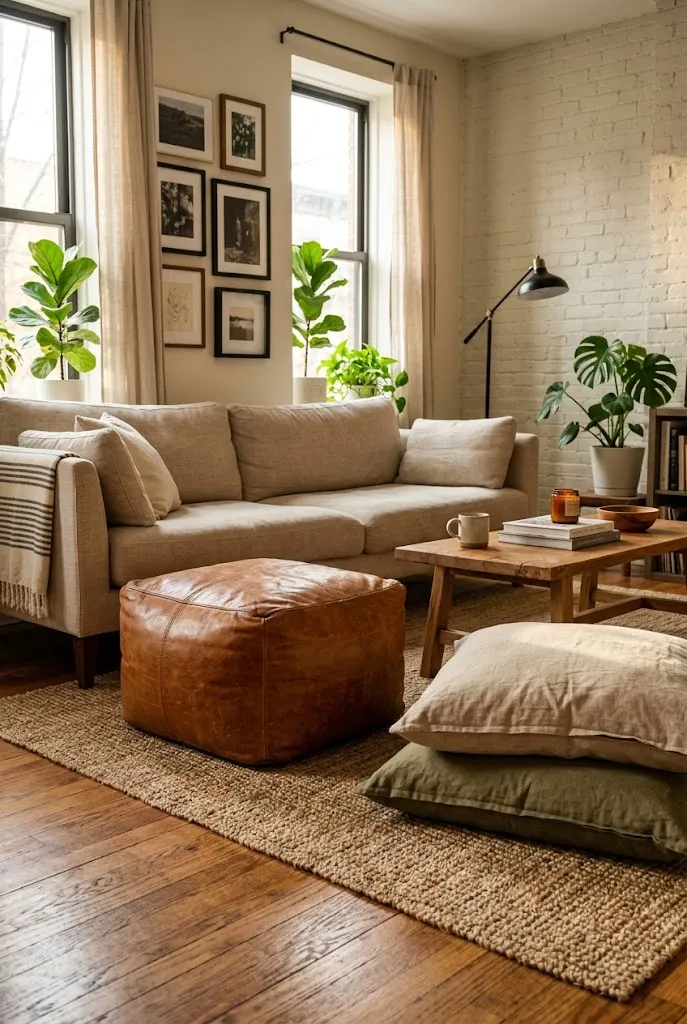
Extra seating that can be moved or tucked away is useful when guests arrive. A leather pouf doubles as a footrest, while oversized floor cushions create a relaxed spot near the coffee table. They’re also good for kids’ play areas or casual movie nights.
Quick Tip: Choose cushions with removable covers so spills and pet hair aren’t a problem.
16. Hang Sheer Linen Curtains High and Wide
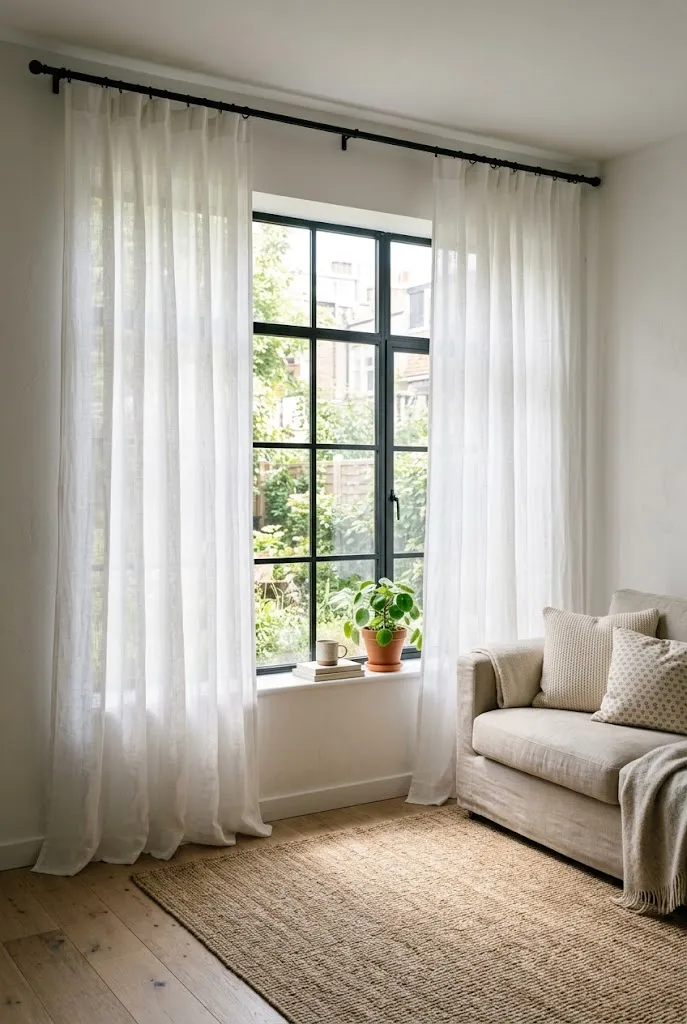
Mounting the rod closer to the ceiling and extending it beyond the window frame makes the window look larger and gives the room more height. Sheer or lightweight linen curtains filter the light so the room glows rather than glares. Make sure the panels are full enough to look gathered, even when closed.
Do: Let the hem graze the floor or puddle slightly.
Don’t: Hang curtains right at the top of the window frame.
17. Cluster Candles and a Lantern on a Tray

A tray gathers small objects and makes them look like a deliberate vignette. Use a wood or metal tray on the coffee table or console, with a mix of pillar candles, a small lantern, and a vase of stems. Varying the heights keeps the arrangement from looking flat.
Editor’s Note: Never leave open flames unattended, and keep candles away from curtains and pets. Flameless LED candles work well where safety is a concern.
18. Pair a Worn Leather Sofa With Plaid and Wool Pillows
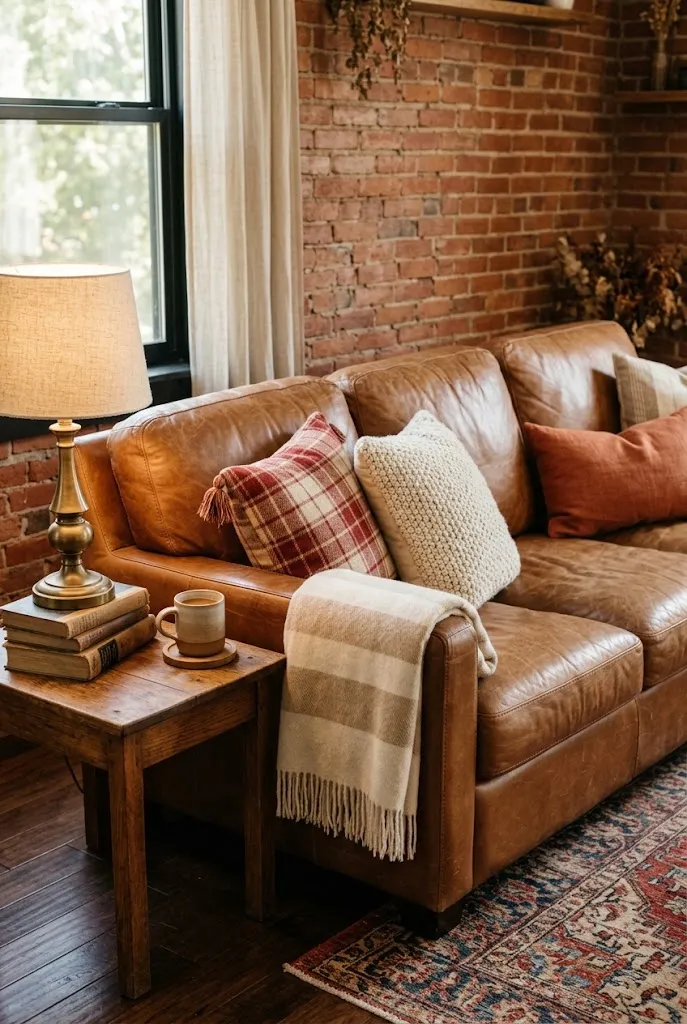
Leather develops character with use, and the creases and patina give a living room a settled, comfortable feel. Soften it with pillows in plaid, wool, and solid tones that echo the leather color. Mixing patterns works best when they share a color or scale.
- Combine one large-scale plaid, one small pattern, and one solid.
- Include a mix of square and lumbar shapes.
- Keep the palette to three or four related colors.
19. Style Open Shelves With Books, Ceramics, and Breathing Room

Open shelves look best when they aren’t packed. Mix stacked horizontal books with a few vertical ones, add handmade-looking ceramics, and leave some empty space so each object has room to stand out. Group items in odd numbers and vary heights.
| Element | Role | Tip |
|---|---|---|
| Books | Structure and color | Mix horizontal stacks with upright groups |
| Ceramics | Texture and shape | Choose two or three tones |
| Empty space | Visual rest | Leave at least one third of each shelf open |
20. Use Plug-In Sconces to Add Warm Light in a Rental
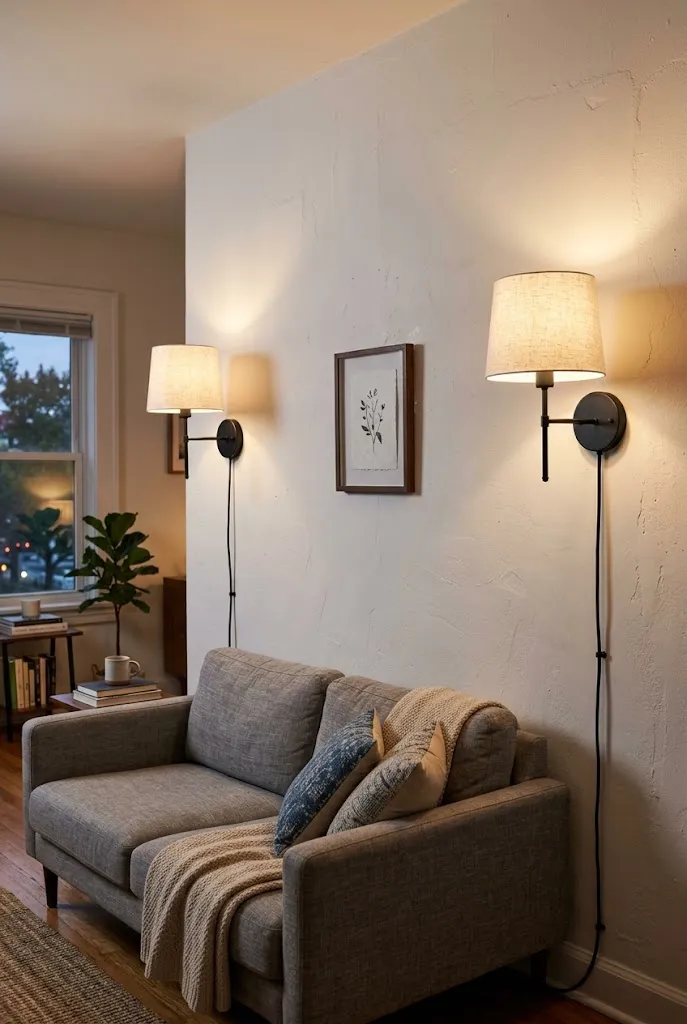
If you can’t hardwire lighting, plug-in wall sconces with a fabric-covered cord provide the same glow as a hardwired fixture. Mount them on either side of the sofa or above a shelf, and run the cord neatly along the wall or use a cord cover painted to match.
Quick Facts
Best For: Renters
Investment: Accessible
Difficulty: Basic mounting, no electrician needed
21. Warm Up the TV Wall With Dark Paint and Wood Shelving
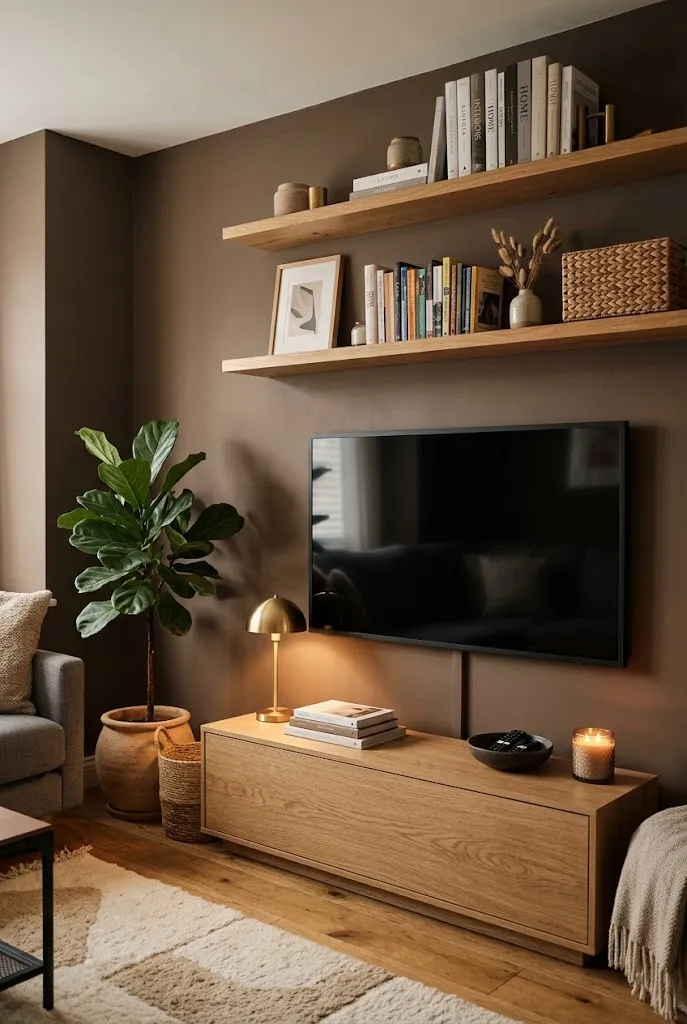
A TV on a white wall tends to be the strongest visual focus in the room. Painting the wall a deep, warm color such as charcoal brown or dark taupe makes the screen blend in. Add floating wood shelves with baskets and books around it so the area feels like a feature wall.
Common Mistake: Mounting the TV too high.
Better Approach: Center the screen at roughly eye level when seated.
22. Mix In Thrifted Wood Furniture
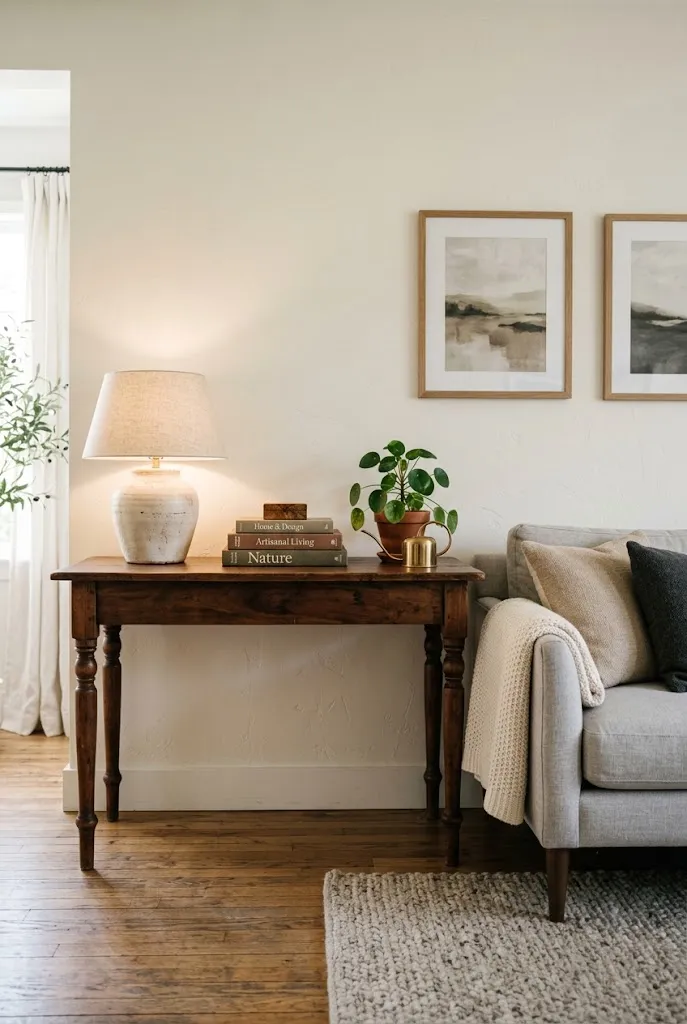
Secondhand wood pieces add warmth and a sense of history that new furniture often lacks. A vintage side table, a worn writing desk, or a carved wooden bench can become the character piece in a room. Check for sturdy joints, minimal wobble, and a finish that can be cleaned or refreshed with a simple wax or oil.
Quick Tip: Wipe the piece with a damp cloth and test a cleaner on a hidden spot before refinishing.
23. Warm the Palette With Rust and Terracotta Accents

Rust, terracotta, and clay tones bring warmth to cool neutrals without much effort. Use them in pillows, a throw, a vase, or a piece of art, and keep the base of the room in cream, oatmeal, or soft gray. Repeat the accent color in three places across the room to tie it together.
- Add rust to textiles, since they’re easy to switch out.
- Introduce terracotta in pots and ceramics.
- Pull in deeper brown through wood or leather.
24. Add Applied Molding for a Paneled Wall

Applied wall molding, such as simple rectangular frames or board-and-batten, adds depth and a finished look without full custom millwork. Paint the wall and molding the same color for a subtle, tonal effect, especially in a soft greige, warm white, or muted green. It’s a moderate DIY project that requires measuring, cutting, and caulking.
| Style | Effect | Best Fit |
|---|---|---|
| Rectangular box molding | Classic, traditional | Older homes |
| Board and batten | Clean, vertical lines | Modern and farmhouse rooms |
| Full-height wainscot | Dramatic, tailored | Rooms with higher ceilings |
25. Float the Sofa and Back It With a Narrow Console

In an open-plan apartment or large living room, pushing the sofa against a wall can leave the room feeling undefined. Pulling it forward and placing a narrow console behind it separates the seating area from the rest of the space and creates a surface for lamps and books. It makes the zone feel cozier and gives you extra lighting without needing a nearby outlet on the wall.
Editor’s Note: Leave at least 30 to 36 inches for walkways around the sofa, and choose a console that’s slightly shorter than the sofa back.
Where to Start
You don’t need to do all 25. Pick one change that addresses the biggest gap in your room, whether that’s lighting, texture, or an undefined seating area, and start there. A rug, a few lamps, and one or two layered textiles will make a bigger difference than a full redecorating spree. Add one idea at a time and live with it for a week or two before the next.