

Thanksgiving tables fill up quickly. Between the turkey, the sides, the rolls, and the drinks, the centerpiece can become an afterthought, or worse, a barrier that keeps guests from seeing one another. The good news is that a centerpiece doesn’t need to be large or costly to make a dinner feel finished. A few well-chosen elements, a sense of height, and a palette that suits the season can do most of the work.
The 25 ideas below each offer a distinct look. Some rely on what you can gather from a yard, a grocery store, or a farm stand. Others use candles, florals, or a few heirloom pieces. You’ll find options for a compact apartment table, a rented dining room with limited storage, a traditional family spread, and a formal setting with the leaves fully extended.
One practical rule runs through all of them: people need to see each other across the table. Keep most arrangements under about 12 inches tall, or leave gaps that let guests look through. Taller pieces suit long, formal tables, while low groupings and scattered elements work well when the table seats a crowd.
1. Mini Pumpkins Nestled in a Wooden Tray
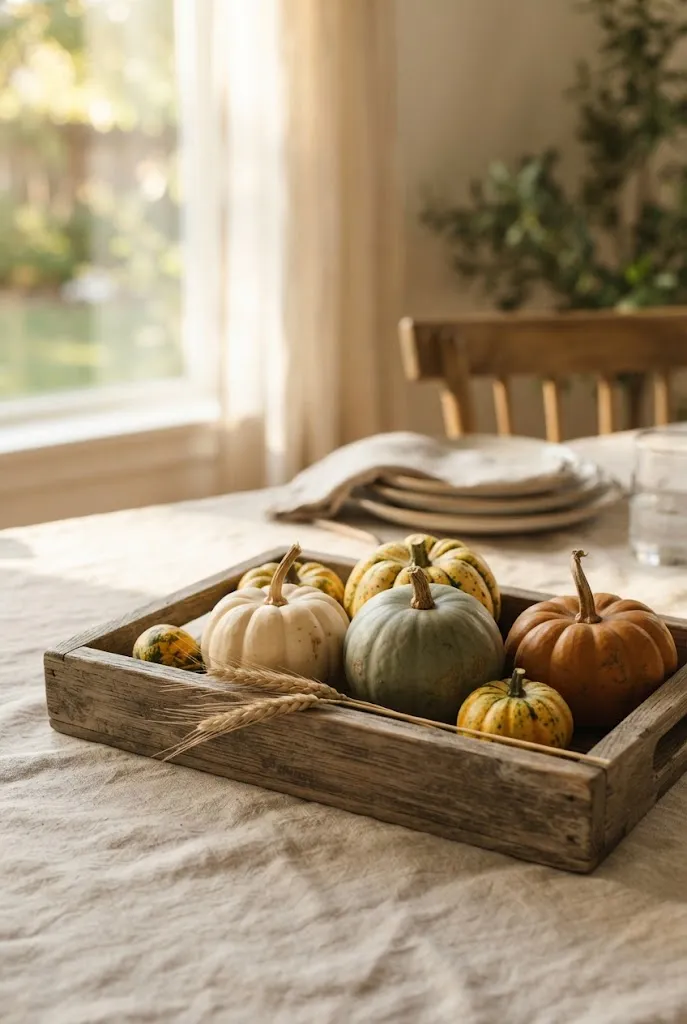
Start with the most familiar fall element and give it some structure. Choose three or four pumpkins in different sizes and colors, such as cream, sage green, and deep orange, and set them on a shallow wooden tray. Tuck a few small gourds between them and add a sprig of dried wheat along one edge for height. The tray keeps everything contained, which makes it easy to lift off the table when it’s time to clear for dessert.
Because the arrangement stays low and compact, it works at nearly any table size. Mini pumpkins and gourds are widely sold in the weeks before the holiday, so this is one of the more budget-conscious options here. Real pumpkins will eventually soften, so plan on using them for the dinner itself rather than leaving them out for several days. Faux pumpkins are a practical choice for a display that needs to last longer.
2. A Low Eucalyptus and Olive Branch Runner
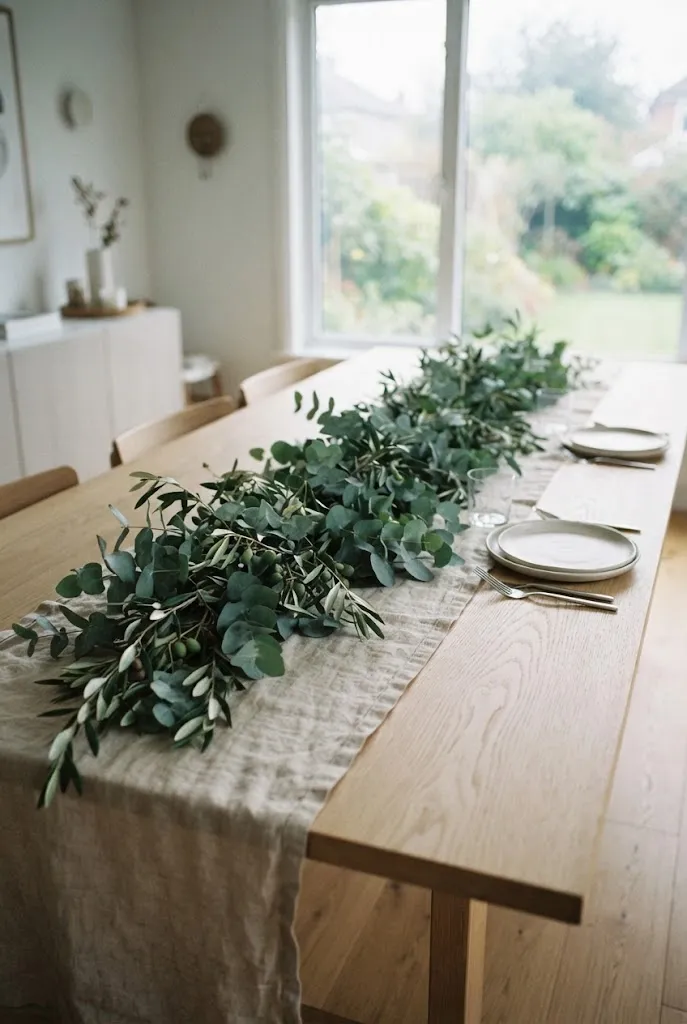
A long runner built from branches gives the table a relaxed, garden-grown feel. Lay a strip of linen or a simple table runner down the center, then arrange eucalyptus, olive branches, and a few stems of bay leaf so they trail slightly past the ends. Keep the height low, no more than a few inches above the table, so guests can see straight across.
The look is more about movement than color. Silver-green foliage reads cooler and softer than the warm tones usually associated with fall, which makes it a good choice if your table already has plenty of orange and red. Fresh greenery can wilt in a warm dining room, so mist it lightly in the afternoon or add a few inches of water in a hidden container under the runner if your setup allows. Avoid tucking foliage too close to candles, which is covered in a later idea.
3. Taper Candles in Brass Holders Framed by Wheat
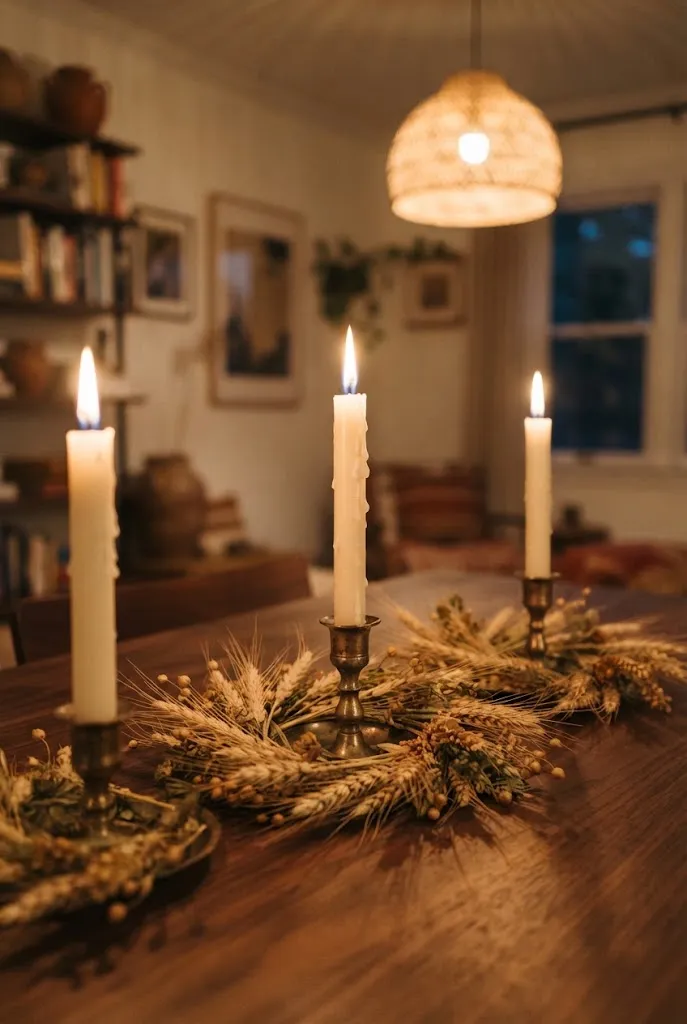
Candles are one of the simplest ways to bring warmth to a dinner, and brass holders make them feel intentional. Set three or four taper candles in matching holders along the center of the table, varying their heights slightly. Then place a loose bundle of wheat or dried grass around the base of each holder.
- Choose candles in ivory or soft cream so they blend with the wheat rather than competing with it.
- Use holders that sit steady on the table and have a wide enough base to prevent tipping.
- Keep the candles at least a foot away from anything dry, including the wheat itself, and never leave them burning unattended.
The result reads as traditional and warm, and the candlelight looks especially good as the sky darkens during a late-afternoon meal. Taper candles also leave room for conversation, since they stay narrow enough to see around.
4. Pinecones and Pillar Candles on a Dark Wood Board
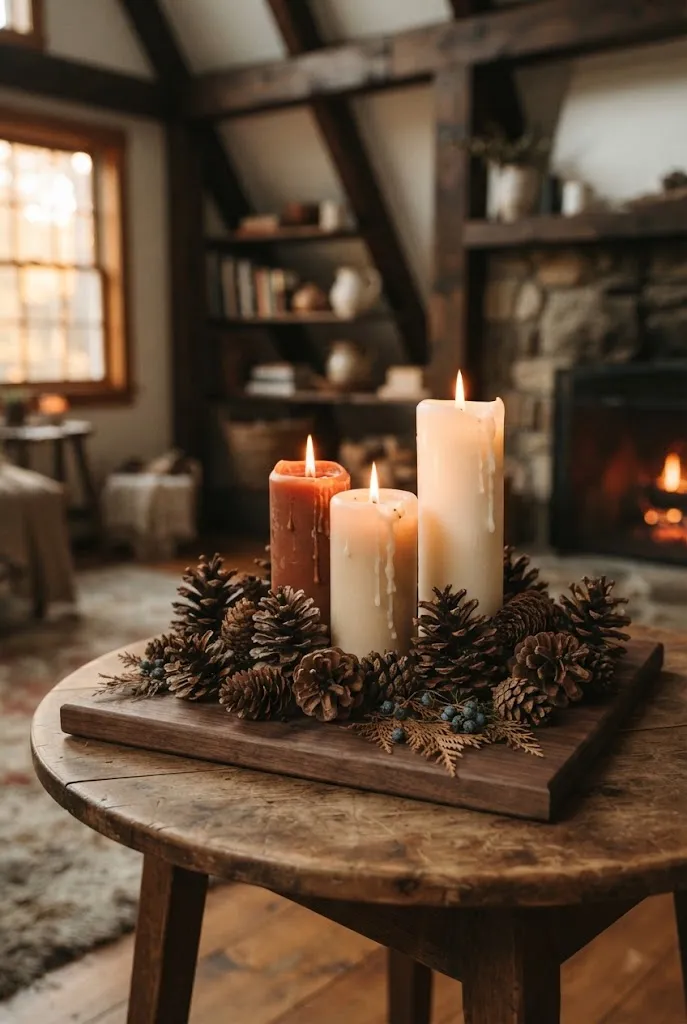
This idea leans toward a cabin-like warmth without requiring a rustic dining room. Place a long, dark wood board or cutting board in the center of the table, then arrange three pillar candles of differing heights in a loose cluster. Fill the gaps with pinecones of varying sizes.
The contrast between dark wood, pale candles, and the textured pinecones gives the piece depth. Because it is compact, it works well on a smaller dining table. Pinecones should be fully dry and cleaned before they go on the table. Check them for insects, and avoid placing them directly beside a flame. If you use a larger pillar candle, consider a short metal tray beneath it to catch drips.
5. Apples and Pears in a Harvest Bowl
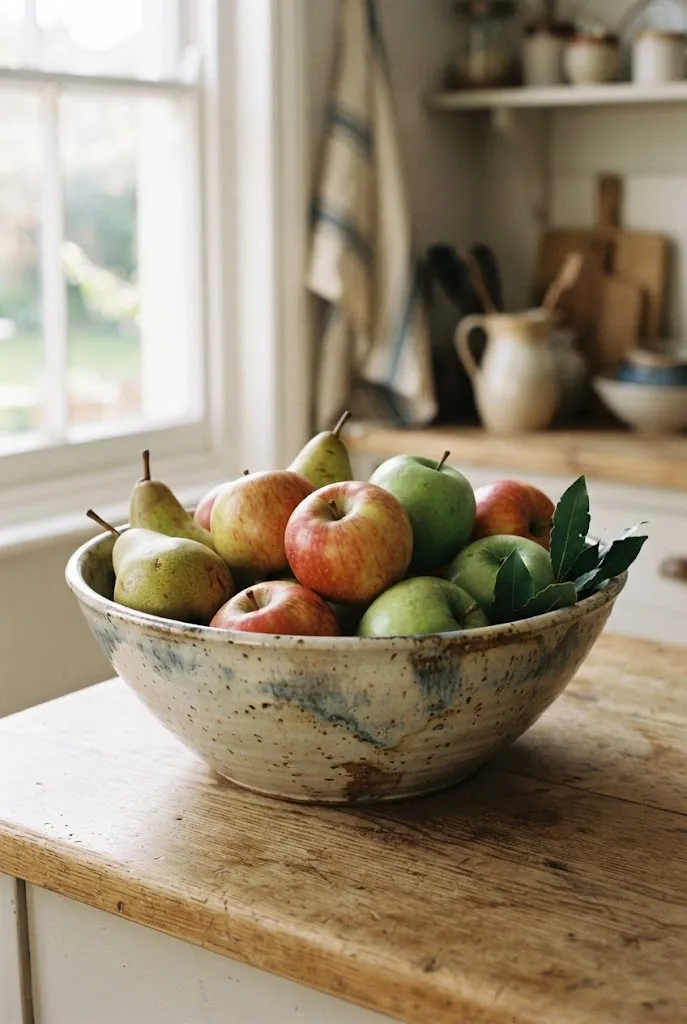
A bowl of fresh fruit feels generous and seasonal, and it can double as a snack for guests who arrive early. Choose a wide, low bowl in glazed ceramic or wood, then arrange red and green apples alongside pears in varied shades. Tuck a few bay leaves or small branches between the fruit for a bit of contrast.
The main practical consideration is timing. Fruit left out for hours can bruise, attract fruit flies, or simply look tired by dessert. Set the bowl out shortly before guests arrive, and keep it away from heat sources such as the oven. Choose fruit with few blemishes, and rotate any piece that begins to soften. Because the bowl is wide rather than tall, it leaves room for dishes around it.
6. Cranberry-Filled Hurricane Vases With Floating Candles
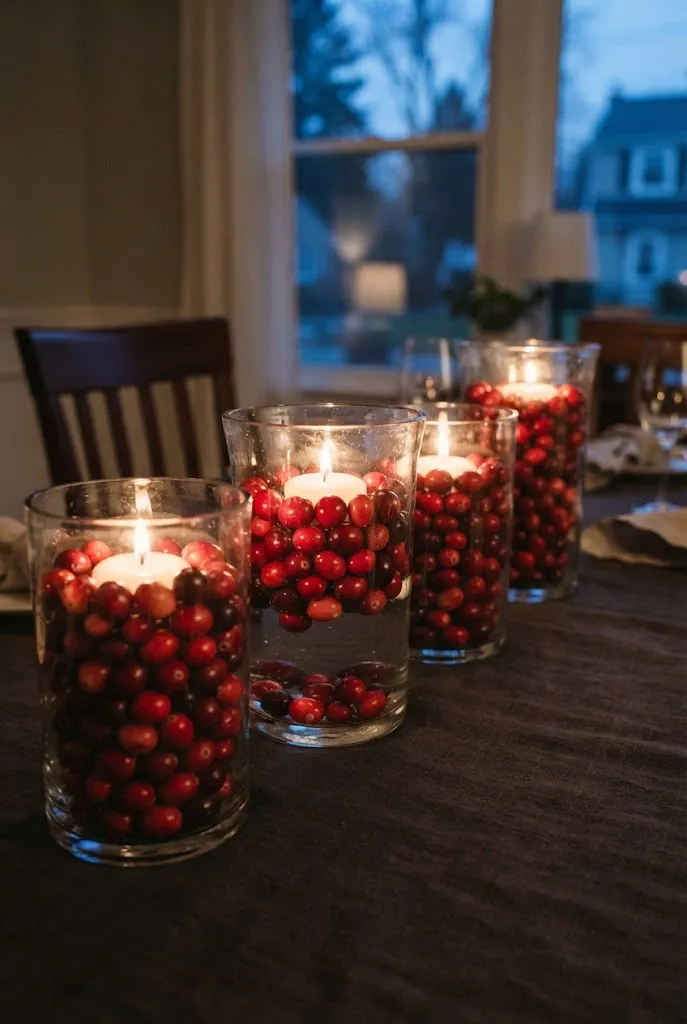
A few glass hurricane vases filled with fresh cranberries offer bright color without a lot of bulk. Place three or four clear vases in a row or staggered across the table, fill each with cranberries to about two-thirds, and add a short floating candle on top. The cranberries catch the light and create a glossy, jewel-toned glow.
This is a good option for a table with a red or wine-colored palette. Keep the vases stable and check that the candles fit inside without touching the glass. Because fresh cranberries are seasonal and inexpensive, the whole piece stays accessible. If you prefer to skip candles entirely, the cranberries alone still look striking, and the vases can be refilled with fresh berries for a later meal.
7. A Row of White Mums in Bud Vases
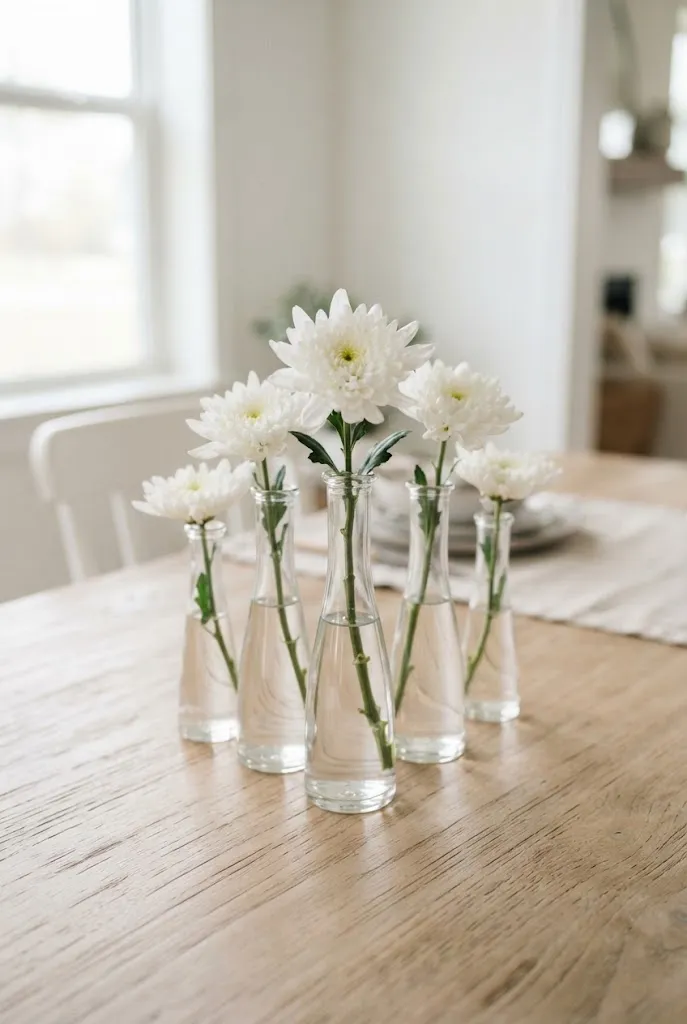
Chrysanthemums are one of the most reliable fall flowers, and a row of small bud vases keeps the look clean and graceful. Choose three to five white or cream mums, trim them to different heights, and place each stem in its own slender vase. Line the vases along the table so the arrangement reads as a single, rhythmic element rather than a pile.
Bud vases are especially useful at tables where space is tight, because each stem stays narrow. Mums tend to last well when the water is changed every day or two and the stems are trimmed at a slight angle. The main styling decision is spacing: leave enough room between vases for plates and serving dishes, and keep the tallest stem near the center of the table.
8. Stacked Vintage Books With a Small Gourd
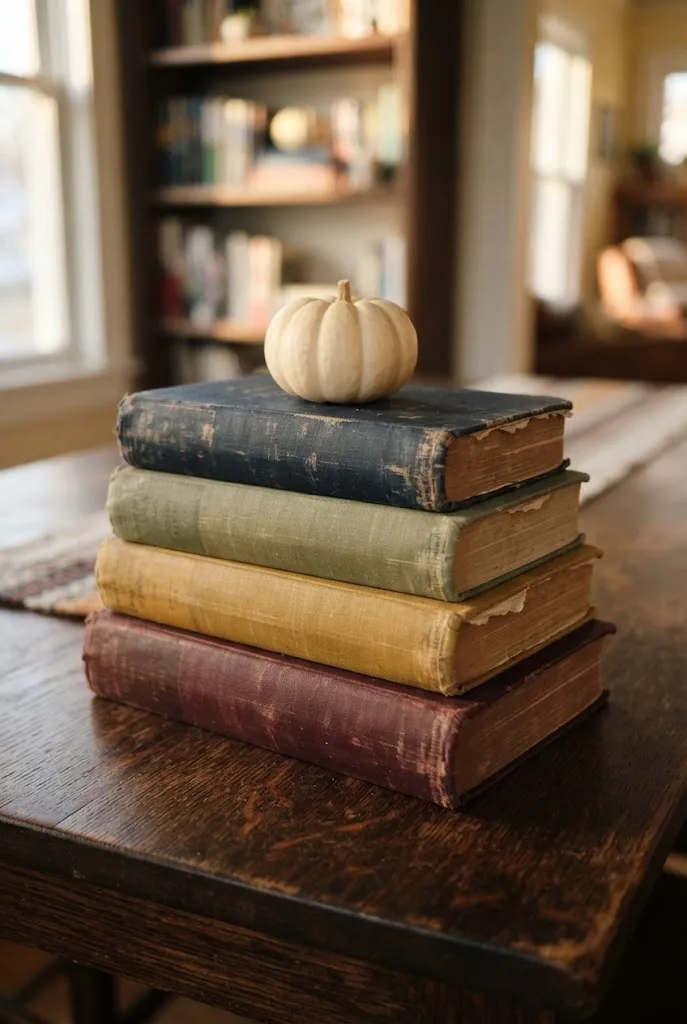
Not every centerpiece needs to come from a florist or a garden. A small stack of books, especially secondhand volumes with worn covers and mismatched colors, adds texture and character. Stack three or four books in descending size, lay them flat, and set a small gourd or miniature pumpkin on the top one.
The charm lies in the mix of colors and the sense that the books belong to the house. This idea works especially well in homes that already have a bookish or traditional feel. Choose books with sturdy covers and avoid any that are fragile or valuable. Because the stack sits low and stays fairly narrow, it fits comfortably on a crowded table, and the books can be moved easily to make room for serving.
9. A Floral Cloud of Hydrangeas and Garden Roses
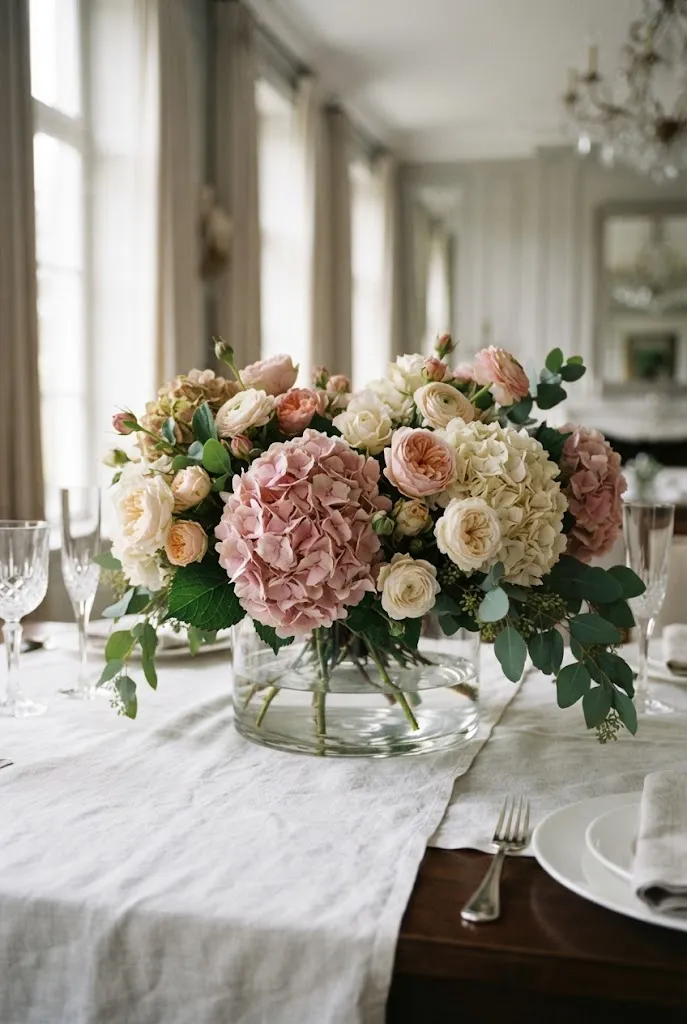
For a more elevated look, a low glass bowl filled with hydrangeas and garden roses creates a soft, full mass of color. Choose blooms in dusty pink, cream, and muted peach, and arrange them so the flowers rise just above the rim. Keep the composition low and wide rather than tall, so it reads as an abundant cloud over the table.
Floral arrangements at this scale take more planning and typically cost more than the earlier ideas, but the effect can be worth it for a special dinner. Florists can often customize the palette to match linens or dishware. Ask about the expected vase life of each bloom, since hydrangeas and roses behave differently over several days.
| Bloom | Visual Effect | Best Fit |
|---|---|---|
| Hydrangea | Full, soft clusters that fill space | Low bowls and wide arrangements |
| Garden rose | Layered petals with a romantic shape | Mixed arrangements with greenery |
| Chrysanthemum | Crisp, structured form | Tall or minimal designs |
10. Brass Candelabra With Burgundy Tapers
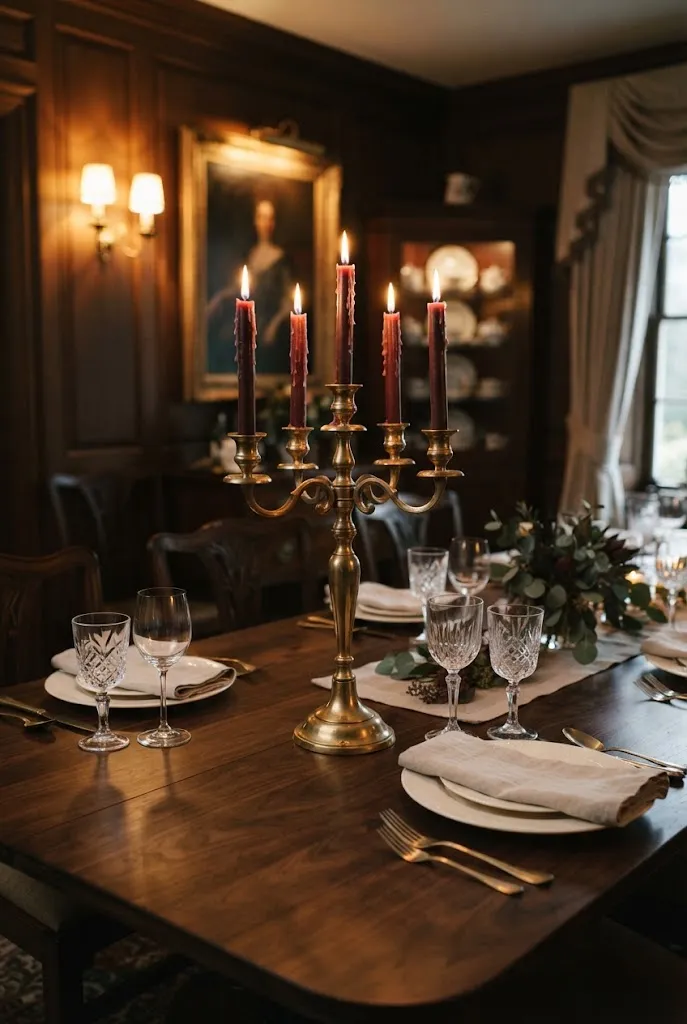
A candelabra makes an immediate statement, and it can carry a formal dinner without much additional decoration. Choose a brass candelabra with three to five arms, add burgundy or deep red taper candles, and place it at the center of the table. Keep the base wide enough to stay stable.
The candelabra is most effective on a longer table where it can stand as a focal point without blocking sightlines. Because it rises above the table, it is best suited to a larger gathering where guests are seated comfortably at a distance from one another. Use a candle snuffer rather than blowing out the flames, and trim the wicks before the meal so the flames stay steady. Avoid placing it beneath a hanging light fixture.
11. A Cornucopia Basket of Gourds and Fruit
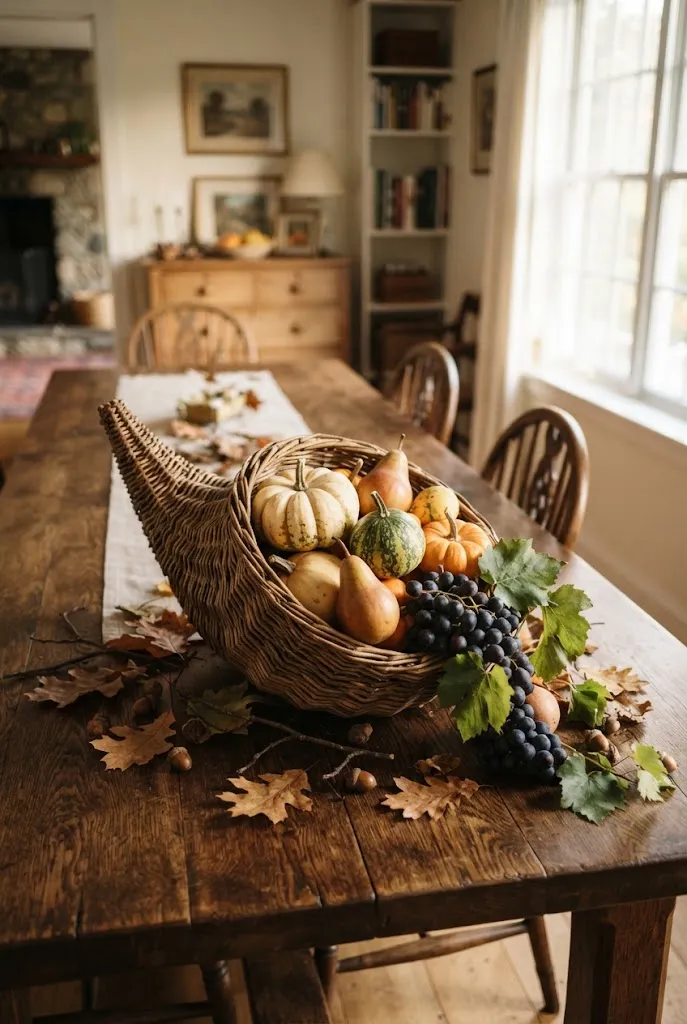
A woven cornucopia overflowing with gourds, pears, and grapes is one of the most recognizable Thanksgiving images, and it works especially well for a traditional family dinner. Fill a basket with a mix of squash, small pumpkins, and pears, then add a few clusters of grapes and a handful of dried leaves to soften the edges.
Build the arrangement from the bottom up. Place the heaviest items first, then layer the lighter pieces on top so the design looks full without crushing anything. Grapes and pears bruise easily, so handle them gently and avoid stacking them under heavier gourds. The basket can sit at one end of the table or in the center, provided it stays low enough for guests to see across.
12. Acorns and Oak Leaves Along a Linen Runner
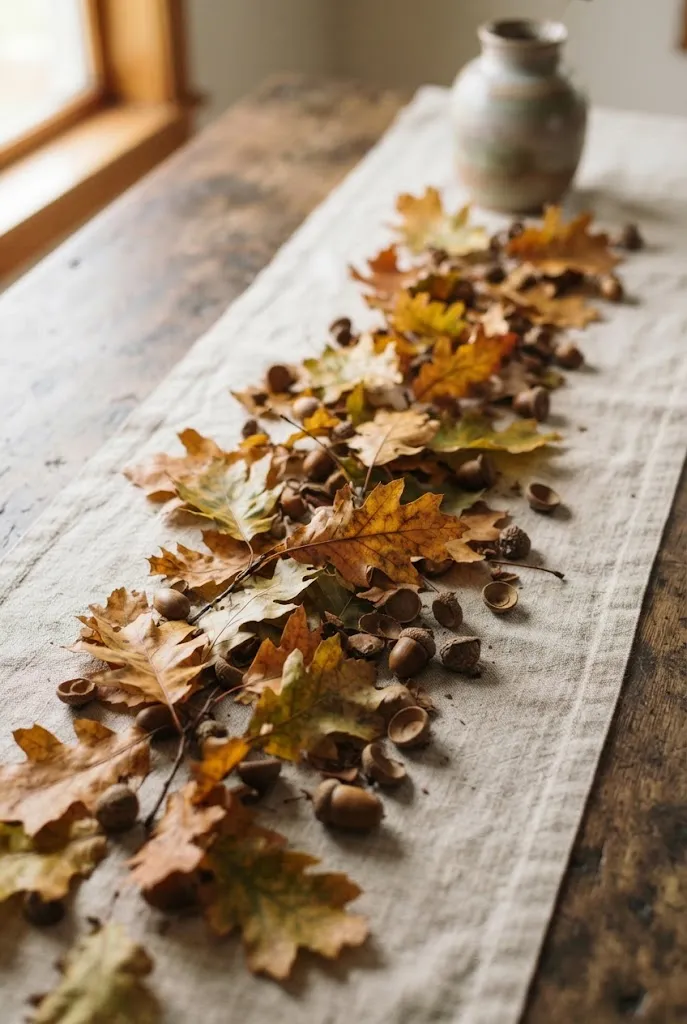
For a quieter and more understated approach, scatter acorns and oak leaves in a loose line along a neutral linen runner. Choose leaves in a range of golden, rust, and olive tones, and mix them with a few acorns and their caps. The arrangement should look casually placed, almost as if it fell there.
This is one of the lowest-cost options on the list, since acorns and leaves can be gathered from a yard or a park. Before using them indoors, check for insects and dry the leaves fully, then press or lightly wipe them clean. Because the arrangement is flat, it leaves room for serving dishes and keeps the table feeling open. It also looks lovely with the taper candles from earlier.
13. Miniature Pumpkin Place Settings
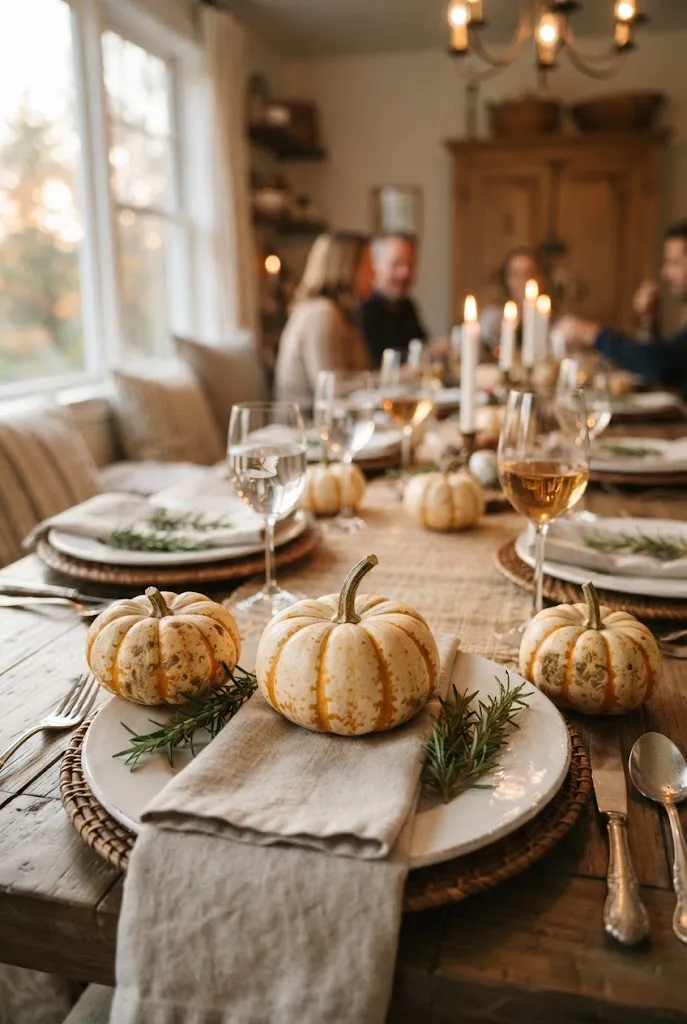
Instead of one large centerpiece, give each guest a small pumpkin of their own. Place a miniature pumpkin or gourd beside each plate, and add a single leaf or sprig of greenery to the top. The effect is personal and inviting, and it keeps the center of the table free for serving dishes.
- Choose pumpkins that are roughly the same size so the row looks orderly.
- Mix two or three colors, such as cream, orange, and white, for visual interest.
- Use a small sprig of herb such as rosemary or thyme, which holds its shape well and adds a subtle scent.
This idea is especially useful for larger gatherings because it doesn’t crowd the table. Pumpkins can be used as place markers, or guests can take them home at the end of the evening.
14. A Modern Black Branch Sculpture
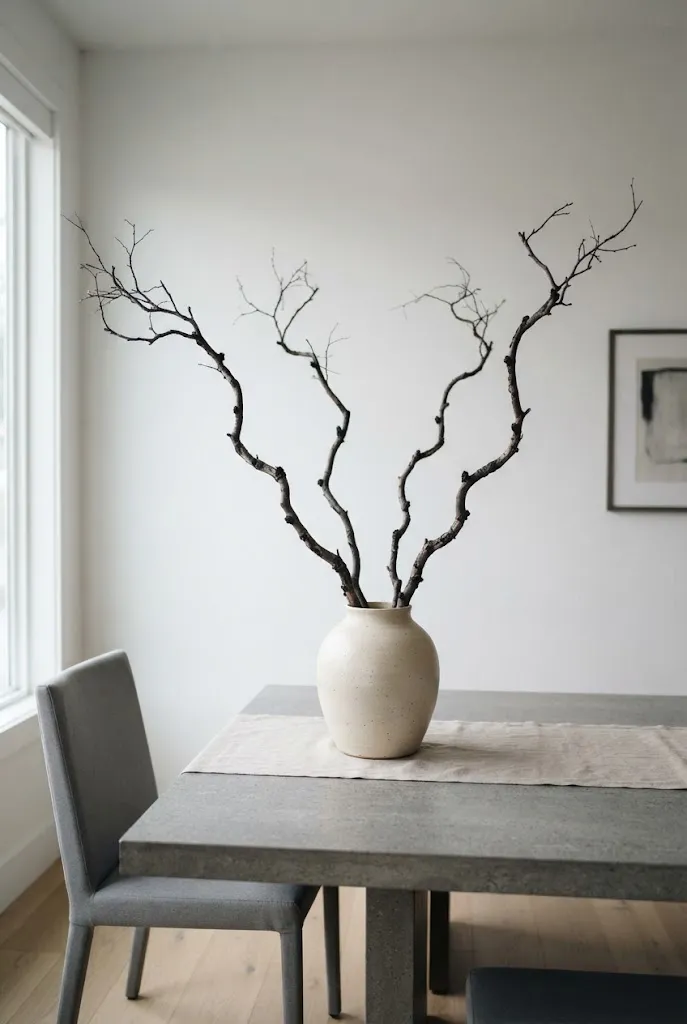
For a sleek, contemporary look, a single tall vase holding a few black or dark-stained branches creates an architectural shape. Choose a matte ceramic vase in a neutral tone, then arrange three to five branches so they rise and curve in different directions. Keep the arrangement off-center so it feels deliberate rather than symmetrical.
This works best with minimalist palettes, such as white, gray, and black dishware. It is one of the few options here that is best kept above eye level, so it suits a dining room with a generous table and enough space around it. Because the branches are fairly narrow, guests can see past them easily. Dark branches can be found in many craft stores or cut from fallen limbs after they are cleaned and dried.
15. Brass Lantern With Birch Logs and Greenery
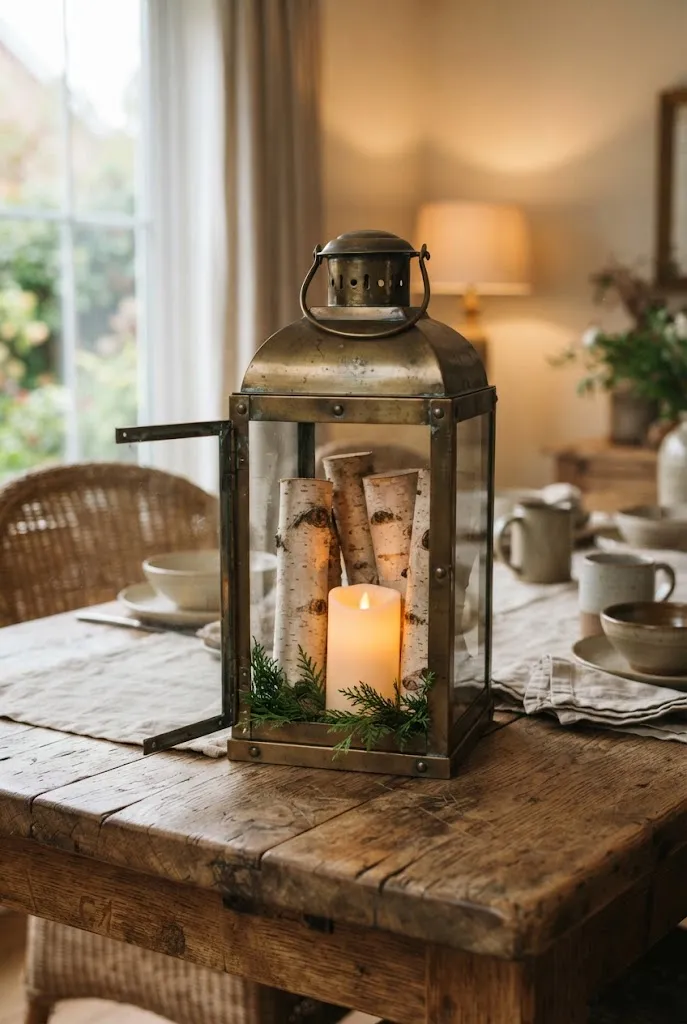
A brass lantern filled with a few short birch logs and a tuft of fresh greenery brings a touch of woodland warmth to the table. Place a battery-powered or lantern-style candle inside, then arrange the logs and greenery around the base. Choose logs that are clean and bark-free, or leave the bark on for a more natural texture.
The contrast between polished brass and pale birch is especially appealing in a room with warm wood tones. Because the lantern is compact, it works at tables of almost any size. For safety, use an enclosed lantern and keep it away from greenery that could dry out or touch the glass. Battery candles are a practical choice if guests will be moving around the table.
16. Pampas and Dried Grasses in a Tall Ceramic Pitcher
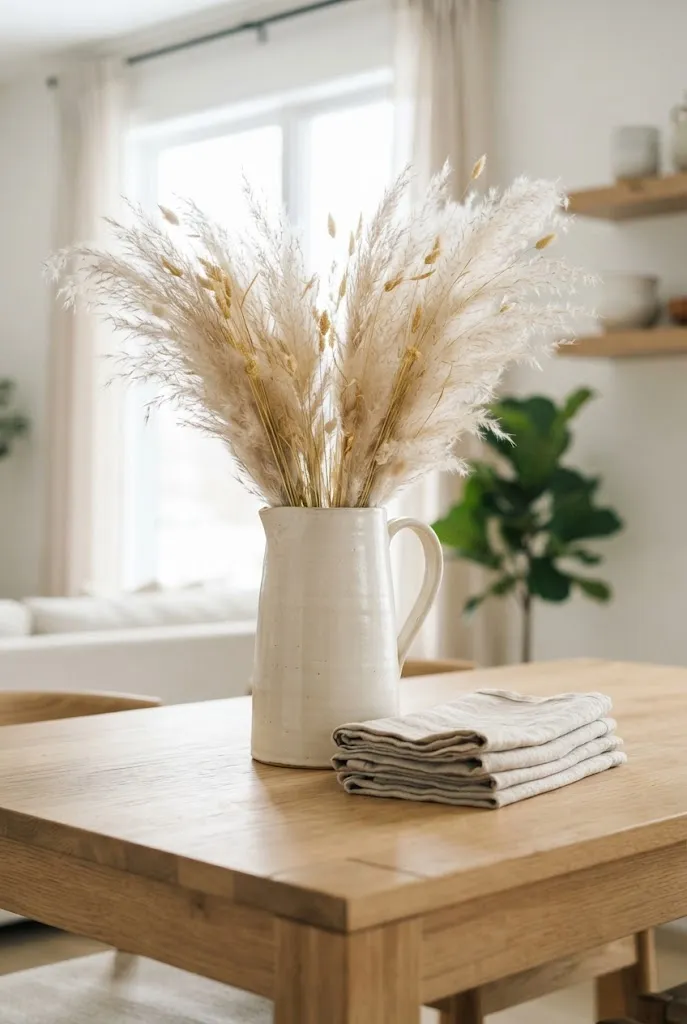
Tall, feathery grasses create movement and height without crowding the table. Place a few stems of pampas or other dried grasses in a wide-mouthed ceramic pitcher, then fan them out so they reach gently upward and outward. Choose a neutral pitcher in cream, sand, or soft gray to let the plumes stand out.
Dried grasses are a practical choice because they hold their shape for weeks. Keep the arrangement toward the back half of the table or on a sideboard if the table is shared by many guests. The main styling detail is proportion: the grasses should be tall enough to balance the pitcher without overwhelming it.
| Dried Material | Visual Effect | Best Fit |
|---|---|---|
| Pampas grass | Airy, plumed texture | Tall pitchers and modern tables |
| Wheat | Golden, structured stems | Traditional and rustic settings |
| Sorghum | Soft, rounded seed heads | Layered arrangements |
17. Fall Leaves Floating in a Frosted Glass Vase
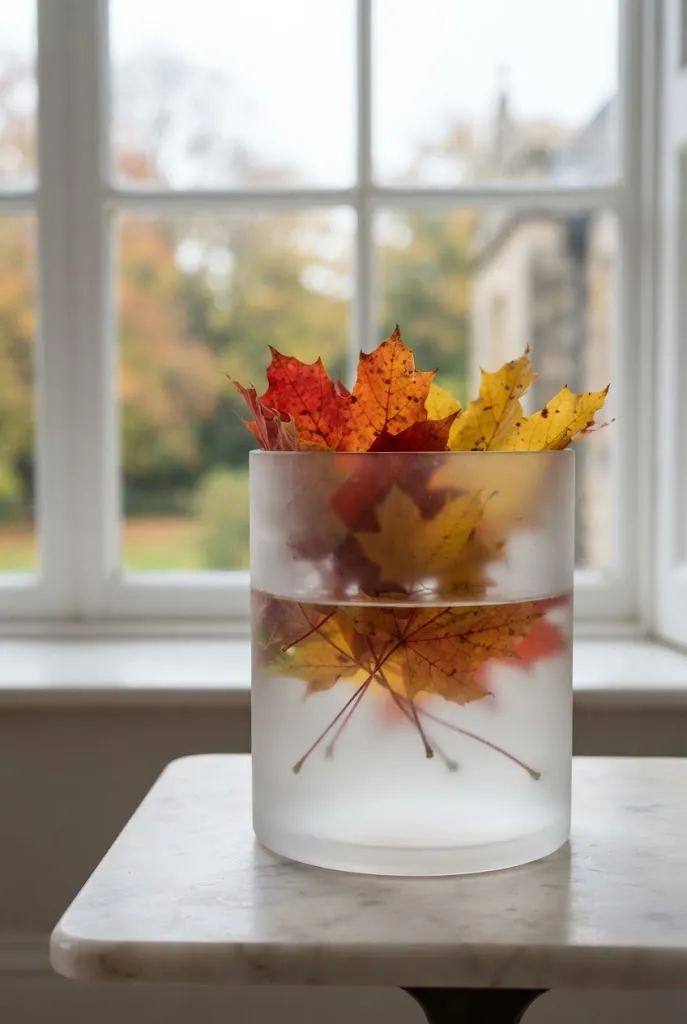
Submerging a few fall leaves in water creates a surprisingly delicate effect. Choose a frosted glass vase with a wide opening, fill it partway with water, and add a handful of colorful maple, sweetgum, or oak leaves. Let some of the leaves float near the surface while others sink slightly, so the arrangement looks layered and natural.
Frosted glass diffuses light and softens the colors of the leaves, which makes this idea work well in homes with plenty of natural daylight. Use leaves that are fully dry or were gathered recently and cleaned gently. Refill the water if it begins to cloud, and avoid placing the vase in direct sun for long periods, since that can fade the leaves.
18. A Tiered Stand With Mini Desserts
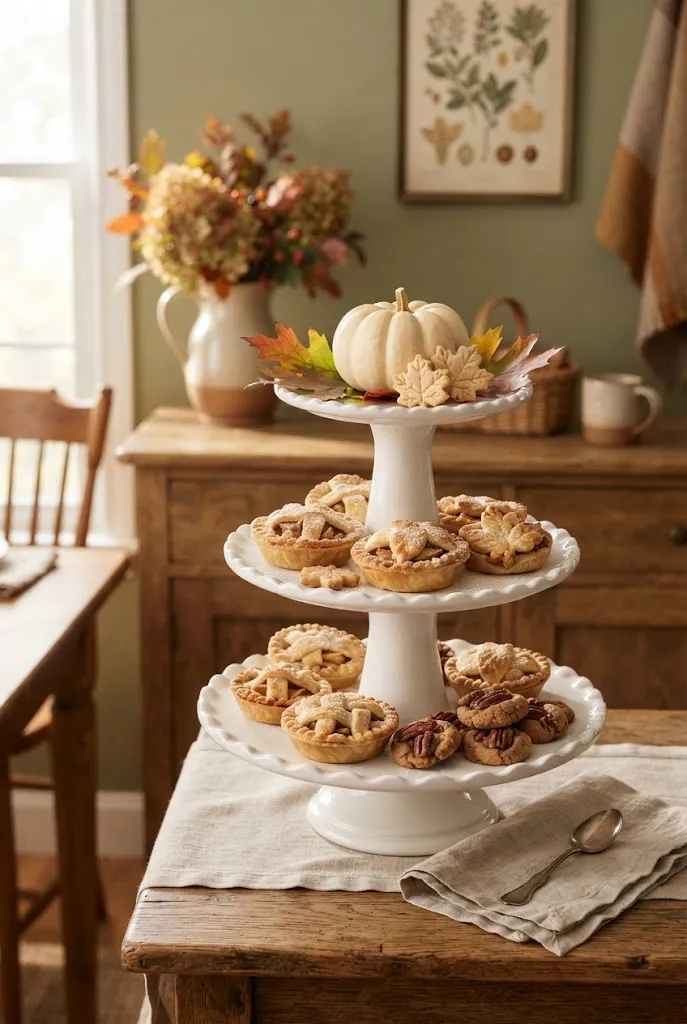
A tiered cake stand can serve as a centerpiece and a dessert display at the same time. Arrange small items such as mini pies, cookies, or pastries on two or three tiers, and add a few fall leaves or a small pumpkin to the top tier. Because the stand rises upward, it creates height without blocking sightlines when it sits at the end of the table or on a sideboard.
This idea is best kept for the dessert portion of the meal, so the display doesn’t compete with the main dishes. Keep food covered until guests are ready, and place the stand away from heat sources or direct sun. Because it holds items that guests will touch, a stand works best when it sits near the dessert plates rather than in the middle of the table where it could be knocked into.
19. Mason Jar Bundles of Rosemary and Dried Grasses
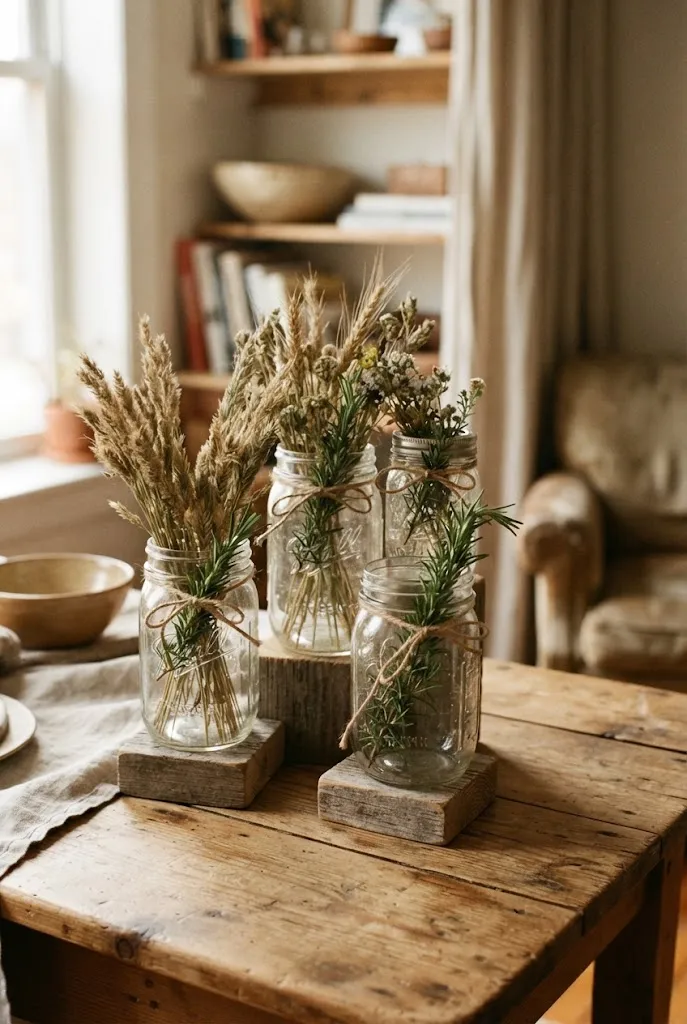
Small mason jars make an approachable and inexpensive centerpiece. Fill three or four jars with a short bundle of dried grasses, then tie a sprig of fresh rosemary around each jar with twine. Set the jars in a loose group in the center of the table, staggering their heights with a few inverted jars or small books underneath.
This is one of the simplest ideas on the list and is easy to adapt to a small space. The rosemary adds a subtle, savory scent that fits the meal, and the twine adds a handmade feel. Trim the rosemary before it goes on the table so the sprigs don’t dry out too quickly. Because each jar is self-contained, the group can be spread out or split among several small tables.
20. A Gold-Accented Pumpkin Trio on a Stone Pedestal
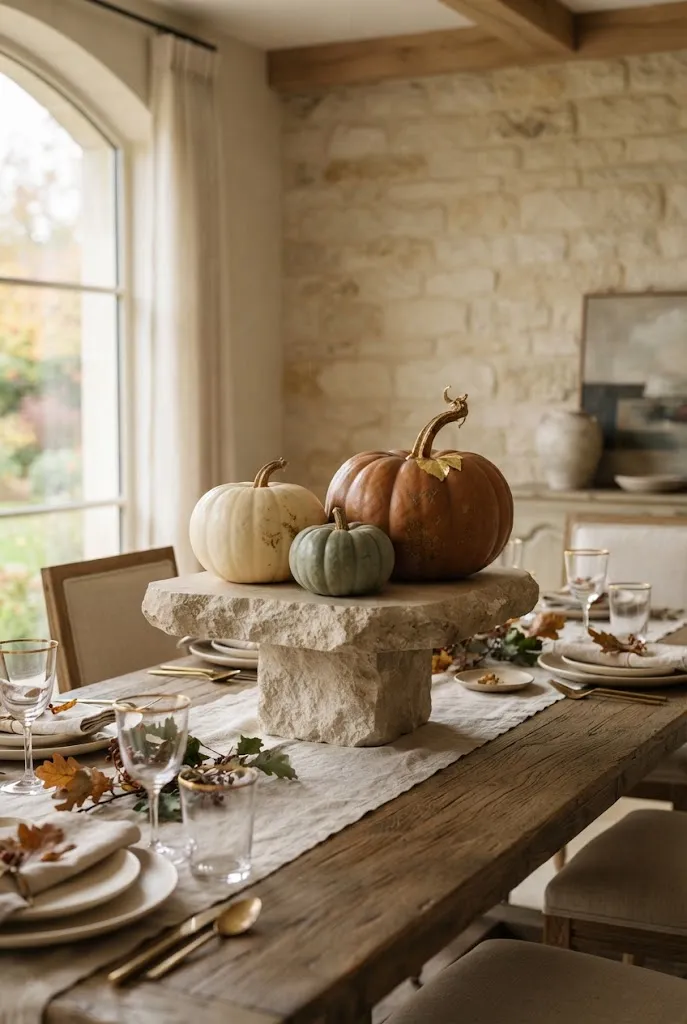
For a more refined centerpiece, a stone pedestal can display three pumpkins of different sizes with a subtle metallic accent. Place a low stone or plaster pedestal at the center of the table, then arrange pumpkins in ivory, pale sage, and a soft russet. Add a light gold leaf or metallic wash to the stem of the largest pumpkin rather than covering the whole surface.
The pedestal is the element that elevates this look. Natural stone has a visual weight that a plain bowl doesn’t, and it stays stable on a crowded table. Real stone and specialty finishes are a larger investment, so a plaster or cast-stone version can offer a similar effect at a more accessible price. Keep the metallic accent restrained, since too much gold can overwhelm the arrangement.
21. A Long Asymmetrical Floral Installation
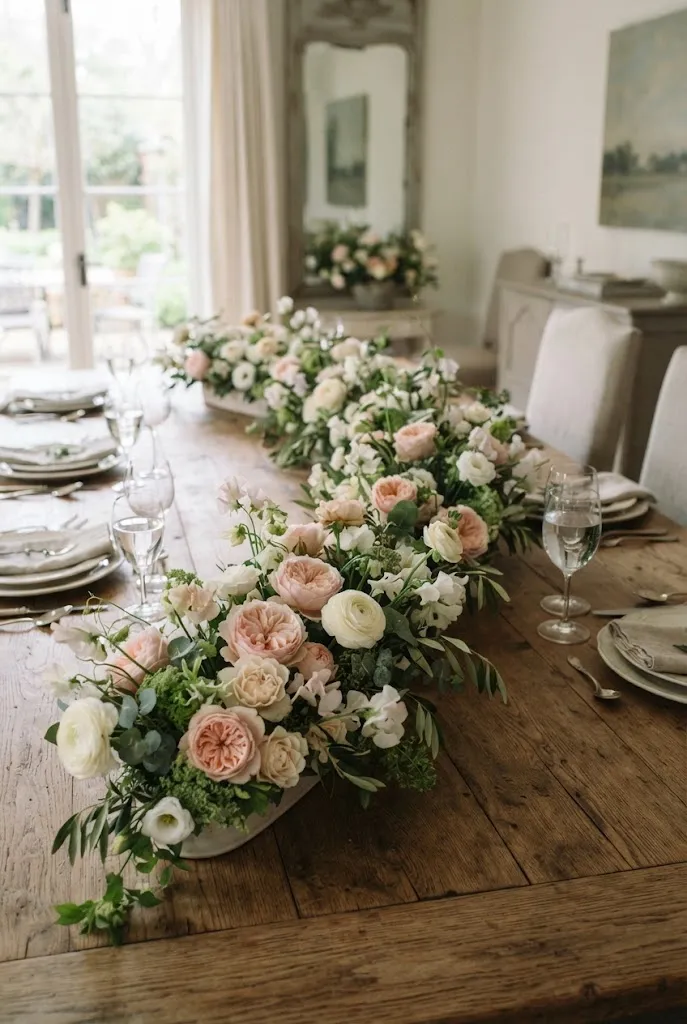
For a formal dinner, a long, asymmetrical floral arrangement can run the length of the table without rising too high. Choose garden roses, ranunculus, and seeded eucalyptus in a palette of blush, cream, and muted terracotta. Arrange the blooms so they cluster more densely at one end, then taper gradually toward the other.
This type of installation requires careful planning and the help of a skilled florist. It is typically one of the more significant investments in this guide. Ask the florist to build the arrangement in low, shallow containers so it stays below eye level, and confirm the expected vase life of each flower before the event. An asymmetrical design also suits a table where guests may be seated on only one side.
22. A Fresh Herb and Lemon Cluster
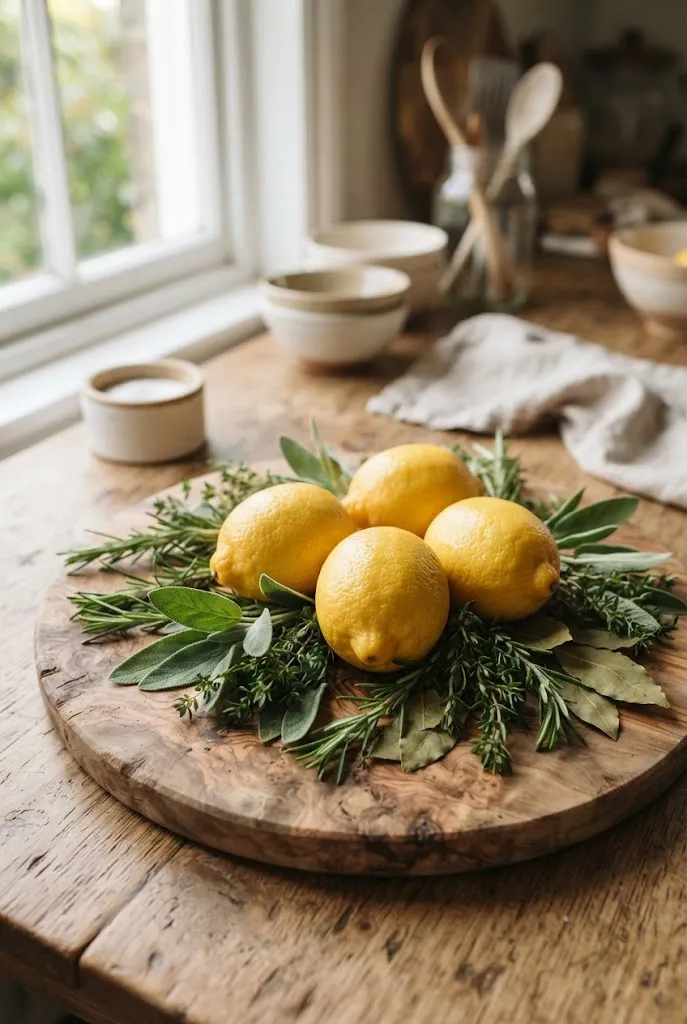
For a centerpiece that smells as good as it looks, group fresh herbs and lemons on a wooden board. Place three or four whole lemons at the center, then surround them with sprigs of rosemary, sage, and thyme. Add a few small bay leaves so the arrangement feels fuller at the edges.
Fresh herbs bring a savory note to the table, and the cluster works well in homes where the meal itself is a focus. Because the ingredients are edible and can be used in cooking, this idea is especially practical. Keep the arrangement low and compact, and refresh the herbs if they begin to wilt. Lemons can be swapped for small oranges or clementines if you prefer a warmer color.
23. Painted Pumpkin Votive Holders
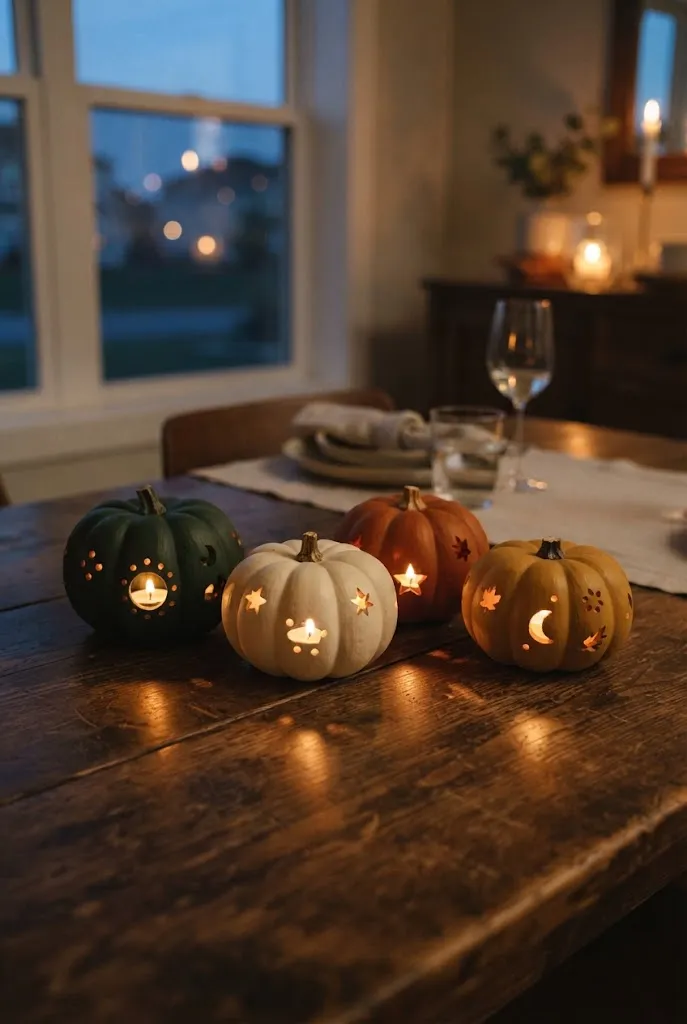
A simple DIY project can turn ordinary pumpkins into glowing votive holders. Choose small pumpkins with a flat base, then use a sharp knife or pumpkin-carving tool to cut a few openings in the sides so light can escape. Paint the outer surface in a single color such as deep green, cream, or burnt orange, or leave the natural skin and add painted stripes for a graphic look.
Keep the candles in glass votives set inside the pumpkins rather than placing flames directly on the pumpkin. This protects the surface and reduces fire risk. Painted pumpkins are also easier to maintain than fresh carved ones, since they don’t soften as quickly. Arrange them in a loose group along the table so the light reads as a warm, scattered glow.
24. A Mirror Tray With Votives and Greenery
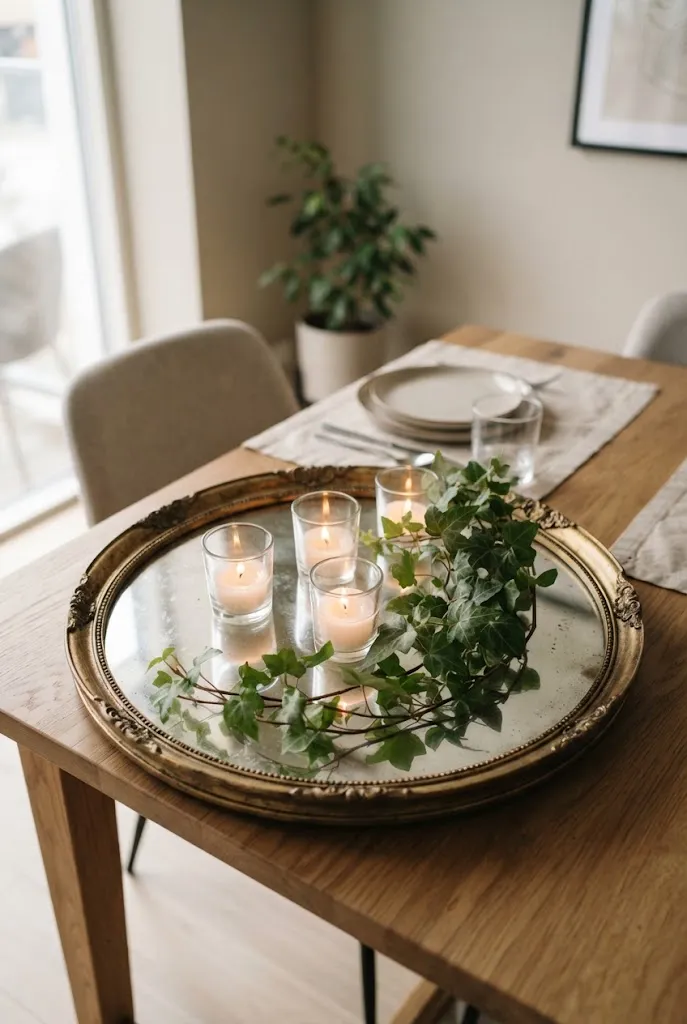
A mirror tray adds a subtle sense of light and depth. Place a round or rectangular mirror tray at the center of the table, then arrange three glass votives and a small cluster of greenery on top. The mirror reflects the candles and foliage, which makes the arrangement appear larger than it is.
This idea works well in smaller dining rooms because it keeps the centerpiece flat and compact while still feeling layered. Choose greenery that stays fairly low, such as small ferns or trailing ivy, and keep the candles at a safe distance from the leaves. Mirror trays can be found at most home goods stores at accessible prices, and they reuse easily from season to season.
25. A Pine Garland Runner With Pinecones and String Lights
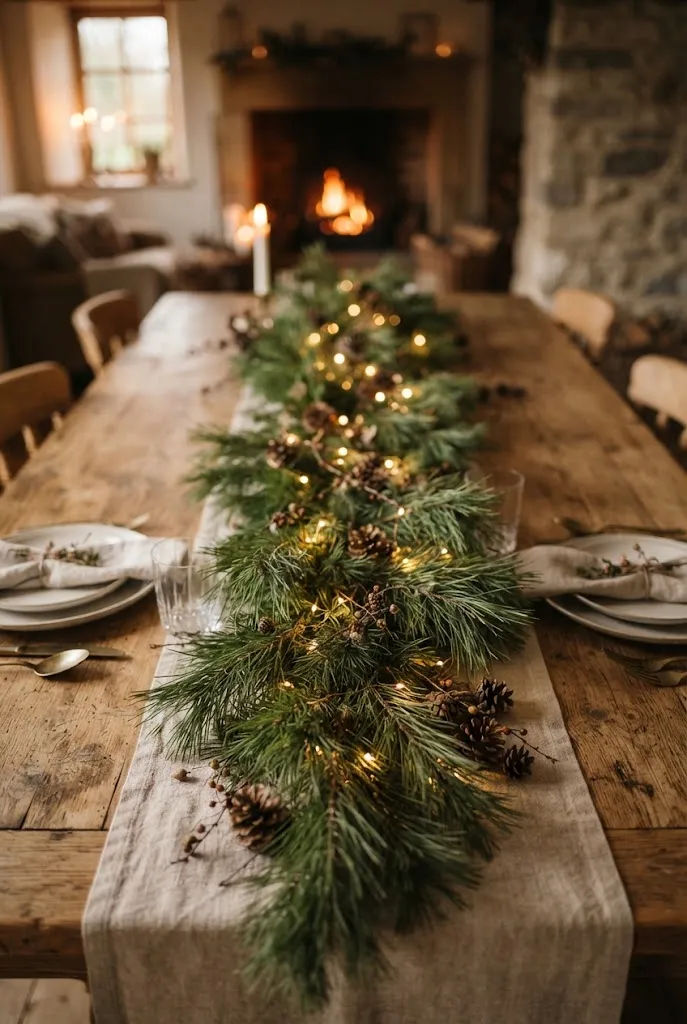
For a cozy, festive table, lay a pine garland down the center and add pinecones and warm battery-powered string lights. Choose a full, natural garland, then weave the lights through the branches so they glow softly from within. Scatter a few pinecones along the length of the garland to add texture and a natural note.
The garland creates a lush, woodsy feel without requiring fresh flowers, which makes it a practical choice for long dinners. Battery-powered lights are the safest option for this arrangement, since they avoid heat and open flames near dry greenery. Check that the garland is fresh and fire-resistant if you’re using it in a home with a fireplace nearby. Because the garland runs along the table, keep it low enough that guests can see across easily.
Choosing the Right Starting Point
The best centerpiece is usually the one that fits your table, your guest count, and the amount of space you have to work with. If your table is small, begin with a low option such as the mini pumpkin tray, the mason jar group, or the acorn runner. These keep the center open and let everyone stay in the conversation. A larger table can carry more height, so the candelabra, the pitcher of grasses, or the pedestal arrangement may suit it better.
If you want to keep costs manageable, combine two or three inexpensive elements rather than buying one expensive piece. A tray of pumpkins, a few taper candles, and a handful of leaves can look far more finished than a single large floral order. For a richer look, add one premium element as a focal point and let simpler pieces support it.
Plan the arrangement a day ahead, then adjust it once the table is fully set. Check that candles sit well clear of foliage, confirm that guests can see one another, and leave room for the dishes that will fill the center of the table.