

Introduction
The shift into autumn changes how a home needs to feel. Evenings arrive earlier, windows stay shut more often, and the rooms you barely noticed in July suddenly need to be good places to sit for hours. The best fall decor ideas respond to that: heavier textures, warmer light, and a few natural materials brought in from outside.
The 26 ideas below cover porches, living rooms, bedrooms, kitchens, and even the bathroom. Some take ten minutes and use things you already own. Others involve paint, drapery, or a larger investment. Mix and match based on your space, whether that’s a rental apartment, a starter home, or a house with a fireplace and a little more room to play.
1. Stagger Pumpkins and Gourds in Three Heights on the Porch

A porch looks intentional when it has height variation rather than sheer quantity. Start with something tall beside the door, then step down so the eye travels toward the entrance.
- Back layer: two stacked wooden crates or a hay bale
- Middle layer: three or four pumpkins in different sizes, grouped rather than lined up
- Front layer: small gourds and a potted mum near the steps
- Color mix: cream, sage, and traditional orange so the group doesn’t read as a single bin of produce
Odd-numbered clusters tend to look more natural than pairs. Keep a clear walking path, especially after dark, and set real pumpkins out of direct afternoon sun, where they usually hold up better.
2. Layer the Bed in Rust, Cream, and Oatmeal

Fall bedding doesn’t need a full replacement. A white or soft-neutral base stays in place, and the warmth comes from layers: a washed-cotton quilt folded at the foot, a rust or ochre throw, and two textured pillows in front of the usual sleeping pillows.
The key is keeping the tones close together. Rust, camel, and oatmeal sit comfortably as a trio, while four or five competing colors begin to look busy. Flannel or heavier-weave cotton adds a visible texture shift without much cost.
Editor’s Note: If the room already has dark walls or a dark headboard, lean on cream and oatmeal for the larger pieces and save rust for one smaller accent. Too many deep tones in a small bedroom can make it feel heavier than intended.
3. Pair Bare Branches With Tapers on the Mantel
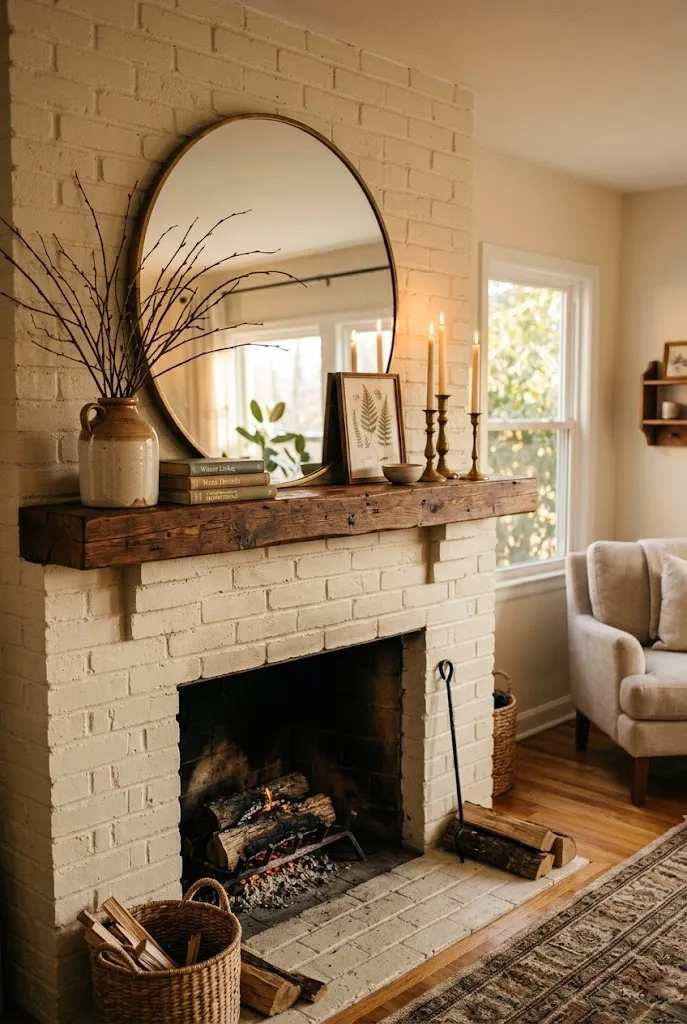
A mantel that looks styled but not crowded usually follows a short sequence.
- Anchor the center with a large mirror or framed piece, leaning it if the wall can’t take a hook.
- Place a vase of bare or lightly leafed branches slightly off-center to break up symmetry.
- Add two or three tapers in candlesticks of different heights, grouped at the opposite end.
For safety, keep real flames well clear of branches and any hanging greenery, or use flameless tapers where the mantel is cramped. Brass, matte black, and aged wood candlesticks all work, as long as the finishes are limited to one or two.
4. Fill a Tall Floor Vase With Branches and Dried Grasses

An empty corner beside a sofa or entry console often wants something vertical. A tall ceramic or stoneware floor vase filled with stems adds scale without taking up floor space.
The material you choose changes how much upkeep the arrangement needs:
| Option | Practical Effect | Best Fit |
|---|---|---|
| Fresh-cut branches | Natural shape and movement; leaves may dry or drop over time | Entry corners, short-term display |
| Dried grasses | Soft, airy texture with little care | Living rooms, long-term fall styling |
| Faux stems | Consistent look, no shedding | Rentals, homes with allergies or limited upkeep time |
Whichever you pick, aim for stems roughly one and a half times the height of the vase, and let a few reach out at different angles.
5. Set a Harvest Table With Linen and Brass Candlesticks

A fall dining table can be refined without feeling stiff. A neutral linen runner, stoneware plates in a warm cream or brown glaze, and a pair of brass candlesticks give a mid-range, layered look that works for regular dinners, not only holidays.
Common Mistake: A tall centerpiece that blocks sightlines across the table.
Better Approach: Keep the center low, with a wooden tray, a short row of small pumpkins, and candles at varied heights. Guests can see each other, and the table still looks full.
Linen wrinkles naturally, so a slightly rumpled runner is part of the appeal. Choose napkins in a different but related tone, such as olive or terracotta, to avoid a matched-set look.
6. Reset the Sofa With Chunky Knit and Plaid Pillows

Pillows are the fastest way to change a living room’s mood. Swap summer cottons for denser materials in a deliberate mix:
- One large pillow in solid moss, mustard, or rust
- One plaid or checked pillow for pattern
- One textured knit or bouclé pillow
- A chunky knit throw draped over the arm rather than folded into a perfect square
Stay with a palette of three colors and let the sofa fabric do the quiet work in the background. Mixing pillow sizes, such as a larger square with a smaller lumbar, makes the group look collected rather than purchased as a set.
7. Paint the Front Door Deep Green or Burgundy
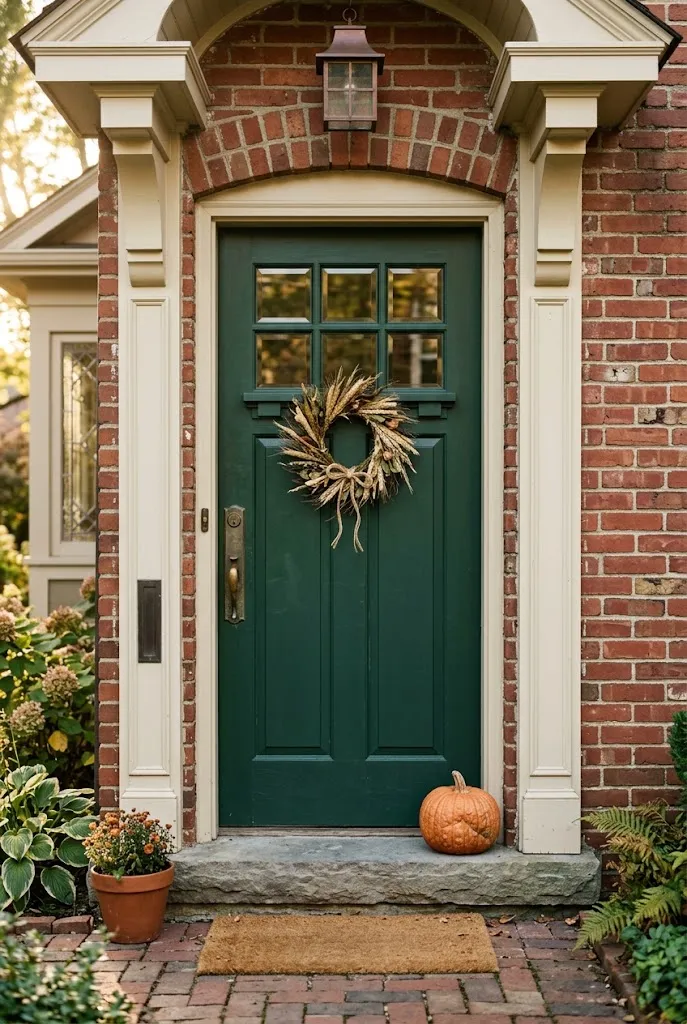
A fresh front door color changes a home’s first impression more than most seasonal accessories do. Deep green, oxblood, and dark plum all read warm against brick, wood siding, or pale paint.
Do:
- Test a swatch on the door and check it in morning and late-afternoon light
- Use a paint made for exterior doors and let coats dry fully
- Match hardware finish to the new color, since brass and black each shift the look
Don’t:
- Paint without checking your lease or HOA rules, where they apply
- Pick a shade only from a small chip; deep colors can look much darker once they cover a full door
If painting isn’t an option, a deep-toned wreath or a bold doormat produces a smaller version of the same effect.
8. Layer a Wool Rug Over Jute

Layering rugs adds depth and softness underfoot, and it can make a patterned or smaller rug feel more anchored. A natural jute base in a large size, topped with a smaller wool rug in rust, olive, or a muted pattern, is a mid-range upgrade that works in both living rooms and bedrooms.
| Layering Approach | Visual Effect | Best Fit |
|---|---|---|
| Wool flatweave over jute | Subtle contrast, easy to walk over | Living rooms and hallways |
| Patterned vintage-style over jute | Adds color and character | Open living spaces |
| Sheepskin or shaggy accent over jute | Soft, casual layer | Reading corners, bedsides |
Keep the top rug at least a few inches smaller than the base on all sides, and use a non-slip pad so the layers don’t shift.
9. Create a Reading Corner With a Sherpa Chair and Floor Lamp

A single chair can anchor a corner that otherwise goes unused. A bouclé or sherpa-covered armchair, a slim arc or tripod floor lamp, and a small side table for a mug and book create a nook that invites staying put.
Best For: Living rooms, bedrooms, and wide hallways
Investment: Moderate, mainly the chair
Visual Effect: A soft, textured focal point in a quiet corner
Place the lamp so light falls over the shoulder rather than directly onto a screen or page. A wool throw over the chair arm and a small stack of books on the table finish the scene without adding clutter.
10. Style a Kitchen Counter With a Cutting Board, Apples, and Amber Glass

Kitchen counters work best with decor you’ll also use. Lean a wooden cutting board against the backsplash, set a bowl of apples or pears beside it, and add one or two amber glass bottles or a small pitcher of dried stems.
Using real fruit that you plan to cook with keeps the display useful and gives a small seasonal refresh each week. Leave open counter space around the grouping so the kitchen still works for daily prep, and keep the palette to warm woods, amber, and one accent color.
11. Hang a Dried Floral Wreath Over a Mirror

Wreaths don’t have to stay on the front door. Hung over a round or arched mirror, a wreath of dried wheat, eucalyptus, or preserved florals adds texture to a wall that might otherwise stay bare. It’s a good move for renters, since an adhesive-free hook or a ribbon looped over the mirror’s existing hardware avoids new holes.
Choose a wreath slightly smaller than the mirror so the shape reads as layered rather than competing. Dried materials work best in low-moisture spots like entryways and living rooms.
12. Group Lanterns on the Hearth

A hearth that isn’t in use yet or at all can still glow. Cluster three to five metal or wood lanterns in different heights on the hearth or floor beside it, filled with flameless candles that flicker softly.
Tips & Tricks:
- Vary lantern sizes and finishes slightly so the grouping doesn’t look like a set
- Use warm-toned flameless candles, since cool white ones look flat
- Tuck a few small pinecones or a short branch between the lanterns to soften the edges
Lanterns also move easily from room to room, so the same group can shift to a patio or porch later in the season.
13. Swap Curtains for Heavier Rust or Clay Linen Panels

Heavier curtains soften sound and hold in a little warmth, and a color shift to rust or clay brings the season into the room without needing much else. Linen-blend panels in a heavier weave hang well and filter light into a golden tone rather than blocking it entirely.
Before: A short, light curtain hung right at the window frame that makes the window look smaller.
After: A rod set higher and wider than the frame, with panels falling just to the floor, which makes the ceiling and window feel taller.
This is a mid-range change since quality panels and hardware add up quickly. If budget is tight, start with the room you spend most evenings in rather than replacing curtains throughout the house.
14. Fill a Dough Bowl With Pinecones and Gourds

A wooden dough bowl is one of the easiest centerpieces to build, and it works on a coffee table, island, or entry console. Fill it with a base of pinecones, then tuck in small heirloom gourds, a few dried orange slices, or acorn-topped mini pumpkins.
The bowl’s own shape does most of the styling, so avoid overfilling it. Leave a little visible wood at the rim, and rotate what’s inside every couple of weeks as the season moves toward early winter. If you don’t own a dough bowl, a shallow wooden tray or a wide ceramic bowl handles the same job.
15. Build a Layered Landing Zone Around the Entry Peg Rail

The entry sets the tone before anyone sees the living room, and fall adds more to manage: heavier coats, scarves, and boots. A wooden peg rail, a narrow bench, and a basket beneath for shoes turns a bare wall into a landing zone that is both functional and seasonal.
- Hang a plaid wool blanket or a canvas tote on one peg as part of the display
- Use a bench cushion in a rust or olive linen
- Add a small tray for keys and a wreath or dried stems above the rail
Editor’s Note: Leave a few pegs empty. A rail that is fully loaded with coats will look cluttered no matter how well the rest is styled.
If you rent, a rail attached with the screws your lease allows, or a freestanding coat rack, offers a similar effect.
16. Add One Burnt Orange Velvet Chair
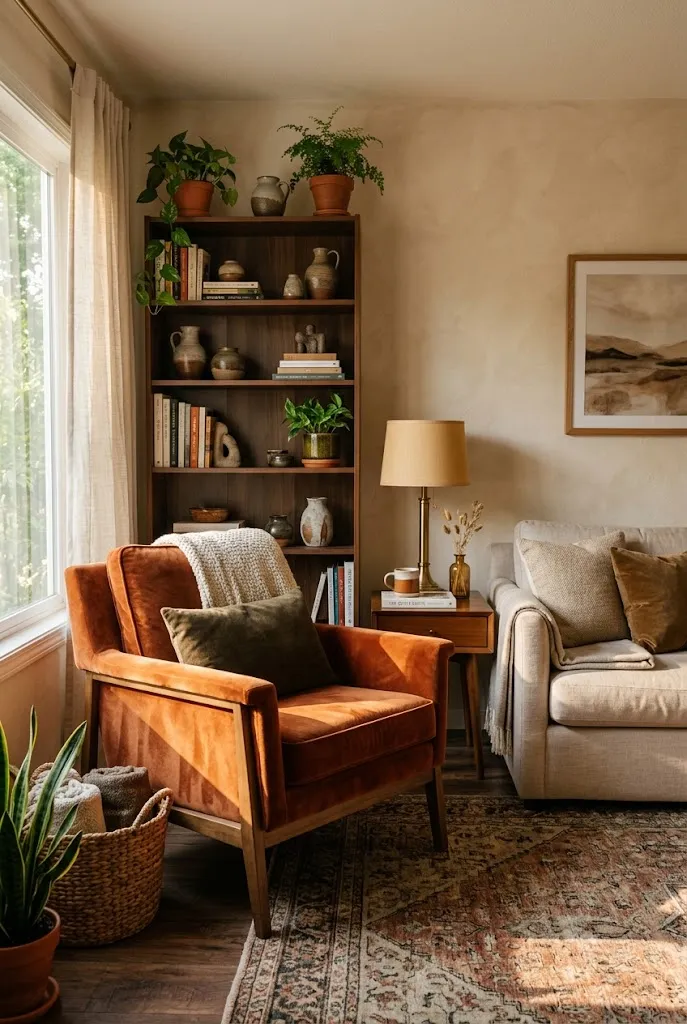
Sometimes a single, well-chosen piece does more than a dozen small accessories. A velvet accent chair in burnt orange, cognac, or deep olive gives a neutral living room a strong seasonal focus and works long after fall is over.
This sits between a mid-range and premium purchase, depending on build quality, so it’s worth checking frame construction and cushion density rather than going on color alone. Position it at an angle to the sofa, near a window or beside a bookcase, and avoid matching it closely to every other accent in the room. A small wooden side table and a single textured throw are enough.
17. Cluster Amber and Smoke Glass Vases on a Console

Glass in warm tones catches window light and gives a console or sideboard a soft glow without adding bulk. Group three to five pieces in amber, smoke gray, and deep brown, varying their heights, and add a few single stems such as dried wheat or eucalyptus.
Thrift stores and secondhand shops often have good options, which makes this an accessible idea. Keep glass away from direct hot afternoon sun if it holds water, and leave a bit of console surface bare so the group looks curated instead of crowded.
18. Drape Blankets on a Wooden Ladder
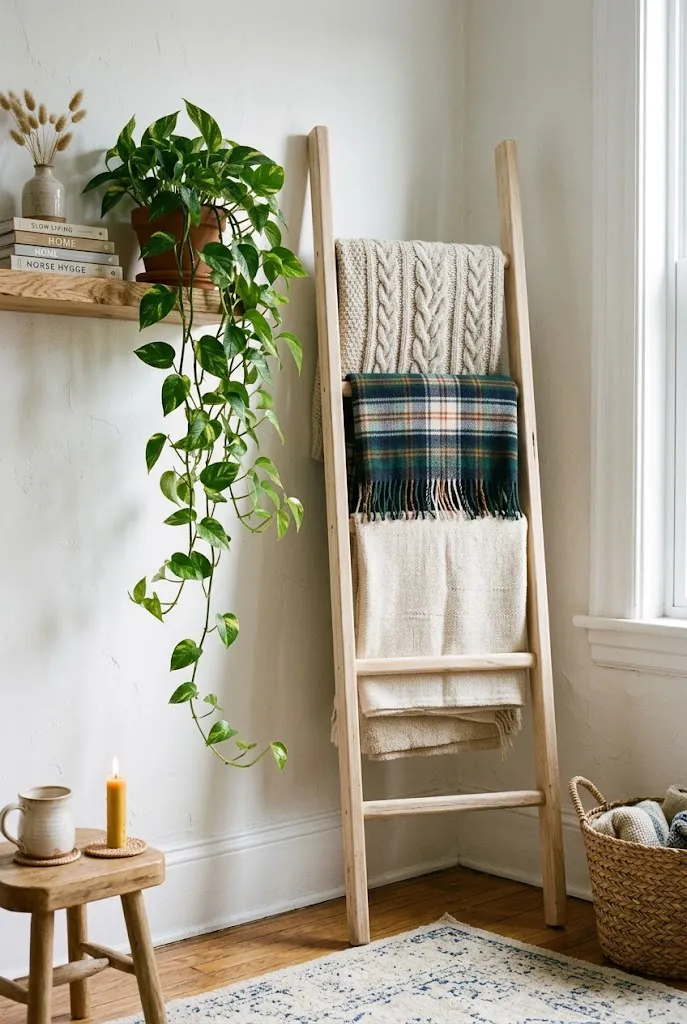
A decorative blanket ladder keeps throws within reach and gives a bare wall some vertical interest. Lean it against a wall in a living room corner or beside a bed, then layer three or four blankets in different weights: a plaid wool, a cable-knit, and a soft cotton.
It costs little, needs no wall-mounting, and works well in apartments. For a cleaner look, fold blankets to different widths so each pattern is visible, and avoid more than four or five layers, which can tip a lightweight ladder forward.
19. Hang a Gallery Wall of Autumn Landscapes in Wood Frames
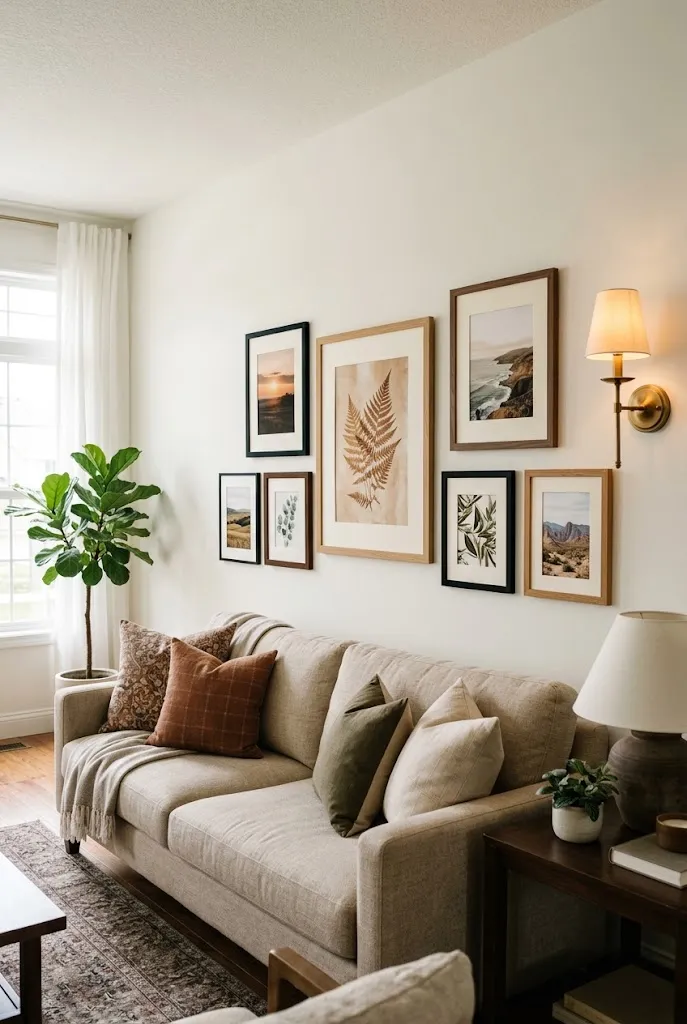
Swap summer prints for autumn landscapes, botanical drawings, or abstract art in warm tones, all in wood or black frames. Mixing sizes and mats gives the wall a collected feel without relying on a single large piece.
- Lay the frames on the floor first and arrange them with two to three inches between each.
- Trace each frame on kraft paper and tape the templates to the wall.
- Adjust spacing, then hang using hooks suited to your wall type.
Prints can be digital downloads from independent artists, or pages from vintage books and calendars. Frames in two or three similar finishes keep the group cohesive.
20. Limewash One Wall in Warm Clay
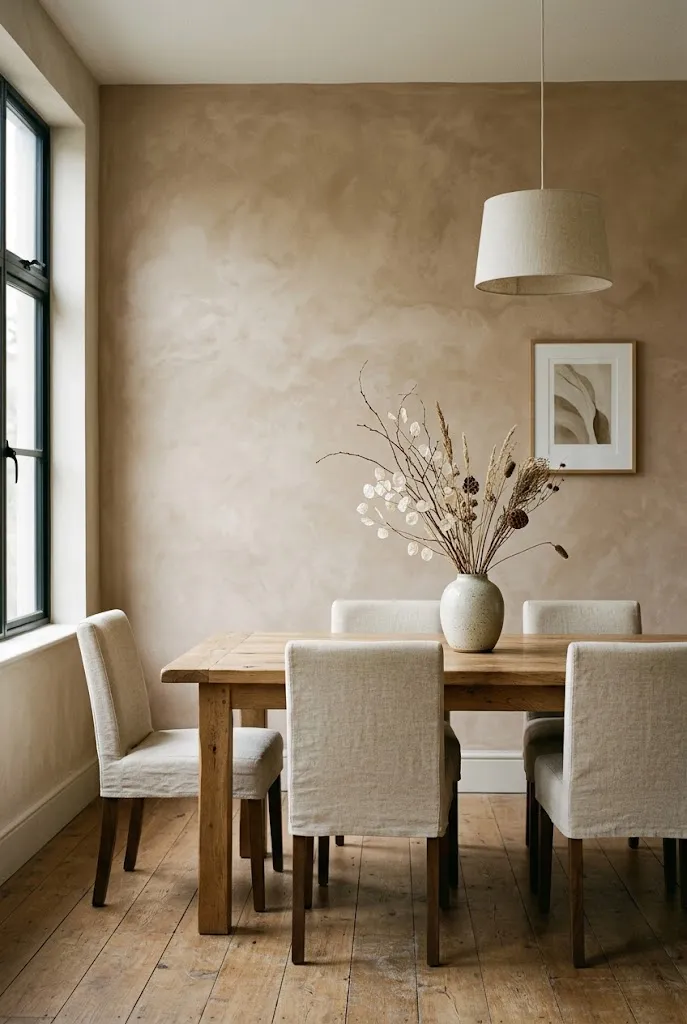
A limewashed wall adds depth that flat paint can’t match, with soft variation and a matte, plaster-like finish. In warm clay, terracotta, or sand, it makes a bedroom wall or dining room backdrop feel finished and seasonal without any accessories.
This is a premium-leaning project because application technique matters; the brush strokes create the effect, and results vary by surface. Many homeowners hire a painter, while others practice on a sample board first. Limewash can also be less forgiving on previously glossy walls, so check the manufacturer’s preparation instructions.
21. Stack Firewood in an Iron Rack or Built-In Niche
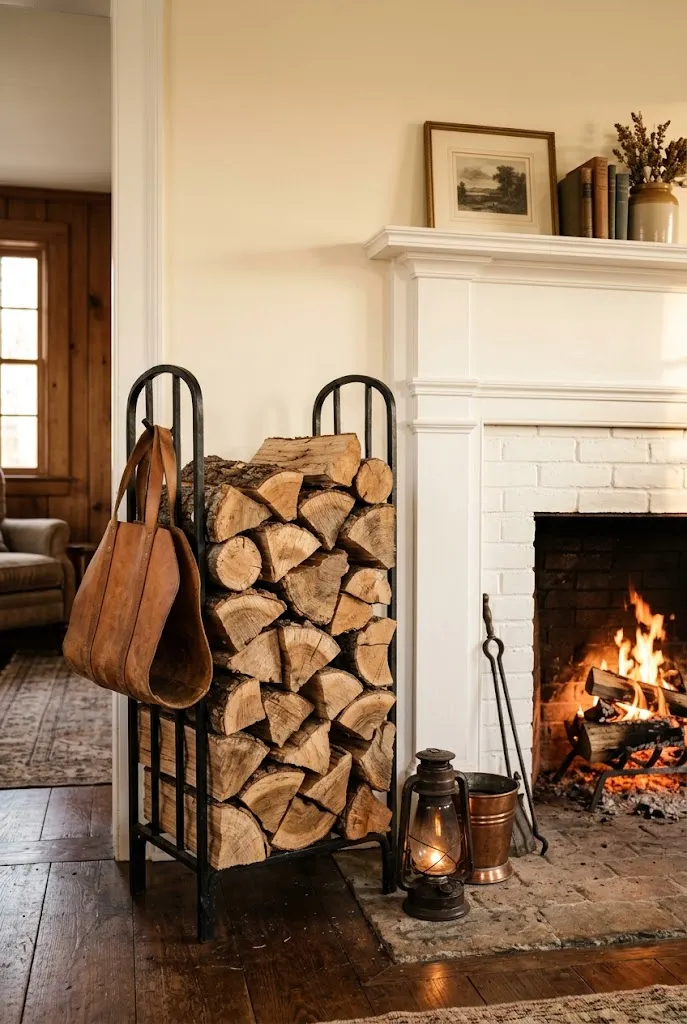
Stacked wood is functional decor. A black iron rack beside the fireplace, or a built-in niche below the mantel, adds natural texture and visual warmth even when the fireplace isn’t in use.
Keep indoor stacks small, only what you plan to burn within a short time, since firewood can bring insects or moisture inside. Place the stack well away from the fire opening and use dry, seasoned wood. A leather carrier or a wool blanket over the rack’s edge adds softness.
22. Simmer a Pot of Apples, Cinnamon, and Orange on the Stove

Scent is part of fall decor, and a stovetop simmer pot is a low-cost way to add it. A small pot with water, sliced apples, a cinnamon stick, orange peel, and a few cloves gives the kitchen a warm aroma and a nice visual for guests to see.
Quick Tip: Keep the heat low, top up the water as it evaporates, and never leave the pot unattended. A small, heavy pot with a lid reduces the risk of scorching.
It’s a good alternative if candles or plug-in scent products bother you or someone in your household.
23. Warm the Bathroom With Dark Towels and a Pitcher of Stems

Bathrooms often get skipped in seasonal decorating, but small changes carry weight in a compact room. Swap pale towels for deep rust, chocolate, or forest green, and place a ceramic pitcher with a few dried stems or bare branches on the vanity.
A wooden stool beside the tub with a folded towel and a small candle adds a layer. Choose dried or faux stems here, as steam and humidity shorten the life of fresh-cut material. Keep surfaces clear enough for everyday use.
24. Add Plug-In Sconces and Warm Bulbs

Lighting does as much for fall coziness as any accessory. Plug-in wall sconces mean you can add light at eye level without hiring an electrician, which is useful for renters. Pair them with warm white bulbs, usually labeled “soft white” or “warm white,” and consider a dimmer or a smart plug for control.
Place sconces on either side of a sofa, a bed, or a gallery wall to create a layered glow instead of relying on overhead lighting. Use cord covers that match the wall color to keep the look tidy.
25. Set Up a Fire Pit Seating Nook With Blankets and Mugs

Outdoor space can stay in use well into fall with the right setup. A fire pit, four chairs or a curved bench, and a basket of blankets turn a patio or backyard into a place to gather after dark.
| Setup | Practical Effect | Best Fit |
|---|---|---|
| Portable tabletop fire bowl | Small, affordable, easy to store | Balconies and small patios |
| Steel or cast-iron fire pit | Larger flame and more seating | Backyards with space |
| Built-in stone fire feature | Permanent and polished; higher investment | Homeowners planning long-term |
Check local fire rules and keep the pit a safe distance from structures, trees, and overhanging branches. Add outdoor-safe cushions and lanterns for a finished look.
26. Install a Reclaimed Wood Beam as a Mantel

For homeowners ready for a larger project, a reclaimed wood beam mantel gives a fireplace a permanent focal point that works through every season, with fall styling simply layered on top. The weathered grain and slight variations in color add warmth that new lumber often lacks.
This is a premium idea because installation requires solid anchoring, and the beam can be heavy. A contractor can confirm the wall structure and secure the beam safely. For a simpler version, a thick oak or walnut shelf in a similar style offers a similar silhouette with less weight.
Where to Start
Every idea above doesn’t need to happen at once. If you want a quick refresh, begin with the porch, pillows, and a few lanterns. If you’re planning around the weekend, add the rug, a new throw, and warmer bulbs. Save paint, drapery, and architectural changes for a time when you can budget for them.
Pick one room where you spend the most time and make it feel finished before moving on. A single well-lit corner with soft texture and a few natural materials will do more than scattered accents throughout the house.