

Winter asks more of a home than any other season. Days are shorter, windows run cold, and rooms that felt airy in July can start to feel flat by January. The most effective winter decor ideas work on that problem directly, adding warmth, softer light, and a few seasonal details that make each room more comfortable to be in.
This guide moves through the whole house, from the front porch and entryway to the bathroom, kids’ room, and guest room. Some ideas take ten minutes and a thrifted blanket. Others involve paint, lighting, or custom carpentry. Most are meant to last well past the holidays, so the house still feels finished in late February. Pick the rooms you use most and start there.
1. Layer a Chunky Knit Throw Over a Linen Sofa
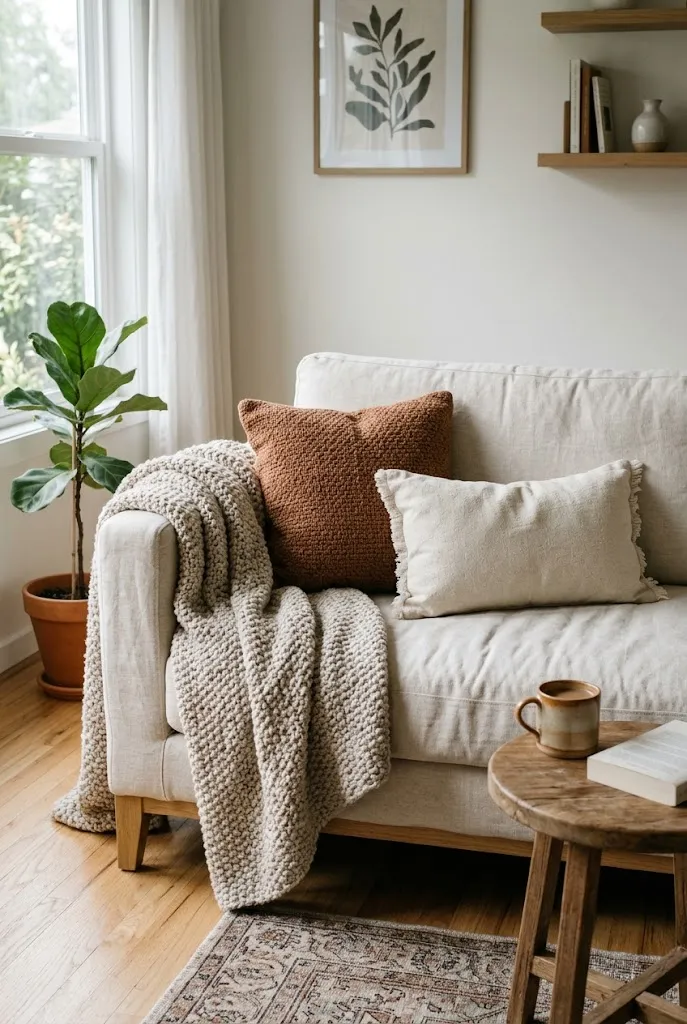
A linen or cotton sofa looks cooler than it feels once temperatures drop. Draped with a thick, loosely knit throw in oatmeal, rust, or deep green, it reads as noticeably warmer. The contrast between smooth upholstery and a heavy, open weave is what gives the layering its depth.
- Drape the throw over one arm and let it fall onto the seat rather than folding it flat.
- Pair two pillow covers in different textures, such as bouclé and wool, in the same color family.
- Keep the palette to two or three tones so the sofa stays calm.
Quick Tip: If the throw slides off, fold it lengthwise and tuck one end between the cushion and the arm.
2. Anchor the Seating Area With a Wool Rug
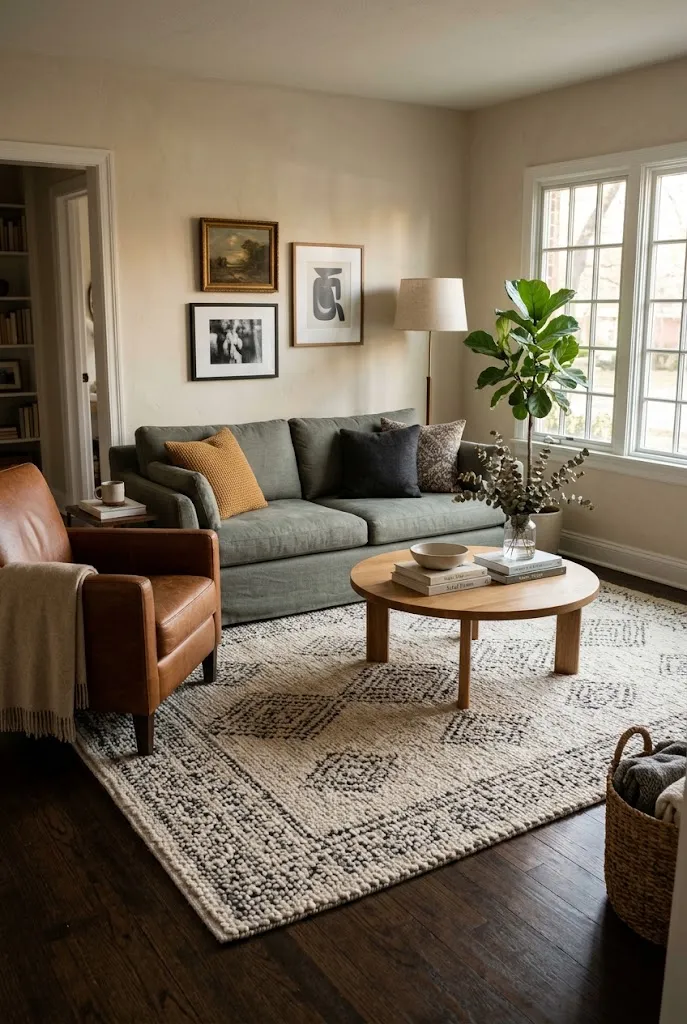
Cold floors are one of the quickest ways a room feels uninviting in winter. A thick rug over hardwood or tile changes how the space feels underfoot and visually grounds the furniture. Size matters more than pattern. The front legs of the sofa and chairs should sit on the rug so the arrangement feels connected.
| Material | Effect | Best Fit |
|---|---|---|
| Wool | Dense, warm, naturally resilient pile | Living rooms and bedrooms with steady foot traffic |
| Wool blend | Similar look, often more budget-friendly | Rentals and family homes |
| Synthetic shag | Very soft and plush | Low-traffic corners and kids’ spaces |
Use a non-slip pad underneath. It keeps the rug flat and adds cushioning.
3. Style the Mantel With Evergreen Branches and Candles
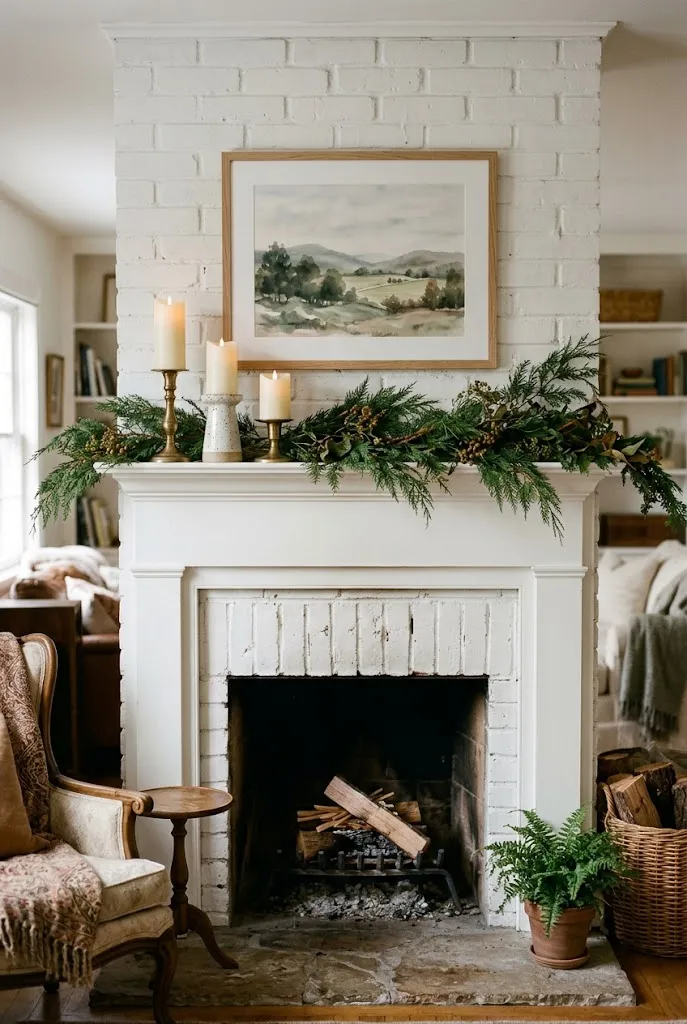
A mantel works best when it looks gathered rather than arranged. Lay a few fresh cedar or pine branches along the length, then place three candles of different heights in simple holders. Add one framed piece of art leaning at the back and stop there.
Editor’s Note: Keep real greenery and candle flames well apart, and never place flammable decor close to an active fire. Battery candles give the same glow without the risk, and many look convincing in a glass holder.
Replace the branches every couple of weeks if they dry out. The branches are the inexpensive part of this look. The restraint is what makes it feel intentional.
4. Build a Reading Corner by the Window
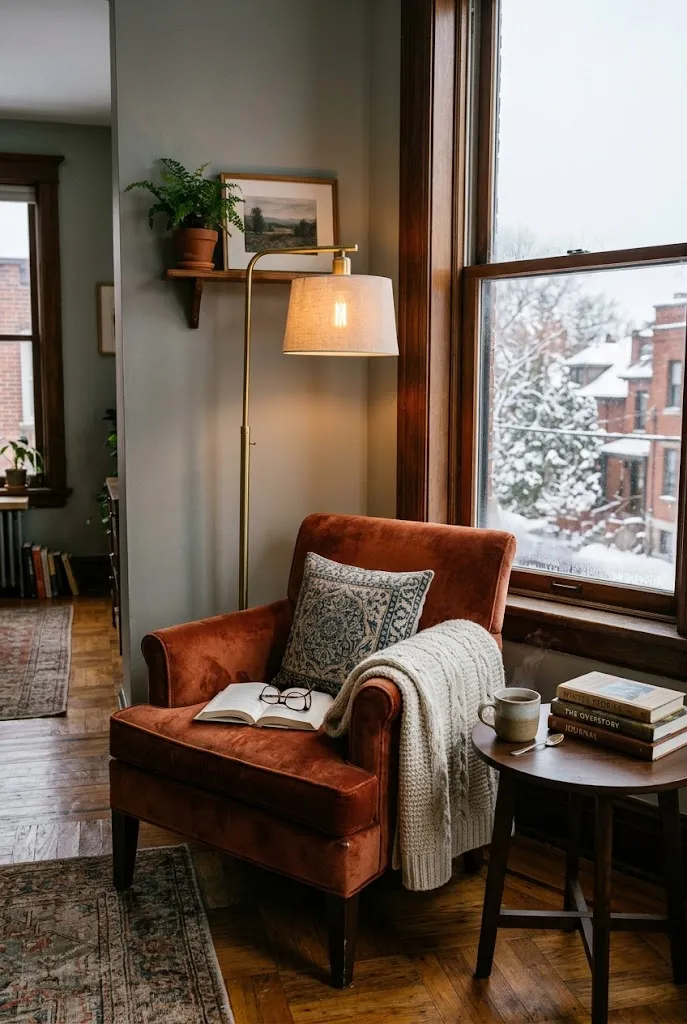
A good winter reading spot needs three things: a comfortable seat, a light source, and a surface for a drink. Window light is best during the day, but it fades early in winter, so a lamp matters.
- Choose a chair that supports your back, such as an upholstered armchair or a sturdy accent chair.
- Add a small side table within arm’s reach.
- Place a lamp behind or beside the chair and drape a blanket over one arm.
Keep the window clear of heavy objects so you can see outside. A basket of books or magazines beside the chair makes the corner look purposeful.
5. Hang Lined Curtains for a Warmer Window Wall
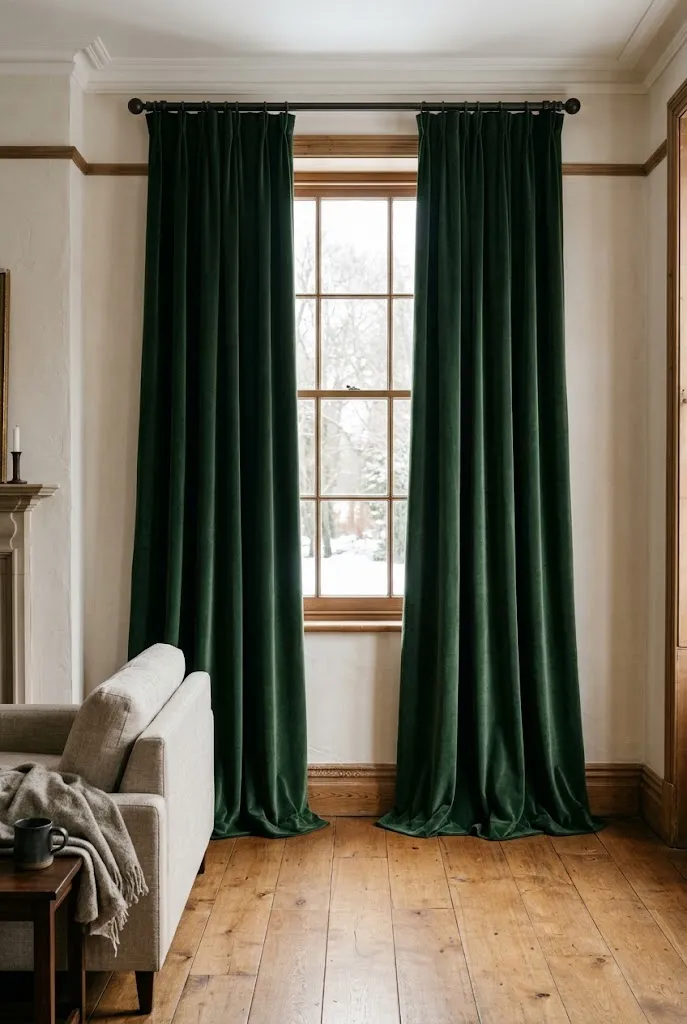
Windows are where a room feels the winter most. Lined or thermal curtains in a heavier fabric such as wool-blend, velvet, or thick cotton can help reduce drafts and soften the cold look of bare glass. They also change how the room sounds, absorbing a little echo.
For the best effect:
- Mount the rod a few inches above the window frame and extend it past the sides so the curtains clear the glass when open.
- Choose panels long enough to graze or just touch the floor.
- Pick a fabric with enough weight to hang in soft folds.
Common Mistake: Hanging short curtains right at the top of the window frame.
Better Approach: Raise the rod and use floor-length panels. The room reads taller, and the fabric covers more of the cold glass.
Custom-made drapery is a premium upgrade, while ready-made lined panels give a similar silhouette at a much lower cost.
6. Set Up an Entryway Boot Tray and Wool Accents
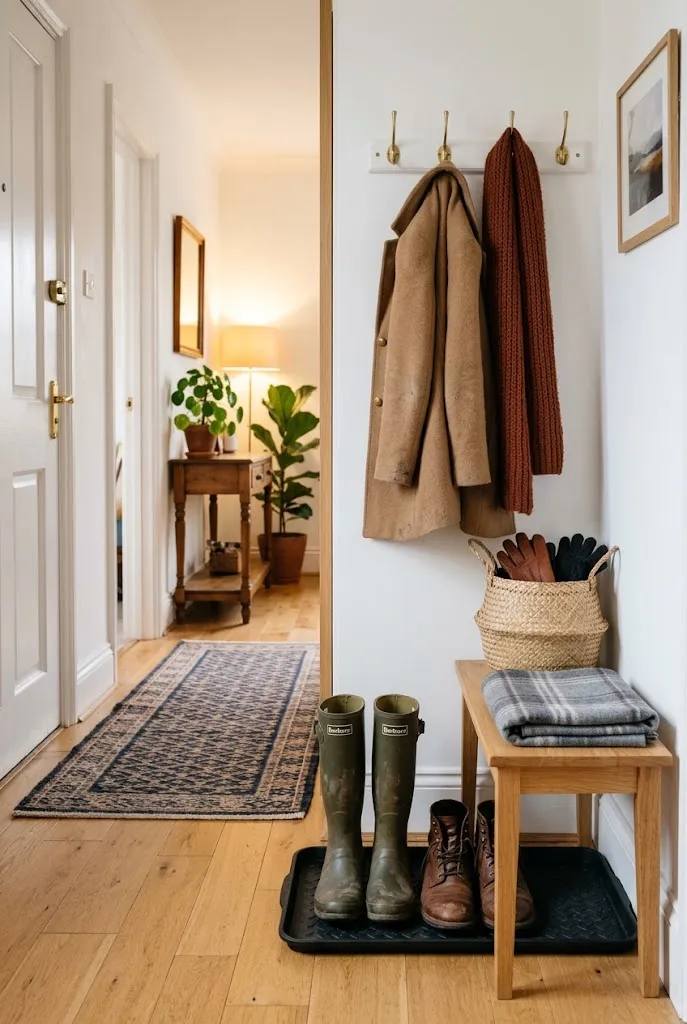
Winter entryways handle wet boots, damp coats, and salt tracked in from the sidewalk. A well-set entry is practical first and decorative second. A shallow, waterproof boot tray catches meltwater, while a wool runner or flatweave rug gives the space a finished look.
Add a row of sturdy hooks at adult height, a small bench for taking off boots, and a basket for hats and gloves. In a narrow entry, a slim bench and wall hooks use less floor space than a bulky cabinet.
Quick Facts
Best For: Apartments, rentals, and narrow entries
Investment: Accessible
Visual Effect: Organized, warm, and welcoming
7. Create a Hot Cocoa Station in the Kitchen
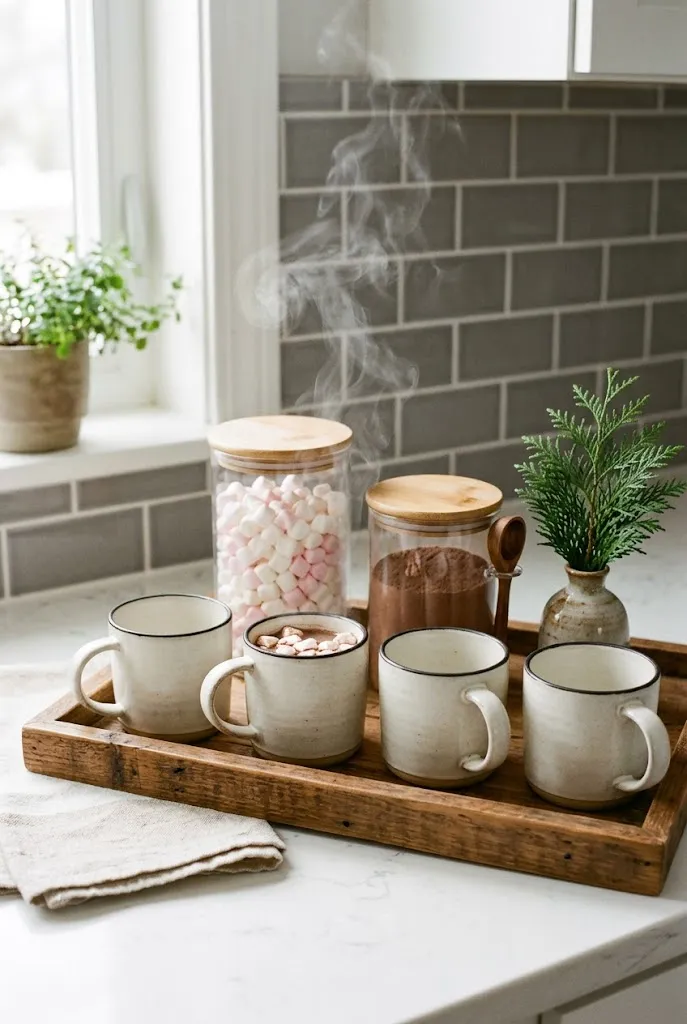
A drinks station gives a corner of the kitchen a winter purpose. A tray on the counter, or a small cart in a nook, holds mugs, a jar of cocoa mix, marshmallows, and stirring spoons. Glass jars and wooden scoops add texture without much cost.
Aim for visual calm. Use jars of the same size, keep the color palette to two or three shades, and stack mugs rather than hanging them if space is tight. A small sprig of greenery in a bud vase adds a seasonal accent.
Tips & Tricks
- Use a tray to keep everything contained and easy to move.
- Choose one type of mug so the station looks coordinated.
- Keep ingredients in sealed containers to protect against humidity.
8. Restyle Open Kitchen Shelves With Cream Ceramics
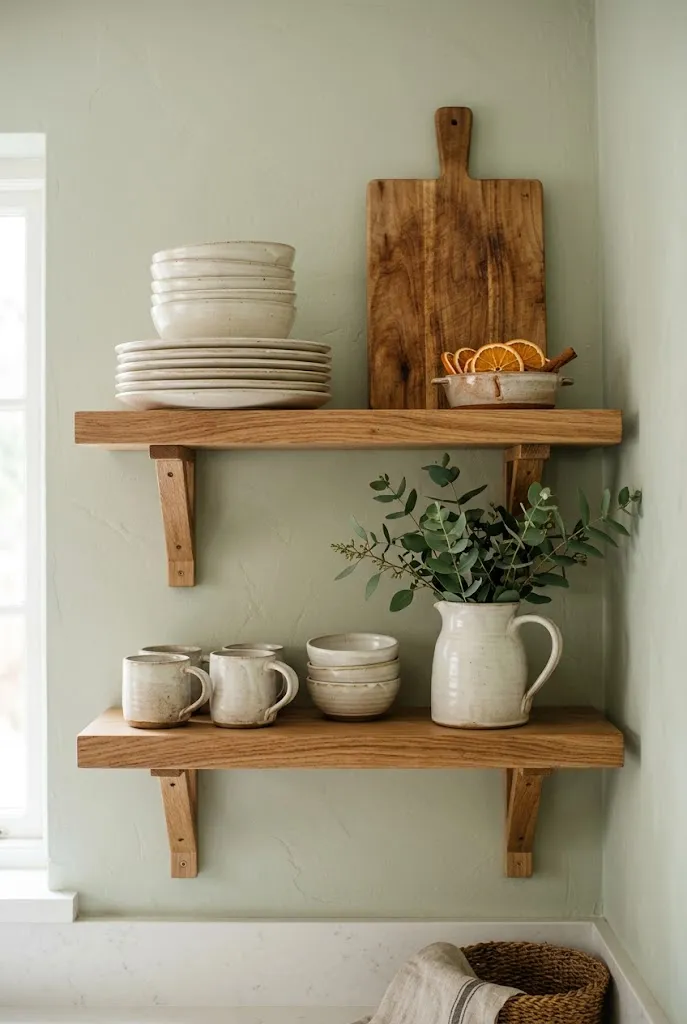
Open shelves can look cluttered by midwinter. Edit them down to cream and white dishes, a few wooden boards, and one or two seasonal accents such as a small bowl of dried orange slices or a short stem of eucalyptus.
Group dishes by height and leave space between groupings. Negative space gives the shelves a quiet, lived-in feeling rather than a showroom one. Everyday plates work just as well as special ones, and using them keeps the shelves practical.
Do: Stack plates and bowls in odd-numbered groups.
Don’t: Fill every inch of the shelf. Visual breathing room is part of the look.
9. Dress the Dining Table With a Linen Runner and Pillar Candles
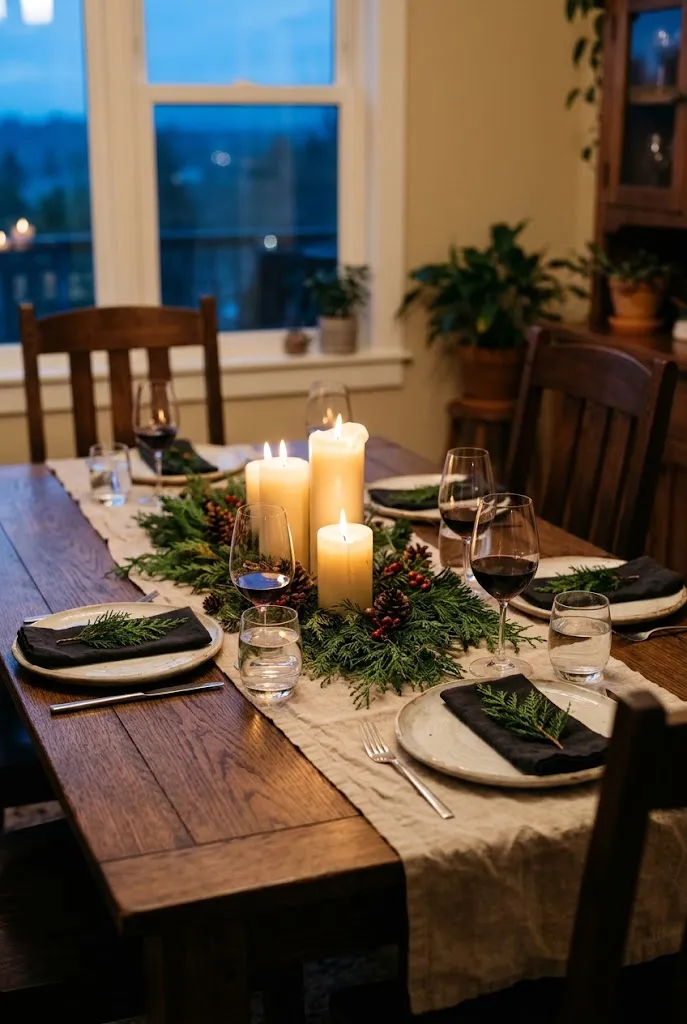
Winter dinners tend to run longer, so the table benefits from low, warm light. Lay a natural linen runner down the center, add three or four pillar candles of varied height, and scatter a few short greenery clippings between them.
Common Mistake: Building a tall centerpiece that blocks sightlines across the table.
Better Approach: Keep everything below eye level when seated, so guests can talk across the table.
Use neutral plates and let the candles do the work. Real candles add scent-free warmth, and flameless ones are a safe substitute around children and pets.
10. Layer the Bedroom Bed for Winter Warmth
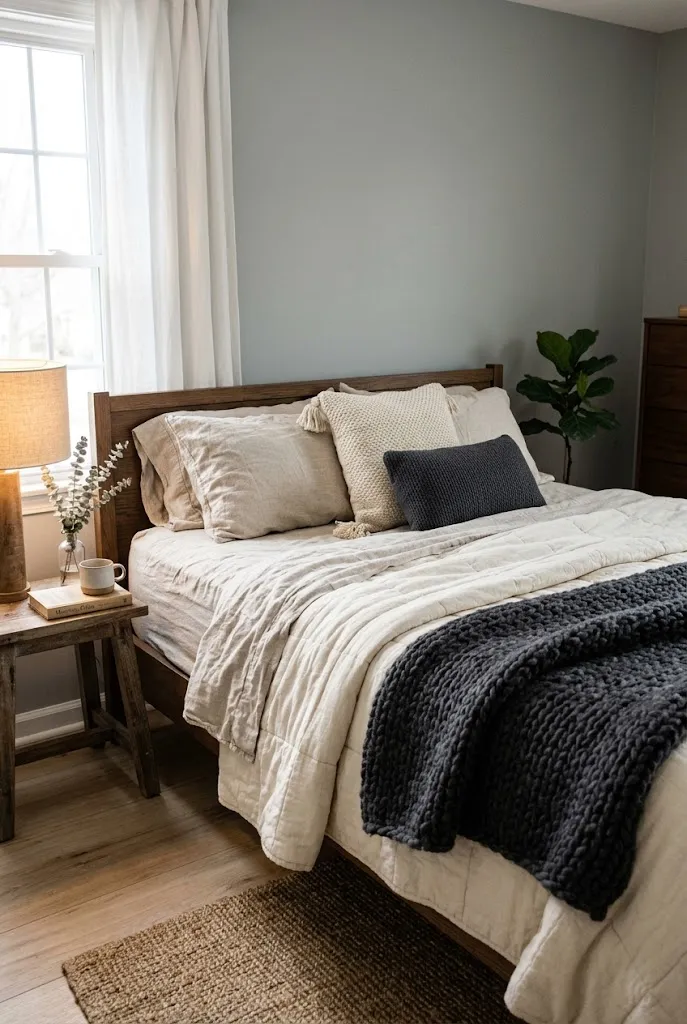
Bedding is the most direct way to make a bedroom feel warmer. Think in layers: fitted sheet, flat sheet, a medium-weight blanket, and a heavier duvet or quilt on top. A wool or knit blanket folded across the foot of the bed adds weight and visual depth.
| Layer | Purpose |
|---|---|
| Flannel or cotton sheets | Softness against skin |
| Blanket or coverlet | Mid-weight warmth |
| Duvet or quilt | Primary insulation |
| Knit throw | Texture and extra warmth on cold nights |
Stay within two or three colors. Warm whites, oatmeal, and charcoal create a relaxed look, while deeper tones like burgundy add richness.
11. Paint One Wall in a Deep Winter Color
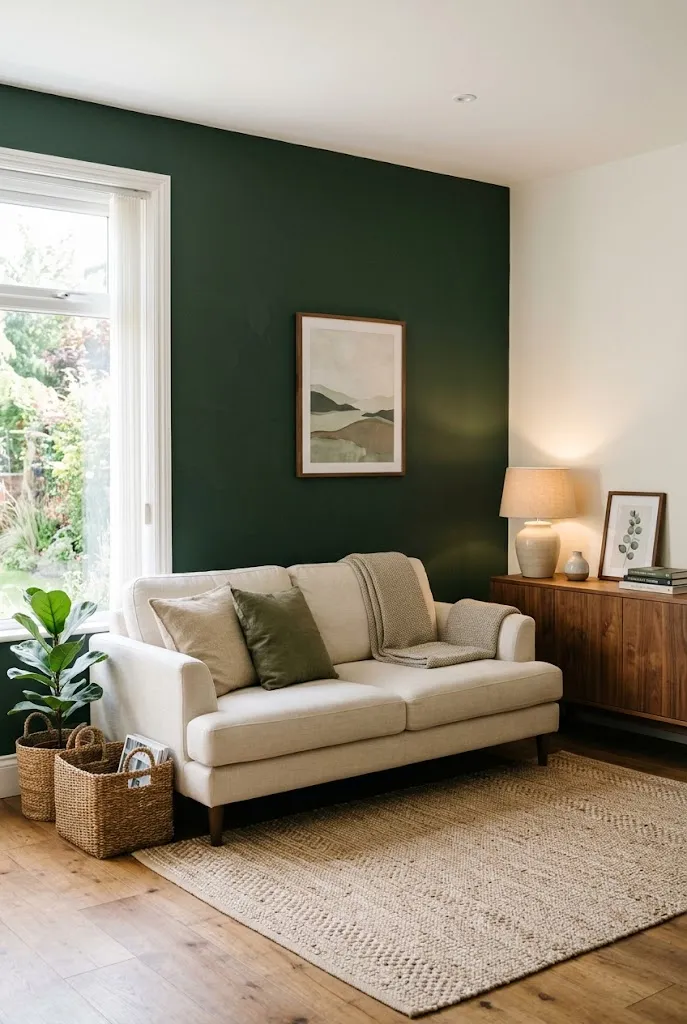
Deep colors suit winter well. Forest green, navy, and warm charcoal absorb light, which can make a room feel cocooned rather than dim. Choose one wall, often behind the bed or sofa, and keep the other walls lighter to prevent the room from feeling heavy.
Test sample swatches on the wall and look at them in morning and evening light, because deep paints shift noticeably. Renters can get a similar effect with a large piece of fabric hung on a rod or a leaning oversized canvas in a dark tone.
Quick Facts
Best For: Bedrooms, dens, and living rooms with good natural light
Investment: Accessible to moderate
Visual Effect: Warm, enclosed, and layered
12. Turn the Bathroom Into a Winter Spa
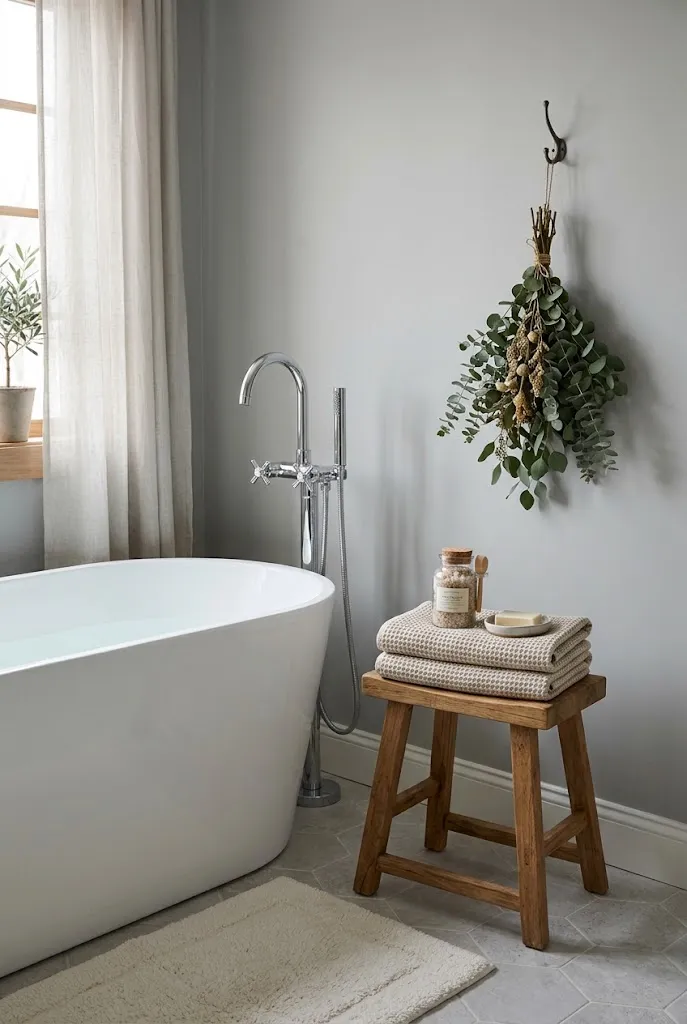
Bathrooms feel coldest in winter, so warmth comes from textiles and light. Swap thin towels for thick waffle or cotton ones in oatmeal or soft gray, add a plush bath mat, and keep a small wooden stool beside the tub for a candle or tray.
A few stems of eucalyptus hung from the shower head release a light scent when warm water hits them, and a glass jar of cotton rounds or bath salts adds a quiet decorative touch. Choose a flameless candle near the tub for safety.
Tips & Tricks
- Fold towels in thirds and stack them on an open shelf or in a basket.
- Replace the bath mat with a quick-drying cotton or bamboo option.
- Keep decorative objects minimal so the room stays clean and easy to use.
13. Warm Up the Home Office With Wood and Lamplight
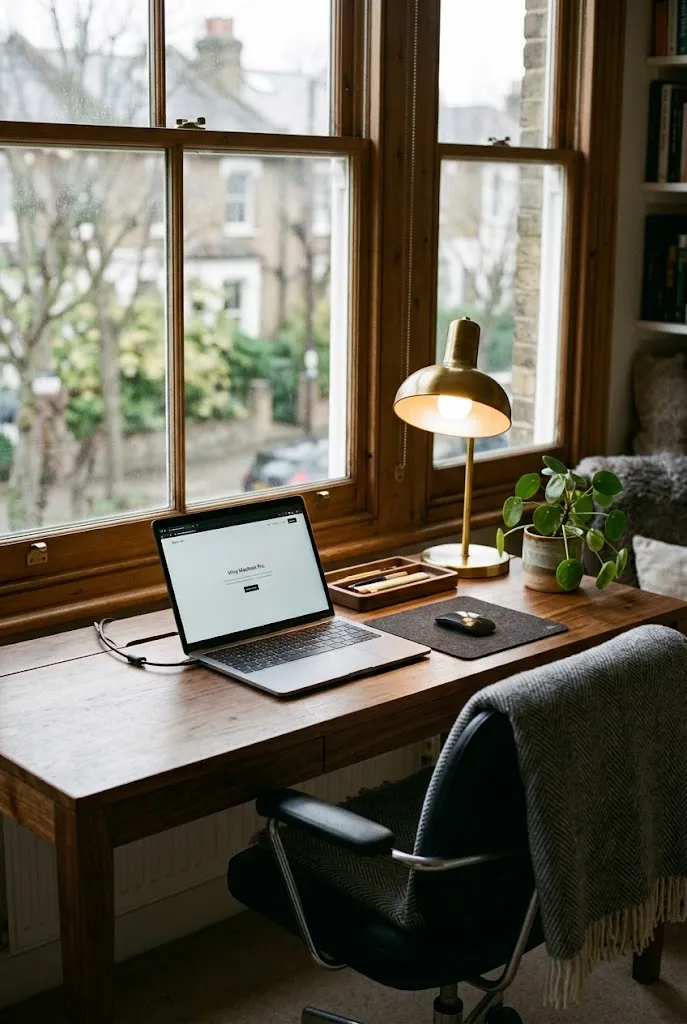
Home offices often rely on overhead light, which feels harsh by late afternoon in winter. A desk lamp with a warm bulb makes the workspace easier to sit in. Add a wooden tray for pens, a small ceramic planter, and a wool pad under the keyboard or mouse to soften the surface.
Put a throw blanket over the back of the chair, and consider a small footrest or felt pad under the desk for cold feet. Natural textures, such as wood, wool, and ceramic, soften the technical look of screens and cords.
Editor’s Note: Place the lamp opposite your writing hand to avoid shadows across the page or keyboard.
14. Layer Evergreens in Front Porch Planters
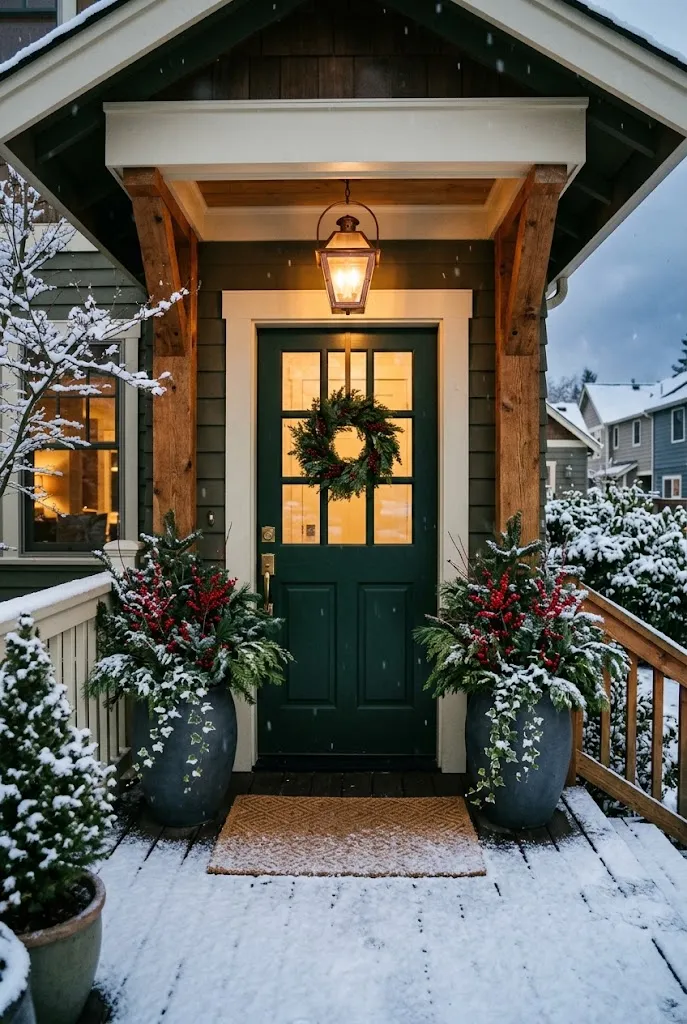
A front porch sets the tone for the whole house. Fill a pair of large planters with winter-friendly greenery. Many gardeners use dwarf evergreens, cedar, boxwood, or pine, but hardiness depends on your climate zone, so check what works locally.
For a layered look, use a tall element in the center such as a branch cluster or small spruce, a middle layer of pine and cedar, and a trailing element like ivy at the edge. Add a few red winterberry stems or dogwood branches for color. A warm porch light and a durable doormat finish the look.
Quick Facts
Best For: Entryways with a covered porch or front stoop
Investment: Moderate
Visual Effect: Welcoming, structured, and seasonal
15. Fill a Dough Bowl With Pinecones and Wool Felt Balls
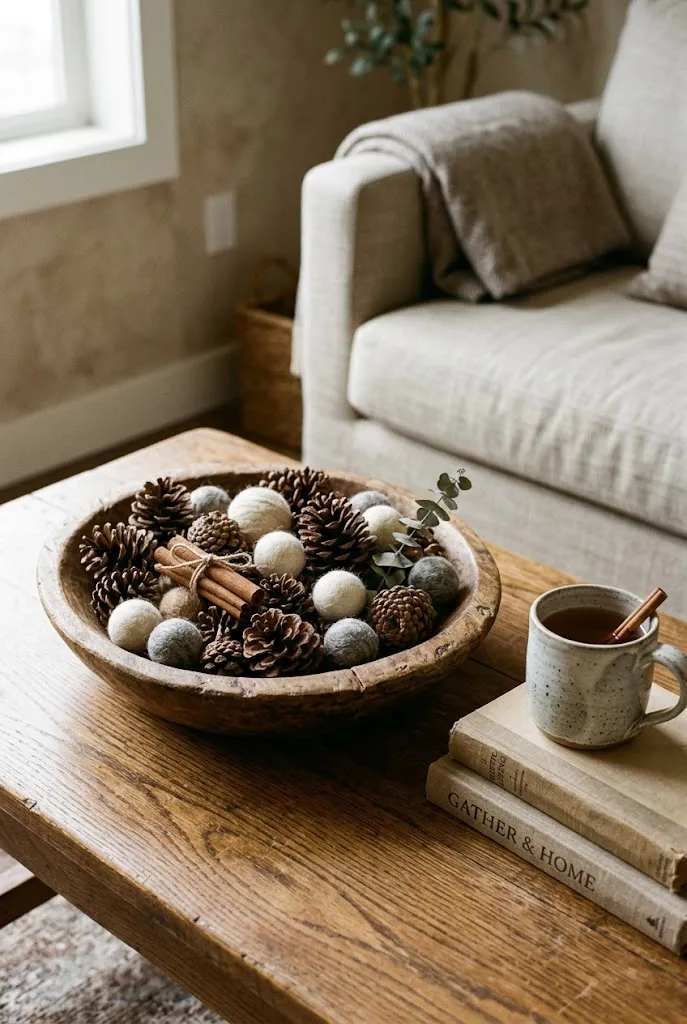
A wooden dough bowl on a coffee table or console takes about five minutes to style and works all season. Fill it with pinecones of different sizes, wool felt balls in cream and gray, and a few cinnamon sticks for scent.
The mix of rough and soft textures keeps it from feeling like a craft project. Keep the bowl to roughly two-thirds full so the shape still reads clearly. Pinecones gathered outdoors can be baked briefly at a low temperature to remove insects and sap before bringing them inside.
16. Wrap a Staircase in Greenery
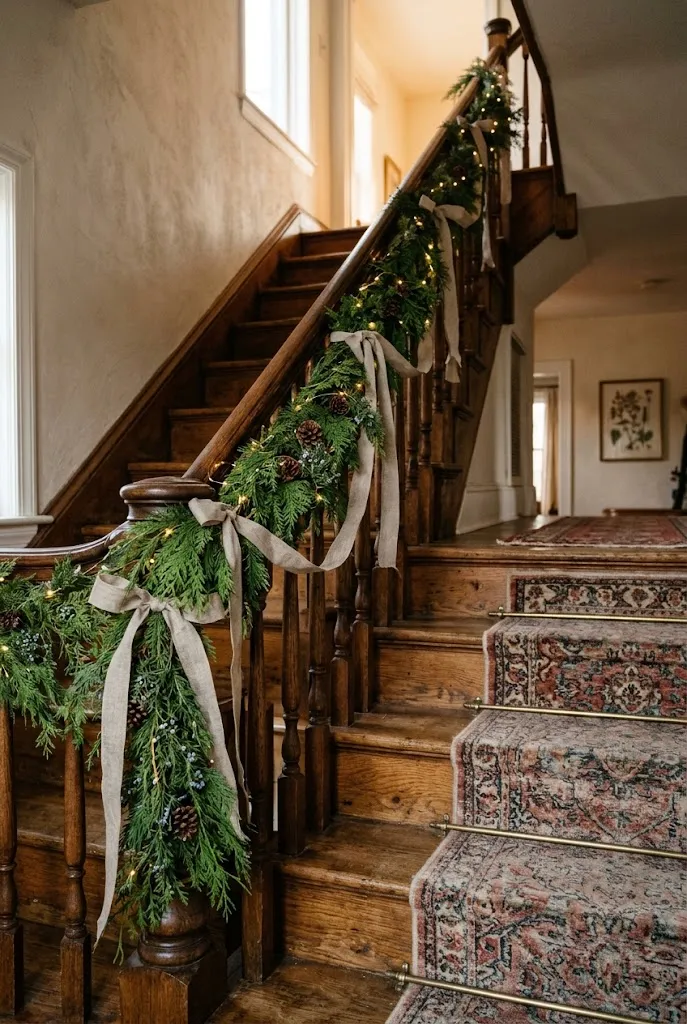
A staircase gives winter decor a vertical stage. Drape a cedar or pine garland along the banister, securing it with floral wire or removable clips. Loop a simple ribbon in a muted color at intervals or tuck in a few pinecones.
Do: Keep the garland on the railing and the treads clear.
Don’t: Place anything on the steps themselves, since it can create a tripping hazard.
Fresh greenery smells wonderful but dries out, so check it periodically. A faux garland lasts longer and reuses well. Warm string lights add soft light, though avoid leaving them plugged in unattended.
17. Warm a Sunroom or Enclosed Porch With Lanterns and Layers
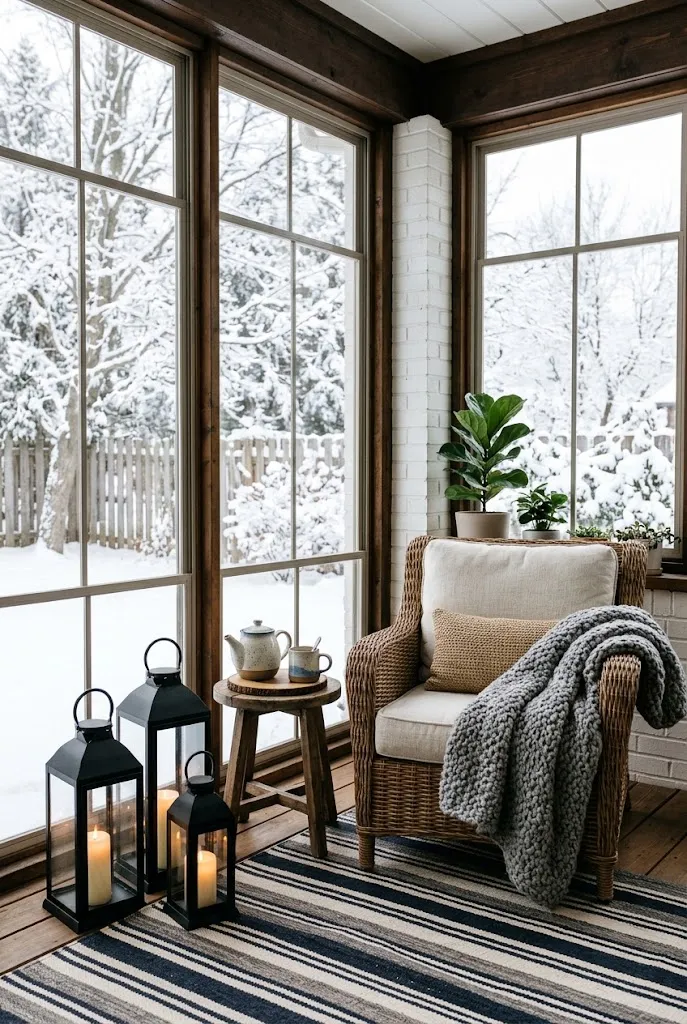
An enclosed porch is a great place to use winter light. Group a few lanterns on the floor in odd-numbered clusters, using flameless candles inside. Add an outdoor-rated rug, a wicker or rattan chair with a thick cushion, and a wool throw within reach.
If the room is unheated, choose weather-tolerant materials and bring in any cushions that could absorb moisture. A small side table and a thermos or tea tray turn it into a place to sit with a view of the snow.
Quick Facts
Best For: Sunrooms, enclosed porches, and covered patios
Investment: Moderate
Visual Effect: Cozy, glowing, and relaxed
18. Put Frosted Branches in a Tall Floor Vase
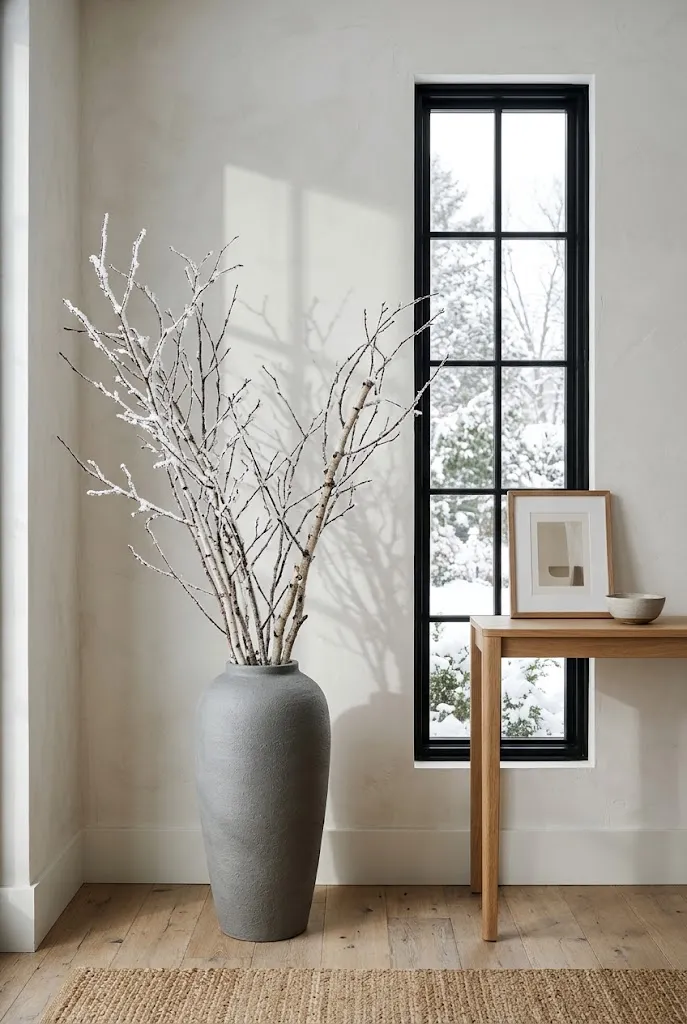
Branches are an inexpensive way to fill an empty corner or console. Choose bare birch, willow, or dogwood stems and place them in a tall ceramic or glass vase. A light coat of white spray paint, applied outdoors, gives a frosted look.
Pick a heavy vase or add stones at the base so tall stems stay upright. Place the vase beside a window or entry console where the silhouette is visible against the light. Unlike fresh flowers, branches last the whole season with no water to change.
Quick Tip: Vary the stem lengths slightly so the arrangement looks natural rather than cut to a uniform height.
19. Hang a Gallery Wall of Winter Landscapes
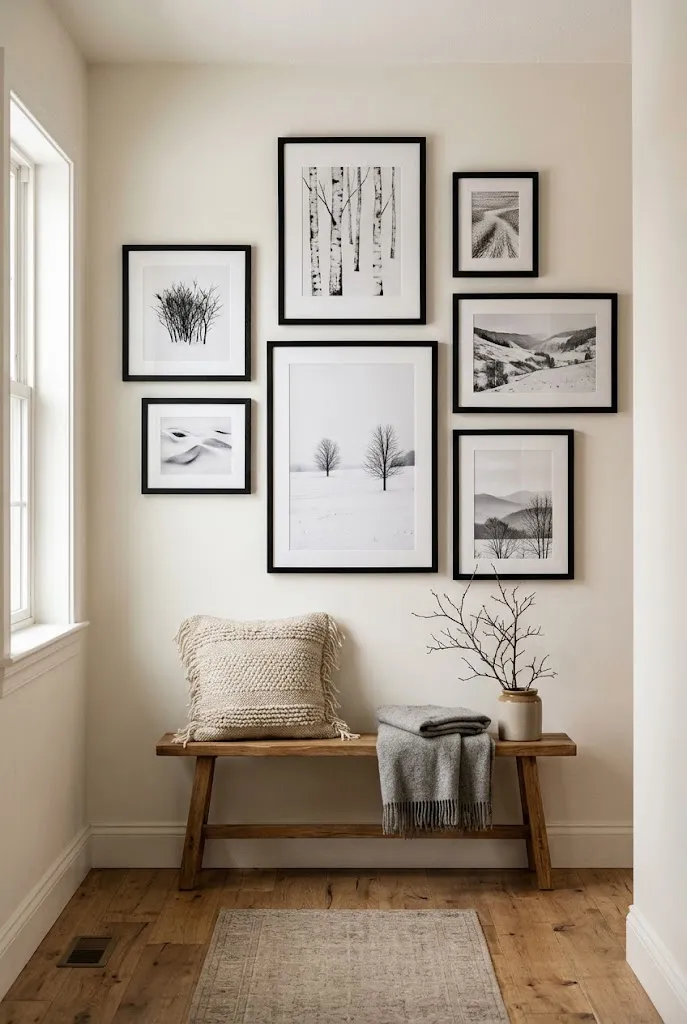
Winter landscape art, such as snowy fields, bare trees, and quiet cabins, can sit on a wall long after the holidays. Mix a few sizes of frames in a consistent color, such as black or natural oak, to keep the arrangement cohesive.
Plan the layout on the floor first. Keep the spacing between frames consistent, usually two to three inches, and center the grouping at about eye level. Original prints, vintage finds, or your own photographs make the wall personal. Inexpensive frames with white mats give a gallery feel for less.
Editor’s Note: Take photos of the layout on the floor before hanging so you can adjust as you go.
20. Layer Warm Lighting in a Dim Corner
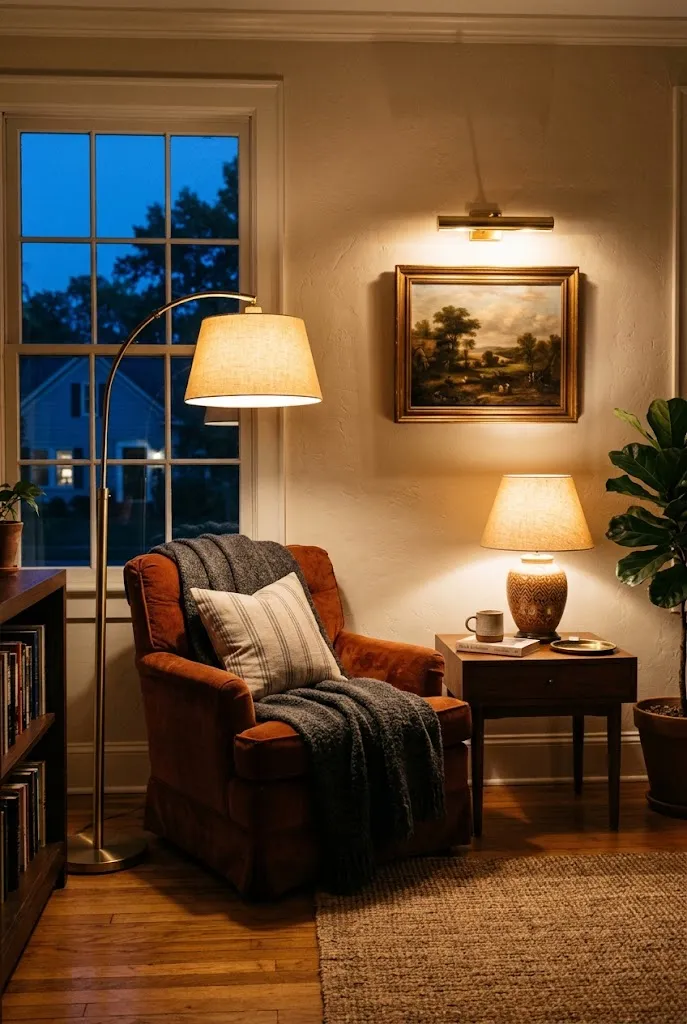
Winter rooms often rely on a single overhead fixture, which flattens a space. Layer three light sources at different heights, such as a floor lamp, a table lamp, and a small accent light, to create depth. Choose bulbs with a warm color temperature.
| Bulb Type | Effect | Best Use |
|---|---|---|
| Warm white (about 2700K) | Soft, golden glow | Living rooms and bedrooms |
| Soft white (about 3000K) | Slightly brighter, still warm | Kitchens and offices |
| Cool white (4000K+) | Crisp, bluish light | Task areas, less suited to cozy rooms |
A dimmer switch or smart bulb gives more control. Place lamps so the light spreads along walls rather than directly into eyes.
21. Build a Blanket Nook in the Kids’ Room
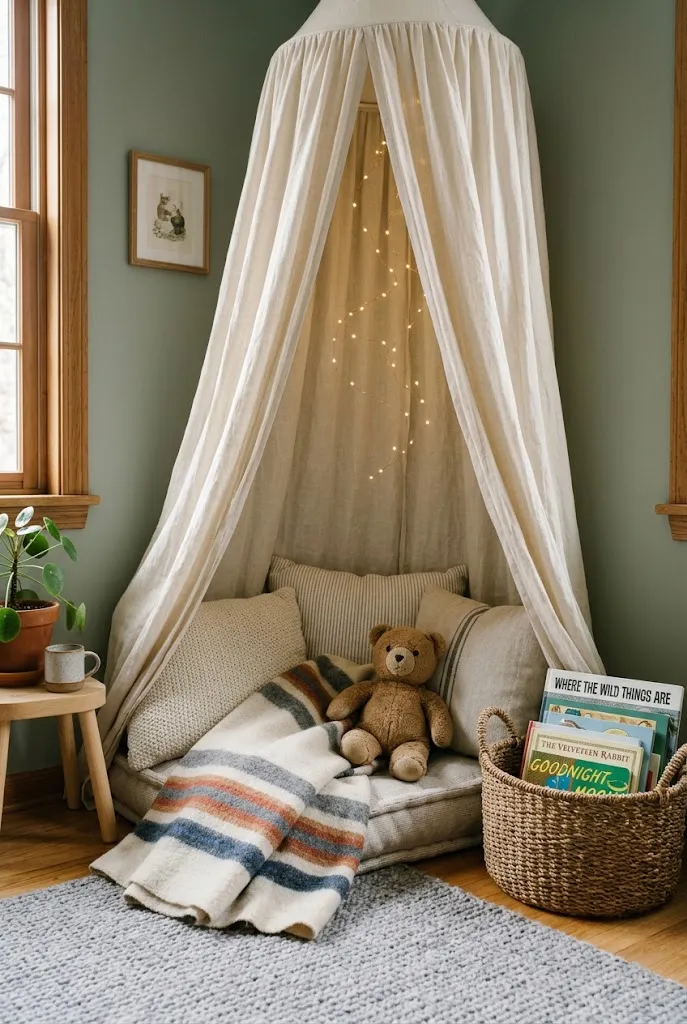
Children’s rooms can hold winter play as well as quiet time. A small tent, a canopy hung from the ceiling, or a pile of floor cushions with a soft blanket creates a snug corner for reading or imaginative play.
Choose washable fabrics, and avoid heavy items hanging above where a child sits. Add a basket of books and a few stuffed animals within reach. Fairy lights should be battery operated and kept out of reach of small children.
Do: Use machine-washable blankets and cushions.
Don’t: Hang anything heavy above a play area.
22. Hang a Paper Snowflake Garland
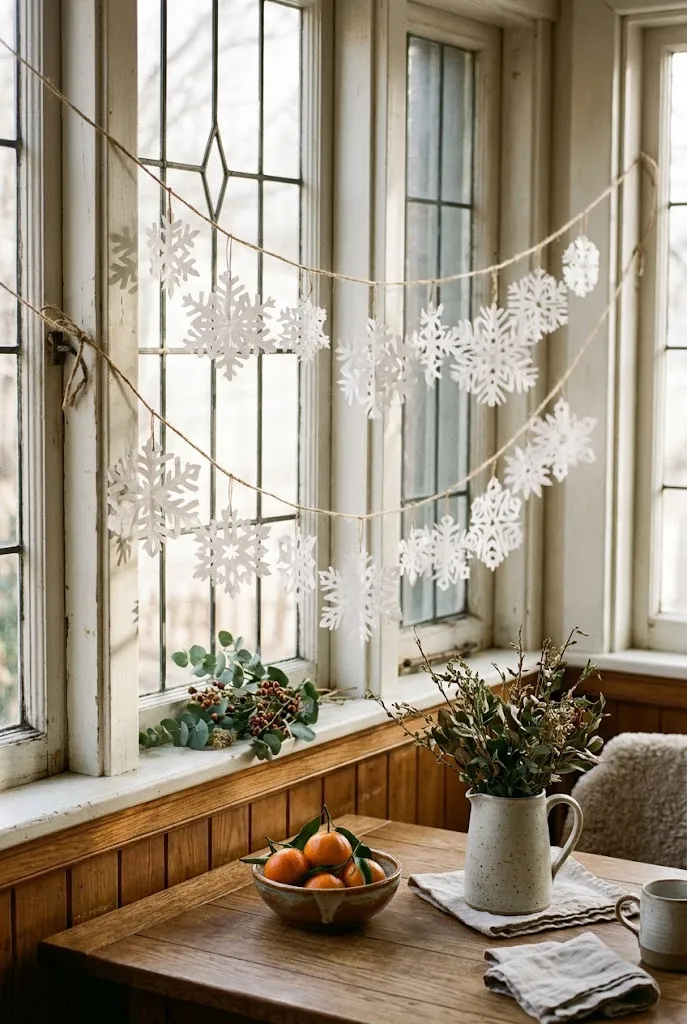
Paper snowflakes cost almost nothing and turn a plain wall or window into something playful. They also work well as an activity.
- Fold a square of white paper into a triangle, then fold again into smaller triangles.
- Cut small shapes along the edges.
- Unfold and flatten gently, then thread several onto a piece of string.
Vary the sizes so the garland feels organic. Hang it across a window, above a mantel, or down a wall. Heavier paper holds its shape better, and a quick press under a book removes creases.
23. Style a Potted Norfolk Island Pine on a Side Table
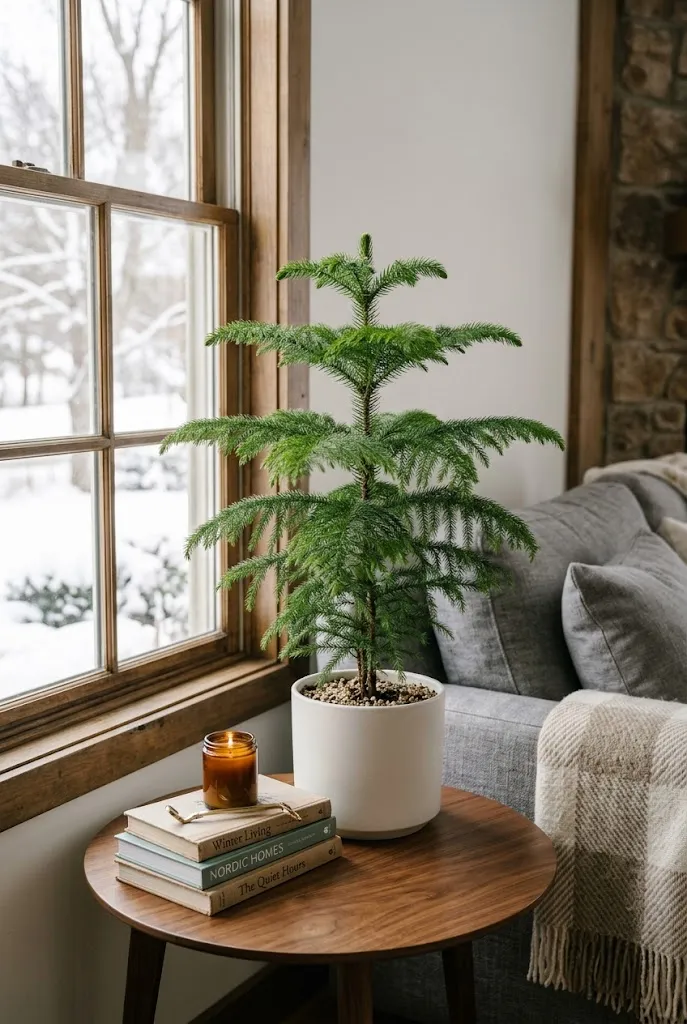
A small Norfolk Island pine looks like a miniature tree and can last beyond the holidays as a houseplant. It generally prefers bright light and does not like to dry out completely, so place it near a window and check the soil regularly.
Set the plant in a simple terra-cotta or ceramic pot, and add a light fabric wrap or a basket around the pot if you want a softer look. Keep it away from heating vents and drafts. After the season, the same plant can remain in the room as an everyday green accent.
Quick Facts
Best For: Side tables, console tables, and window ledges
Investment: Accessible
Visual Effect: Fresh and tree-like without the size of a full tree
24. Force Paperwhites and Amaryllis in Glass Vessels
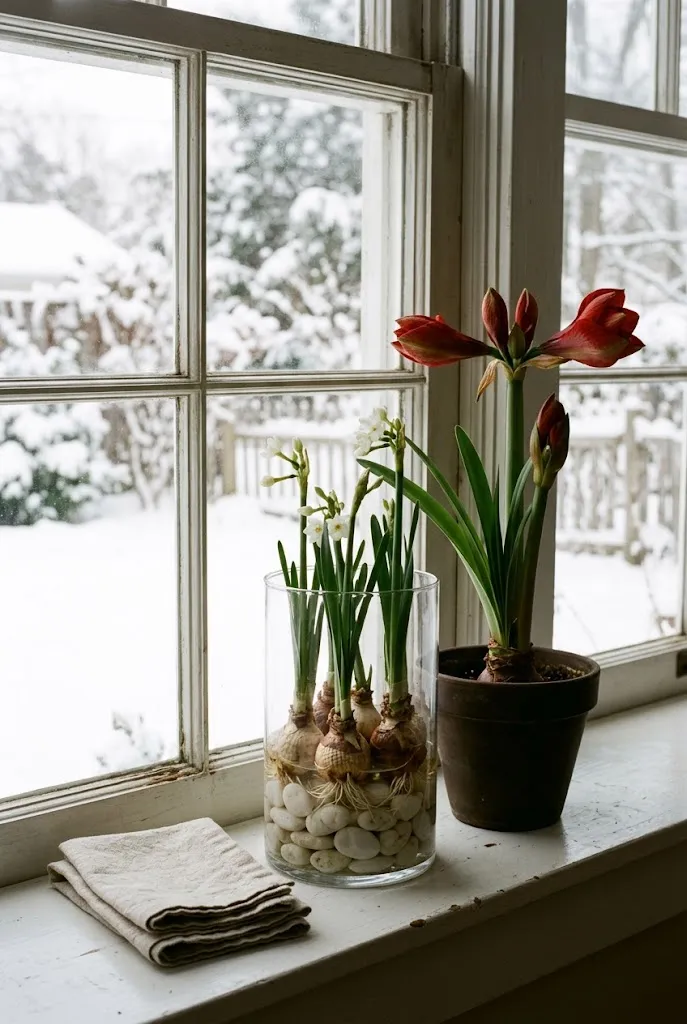
Indoor bulbs bring a living, growing element to a winter windowsill. Paperwhites can be set in a shallow dish with pebbles and a little water. Amaryllis is often planted in a pot of soil with a stake for the tall stem.
Both usually need bright light and cooler rooms to grow sturdily. Paperwhites can flop as they grow, and some gardeners use a stake or twine to support them.
Editor’s Note: Amaryllis and paperwhite bulbs are generally listed as toxic to cats and dogs, so place them out of reach of pets.
25. Stack Firewood in a Metal Rack by the Hearth
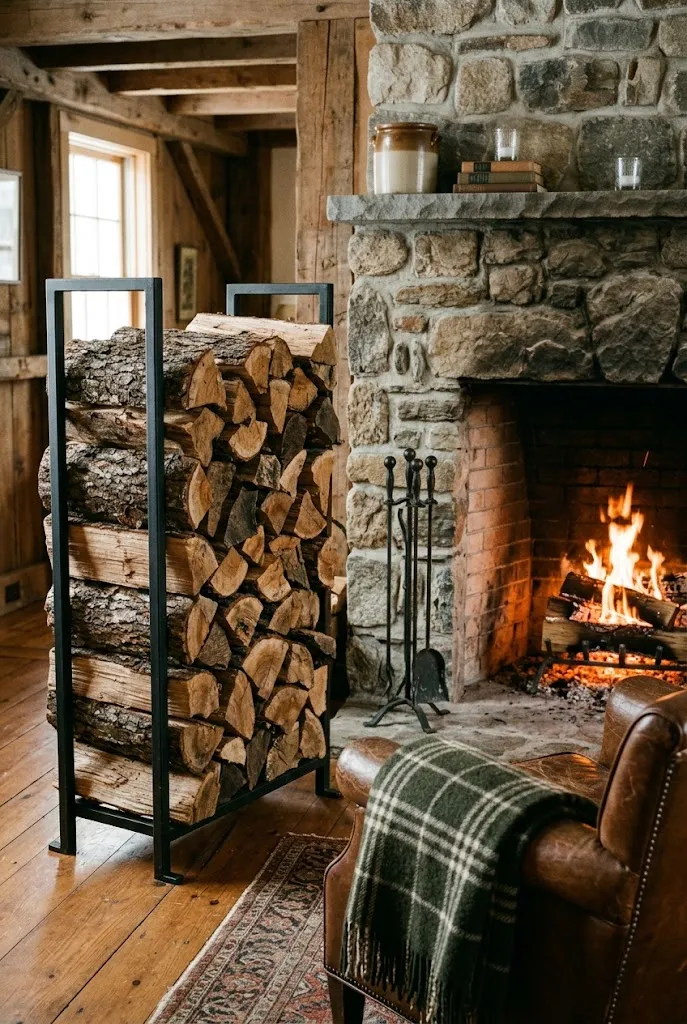
A small log rack turns a practical item into a decorative one. Choose a simple black metal rack or a sturdy wooden one and stack split logs neatly. The varied shapes and bark textures add warmth to a room.
Only bring in a small supply at a time, since firewood can carry insects and moisture. Keep the rack a safe distance from the fire, following the guidance for your fireplace or stove. If you do not have a fireplace, a small rack of decorative birch logs in a corner gives a similar effect.
26. Light a Long Hallway With a Wool Runner and Sconces
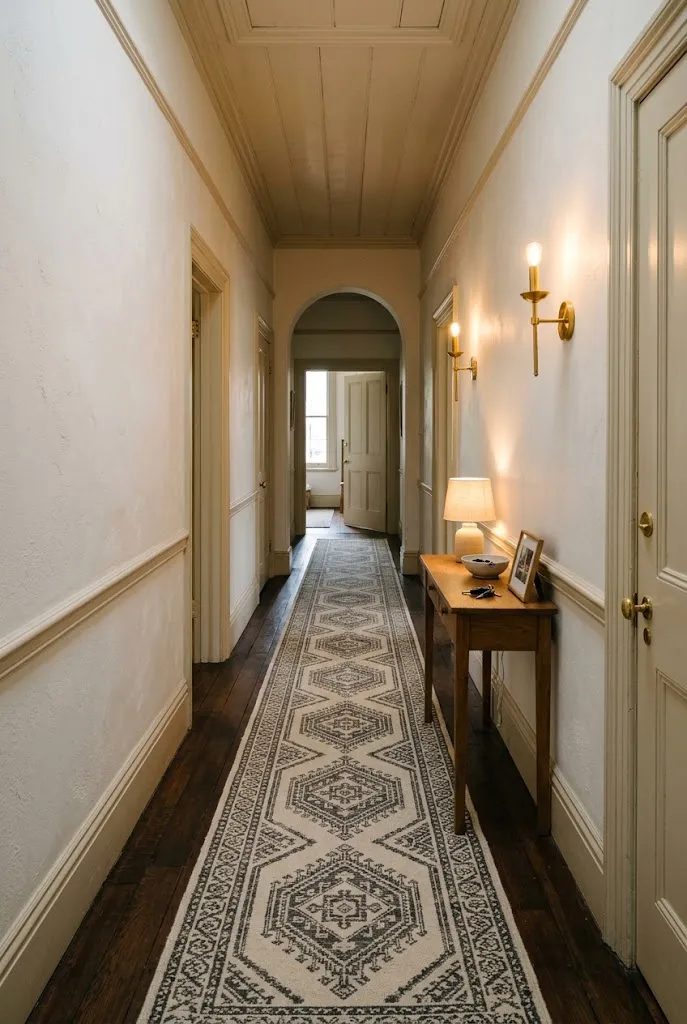
Hallways in winter often feel like dark tunnels. A wool or flatweave runner warms the floor, and wall sconces add pools of soft light along the walls. Plug-in sconces with cord covers suit rentals, while hardwired sconces are a premium upgrade that gives a built-in feel.
Space the sconces evenly and at about eye level so the light falls across the walls. A narrow console or a single piece of art breaks up the length. Keep the center of the hall clear so walking remains easy.
Quick Facts
Best For: Long, narrow hallways
Investment: Moderate to premium
Visual Effect: Warm, layered, and welcoming
27. Add an Upholstered Window Seat
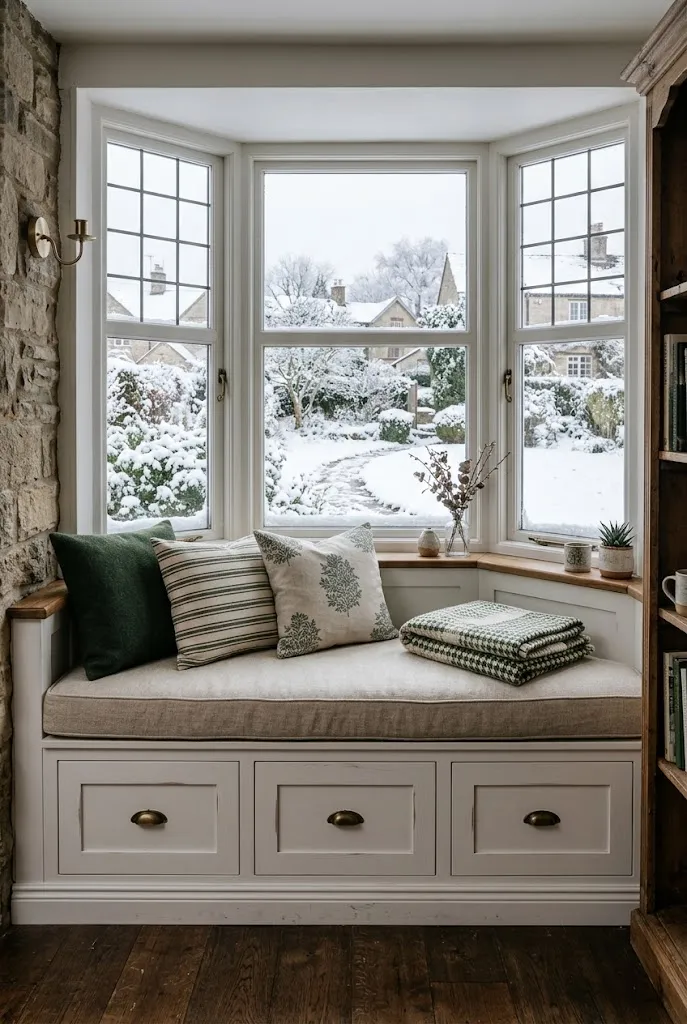
A built-in window seat is a premium project that gives winter a permanent focal point. A cushioned bench beneath a large window offers a place to sit with a book and a blanket, with storage underneath for throws and games.
Custom carpentry gives the best fit, though a ready-made storage bench beneath a window can approximate the idea. Choose a durable, easy-to-clean upholstery fabric, and add a few pillows and a folded throw. Make sure the cushion is thick enough to be comfortable, since a thin pad quickly looks and feels flat.
Quick Facts
Best For: Bay windows, large windows, and bedrooms
Investment: Premium for custom, accessible for ready-made benches
Visual Effect: Built-in, cozy, and architectural
28. Panel a Wall in Warm Wood Slats
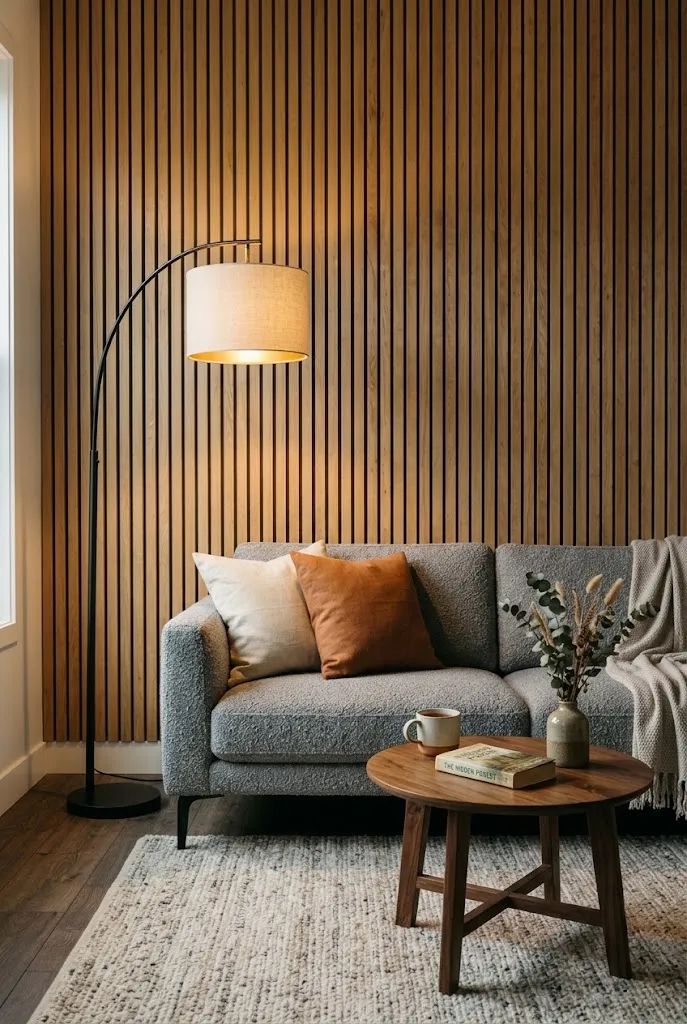
Vertical wood slats give a den or living room a cabin-like warmth without needing a fireplace. Natural oak or walnut slats on one wall add texture and a sense of shelter, and they hold up well through the colder months.
Professional installation usually gives the cleanest result, and custom slat walls are a premium investment. Prefabricated slat panels are a more accessible way to get a similar look, though the finish and fit differ from custom carpentry. Pair the wall with soft lighting and simple furniture to keep it from feeling heavy.
Common Mistake: Covering every wall in slats, which can make a room feel dark and boxy.
Better Approach: Use slats on a single feature wall and keep the others light.
29. Lean a Blanket Ladder Against the Wall
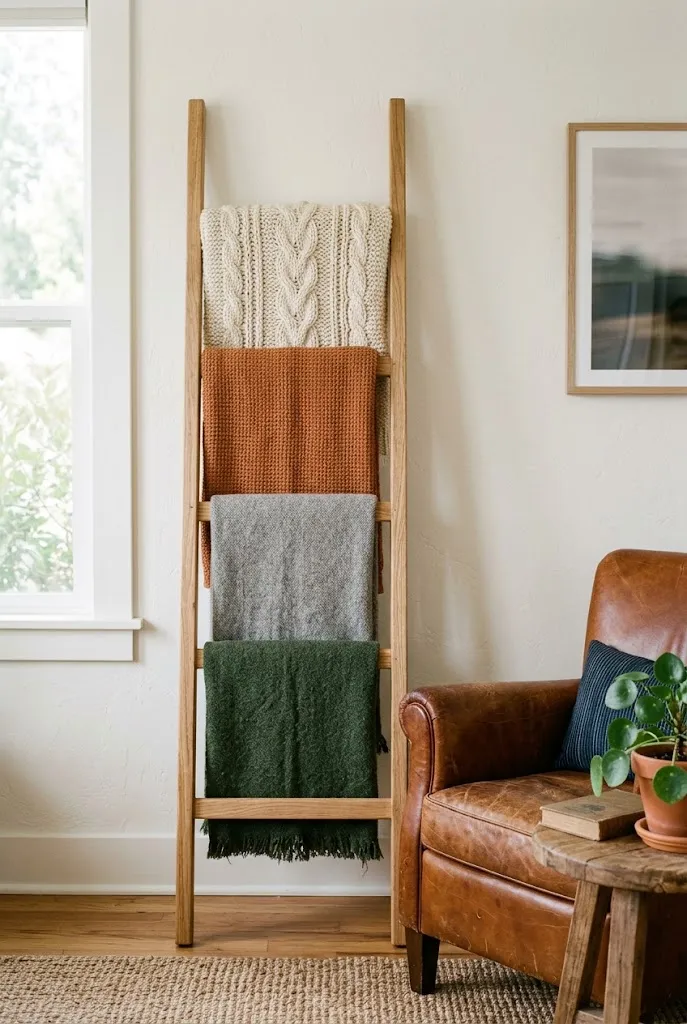
A blanket ladder is a simple way to store throws and display them at the same time. Lean a wooden ladder against a living room or den wall, then drape three or four blankets in different textures and complementary colors over the rungs.
This is a good way to use blankets as decor. Fold or drape them so the patterns and textures are visible, and rotate them with the season. A ladder is easy to move, which makes it suitable for rentals. Make sure the base is stable and positioned away from foot traffic.
Tips & Tricks
- Mix chunky knits with flat-woven wool for contrast.
- Keep the colors within one palette.
- Leave the top rung empty for a cleaner look.
30. Prepare the Guest Room for Cold-Weather Visitors
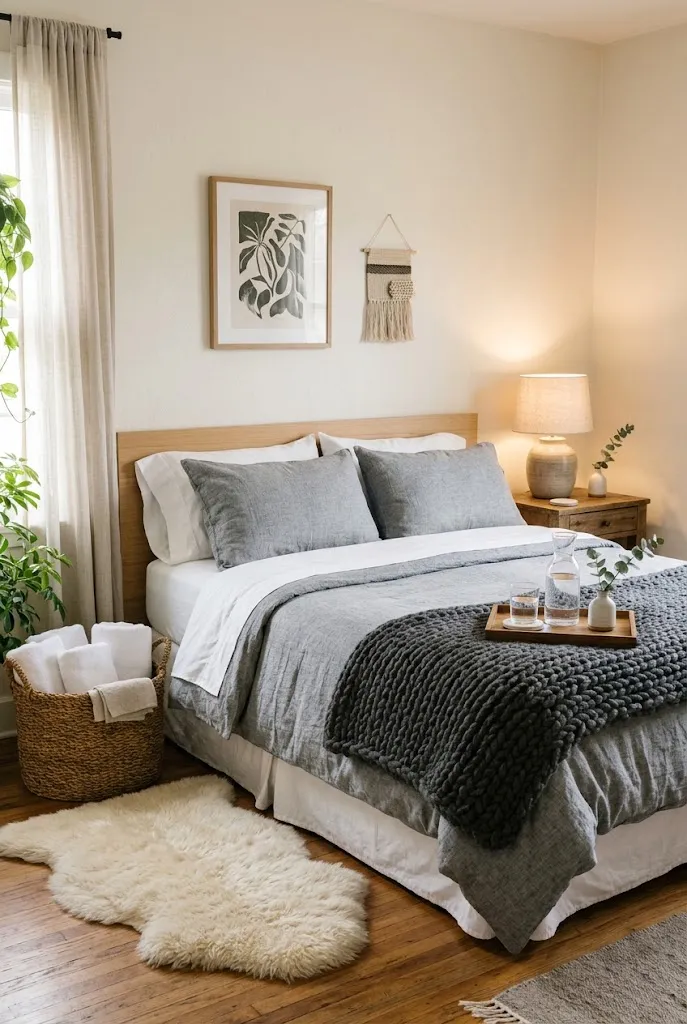
A guest room in winter benefits from a few considerate details. Make the bed with warm layers and leave an extra blanket folded at the foot. A small tray on the nightstand with a water carafe, a glass, and a small lamp helps guests feel looked after.
Add a basket with spare towels, a phone charger, and a few magazines. A small rug beside the bed keeps feet off cold floors. These details cost little but make the room feel prepared rather than simply available.
Quick Facts
Best For: Guest rooms and spare bedrooms
Investment: Accessible
Visual Effect: Calm, thoughtful, and ready to use
Where to Start
If thirty ideas feel like a lot, begin with the room you use most and change one thing: the lighting, the textiles, or the window. Those three tend to shift how a room feels more than any single accessory. Once that room feels right, move to the entryway, since you pass through it daily, and add smaller seasonal touches elsewhere as time allows.
Remember that winter decor does not have to disappear in February. Warm textiles, softer light, and natural materials keep the house comfortable well into spring.