

A cozy home rarely comes from one big purchase. It comes from small decisions that add up: a lamp that glows instead of glares, a rug that softens a hard floor, a throw that actually gets used. The ideas below cover living rooms, bedrooms, kitchens, entries, bathrooms, and even balconies. They run from renter-friendly styling changes to more involved upgrades, so you can start with what suits your space and budget. Each one explains what to do, why it works, and what to watch for, so your home feels warmer and more lived-in without looking cluttered.
1. Layer a Wool Rug Over Hardwood in the Living Room
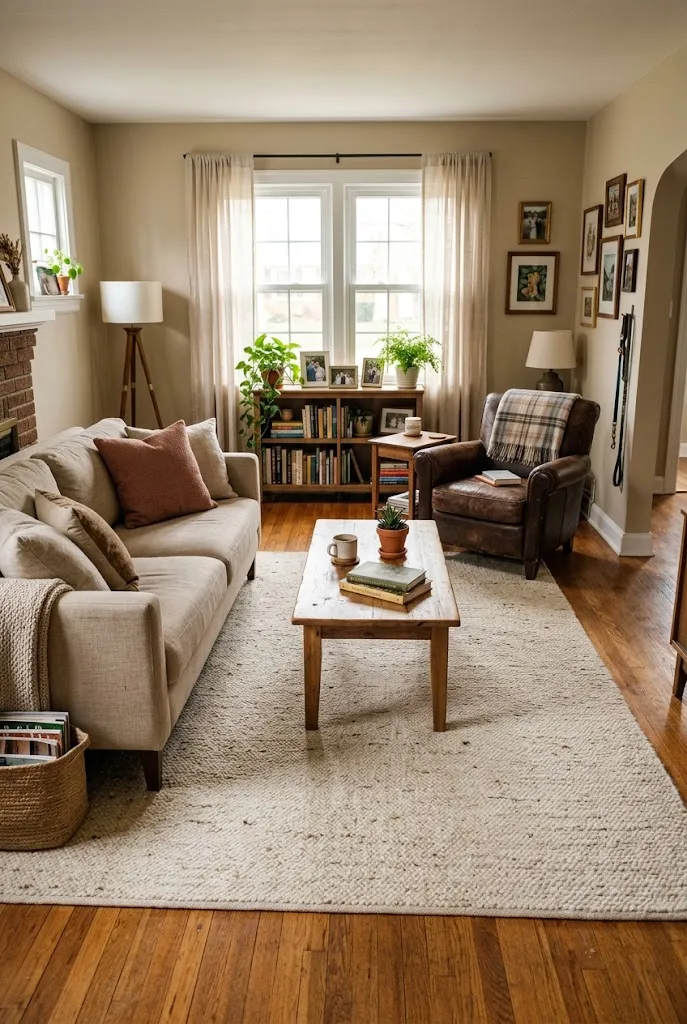
Bare hardwood or laminate can make a living room echo and feel cool underfoot. A wool or wool-blend rug adds softness and absorbs sound. Choose one large enough that at least the front legs of your sofa and chairs sit on it. A rug that is too small makes the seating area look like it’s floating.
A flatweave or low-pile style holds up well under foot traffic. If you love a shaggy texture, save it for a bedroom or reading corner.
Quick Tip: Leave 12 to 18 inches of bare floor around the rug’s edges so the room keeps a sense of frame.
2. Swap Harsh Overhead Light for Lamps at Three Heights
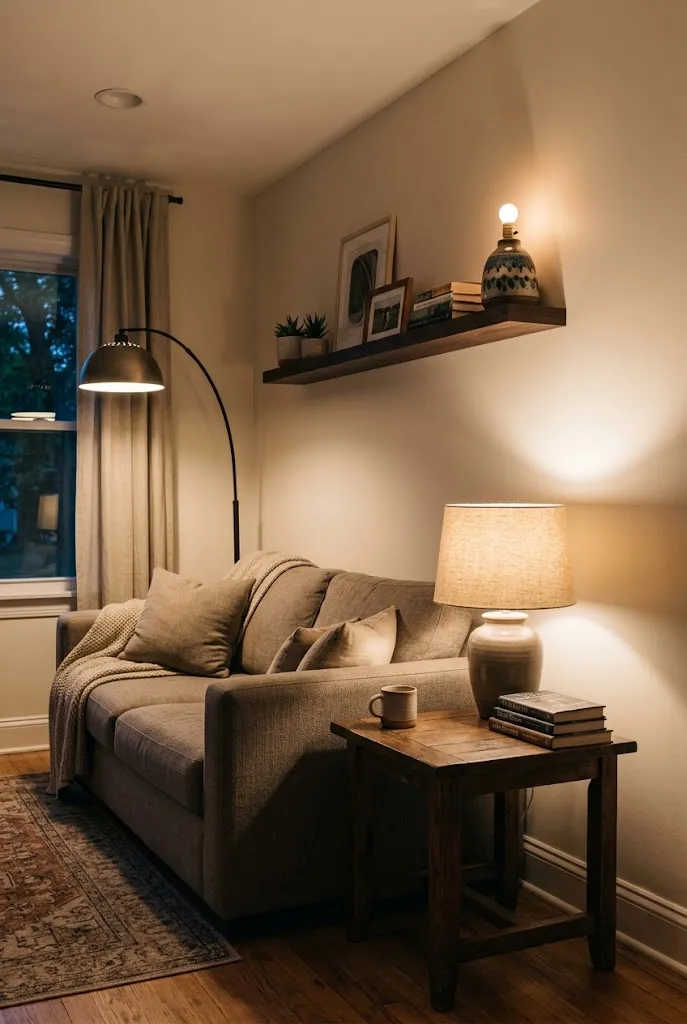
Overhead fixtures flatten a room. Warm lamps placed at different heights create pools of light that make a space feel settled in the evening. Aim for something on the floor, something at sofa-arm level, and something higher on a console or shelf.
- Use bulbs labeled “soft white” or around 2700K for a candlelit warmth.
- Choose fabric or opal-glass shades that diffuse the light.
- Put at least one lamp on a dimmer or smart plug.
- Keep cords tidy with clips along baseboards.
Together, the three levels guide the eye around the room and give you options for movie nights, reading, or quiet mornings.
3. Drape a Chunky Knit Throw Over a Linen Sofa
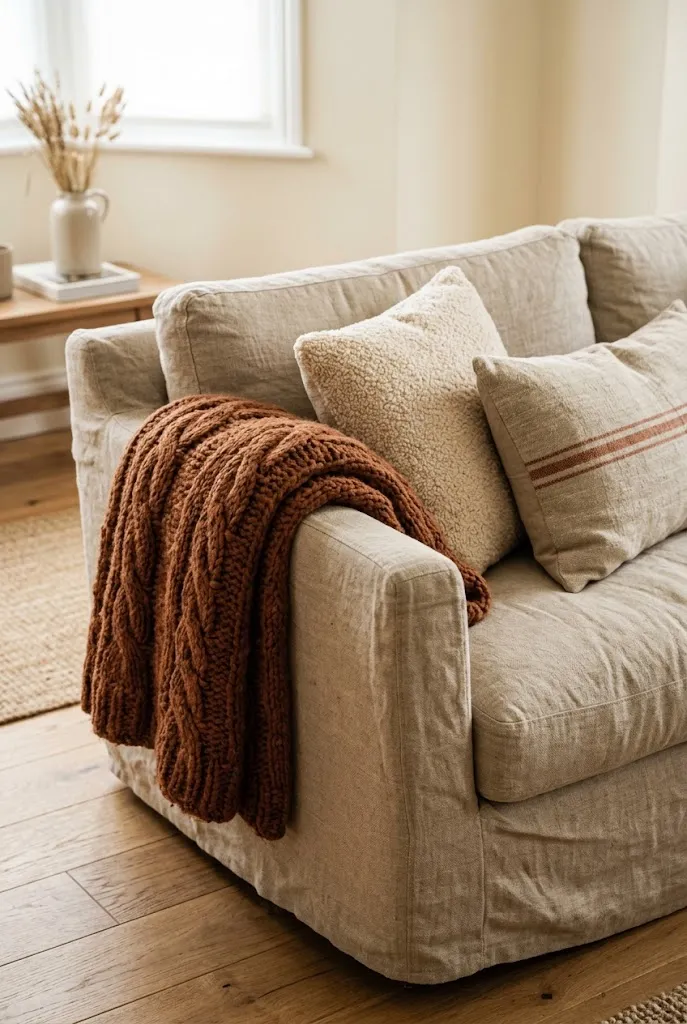
Contrast is part of coziness. A smooth, slightly rumpled linen sofa looks even warmer with a thick knit throw in oatmeal, rust, or deep olive. Let the blanket fall casually over one arm rather than folding it into a perfect square.
A throw earns its place by being soft enough to curl up in. Look for cotton chenille, wool blends, or a tight knit that won’t snag easily if you have pets. Two or three pillows in varied textures, such as a boucle, a plain linen, and a subtle stripe, finish the arrangement without crowding the seats.
4. Paint an Accent Wall in Muted Terracotta

Earthy clay tones make a room feel sunbaked and sheltering, especially when they sit behind a neutral sofa or a bed. Choose a muted, slightly brown-leaning terracotta rather than a bright orange, and test large swatches on the wall at different times of day. Terracotta shifts a lot between morning and evening light.
| Wall Choice | Effect | Best Fit |
|---|---|---|
| One terracotta accent wall | Adds warmth, keeps the room open | Smaller rooms, rentals with paint permission |
| Terracotta on all walls | Wrapped, enveloping feel | Rooms with strong natural light |
Pair it with creamy trim, natural wood, and linen to keep the palette grounded.
5. Create a Reading Corner With an Armchair and Floor Lamp
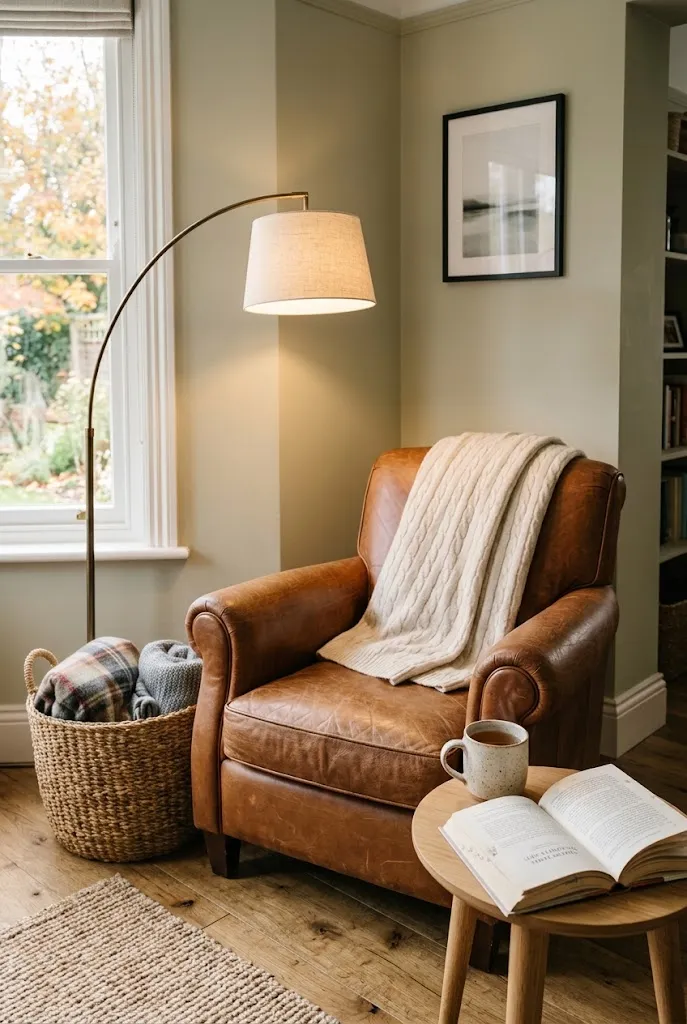
A single corner can change how a whole room feels. Angle a comfortable armchair toward the room, add a slim arc or torchiere floor lamp, and place a small side table within reach for a mug and a book. A basket for blankets tucked beside the chair keeps things handy.
- Choose a corner with some window light if possible.
- Place the chair so you can see the room, not stare at a wall.
- Add a lamp that lights the page without glaring on a screen.
- Finish with a small table, a throw, and one piece of art above.
This works in a bedroom, a living room, or even a wide hallway.
6. Style a Mantel With Layered Art, Candles, and Greenery
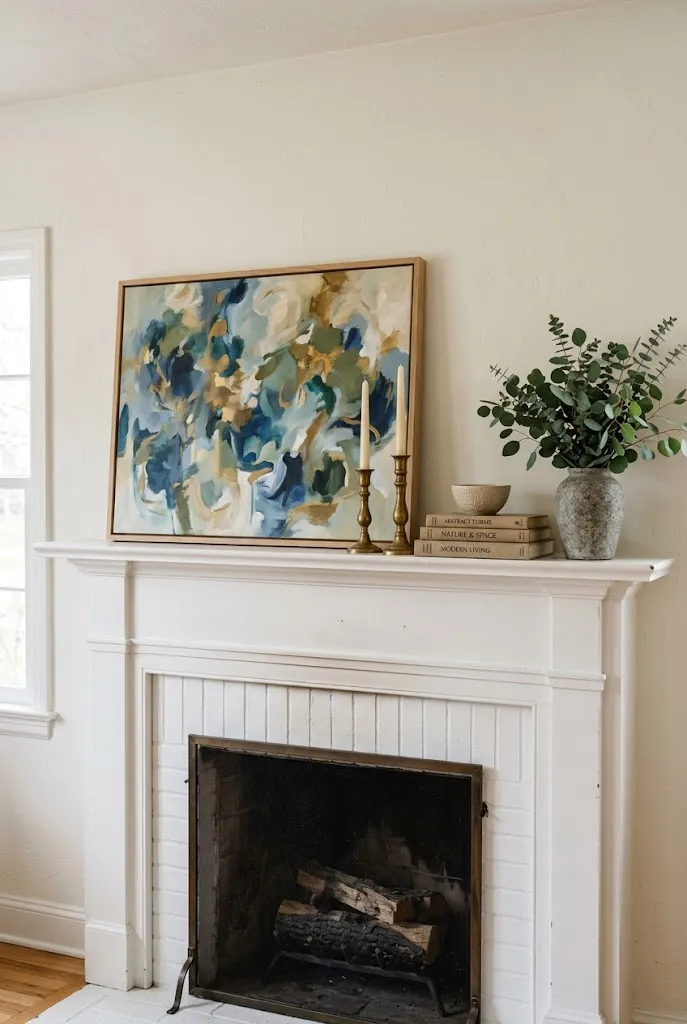
A mantel gives you a natural stage for texture. Lean a large piece of art toward the back, then layer smaller objects in front at different heights: a pair of candlesticks, a ceramic vase, a short stack of books. Add a sprig of eucalyptus or olive branch for a living note.
Asymmetry feels more relaxed than a perfectly mirrored arrangement. Odd numbers of objects generally look more natural, and leaving some empty space lets the display breathe.
Editor’s Note: If you use real candles, keep them well away from art, greenery, and anything flammable, and never leave them burning unattended. Flameless candles are a practical alternative.
7. Add a Wood-Slat Headboard Wall in the Bedroom
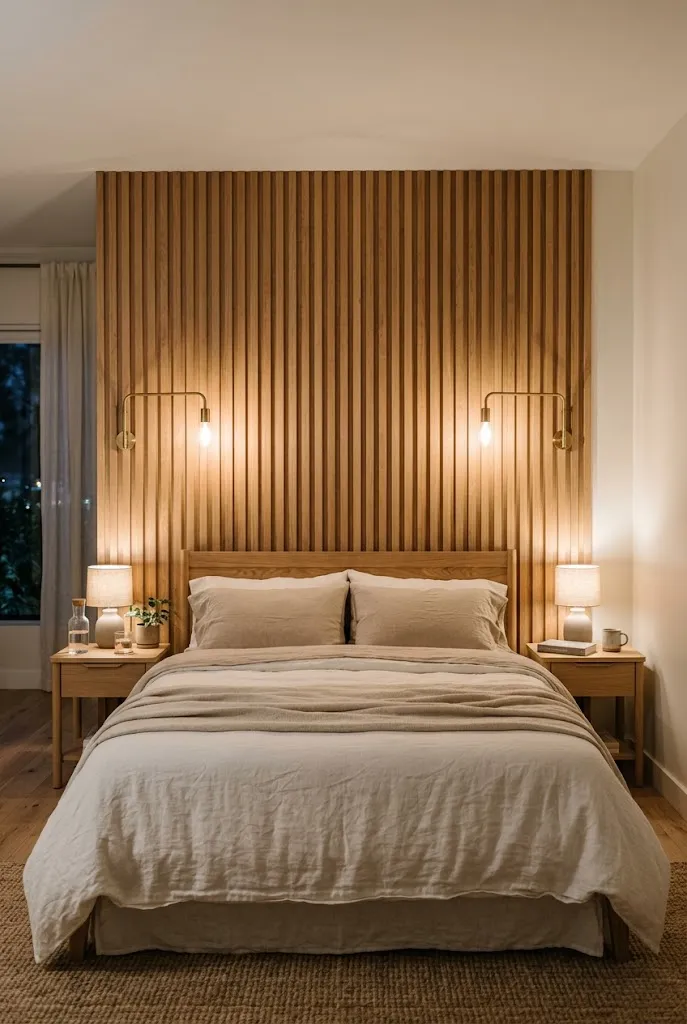
Vertical wood slats bring warmth, rhythm, and a touch of Scandinavian-inspired calm behind a bed. Slats can be real oak or walnut for a higher-end result, or lighter MDF or pine strips painted or stained for a more moderate investment. Peel-and-stick panels exist for renters, though real wood has better depth and shadow.
Keep the slat width and spacing consistent, and extend the panel a bit wider than the bed so it reads as a deliberate feature. Soft bedside lighting skimming the slats makes the texture glow in the evening.
8. Dress the Bed in Layered Linen and Waffle Texture
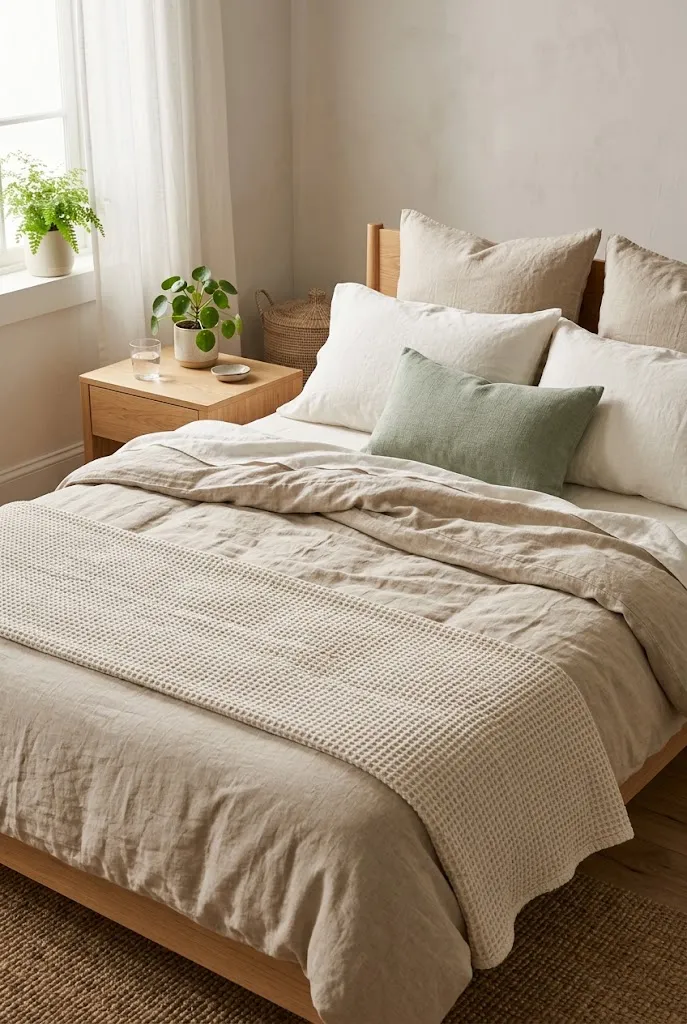
A bed looks inviting when it has a few distinct layers instead of one flat comforter. Start with a fitted sheet and a quilt or duvet in washed linen or cotton. Fold a waffle-weave or knit blanket across the lower third, then add two sleeping pillows, two Euro shams, and one lumbar pillow.
- Stay within two or three related colors, such as ivory, sand, and sage.
- Mix matte and softly textured fabrics rather than shiny ones.
- Choose washable covers for everyday use.
A slightly undone look reads as comfortable. A rigid hotel-perfect finish can feel cold in a home setting.
9. Hang Lined Curtains High and Wide
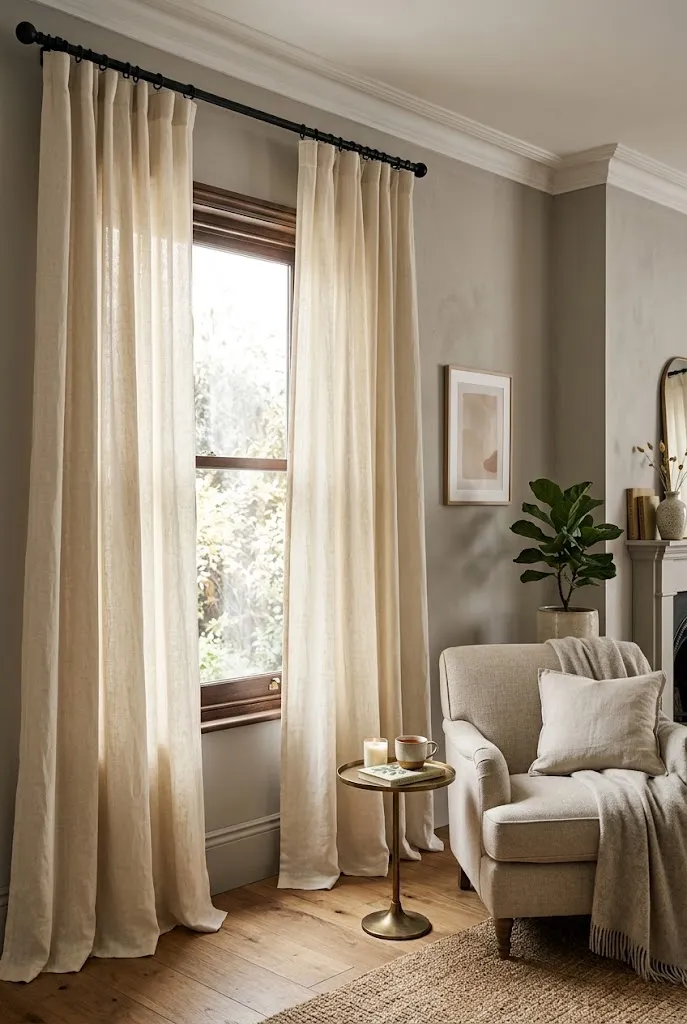
Curtains do more than cover glass. Hung close to the ceiling and extending several inches beyond each side of the window, they make walls look taller and let more light in when open. Lined or interlined panels add insulation and block glare, which helps with both warmth and sleep.
Linen blends soften daylight, while heavier cotton or velvet suits bedrooms and media rooms. Let the panels just brush or lightly touch the floor.
Common Mistake: Mounting the rod right at the window frame, which makes the window look smaller.
Better Approach: Mount it higher and wider, and use curtain panels full enough that they look gathered even when closed.
10. Build a Window Seat With Hidden Storage

A window seat pairs a sunny perch with practical storage. A simple version uses a pair of low cabinets or a custom-built bench along a window wall, topped with a firm cushion and a row of pillows. Drawers or lift-up lids hide blankets, toys, or seasonal items.
For a lower-effort version, a slim upholstered bench in front of a window with a few baskets beneath gives a similar feel. Check that heating vents and radiators aren’t blocked by the seat, and choose a cushion fabric that stands up to sunlight.
11. Warm Up the Kitchen With Open Shelves and Stoneware
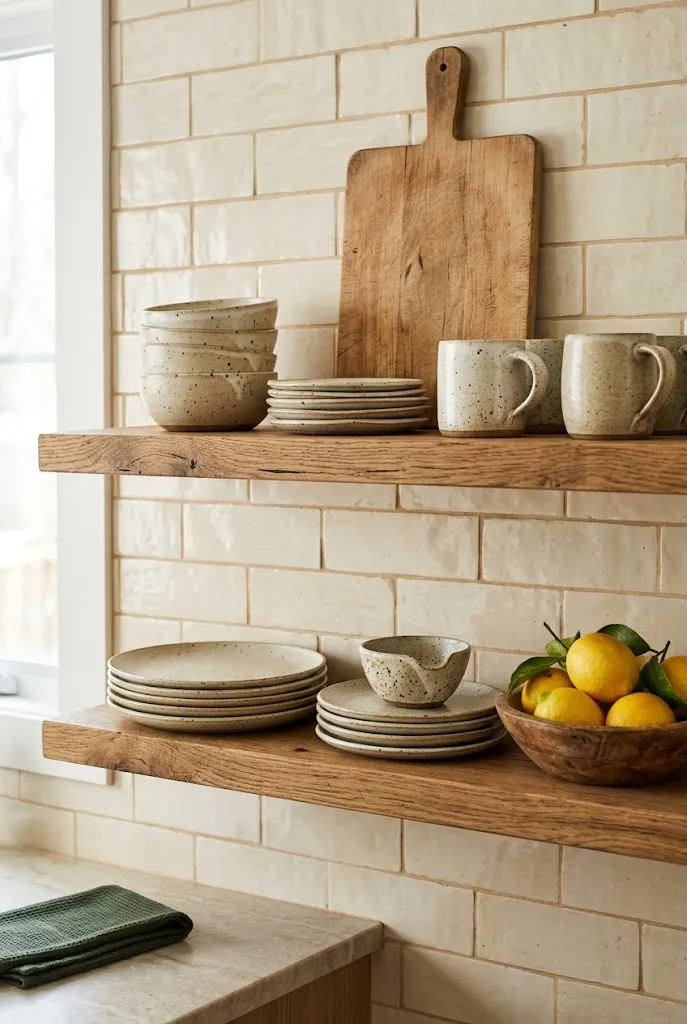
Open shelving works best when it displays things you actually use. Cream, speckled, or earthy-glazed stoneware looks warm and approachable, and a few wooden cutting boards or a bowl of fruit add natural color. Limit yourself to one or two shelves rather than replacing all your cabinets.
Keep items grouped by height and color, and leave breathing room between stacks. Grease and dust collect on open shelves, so reserve them for dishes that get regular use.
12. Add Warm Hardware and a Butcher-Block Island Top
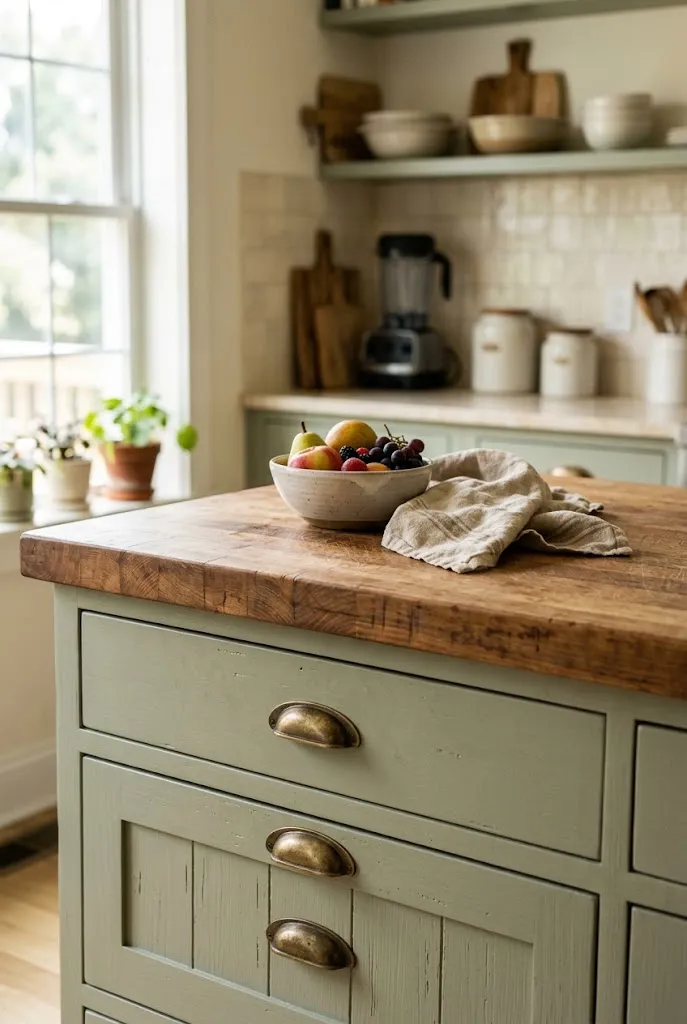
Swapping cold chrome pulls for unlacquered brass, aged bronze, or matte black hardware is one of the easiest ways to change a kitchen’s mood. A wood butcher-block top on an island or a section of counter adds warmth that stone and laminate can’t match.
| Update | Effort | What It Changes |
|---|---|---|
| New cabinet hardware | Low, mostly screwdriver work | Tone and finish detail |
| Butcher-block island top | Moderate | Texture and warmth |
Seal wood properly with a food-safe finish near sinks, and expect to refresh it periodically.
13. Create a Dining Nook With a Round Table and Bench

A round table in a corner feels intimate and makes conversation easier. Pair it with a banquette-style bench along one wall and a couple of chairs on the open side. Bench cushions in a washable performance fabric keep the setup practical for family meals.
Round tables also help with traffic flow in tight spaces because they have no sharp corners to bump into. Hang a pendant lamp low enough over the center to create a glowing, enclosed feeling.
14. Build a Gallery Wall in a Soft, Cohesive Palette
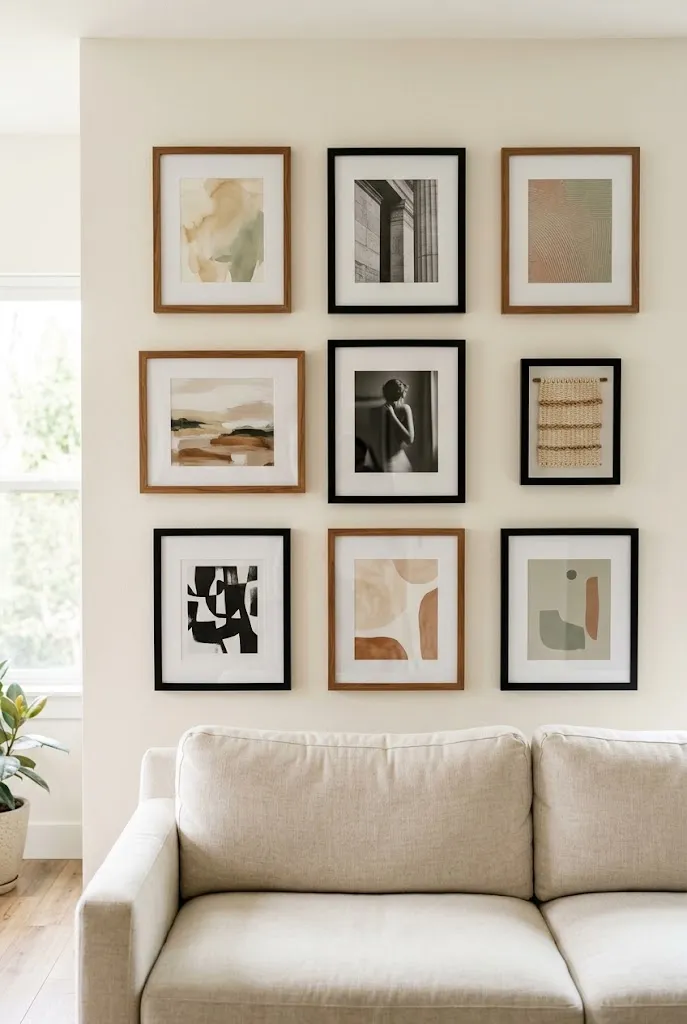
A gallery wall can look cluttered or calm depending on how much it has in common. Choose frames in two finishes at most, such as warm wood and black. Mix art, photography, and a small mirror or woven piece for depth, and keep the images within a related palette.
- Trace each frame on kraft paper and tape the shapes to the wall.
- Rearrange until the spacing feels even, usually 2 to 3 inches between frames.
- Hang the largest piece first, then work outward.
Using paper templates lets renters test the layout before putting any holes in the wall.
15. Group Plants at Mixed Heights

Greenery brings life and softness into a room. Mix a tall floor plant, a medium plant on a stand, and a small trailing pot on a shelf. Varied heights keep the display from looking like a row of identical pots.
- Match the plant to the light you actually have.
- Use ceramic or terracotta pots with drainage and saucers.
- Group pots in odd numbers.
If you aren’t confident with live plants, high-quality faux ones can work in dark corners, though a few real plants usually look more natural.
16. Layer an Entryway With a Bench, Hooks, and Baskets
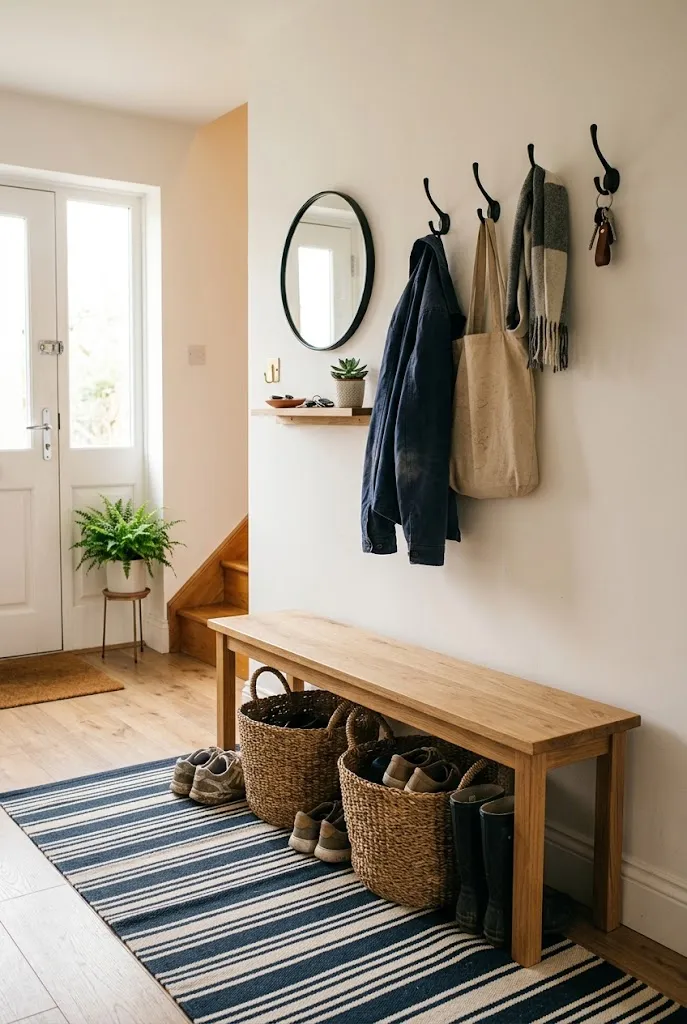
An entry that feels welcoming sets the tone for the whole home. Pair a sturdy bench with a row of wall hooks, a washable runner, and baskets for shoes and accessories. A small mirror above the bench helps reflect light and gives you a last look before heading out.
Keep a shallow dish or tray for keys. The goal is a spot where things land naturally so the rest of the home stays tidy. In narrow entries, choose a bench with a slim profile so doors still swing freely.
17. Turn the Bathroom Into a Calm Spa Corner

Small touches soften a hard-surfaced bathroom. Roll thick cotton towels in a basket or stack them on an open shelf, add a wooden stool or tray beside the tub, and use a ceramic soap dish and cup in the same tone. A small plant, if your bathroom gets some light, adds a natural note.
Consider swapping a stark white shower curtain for a textured waffle or linen-look liner. Candles or a low-wattage lamp-style fixture can help create a calmer atmosphere, as long as you follow bathroom safety guidelines for electrical items.
18. Choose a Warm White With Creamy Undertones
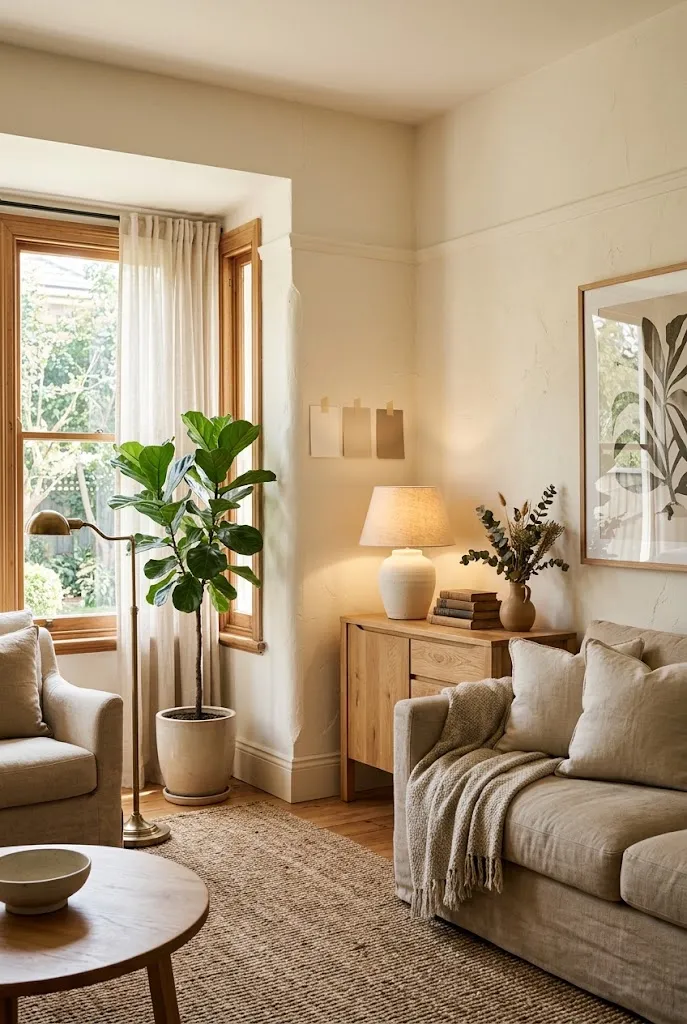
Not all whites feel the same. Bright, blue-leaning whites can look cold, especially in north-facing rooms. A warm white with a creamy or slightly yellow undertone feels softer and flatters wood and fabric.
Quick Facts
Best For: Whole-room repaints, apartments with limited natural light
Investment: Accessible
Visual Effect: Soft, glowing walls that pair well with natural materials
Test two or three samples on different walls, and look at them in morning and evening light before committing.
19. Style a Console With a Ceramic Lamp and Stacked Books

A console table behind a sofa or in a hallway looks inviting with a few well-chosen pieces. Place a ceramic lamp on one side, a low stack of books with a small object on top in the center, and a bowl or tray on the other end. Scale matters here: the lamp should be tall enough to light the surface but not dwarf it.
Try mixing materials, such as glazed ceramic, matte wood, and a bit of metal. Keep the surface from feeling crowded by leaving a small gap between groupings.
20. Bring in a Curved Sofa or Boucle Chair
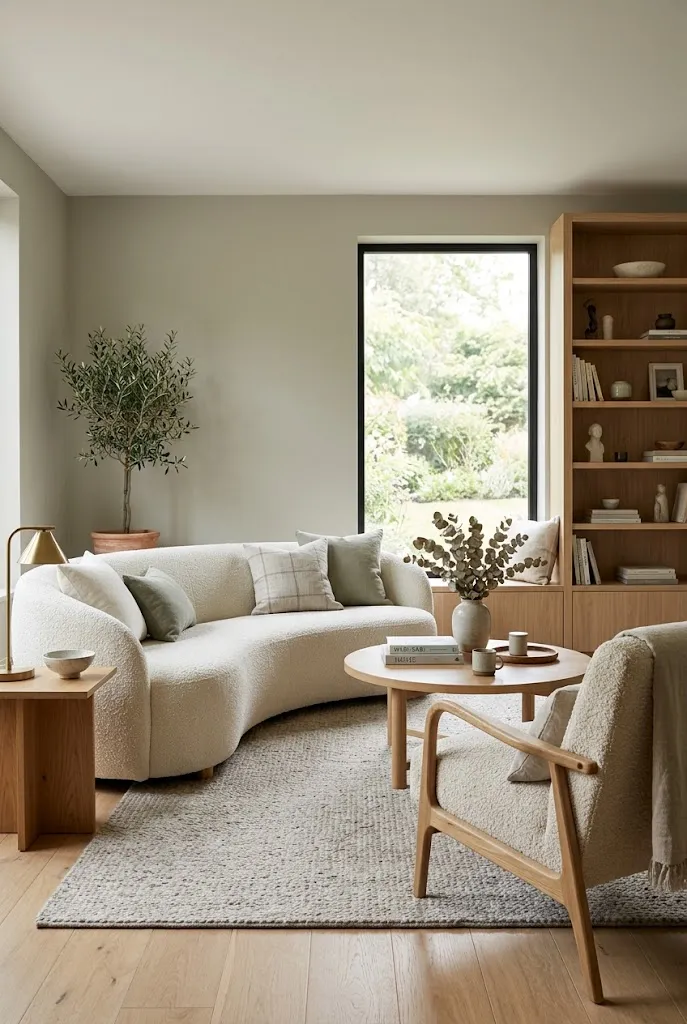
Straight lines and sharp corners can make a room feel rigid. A curved sofa, rounded armchair, or boucle accent chair adds softness and visual comfort. Curves also help guide movement in a tight arrangement.
Boucle looks inviting but can snag or show wear, so check the fabric’s durability if you have pets or kids. A single curved piece is often enough to shift the feeling of a room, particularly when the rest of the furniture is rectangular.
21. Create a Moody Den With Deep Green Walls
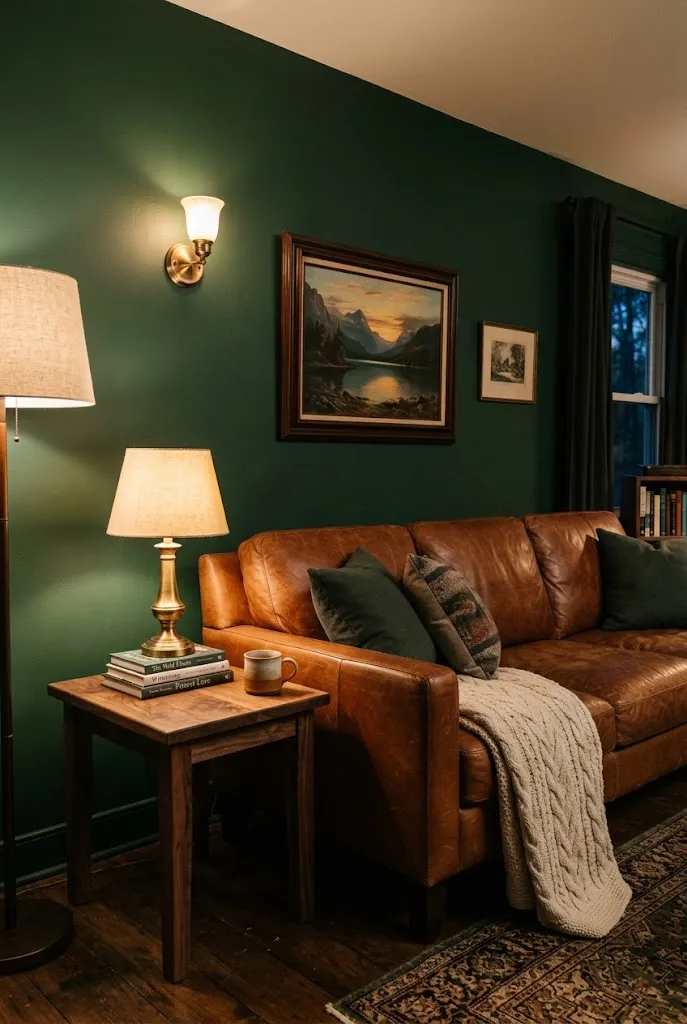
Dark colors can feel cozy in rooms used mainly at night. Deep forest or olive green envelops a space and pairs beautifully with brass, walnut, and cream fabrics. Use it in a den, study, or small media room where the darker tone feels intentional rather than cave-like.
Bring in layered lighting so the room doesn’t feel heavy, with sconces or table lamps at multiple heights. Keep ceilings lighter or painted in the same tone for a fully wrapped look.
Do: Test the shade in your actual light and use plenty of warm bulbs.
Don’t: Use a dark color in a room with almost no light unless you want a deliberately dramatic mood.
22. Set a Candle Tray on the Coffee Table
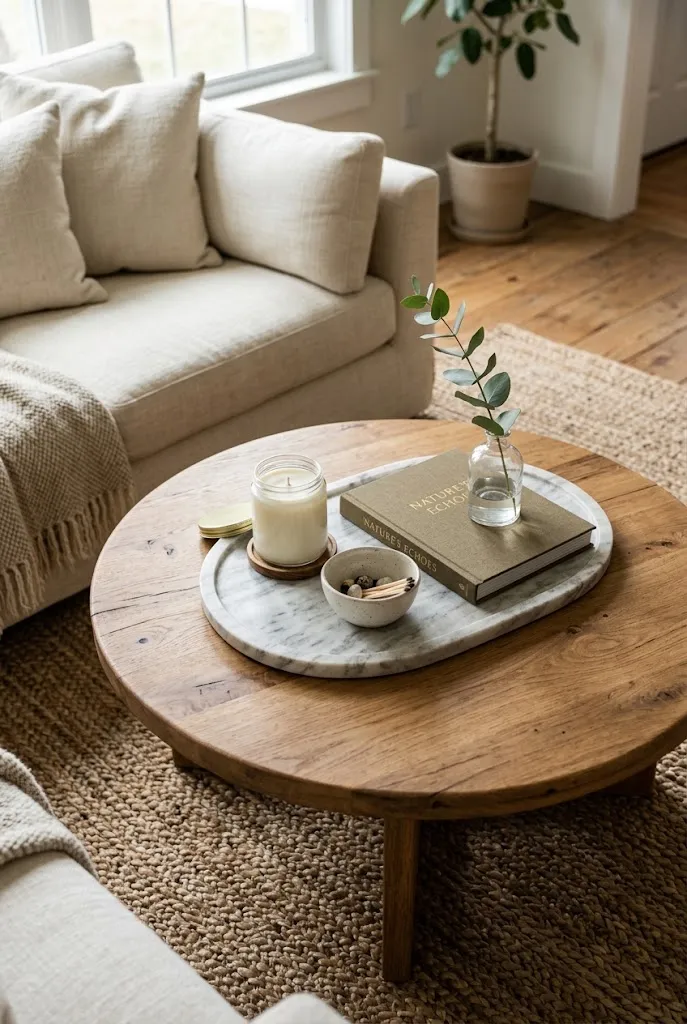
A simple tray corrals objects and gives a coffee table a finished look. Place a wooden or marble tray in the center and arrange a candle, a small bowl, a book, and a bud vase on it. The tray keeps things neat and makes cleanup easy.
Choose a candle in a heavy glass or ceramic container, and pick a scent you enjoy but not so strong it overwhelms the room. Swap the objects by season to keep the arrangement feeling fresh.
23. Hang a Mirror Opposite a Window
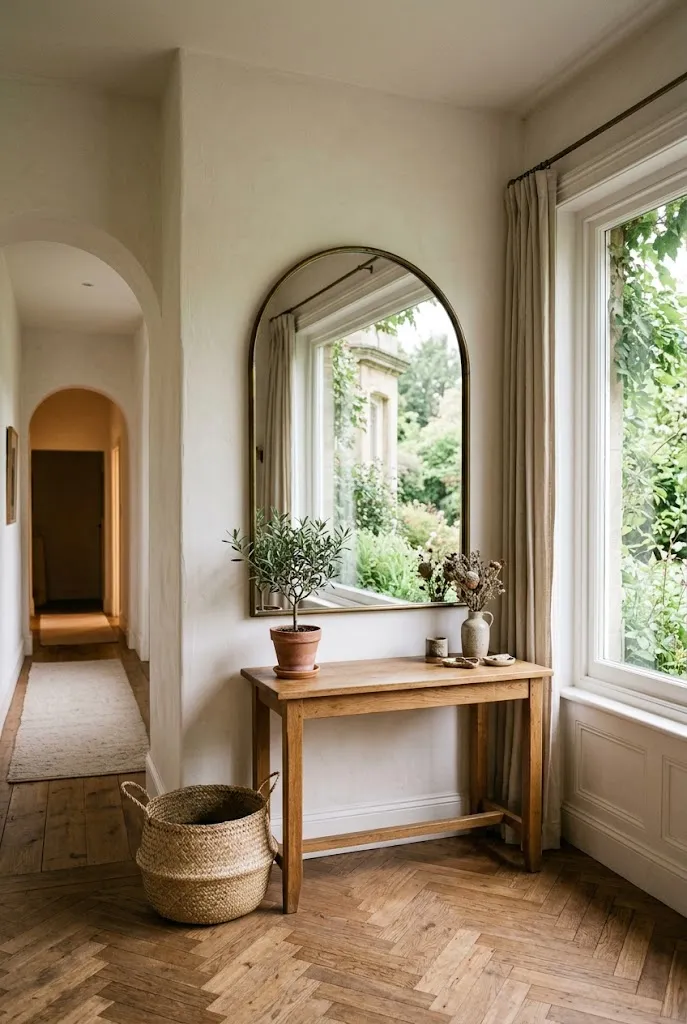
A mirror placed to reflect natural light brightens dim corners and makes a room feel more open. Choose one with a warm frame, such as wood, aged brass, or painted black, rather than a stark white edge. Arched and round mirrors soften square rooms.
Check what the mirror will reflect before hanging it. A view of a pleasant window or lamp is ideal. Reflecting a cluttered corner will only repeat the clutter.
24. Mix Vintage Finds With New Furniture
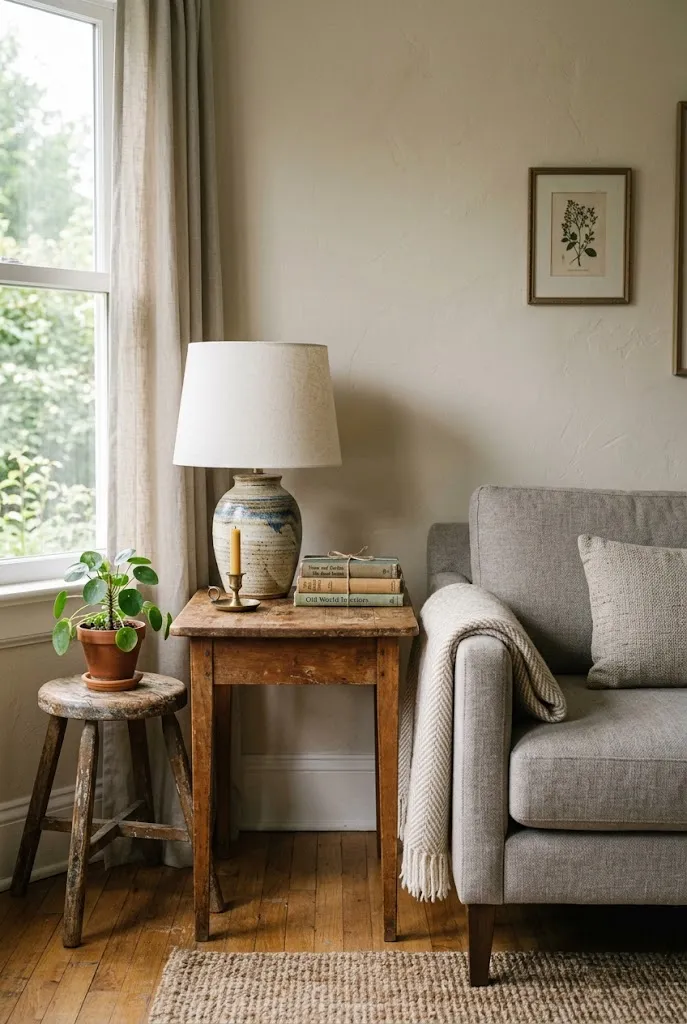
Rooms assembled entirely from one store can feel flat. A vintage side table, a thrifted lamp, or an old wooden stool adds history and character. Secondhand pieces are also a budget-friendly way to find solid wood.
- Look for pieces with good joinery and sturdy construction.
- Repaint or re-stain rather than discard if the finish is tired.
- Balance one or two vintage pieces with simpler new furniture.
The aim is a collected look, not a themed antique shop.
25. Try Limewash-Look Paint for Soft Wall Texture

Limewash-style finishes give walls a gentle, cloudy movement that flat paint lacks. Real limewash is a mineral-based product with its own application technique, while some modern paints imitate the look with brush techniques. Either can create a warm, aged-plaster feel in earthy neutrals or muted greens.
Practice on a spare board first, because brush direction and layering change the final texture. In a rental, check what your lease allows, and consider whether you’d need to repaint when you move out.
26. Use Woven Baskets for Living Room Storage

Baskets make clutter look intentional. Use a large lidded basket for blankets, a shallow one for remotes and magazines, and a tall one for firewood or extra pillows. Natural fibers like seagrass, rattan, and jute add texture without adding visual noise.
Choose a few in similar tones so they don’t compete. Line them with fabric if the weave is rough and might snag throws.
27. Make a Cozy Home Office Corner
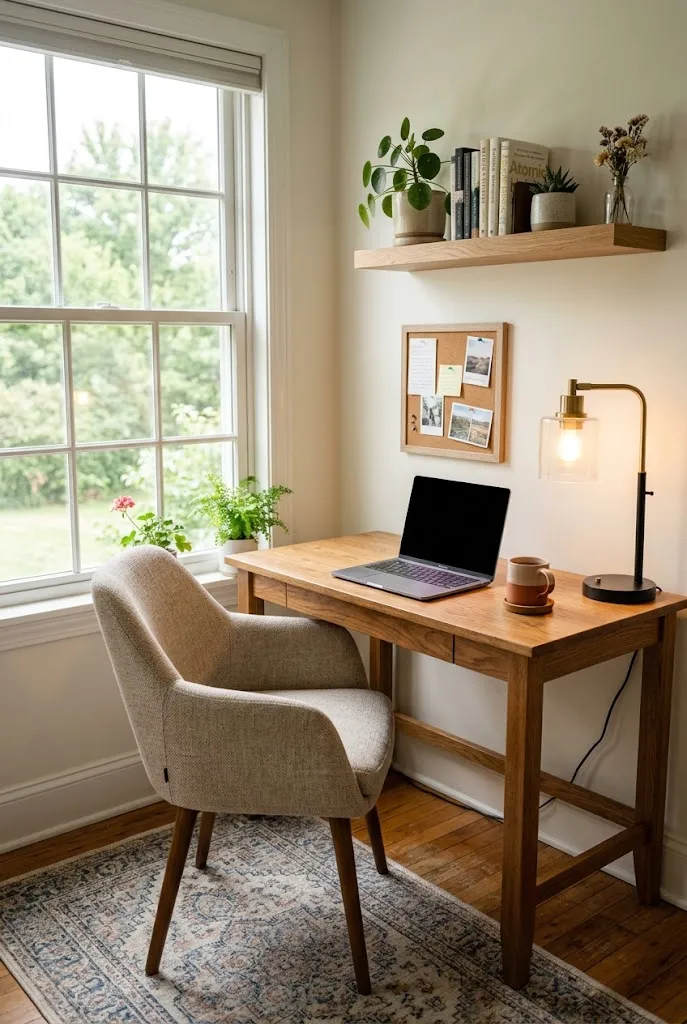
Working from home goes more smoothly when the desk area feels pleasant. Place a wood or warm-toned desk where it gets daylight, add a comfortable chair with good support, and set up a task lamp so you aren’t relying only on overhead lights.
Add a small bulletin board or shelf for personal touches, and keep cables hidden behind the desk. A rug under the chair and a plant nearby help the corner feel part of the room rather than a separate workspace.
28. Add Applied Wall Molding in a Hallway or Dining Room
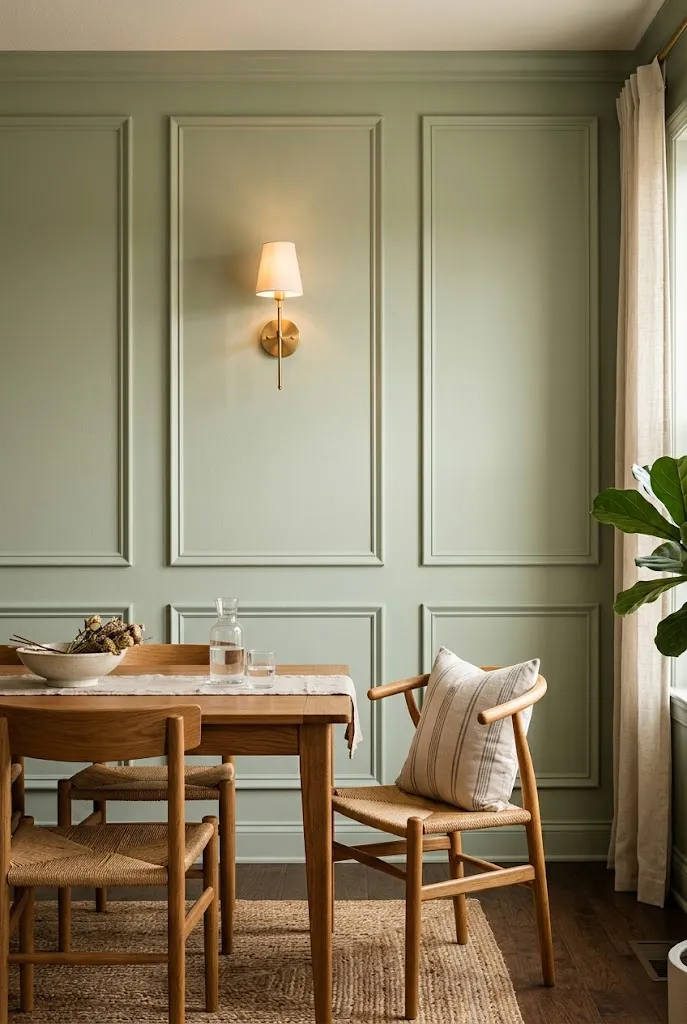
Applied molding, such as board-and-batten or simple picture-frame panels, gives walls depth and a custom feel. Painted in a single color, it adds subtle shadow lines that change throughout the day.
- Measure the wall and plan a balanced layout.
- Install the molding with adhesive and finish nails.
- Fill gaps with caulk, then prime and paint.
Accurate measuring makes the difference between a polished result and a crooked one. Hiring a carpenter is a reasonable choice if you want crisp corners.
29. Set Up a Cozy Balcony or Patio Corner

Outdoor spaces can feel like extra rooms. A weather-resistant outdoor rug, a compact bistro table, and a couple of cushioned chairs create a small retreat. String lights or solar lanterns add glow after dark, and potted herbs or flowers soften the edges.
Choose cushions and fabrics rated for outdoor use, and store them during heavy rain or winter. Check your building’s rules before using candles, hanging items, or any open flame on a balcony.
30. Swap Pillow Covers and Textiles by Season

Changing textiles is the simplest way to refresh a home without buying new furniture. Keep your pillow inserts and change only the covers: lighter linens in spring and summer, wool and velvet in fall and winter. Do the same with throws and table runners.
| Season | Textile Direction | Color Ideas |
|---|---|---|
| Spring/Summer | Cotton, linen, light weaves | Soft whites, sage, sky blue |
| Fall/Winter | Wool, velvet, chunky knit | Rust, forest green, charcoal |
Store off-season covers in breathable bags so they stay fresh.
31. Create a Built-In Look With Bookcases Around a Window
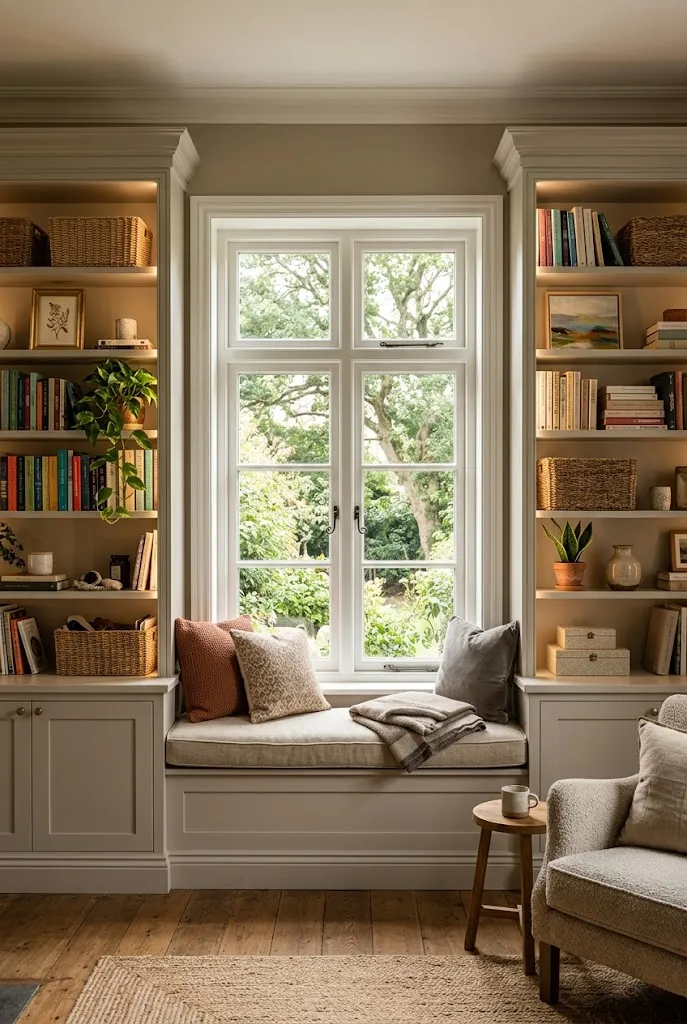
Flanking a window or a fireplace with bookcases adds architectural interest and plenty of storage. A custom built-in is a premium choice, but stock cabinets and shelving units, trimmed out and painted, can give a similar effect at a more moderate investment.
Mix books with baskets, art, and small plants so the shelves feel layered. Lighting inside the shelves, using battery or plug-in LED strips or picture lights, can add warmth after dark. Make sure shelves are anchored securely to the wall.
Making It Feel Like Yours
Don’t try to do all 31 at once. Pick one or two changes that match how you actually use your home, like better lighting in the living room or softer textiles in the bedroom, and live with them for a few weeks. Cozy spaces tend to develop gradually. Swap in secondhand finds, rearrange as seasons change, and keep the pieces that feel good to use every day.