

Most kitchens shift from summer to fall without much change. The counters stay bare, the windows keep their bright light, and the room feels more functional than inviting. A few autumn touches can change that quickly, and you don’t need a remodel or a big budget to do it.
This guide covers 33 fall kitchen decor ideas for different kinds of homes, from a narrow rental galley with one hanging rack to a larger house with a custom walnut island. Some ideas take five minutes and a basket. Others involve lighting, paint, or stone. Each one explains what it does visually, how to make it work in a real kitchen, and where it tends to go wrong. Read the whole list, or jump to the investment level that fits your space and budget.
1. Gourd Trio on a Deep Windowsill

A windowsill beside the sink is one of the easiest places to start, since it already gets good light and sits in your daily routine. Choose three gourds or small pumpkins in different sizes and shapes, such as a squat cream one, a striped green one, and a small burnt-orange one. Group them slightly off-center so the eye moves across the sill rather than stopping in the middle.
A low ceramic dish or wooden tray underneath grounds the display and makes it easy to dust. Keep everything away from the range and direct heat, and check the gourds every week or so. Any soft spot means it’s time to swap that one out.
2. Limewash Plaster Wall Behind a Vintage Hutch
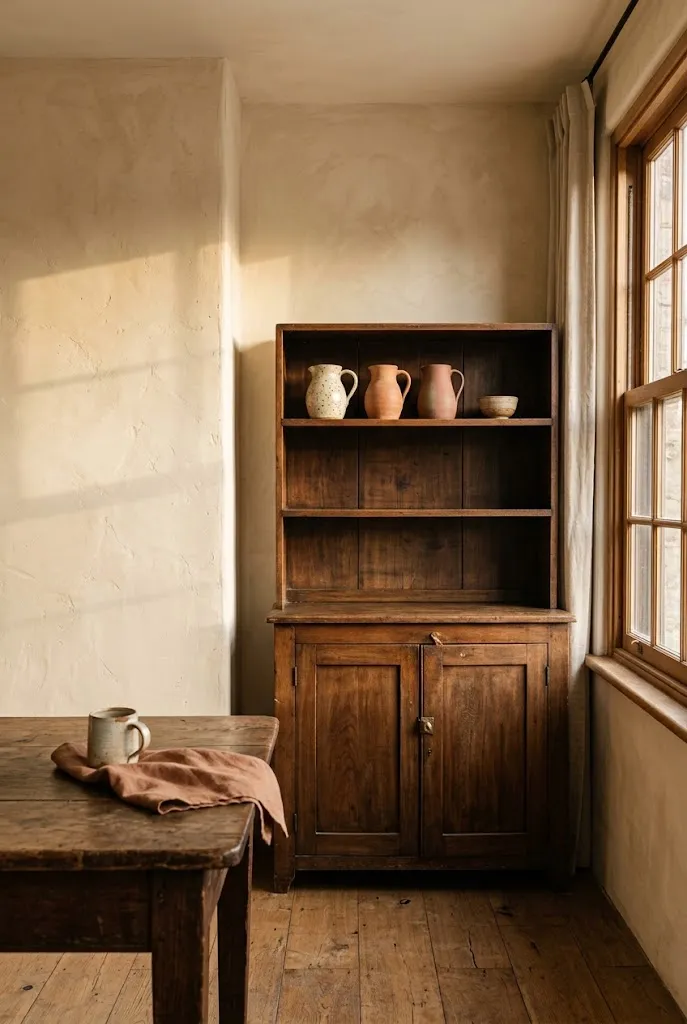
Premium fall style often comes down to surfaces, and a hand-applied limewash wall is one of the most striking. The soft, slightly mottled finish catches light differently throughout the day, giving a plain wall a sense of depth that flat paint rarely matches. Pairing it with a dark walnut hutch adds an older, lived-in character.
Limit the finish to one wall, such as the one behind a dining area, rather than covering every surface. Avoid the zone right beside the range, where splatter is common and an easier-to-clean surface makes more sense. Test a patch first, because the result depends heavily on the base surface and how the finish is applied.
3. Linen Table Runner in Rust and Oat
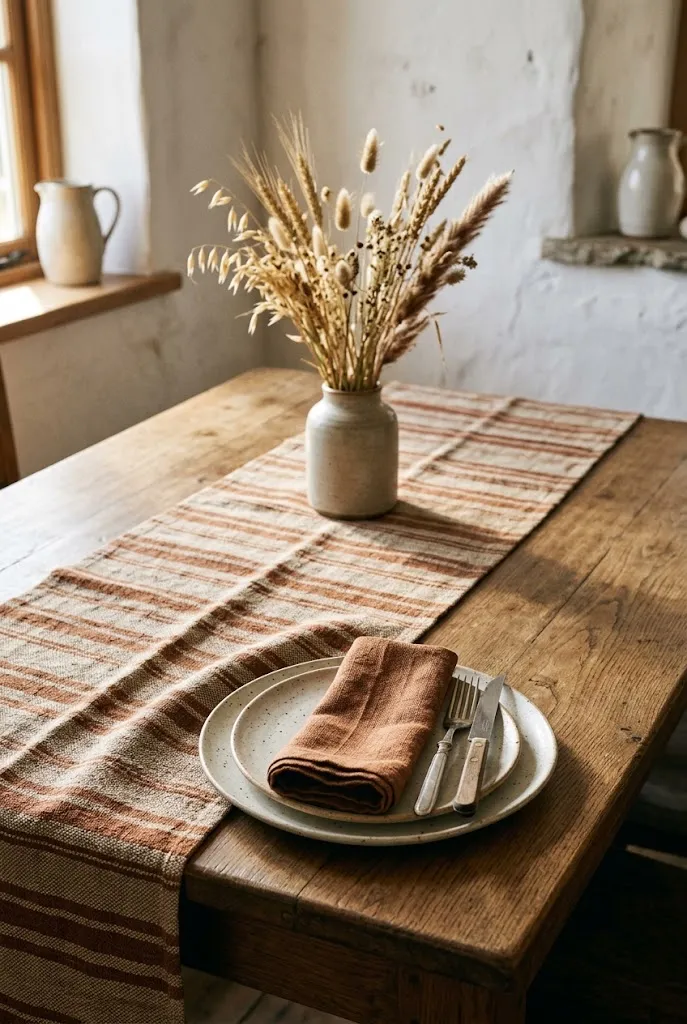
A table runner is one of the quickest ways to change the feel of a kitchen table. Linen in rust and oat reads as warm without competing with the rest of the room. Aim for a runner about a third of the table’s width, long enough to run past the ends of the table slightly. It should sit down the center, leaving room for plates and a single centerpiece on either side.
Linen wrinkles easily, and creases show more in daylight and photographs than most people expect. Smooth it out before you set anything on top.
Quick Tip: Steam or press the runner before setting the table. A smooth runner looks deliberate, while a wrinkled one looks like an afterthought.
4. Warm Bulbs and a Dimmer Switch

Lighting does more for a fall kitchen than almost any object you can add, and it costs far less than most people assume. The color of the bulb changes how wood, linen, and ceramic look in the evening. Warmer bulbs make autumn colors feel rich rather than flat.
| Bulb Color | Look | Best Fit |
|---|---|---|
| 2700K (warm white) | Soft, amber-leaning glow | Dining areas and evening meals |
| 3000K (soft white) | Warm but a little cleaner | General kitchen use |
| 4000K (neutral white) | Brighter, slightly cool | Prep zones and detailed tasks |
A dimmer matters as much as the bulb. Lowering the light in the evening softens the room and makes it feel more settled. Check that the bulbs are labeled dimmable and that the dimmer is compatible with LED bulbs, since mismatches can cause flicker or buzzing.
5. Dried Wheat in a Stoneware Crock

Some of the best fall decor sits in a corner you walk past every day, and a crock of dried wheat is a good fit there. Stalks of wheat or dried grasses in a wide stoneware crock add height and a soft, natural texture to a spot that might otherwise feel empty. Place it beside the back door, near a pantry, or in a corner of the counter that gets little use.
Dried plant material should stay away from the range, heat vents, and direct sunlight, which can fade and dry it further. Trim any broken pieces so the arrangement stays neat.
6. Olive-Painted Lower Cabinets

Painting the lower cabinets olive is one of the strongest ways to bring fall color into a kitchen. It keeps the walls and uppers light while giving the room a grounded, earthy base. This is more involved than painting a wall, so the process matters.
- Clean the cabinet doors and frames thoroughly to remove grease, then sand lightly so the new paint has something to grip.
- Apply a bonding primer and let it cure fully before painting.
- Paint with a cabinet-grade enamel in an olive or deep sage tone, using thin coats and allowing each one to dry between applications.
Keep the hardware consistent with the rest of the kitchen so the color reads as intentional.
7. Hanging Herb and Chili Rack in a Galley Kitchen
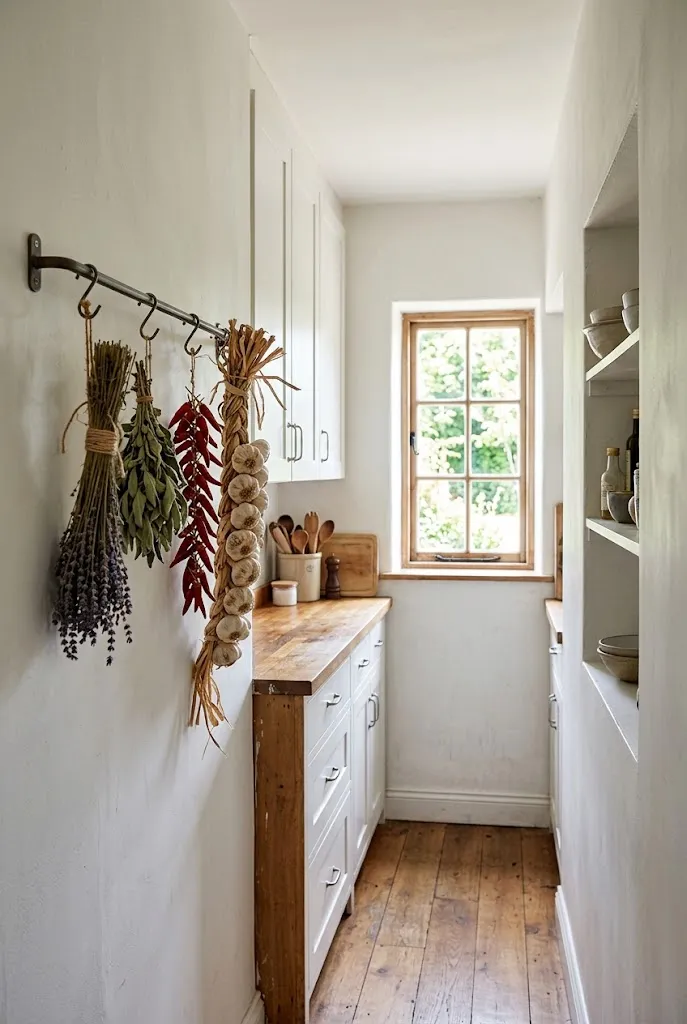
Galley kitchens have very little wall space, so a single well-placed hanging rack can make a big difference. Dried chilies, bay leaves, and a braid of garlic on a narrow metal or wooden rail add color and a sense of a working kitchen without taking up counter space.
This works especially well for renters, since the rack can be mounted on removable adhesive hooks or a tension-style rail. Check the weight rating on any hook before you hang anything, and stick to two or three bunches so the wall doesn’t look cluttered.
Common Mistake: Filling the entire wall with herbs and dried goods. The result looks busy and makes a small kitchen feel smaller.
Better Approach: Use one short rail with a few deliberate pieces, and leave the surrounding wall open so the arrangement can breathe.
8. Burgundy Velvet Dining Chairs

Deep burgundy velvet is a classic fall color, and it looks especially good against warm wood and cream walls. Four chairs in this shade turn a basic dining set into a focal point without changing the table or the layout.
Velvet has a practical side. It shows crumbs and marks more than some fabrics, and it can fade in strong direct sun. Performance velvet is a sensible choice for households with children or pets, since it’s easier to clean.
Do: Choose a performance velvet if the chairs will get daily use.
Don’t: Place them where they’ll sit in direct afternoon sun all day, since prolonged exposure can fade the color.
9. Enamelware Canisters on the Counter

Enamelware in cream and burgundy has a practical, slightly retro appeal that suits fall kitchens well. A small set of canisters lined up near the coffee station or baking area looks intentional and easy to use. Fill them with flour, sugar, dried beans, or coffee so they serve a function as well as a decorative one.
Keep the set to three or four pieces and group them by size, with the tallest at the back. Enamel can chip over time, so store the canisters carefully and avoid stacking them against hard surfaces.
- Flour, sugar, and coffee in matching sizes
- A smaller canister for tea or spices
- A spoon resting on the lid or beside the set
- A small bowl of dried beans for an extra layer of color
10. Built-In Banquette With Wood Paneling

A built-in banquette is a major investment, but it can anchor a breakfast nook in a way few other changes can. Fluted or vertical wood paneling behind the seat adds texture and depth, and warm cushions in autumn tones complete the look. The effect is architectural, with the room’s proportions shaping the design.
The main consideration is scale. A banquette needs enough open floor space to pull out a chair and walk past it comfortably. Measure the nook carefully, and plan the table size around the seat rather than the other way around.
Editor’s Note: Built-in seating often looks best when the table is slightly smaller than the bench would suggest. A bench that is too long for the table makes the nook feel crowded.
11. Rust and Mustard Tea Towels on the Oven Handle

Some of the simplest changes are the ones you use every day. Draping two striped tea towels in rust and mustard over the oven handle puts fall color right where you work, and it costs almost nothing. Cotton towels with a flat weave hang neatly and look more intentional than thick, bulky terrycloth.
Quick Tip: Hang the towels so the ends don’t dangle over the burners or the oven vent. Keep them clear of any open flame.
12. Bronze Cabinet Pulls

Swapping cabinet hardware is one of the most effective ways to update a kitchen without painting or remodeling. Bronze pulls warm up cream and white cabinets and pair naturally with fall palettes. Choose a finish that suits the rest of the room, whether that’s a brushed bronze for a relaxed look or a more polished one for a formal kitchen.
Common Mistake: Buying pulls without checking the hole spacing. Replacement hardware that doesn’t match the existing holes can mean drilling new ones or leaving unsightly marks.
Better Approach: Measure the center-to-center distance between the existing holes before you shop. Many bronze pulls are sold by this measurement.
13. Apple Basket Beside a Kitchen Island

A shallow wooden basket of apples on the end of a kitchen island is a simple, familiar fall image that works in nearly any home. It’s also practical, since the apples are easy to grab for a snack. Mix red, green, and yellow varieties for color, and rotate the basket regularly so the fruit doesn’t sit too long.
Keep the basket away from the stove and sunny windows, where fruit ripens faster. Remove any bruised pieces promptly so the rest stays fresh.
14. Custom Walnut Island With Hidden Pot Storage
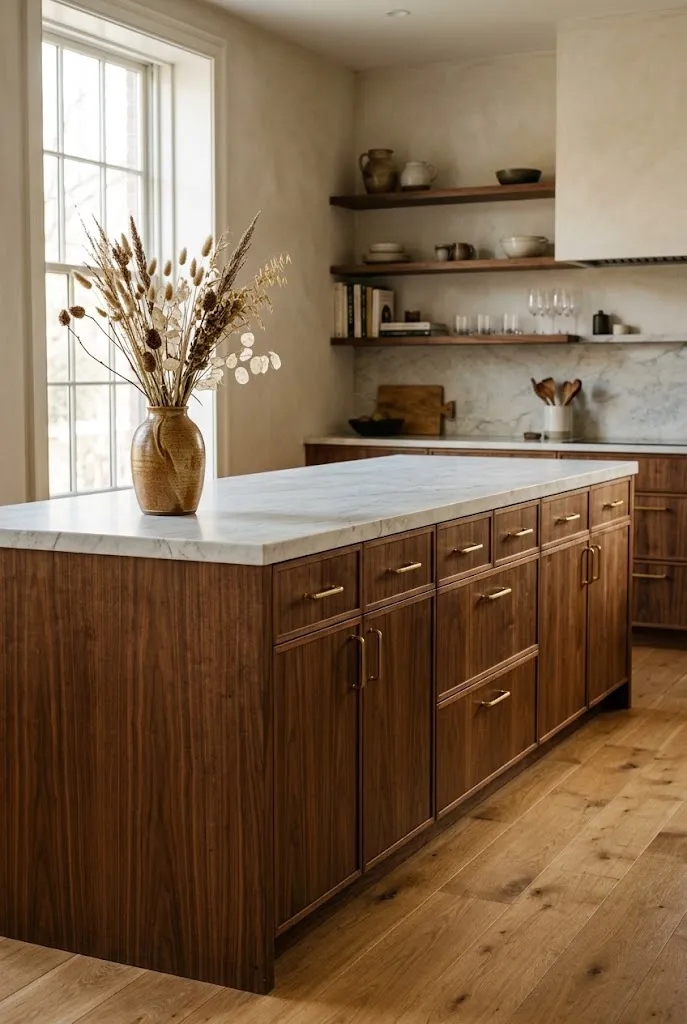
A custom island built from walnut brings warmth and craftsmanship to a kitchen in a way that feels generous and calm. The wood’s deep, chocolate tones suit fall palettes, and the grain adds visual interest without needing much decor. Custom islands can include drawers and cabinets sized specifically for pots, pans, and small appliances, which keeps the top clear.
Before committing to a custom design, consider walkways. Most kitchen planners aim for generous clearance on each side of an island, so measure the room carefully and confirm the layout with a qualified designer or builder.
Use the island surface with restraint. A single ceramic vase or a stack of cutting boards is often enough to show off the wood.
15. Woven Placemats and Rattan Chargers
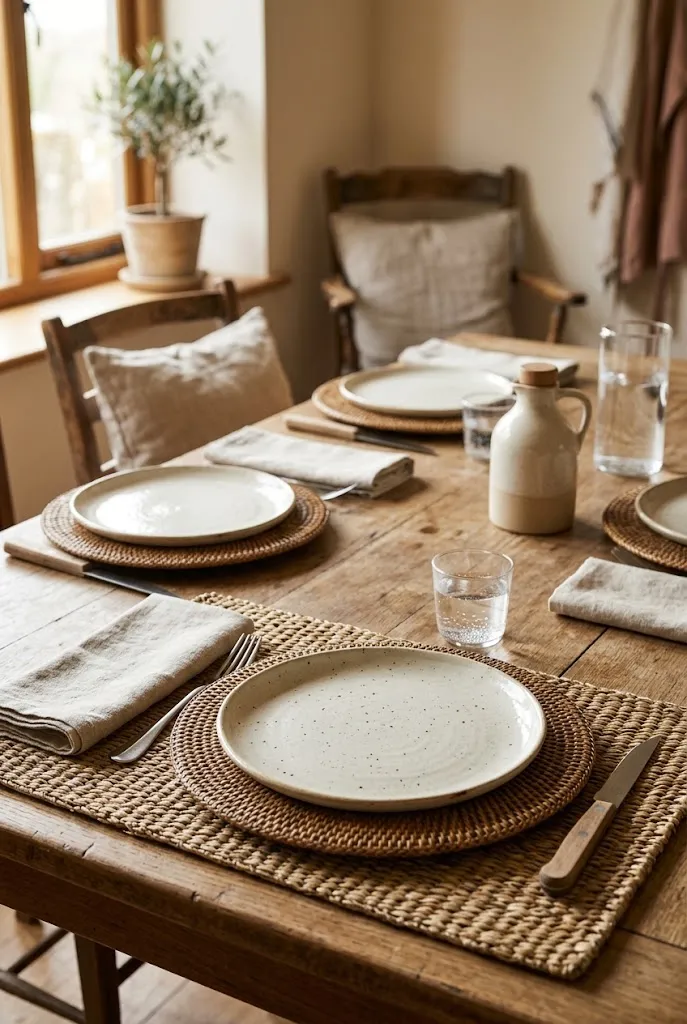
Woven placemats and rattan chargers set a relaxed, natural tone for a fall dinner. They add texture to the table without adding color overload, which makes them a good choice when you want the setting to feel inviting but not formal. Layer a cream or speckled plate on top of the charger for depth.
Natural fibers can stain or fray with heavy use, so wipe them after meals and store them flat. A set of four is enough for most tables.
16. Washable Vintage-Style Runner Rug
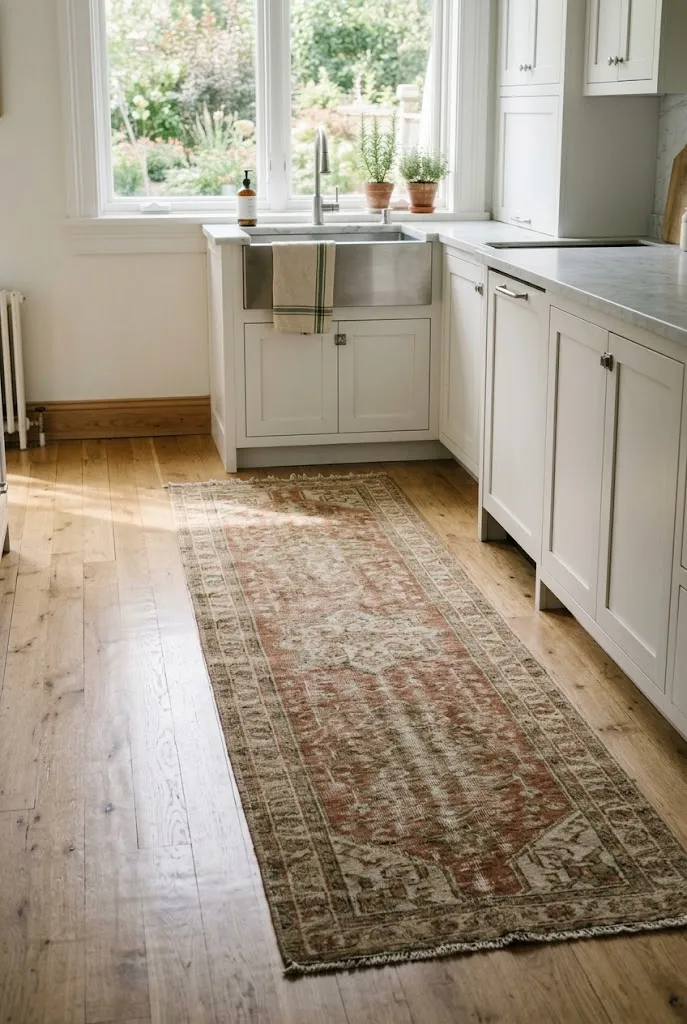
A runner rug in the kitchen adds color and softness underfoot, and it’s an accessible way to bring in pattern. Choose a vintage-style design in rust, cream, and deep green, and look for one labeled machine washable, since kitchen floors collect spills and dust. Place a non-slip rug pad underneath to keep it from shifting.
A runner works best along a walkway, such as between the sink and the range or in front of a counter. Make sure it doesn’t block the path of an open dishwasher or oven door.
17. Chrysanthemums in a Speckled Pitcher
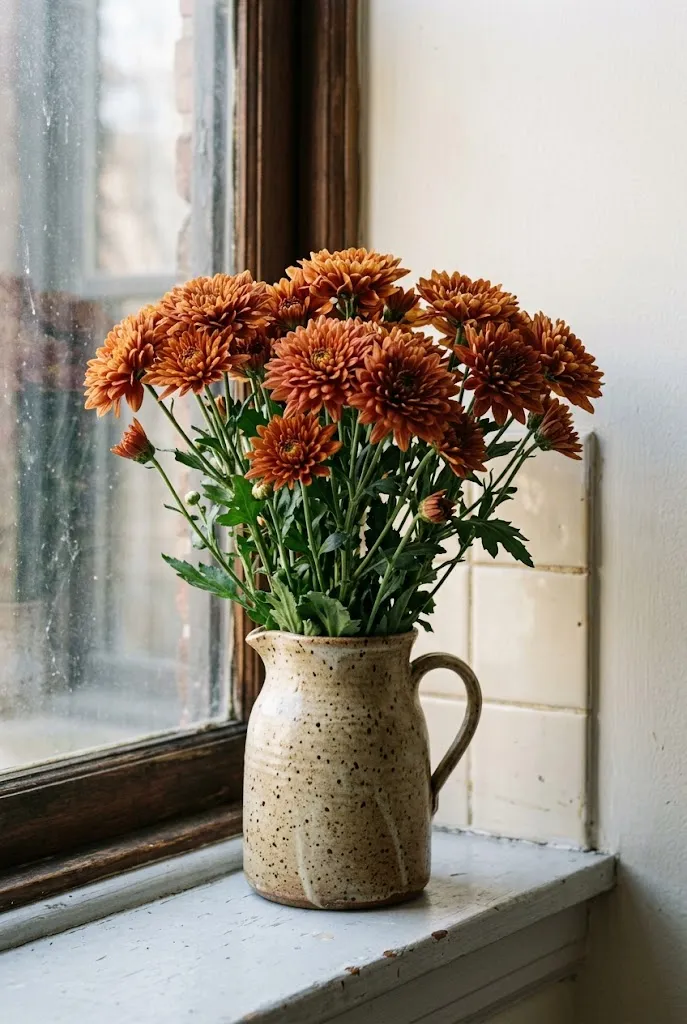
Potted or cut chrysanthemums in bronze, rust, and cream are one of the most recognizable fall flowers, and they work well on a small window ledge. Choose a speckled stoneware pitcher or a simple glass jug, which suits the casual feel of a kitchen better than a formal vase.
Place the flowers away from the range and direct heat, since warmth can shorten their life. Fresh water every few days keeps them looking their best.
18. Pantry Shelves Styled With Matching Baskets

A pantry with open or semi-open shelving can look as thoughtfully designed as any part of the kitchen. Matching baskets in natural wicker or seagrass create a calm rhythm, and they make it easy to group everyday items like dried goods, snacks, and baking supplies.
The key is consistency. Use baskets of two or three sizes, and keep the labels and packaging you can see as uniform as possible. Mixed containers can look cluttered quickly.
- Use baskets in two or three sizes for variety without chaos
- Keep the tallest items at the back and smaller baskets in front
- Leave some open space on each shelf so the arrangement reads as deliberate
19. Open Shelving With a Sage-and-Clay Dish Stack
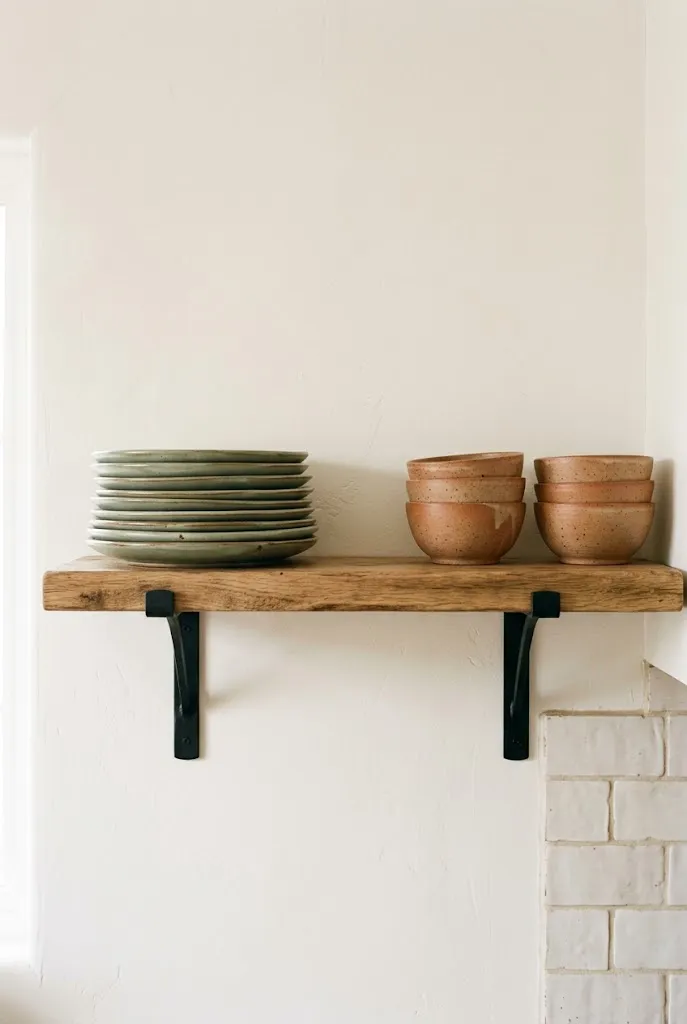
Open shelving is one of the most visual storage choices in a kitchen, and it suits fall well when the dishes have earthy tones. Sage green and clay-colored earthenware plates and bowls stacked by size create a calm, collected look. The shelves themselves can stay simple, such as a single board on brackets.
Stack the dishes by size, with the largest at the bottom, so they don’t look like they’re falling over. Only display pieces you use often, since open shelves show everything.
Quick Tip: Keep one or two empty spaces on each shelf. Filling every inch makes the wall look busy, even if the dishes are attractive.
20. Ochre Handmade Tile Backsplash
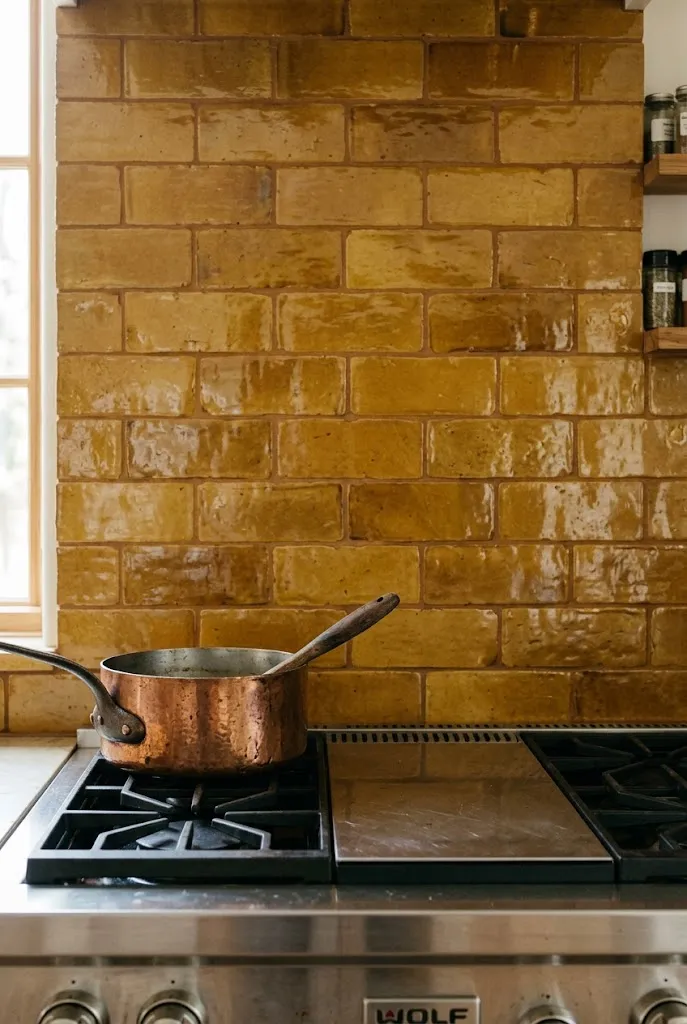
A handmade tile backsplash in ochre brings a warm, collected quality to a kitchen. Each tile has slight variation in glaze and shape, so the wall looks rich and layered rather than uniform. Ochre sits comfortably between mustard and clay, which makes it a strong fall color.
Plan the layout before installing. Handmade tiles often vary in size, so a dry layout on the floor helps avoid awkward cuts near the range or outlets. Ask your installer about the right sealer and grout for the specific tile, since handmade pieces can differ from factory-made ones.
Editor’s Note: Choose a grout color that matches the tile rather than contrasting with it. A contrasting grout can make the handmade irregularities look busier than they are.
21. Pillar Candles on a Wood Tray
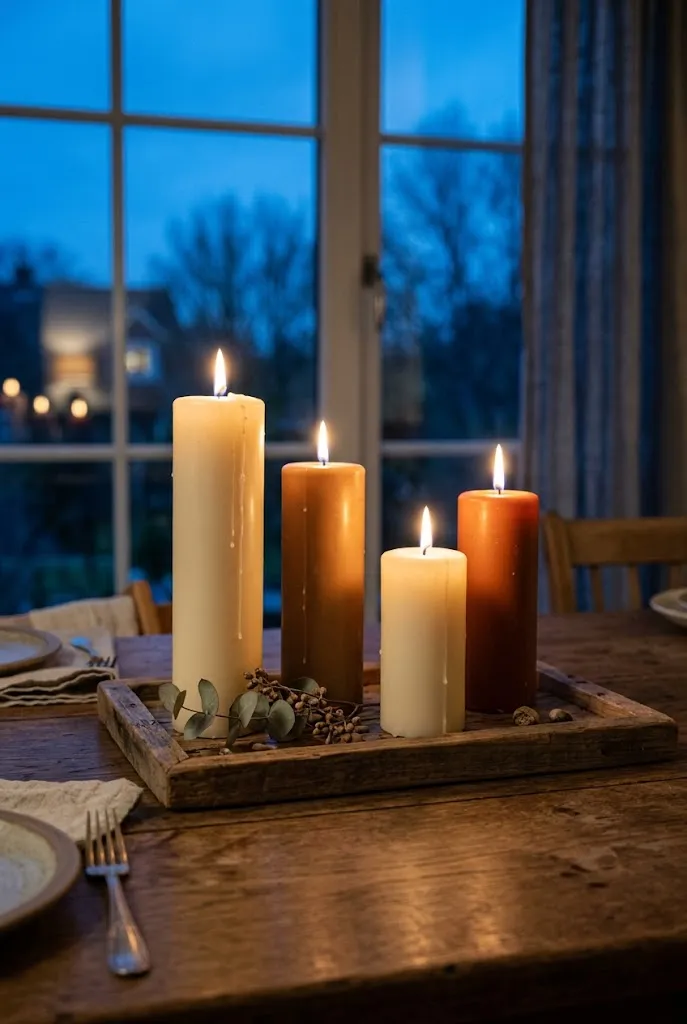
Candles are one of the most effective ways to make a kitchen feel warm in the evening, and a wood tray keeps them grouped and easy to move. Use three or four pillar candles of different heights in cream, brown, or muted orange. Group them off-center on the table or a counter, and leave enough space around each one.
Never leave a lit candle unattended, and keep candles well away from curtains, paper, and open shelves. If you have children or pets, flameless LED candles are a practical alternative that still look warm.
Quick Tip: Trim the wick to about a quarter inch before lighting. A shorter wick burns more evenly and produces less soot.
22. Linen Roman Shade in Warm Tan

A kitchen window can use the same fall palette as the rest of the room. A linen Roman shade in warm tan softens the light and adds a clean, tailored finish without the bulk of heavy drapery. Linen has a natural texture that looks good in a kitchen, and the shade folds up neatly when you want the view.
The fabric you choose changes how much light comes through and how private the room feels.
| Fabric Type | Light Effect | Best Fit |
|---|---|---|
| Light-filtering linen | Soft glow, some visibility | Kitchens that need daylight |
| Room-darkening weave | Dimmer room, more privacy | Rooms with strong morning sun |
| Blackout lining | Blocks nearly all light | Bedrooms or media spaces |
Measure the window carefully, and decide whether the shade should sit inside the frame or outside it. Inside mounts show more of the fabric, while outside mounts can make a window look larger.
23. Wooden Breadbox and Cinnamon Loaves
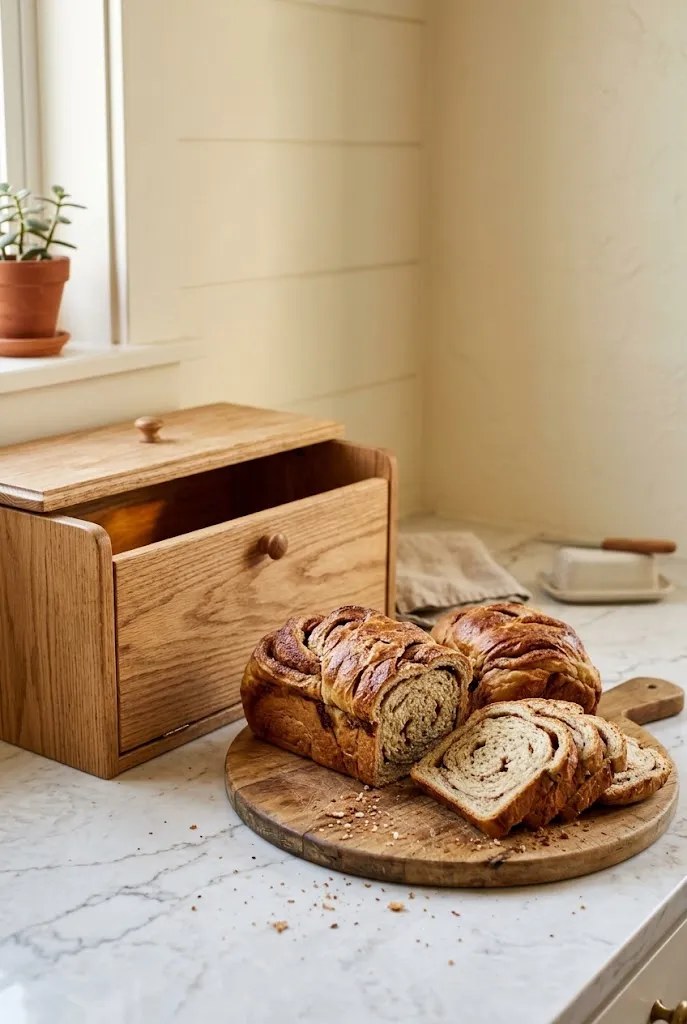
A wooden breadbox on the counter is both useful and decorative, especially when it holds a loaf of spiced or cinnamon bread in fall. It keeps bread fresher than leaving it out in the open, and an open lid gives the counter a homey, inviting look.
Choose a breadbox with a solid wood finish that matches your cabinets or cutting boards, and place it away from the range and direct sunlight, which can dry bread out faster.
24. Aged Brass Sconces Flanking the Range

Aged brass sconces on either side of the range add warmth and a touch of traditional character. They light the cooking area well and frame the range as a focal point. Choose sconces with a finish that matches the other metal in the kitchen, such as the faucet or cabinet pulls, so the room feels cohesive.
Installing sconces typically requires an electrician, especially if there’s no existing wiring at the wall. Check the fixture’s height and clearance from the range hood before buying.
25. Cast-Iron Skillet on a Wood Trivet
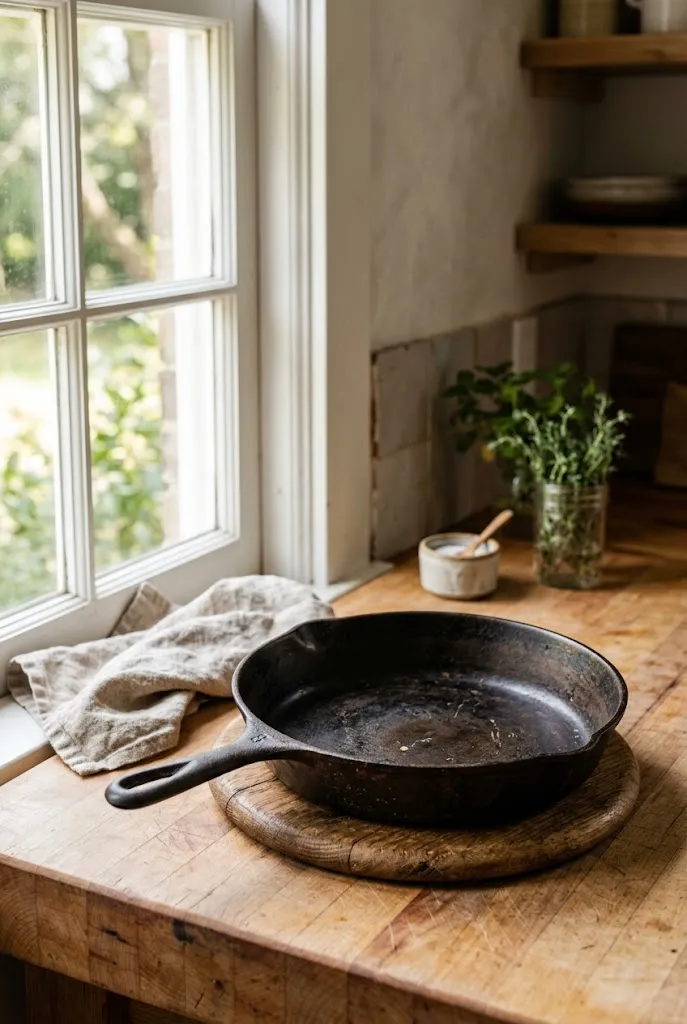
A cast-iron skillet on a wood trivet is a practical display that looks natural in a fall kitchen. The dark iron and warm wood create strong contrast, and the piece looks like it belongs on the stove rather than being staged there. Choose a trivet with a thick base so it protects the counter and adds visual weight.
Cast iron stays hot for a long time after cooking, so keep the trivet and skillet clear of children and anyone who might grab it without thinking.
26. Plaid Napkin Rings and Linen Napkins
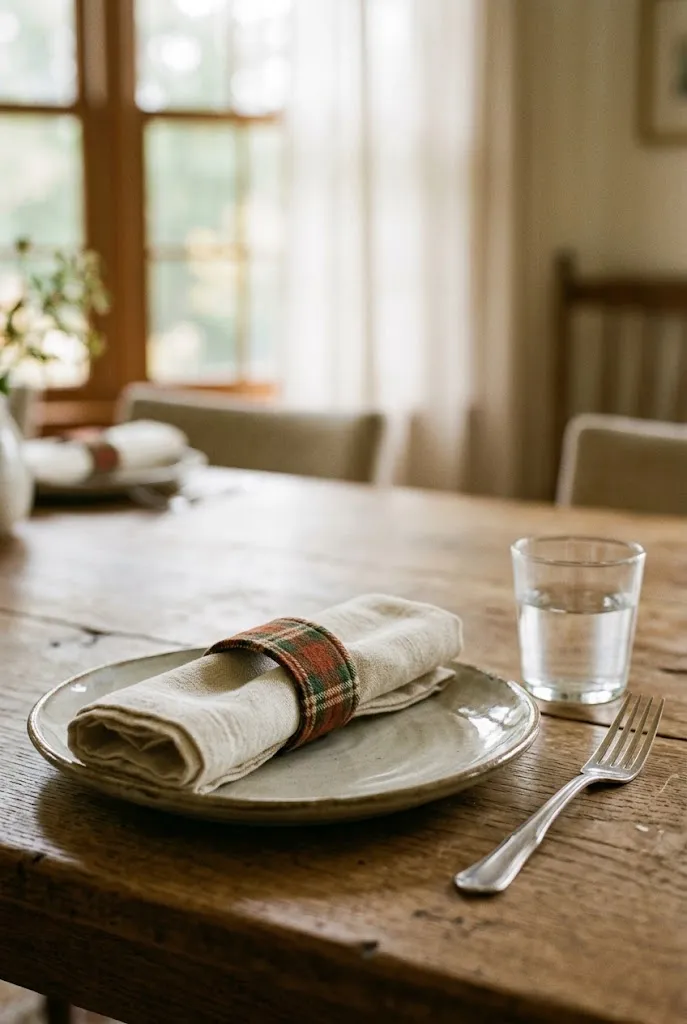
Small details on the table often say the most about a meal. Plaid napkin rings in rust and forest green, paired with plain linen napkins, add pattern and warmth without overwhelming the place setting. The rings are easy to store and can be swapped out seasonally.
Roll or fold the napkins loosely so they hold their shape without looking stiff. Tie or slide the rings on just before guests sit down, so the setting stays neat.
27. Plate Rack With Heirloom-Style Stoneware
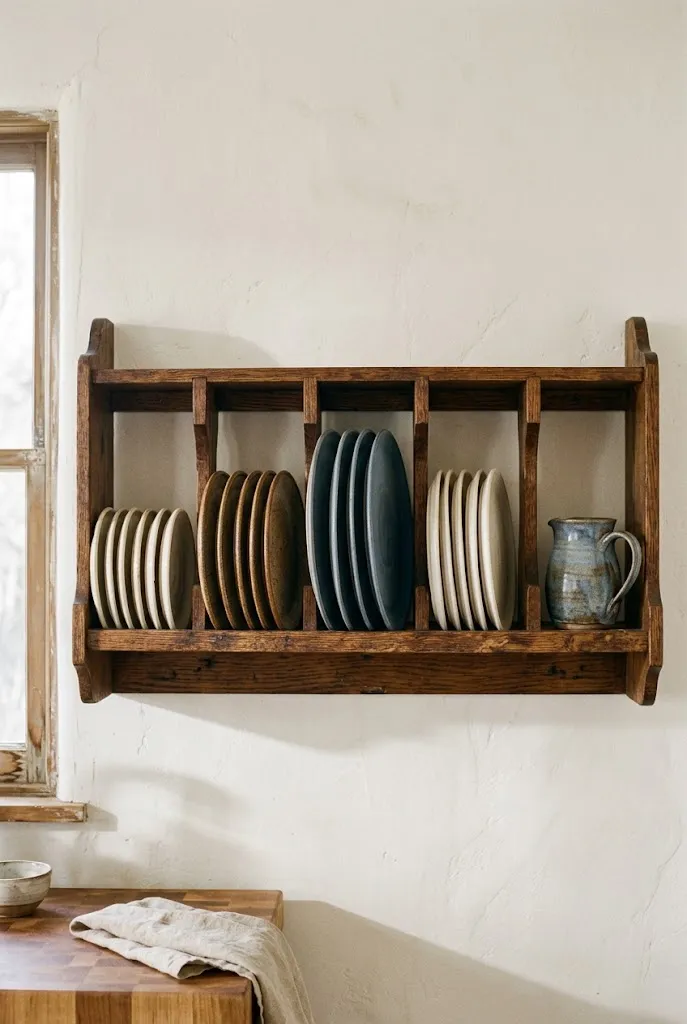
An open wall plate rack lets you display stoneware as part of the room’s design. Heirloom-style pieces in cream, brown, and blue-gray look good stacked on a simple rack. It works especially well in a kitchen with a wall that doesn’t have much other decoration.
Common Mistake: Overcrowding the rack with too many pieces, which makes the wall look like a storage shelf.
Better Approach: Use three or four stacks of two or three plates each, with a bowl or pitcher at one end. The spacing lets each piece register visually.
Confirm the rack is securely mounted into studs or rated for the weight of the dishes.
28. Cookbook Stand With a Wooden Spoon
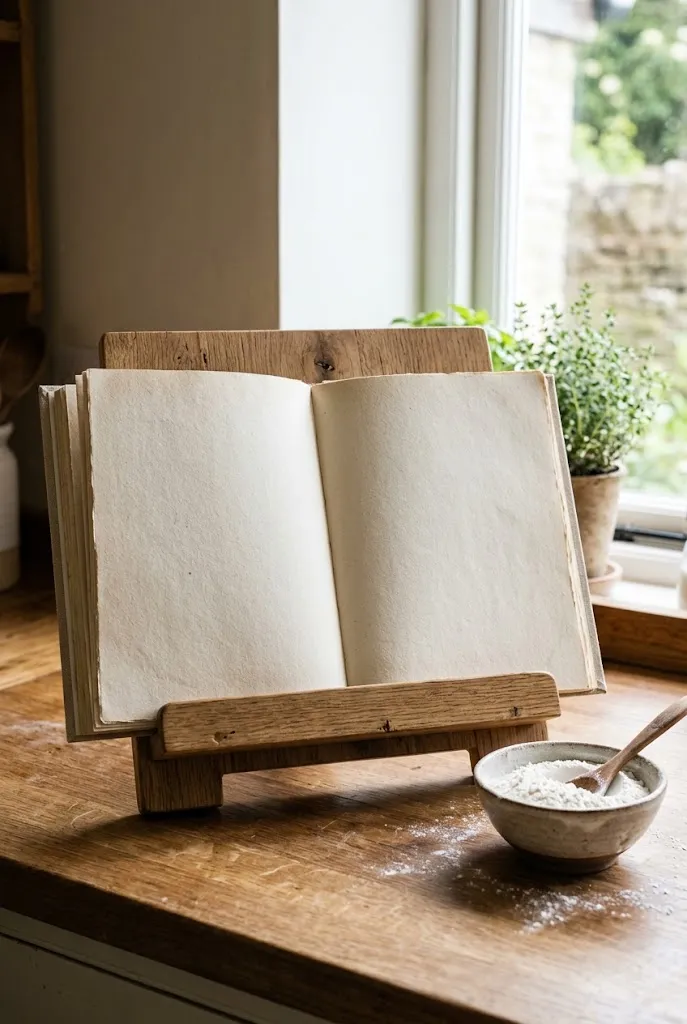
A cookbook stand on the counter gives a recipe a place to rest, and it doubles as a small decorative moment. Choose a stand with a clean, simple design in wood or metal, and open a favorite cookbook to a recipe you plan to make that week. A wooden spoon resting beside it adds a practical, lived-in touch.
Position the stand away from splatter, especially near the stove or sink, so the pages stay clean.
29. Pear and Candle Centerpiece on a Round Table
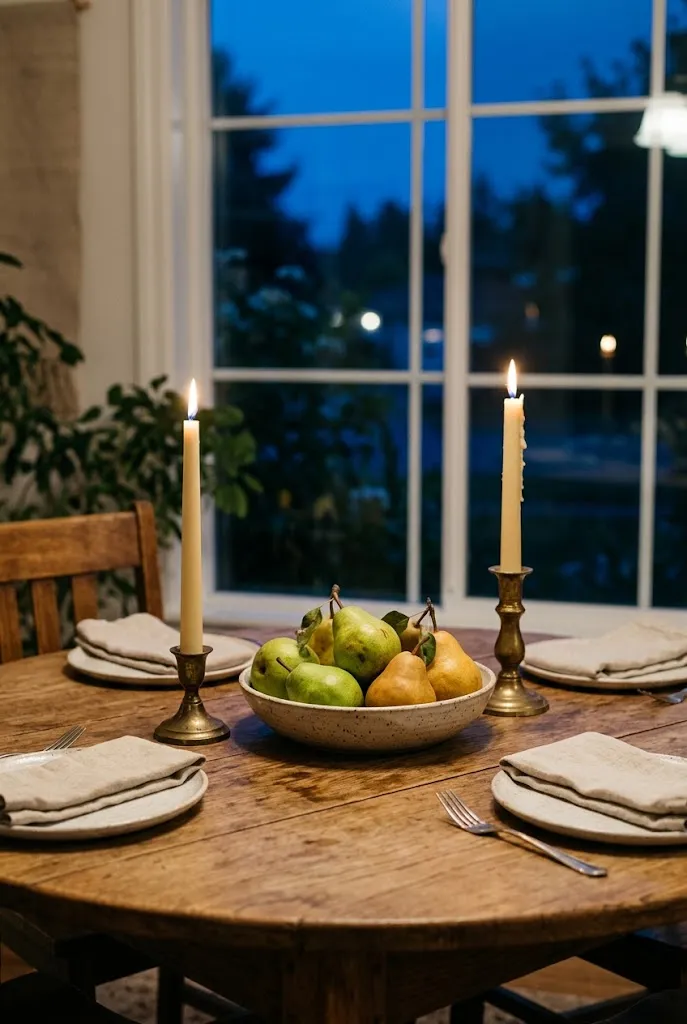
A round table benefits from a centerpiece that’s low enough not to block conversation. A simple arrangement of pears in a shallow bowl, paired with two or three taper candles, creates a soft, seasonal focal point. The round shape suits this kind of grouping, since no single side dominates.
Use fruit that’s firm and free of bruises, and keep candles at a height where guests can see across the table. Arrange the pears in a loose cluster rather than a tight pile.
30. Glass-Front Cabinet With Amber Glassware

A glass-front cabinet filled with amber and smoky glassware gives the kitchen a layered, collected look. Light passes through the glass and warms the room, especially when there’s a small light inside the cabinet. This is one of the few decor ideas that works well because it’s partly functional.
Keep the display edited. A few pieces of consistent color read as intentional, while a mixture of unrelated glassware can look random.
Editor’s Note: Interior cabinet lighting makes the glass look best in the evening. In daylight, the glass may simply look like storage, so plan the display for how it looks when the lights are on.
31. Wreath on the Pantry Door
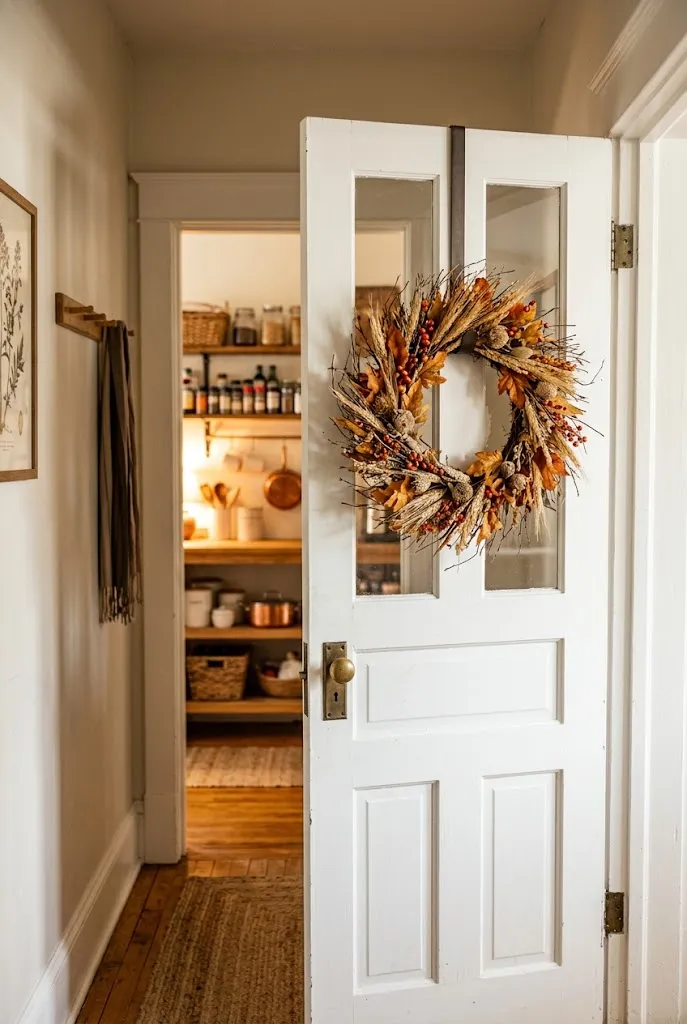
A fall wreath on the pantry door is a simple way to welcome people into the kitchen, and it works in homes where there’s no open wall space. Choose a wreath with mixed textures such as wheat, dried leaves, or small berries, and keep the size proportionate to the door.
For renters, an over-the-door hanger avoids nail holes and lets you take the wreath down easily. Check that the hanger fits the door’s thickness and that the wreath won’t catch on the frame when the door opens.
32. Soapstone Countertop Beneath a Window

Soapstone is a natural stone with a soft, matte look and a gentle gray tone that develops a richer patina over time. Placed beneath a window, it catches daylight beautifully and feels calm and substantial. It’s a premium material that suits a kitchen with a more traditional or farmhouse-inspired design.
Soapstone typically needs regular oiling to maintain its color and to darken it evenly, so ask your fabricator about care before installation. Over time, the surface changes, and many people value that character.
33. Wooden Pot Rack Above the Range

A wooden pot rack above the range puts cookware in view and adds a warm, working-kitchen feel. Copper, cast iron, and enamel pieces hanging from the rack create natural color and texture. It suits a kitchen where cooking is part of the daily routine.
Before installing, check the clearance from the range hood and the upper cabinets, and confirm the mounting hardware can carry the weight of the pans. Hanging cookware above the range also means cleaning the pots more often, so choose pieces you use regularly.
Where to Start
If this list feels like a lot, begin with the changes that cost the least and make the most immediate difference. A tea towel on the oven handle, a runner on the table, and a few warm-toned bulbs can shift the feel of a kitchen in an afternoon. From there, look at the surfaces you touch and see every day, such as cabinet hardware, shelving, or the counter.
The bigger projects make sense once you’ve decided what the kitchen needs most. If the room feels dark, start with lighting. If it feels cluttered, start with storage. If it lacks warmth, start with textiles and wood. Choosing one focus keeps the changes connected, so the kitchen looks planned instead of patched together.